Page 193 of 201
“Healthy” Salads…
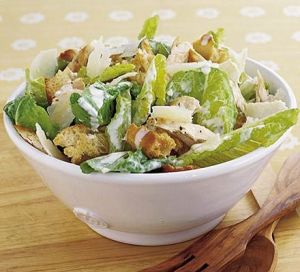 RESTAURANT SALAD: If you think about the typical American restaurant salad, it is huge, filled with at least three cups of lettuce and chock full of other items such as vegetables, meat, nuts, cheese or fruit. Add the dressing and you are consuming massive calories and fat. Let’s break down the Caesar salad since this seems to be a particularly popular salad choice for people.
- Romaine Lettuce – Usually about four cups of Romaine lettuce can be found in a full Caesar salad. This lettuce is a fantastic source of fiber and numerous vitamins and minerals. It also has negligible amounts of calories.
- Grilled Chicken – An ideal serving would be four to five ounces of chicken, but I have seen some large Caesar salads which have three ounces or less and are added almost as an afterthought. Usually this chicken is grilled with seasonings including an appreciable amount of salt for flavor.
- Shredded Parmesan Cheese –
- The good: This food is a good source of Phosphorus, and a very good source of Protein and Calcium.
The bad: This food is high in Sodium, and very high in Saturated Fat. It also carries a hefty calorie count. - Croutons – Typically salad croutons found in a restaurant salad are made of French bread, which is made with white enriched flour. This is processed flour and has a higher glycemic index and lower nutritional value than other types of bread. They are made by adding melted butter or oil and seasonings then baked on a cookie sheet. The added butter hikes up the calorie count and adds saturated fat to the mix.
- Caesar Salad Dressing – Besides oil and vinegar, the classic dressing used for this salad contains egg yolks, anchovies, Worcestershire sauce and more Parmesan cheese. Anchovies are VERY high in sodium, as are Worcestershire sauce and Parmesan cheese.
Perhaps the biggest red flag comes from the sodium count in this salad. A typical restaurant Caesar salad contains roughly 1,500 milligrams of sodium, which is about 75% of the recommended daily intake of sodium. And that is in one meal!
If you want to make a healthier choice, order a mixed greens salad with oil and vinegar or lemon slices on the side, and add a grilled chicken breast.
Reposting video from Ironman Shoot at Gold’s
Competition Bikini for Sale – Never Worn
This beauty has Swarovski crystals all over the front and a pretty crystal scatter on the back of the suit bottoms. I had this custom made then went in a completely different direction with a suit for 2011 when I came up with a creative suit design that really resonated with me. This suit is one of a kind, with an abstract leopard print design that really carries a LOT of bling and dazzle for the stage. It is cut for a 34D chest, and the botoms would fit ladies with anywhere from a 34 inch hip up to 37 inches.
I paid $500 for this suit, and again, it has never been worn. Please make a reasonable offer and let me know how I can get in touch with you. Thanks!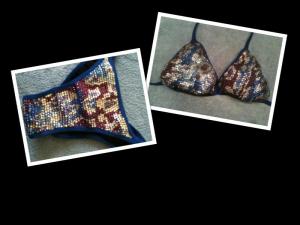
“Healthy” Foods – Don’t Be Fooled!
When my patients and clients insist that they eat healthy foods, I am always curious to find out what they consider to be healthy. Usually I hear them list off restaurant salads, sushi, turkey sandwiches, whole grain cold cereals and cereal bars as their healthy foods. Others will mention low fat versions of many foods, such as crackers, chips, frozen dinners, yogurts, cheese, cold cuts, cereals, etc. and state that they are proud of the fact that they have such foods nestled in their cupboards and refrigerator shelves.
I have news for you who think these are supremely healthy choices: they are not as healthy as you think they are! In an effort to educate readers on what the nutritional breakdown is for these foods, I am dedicating a separate blog post for each food item which is in bold and italicized in this post. In addition, whenever possible, I will provide a healthy option for each dish. By no means do I expect everyone to make healthy choices all the time, but I hope to equip them with the tools to make the healthiest and most informed decisions on what foods to eat whenever possible.
STAY TUNED TOMORROW FOR MY FIRST MEAL BREAKDOWN TOMORROW!
P28 Bread Products Has Released New High Protein Peanut Butter Spreads!

Visit http://www.highproteinbread.com to order!
Be sure to check out their BREAD, BAGELS, and FLATBREADS!
Commit To That Date!
 I may upset a lot of people by saying this, but I cannot stand hearing a competitor talk about an upcoming contest they plan to do, only to back out at the very last minute. I can understand how a significant family emergency, significant illness or a significant injury can undermine plans to compete at a specific event, but I have heard everything from a lack of financial preparedness, to going on a vacation in which all self-control is abandoned, to failing to follow a contest prep plan faithfully, etc., as reasons for pulling out of an event. It is just one excuse after another. Yes, that’s right, I said excuse.
I lead a very busy lifestyle which has me switching roles from physician to model to writer to contest prep coach to trainer. My mother is in a skilled nursing facility and since I am her only child, the burden of monitoring her care falls upon me. I train intensely and regularly five to seven days a week. I pack my food daily. Yet when I select a competition to participate in, I never, ever allow myself to back down from that goal. I commit to it entirely.
What is involved in this commitment to compete in a specific contest?
- I research the show schedule thoroughly beforehand and determine which contests I plan to do.
- I establish a detailed budget for each contest.
- I coordinate financial resources, both my own and those of my sponsors so that I know how expenses are being covered.
- I compile a to-do list for each event which includes a timeline so that I am sure to stay on track with when show registration is due, deposits are due, and when flight reservations should be made.
- I follow my contest prep plan faithfully and do not sabotage my own efforts to be contest ready by the time of the event.
I honestly believe that fear and self-doubt are what jeopardize a competitor’s focus and generate the feeling that contest plans should be postponed. By pushing plans back repeatedly, a competitor develops a cop-out attitude which flies in the face of the determination and fortitude that characterizes the world of competitive bodybuilding. Let’s face it, life always throws challenges at us. But there is no reason whatsoever to allow those challenges to discourage us from continuing to pursue that goal of stepping onstage and showing of the efforts of our determination and hard work.
Pick a contest date, commit to it and just DO IT!
A Favorite Image by the late Weiferd Watts

Taken by the late Weiferd Watts in 2011
A Natural Pain Reliever?
Change of Plans. No Travel Today.
My Hawaii trip has been cancelled and I am staying at home with my cats. Not celebrating with family or friends.

