Different Types Of Buddhas

Check out this link: http://feng-shui.lovetoknow.com/Buddha_Statues_for_the_Home_and_Garden

buddha-toothrelic(1)I have copied and pasted the information on the different types of Buddhas which is presented in the article from the link above. There are suggestions on where to put each type of Buddha in your home, based on Feng Shui principles.

Meditating Buddha
This statue style most commonly found in Buddhist altars in the home. These statues typically render Buddha in a sitting position with both hands in a meditative position called “Cosmic Mudra. The hands overlap each other. The left hand is placed on top of the right one so the thumb tips touch to form an oval, symbolizing the turning of one’s attention inward.

The statue should face the east direction since the Buddha meditated on the sun rising in his search for enlightenment.

Rubbing his belly will bring greater good luck and fortune.

Laughing Buddha
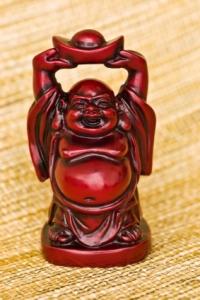
In western culture, the laughing Buddha is probably the most widely recognizable and used. It’s also known as the good luck, prosperity or abundance Buddha. It depicts Buddha in his later years as happy and with a large belly from an abundant lifetime. He’ll either be in a sitting position or standing with his hands over his head supporting a real or imaginary Ru-Yi pot (vessel or bowl of plenty).

This statue is affectionately dubbed Happy. It’s tradition to rub his belly to ensure even greater luck is bestowed upon you. Place this statue in your personal wealth corner or southeast sector of your home. It’s great for an office on the north wall facing those who enter.
102123-200x300-Laughing_Buddha
Other variations include:

Laughing Buddha with children at his feet: Place in west sector (descendants) of garden facing your home. Also use in same sector inside your home.
Traveling Buddha: A variation of the laughing Buddha as a monk features a cotton-sack over one shoulder or tied to a stick. He holds a wealth ball in his other hand. It is an excellent choice if you travel for work. Place in your office in north sector.
Spiritual Journey Buddha: This is another version of the Traveling Buddha. He carries a gourd (wu-lou) of enlightenment suspended from a stick while holding a fan in his other hand and wears a prayer bead necklace. Place in northeast sector (education) or southwest (love and relationships).
Blessing Buddha
The Blessing pose depicts Buddha bestowing fearlessness (upper hand gesture) and compassion (lower hand). Good areas inside the home for this statue include the office and den. You can apply this as a cure for any area inside or outside your home that suffers from weak or afflicted chi due to flying star placement.

Teaching Buddha
Known as Dharma Chakra Buddha, the Teaching Buddha statue is in a sitting or standing position. The most popular is the sitting pose, since this is the position the Buddha assumed when teaching. This is an important period in the Buddha’s life. It symbolizes his sharing of the knowledge he’d gained after his enlightenment in the deer park, Sarnath, located in Uttar Pradesh, India with his disciples.

Since the Buddha’s teachings came from his heart, the both hands are in front of his chest. The index fingers and thumbs touch to form a circle, representing his teaching of the Wheel of Dharma (union of wisdom and method). The other three fingers of both hands always remain extended.

This is an excellent choice for the northeast (education) sector of both inside your home or office and your garden.

Some statues depict the thumb touching the ring finger instead of the forefinger. This changes the meaning to one of good fortune. This style can be placed in the north sector (career) or southeast sector (wealth).

Long Life Buddha
This Buddha sits with the bag of blessings by his side or may hold the bag in his lap. In one hand, he cradles a wealth ball raised in front of him and a Ru-Yi pot in his other hand. Place in your home or garden in the east (health), west (children, descendants) or southeast (wealth) sector. You can also place it in your office in these directions.

Happy Home Buddha
The seated Happy Home Buddha holds a parasol over his shoulder. Place inside and outside your home in the southwest sector (relationships).

Earth Buddha
Also known as the Calling Earth to Witness, the Earth Buddha sits on the ground with his right hand extended so his fingers point to the earth beneath him. This statue honors the time when Buddha was repeatedly tempted by the demon, Mara, but resisted and finally reached enlightenment.

You can place this statue in any sector inside or outside your home that you’re being tempted to reject. If you’re having difficulty in a relationship, place it in the southwest sector to bolster your resolve and commitment. If you’re becoming complacent at work, put this in the north sector (career) to strengthen your dedication to your job.

Reclining Buddha
Buddha awaits his transition from this life to death, viewed as a mere transition into a different state of being. if you’re in a transition period, this is a good choice for inside your home or in a garden.

Place in the sector that represents the area of your transition. For example, place in north sector of home or office if changing jobs. If a relationship has ended, place in southwest sector. If you’re a new empty nester, place statue in west sector to ease this life-changing transition.

gold-buddha-altar

Are You A Sponsored Athlete Or An Unpaid Salesperson?

Original post can be found here:

http://www.rxmuscle.com/blogs/the-business-fitness-modeling-and-showbiz/11790-are-you-a-sponsored-athlete-or-an-unpaid-salesperson.html

Are you an athlete
Most sports supplement companies and other fitness related companies aggressively promote their products through athletes who can sing the praises of their benefits. Who could be better at describing the efficacy of a product and how it enhances training or recovery than an athlete who not only already uses those types of products, but someone who has a following and who can convince new customers to purchase from the company which they represent?

Here’s where things get problematic. The pool of bodybuilding and fitness athletes is pretty massive, and the waters are teeming with athletes who are anxious to get their so-called “big break”. As a result of this, savvy marketing teams from fitness related companies often sweep up these individuals because they are enthusiastic and can propel a brand’s exposure. All the company needs to do is to offer some free product to the athlete and provide instructions on how to use social media to get the word out that these products exist. Then the athletes post images of themselves holding or using products, and add affiliate codes so that any orders which are generated through that athlete’s post are credited to the athlete. This can be a great way for an athlete to make some extra money while competing or chasing down fitness related gigs and projects.

It is important to bear in mind that such athletes really aren’t sponsored, but are instead unpaid salespeople who provide free advertising and generate sales via social media posts which direct followers to product websites. Yes, they get commissions if they have affiliate codes, but such commissions are nothing to write home about unless someone is really blowing the roof off in sales. This is in stark contrast to a true athlete sponsorship, in which an athlete is paid to represent the brand as a brand ambassador. The sponsored athlete is chosen for his or her physique, performance history and awards, facial good looks, charisma, enthusiasm, and often the size of his or her social media following. Usually a sponsored athlete signs a contract which stipulates that he or she will receive a certain amount of free product, and in most cases will also receive financial compensation which is either paid via a monthly salary or via a contest stipend. Though the athlete usually agrees to a set requirement or recommendation to provide social media posts for the company at regular intervals, the company pays the athlete for his or her trouble. Personal appearances and events are also part of the sponsored athlete agreement and clearly described in the written contract. The sponsored athlete is compensated for use of his or her likeness on advertising materials as well.

Obviously it is a far better deal to become an official sponsored athlete for a company. Otherwise, you are just providing free advertising and cheap labor in exchange for products which are sold at a significant markup from what they are manufactured at. If you post a selfie with product that somehow goes viral, the company will certainly love the boost, but I doubt you will ever see any type of compensation if you aren’t a sponsored athlete, which means you provided your likeness for free. The truth of the matter is that there are only a handful of athlete sponsorships to go around, with a massive surplus of athletes vying for those spots. The athletes who end up getting sponsorships stand out from the crowd in some way, or fit a brand’s look and philosophy so well that it makes sense to bring them on board to represent a brand. The rest of the athletes must navigate through all the companies out there to try to find an arrangement which benefits them in some way. Sometimes it is easy to sell a product, usually because the athlete enjoys using it so much that he or she doesn’t mind providing free advertising or labor.

Sometimes a supplement company will launch a contest which is based on social media posts. One company, which shall remain unnamed, launched a huge campaign this year that was patterned on this idea, and decided to award 5 of the entrants $10,000. Sure, that sounds like a good chunk of change, but if there were 8,000 entrants, then 7,995 walked away with nothing. At the end of the campaign, the company got tons of free advertising and all those hashtags they requested for “tracking” purposes also propelled their brand in a huge way. To be honest, this is a brilliant marketing tactic, but not the best move for the majority of athletes who participated. I have also seen companies launch contests in which entrants must purchase a product, then post on social media with hashtags to enter the contest. This is another form of free advertising for the company, a great way to generate sales, a brilliant means for them to boost exposure, and yet another way for athletes to be suckered into doing free advertising. I don’t see much harm in taking part in such a contest if you truly love a product and want to proclaim it, but just remember that it works wonders as an advertising tool for the company without any benefit for you.

One thing I will never advocate is purchasing products, even at a steep discount, while also representing a brand as one of its “sponsored” athletes. If you are asked to pay for a product while also providing free advertising on social media channels, run quickly in the other direction! Basically you are dealing with a company which doesn’t value you enough as an athlete to provide compensation for your advertising efforts. This isn’t the same as purchasing a product, finding out you like it, THEN posting something on social media which lets people know how much you like it. I know of several athletes who had done this, which sparked the attention of the company which manufactured the product, eventually leading to a sponsorship deal. But do not, I repeat, DO NOT PAY for products as a way to get false sponsorship for a company.

It isn’t a bad thing to work as an unpaid salesperson in the fitness industry as long as you know your place and value. Once your following builds, the smart thing to do is to leverage your visibility into getting an athlete sponsorship. The main thing is to make sure that you don’t get taken advantage of in the process.

Sugar And Cognitive Decline

hero-cookie-candy-bars
How can sugar be such a bad thing when it tastes so wonderful? Well, you might want to consider the consequences of indulging in sweet treats on a regular basis. Consume a diet high in processed sugar and you can almost count on experiencing a pronounced cognitive decline with advancing years. Numerous studies have revealed a decline in cognitive function after consuming processed carbohydrates. A 2011 study published in the British Journal of Nutrition examined habitual sugar intake in over 700 nondiabetic middle-aged subjects of Puerto Rican descent. The results showed that consumption of sugary beverages resulted in lower MMSE scores, while a higher total sugar consumption resulted in lower word list learning scores. Numerous other studies have shown a strong correlation between insulin resistance and lowered cognitive function.

sugary-drinks

As it is, cognitive function begins to decrease by our late 20’s with memory problems surfacing about ten years after that. Some individuals are already doomed to develop insulin resistance with increasing age, and this is magnified dramatically when processed carbohydrates are consumed on a regular basis. Processed carbohydrates such as refined sugar are absorbed more rapidly, causing a surge in insulin release. When this occurs frequently, the result is an increase in insulin resistance. Another consequence of increased blood sugar is decreased blood flow, which also inhibits cognitive function.

By no means am I saying that you have to COMPLETELY eliminate all sugar from your diet all the time (though it isn’t a bad idea). If you allow yourself the RARE indulgence, such as birthday cake, that is fine. The more insidious culprits are the sugary sodas, flavored yogurts and packaged crackers which tend to creep into regular diets. They may be tasty to many people, but they carry a heavy consequence. Knowing all of this, why would you risk “dumbing down” and increasing your dementia risk by eating sugary foods all the time? Now, that is just stupid.

Eliminating sugar from your diet is a great step towards improved health and mental clarity, but you should also make sure to get vital nutrients in on a daily basis. I recommend taking a multivitamin several times a day to optimize absorption, but most of the large brand multivitamin formulations out there are dosed once daily. In addition, the bigger brands do not have high bioavailability. What I love about SWAT Fuel’s .40 Caliber Multivitamin is that the nutrients in the formulation are highly bioavailable, and the supplement is taken three times daily. This is my personal choice of multivitamin, and yes, I do take it three times daily. This formulation is very clean and doesn’t cause the intestinal upset that some multivitamins can cause.

You can order .40 Caliber directly from the website: http://swatfuel.com/products.aspx
References:

Br J Nutr 2011 Nov; 106(9):1423-32.

Hand X Band For A Stronger Grip And Great Rehab For Tennis Elbow

handxband_diagram
If you think about all the grasping and gripping you do in your daily life, such as opening doors, driving, working out with weights, etc., it’s pretty obvious that you use the muscles which flex your fingers far more often than the ones which extend (or straighten out) the fingers. Over time, this results in overdevelopment of the finger flexors relative to the extensors. A new product called the Hand X Band enables you to selectively exercise the finger extensors, establishing muscular balance and increasing strength. These clever bands are inexpensive, durable, and effective.

The Hand X Band is great for athletes who want to balance their strength and muscular development, but it is also excellent for upper extremity rehab.

You can order direct from the site: http://handxband.com

Wood Working In Bali

I recently was blessed enough to go to Bali for several days, and was able to visit Seminyak and Ubud for a number of shopping excursions. Ubud is known for its wood working factories and silver factories, so it was a dream come true for a wood carving and silver jewelry freak like me to visit. There are factories all over Ubud, most of which not only display the finished works of the artisans, but also feature the artisans at work on pieces.

One thing I did NOT like was how much the salespeople would hover over me as I walked through the stores. The best thing to do is to walk through a store without indicating interest in any of the pieces until you have determined which ones you are truly interested in purchasing, otherwise you will be asked incessantly, “You like this one? Give good price, not final price!” until you walk out of the store. The majority of stores will have what is called first price, which is the price they quote, but you are expected to haggle with the salesperson until you arrive at a price which is usually about 25% to 40% of the first price. Even so, whenever I would hear “6 million rupiah” ($500 US) for a 20 inch Buddha carving, I would think it was way too expensive and walk on.

One salesperson took the time to educate me on the different types of wood commonly used in Balinese carvings. I learned how to distinguish between hibiscus (which is always two-toned and has a slight reddish hue), coconut (a lighter, greenish, variegated wood), ebony, and mahogany.

Hibiscus wood

Hibiscus wood


Coconut wood carvings are in foreground here

Coconut wood carvings are in foreground here


Ebony wood carving

Ebony wood carving

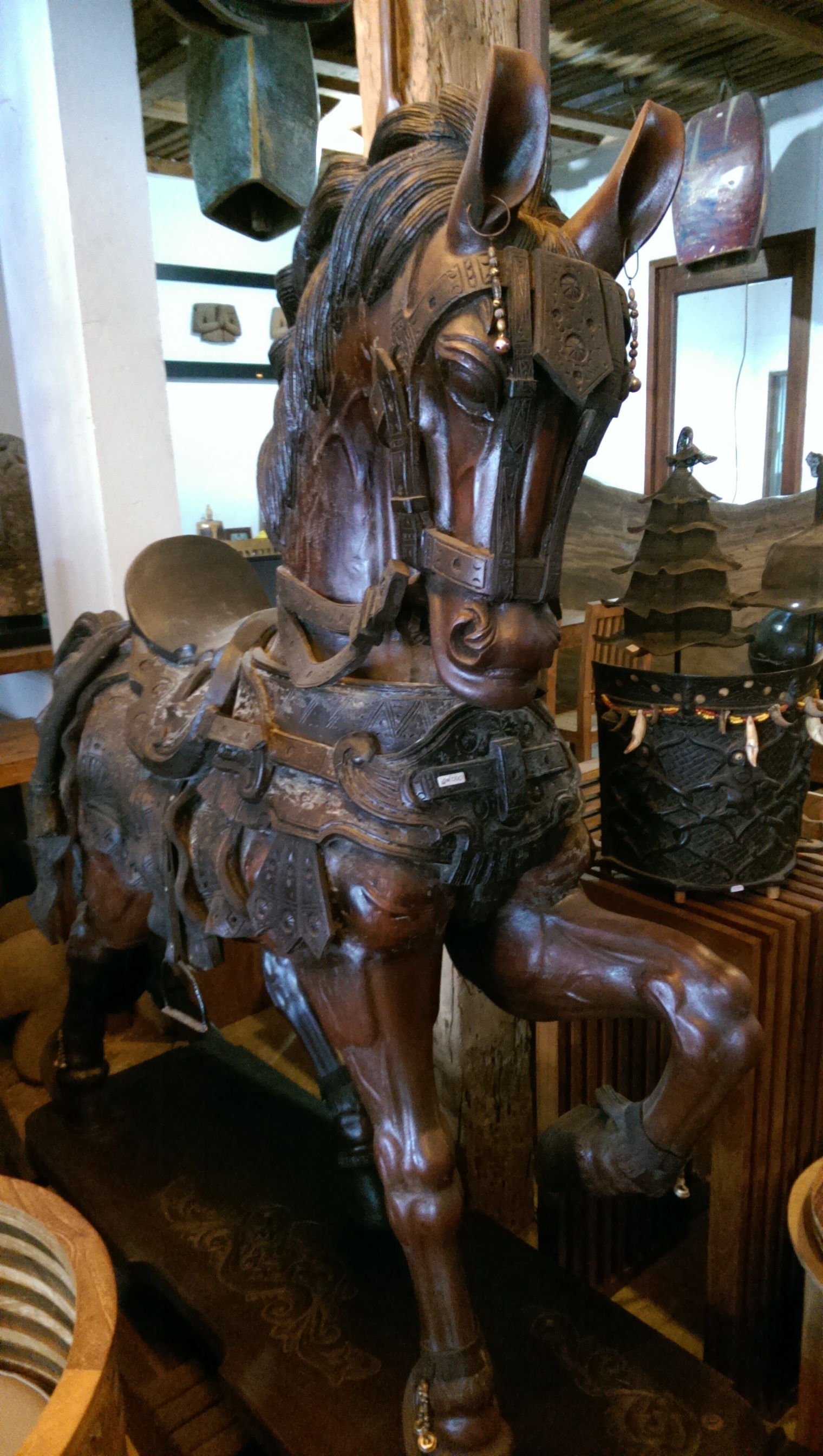
He also informed me that there were three different levels of wood carvers: Student, Teacher and Master. Master carvings command the highest prices since the skill level of the artisan is the highest, followed by the Teacher and then the Student. I was thankful for the information because I discovered that a 24 inch Balinese Buddha wood carving which I have had for about 7 years was created by a Master out of a beautiful piece of hibiscus wood. Later in the day, I saw strikingly beautiful and ornate carvings like this life-sized horse:
Life-size horse carving

When I saw the gorgeous woodwork in Bali, it me wish I had a huge home with a real need for wooden sculptures and furnishings. If you love hand carved wooden sculptures and furniture with an ethnic flavor, you really should visit Bali.

Wi Spa Rocks!

Wi Spa
http://www.wispausa.com/

What a GREAT place to go in Los Angeles for affordable massage, nail, face and body treatments, and sauna and steam room services! This place is on Wilshire Boulevard in Koreatown, and features Korean style spa amenities, including a Korean style restaurant on the top floor. It is open 24 hours a day. There are a number of community tubs and saunas in the women’s and men’s spas, and the coed area features several dry saunas. My dear friend Blanche Le Beau and I visited the facility right before Halloween, and we both had a Buff Treatment done:

BUFF (BODY SCRUB) 35min
$30.00
The buff is a traditional Korean technique which employs full body exfoliating techniques to lift impurities and dead skin, while naturally boosting your blood circulation, leaving you with healthier, brighter skin

Basically, I felt like a fish being scaled during this treatment. An elderly Korean woman clad in a black bra and black granny underwear called my number, then escorted me to a table which was covered in bubble gum pink plastic. She threw a bucket of water on the table so that it was wet, then instructed me to lie face down on the table, whereupon she commenced scrubbing my skin vigorously. I was instructed at intervals to turn over and to lie on my side while she continued this vigorous scrubbing technique. At the end of the treatment, my skin was incredibly soft and glowing. I would HIGHLY recommend this treatment for sloughing off dead skin cells.