Time Zones, Reasonable Hours And The People Who Ignore Them

World TimeZones (analog)

I appreciate being able to meet people from other parts of the United States and the globe because they broaden my perspective and remind me that the world is much larger than what I am aware of as I navigate through a typical day in Southern California. As a result of my travels, I communicate relatively regularly with people who live in time zones that are 3 to 19 hours ahead of me. Whenever I attempt to communicate with them, I try to remain acutely aware of what time it is for them in their corner of the world. That is why I become very irritated when I get text messages and messages on Facebook Messenger in the middle of the night from people who are on the other side of the globe and think it’s a good time to initiate a chat with me. Some people are so clueless that when I respond to a message stating that I am trying to sleep, they KEEP MESSAGING me, causing my phone to clang repeatedly like a bell. I realize that I can (and DO) turn off my ringer, turn off my phone or ignore the messages, but there are two reasons why I respond to such communication attempts:

1. If I don’t respond immediately, I must deal with and endless stream of lengthy messages the next morning, scolding me for not responding.
2. I feel strongly compelled to inform the person that it’s late and that I must put an abrupt end to the conversation stream.

To be honest, I know that I test people when I tell them that it is late and that I am going back to sleep. The way to pass my test is to register a quick apology and allow me to rest, but some individuals seem to lack the sense to drop the conversation. One person who was an acquaintance I knew through Facebook contacted me last night past midnight and kept sending messages and images which woke me up repeatedly, so I told him to please stop. Instead of stopping, he explained to me that it was 12 noon where he was. Okay, that’s fine, but why did he keep messaging me, trying to engage me in a conversation I wanted no part of? I told him to please stop sending messages so that I could go back to sleep. His reaction was to KEEP MESSAGING ME. I have been in situations where I had miscalculated the time zone where a friend was, but as soon as I realized my mistake, I sent a quick apology and then stopped communicating with them. Unfortunately, this guy didn’t have the sense to realize how much of a pest he was, so my reward for his persistence was to block him.
doctorisout
I deal with people who think that because I am in the public eye and a physician, I must be on call 24/7. Not so, ESPECIALLY if someone pressures me to take care of their needs immediately when I have no professional responsibility toward them. The sense of entitlement some people have just blows me away! So-called “quick questions” become long, drawn-out consultation requests, and when I don’t have answers, some individuals cop an attitude after I have taken time out of my busy day to be cordial and helpful. It’s enough for me to consider telling everyone that they must submit questions to me during normal business hours, otherwise leave me alone. I must draw a line in the sand because I tend to sacrifice a great deal of my time and resources to help others, and run myself into the ground as a result.

How Emotional Eating Can Derail You From Your Fitness Goals

emotional-eating ice cream - Copy

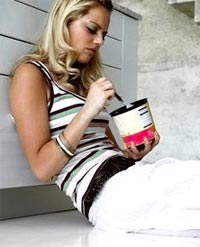
Rather than discuss well-known emotional eating disorders such as bulimia, I will concentrate on binge eating which many women engage in from time to time.  It is important to recognize this behavior if it becomes a regular pattern, because frequent emotional eating warrants a diagnosis of binge eating disorder and requires treatment and intervention.

Binge eating is characterized by eating compulsively to cope with negative emotions and stressful situations.  A binge eater is rarely hungry when she begins to eat and will continue to eat well after she is full.  Such episodes can last for up to two hours or can occur off and on throughout the day.  The binger feels guilty both during and after the episode, but will not attempt to counteract it by fasting, taking laxatives, vomiting, fasting or over-exercising.  A strong lack of self-control as well as feelings of shame will accompany this behavior pattern.  There is a strong association between binge eating and depression.  Binge eating is also driven by social components such as social pressure to be thin, emotional and sexual abuse, parental criticism of a child’s weight, and the use of food as reward or punishment.

Food cravings are usually the strongest when you are in emotional crisis.  You may reach for food for comfort or to serve as a distraction.  Consider the following highly stressful events and think about whether you reached for comfort foods during such times:

  • Financial problems
  • Health problems
  • Work issues
  • Relationship issues
  • Fatigue
  • Family issues

Though some people will lose their appetites when stressed and will refrain from eating, many others will engage in impulsive eating in an effort to deal with negative emotions.  This may be relatively harmless if such emotional eating occurs on a very rare occasion, but becomes a serious problem when it is used as the only coping mechanism for stressful situations or negative emotions.  Just bear in mind that if you have a rare moment of weakness, it is important to recognize it as just that and to prevent yourself from spiraling into excessive feelings of guilt over the incident.  If you engage in an episode of emotional eating, learn to forgive yourself and have a fresh start the following day.

 
Why We Engage in Emotional Eating


What occurs almost invariably when we eat emotionally is that we turn to cookies, cakes, candy, fried foods and breads rather than to healthy foods.  There is a biochemical basis for such behavior.  Carbohydrates which are high in sugar or fat release dopamine in our brains which in turn stimulates the brain’s pleasure center, creating a sense of euphoria.  These foods are usually associated with pleasurable memories, such as cake which you may have looked forward to on your birthday, or macaroni and cheese as a treat after school when you were a child.


Food can also serve as a happy distraction from conflict or stressful events by stimulating the aforementioned pleasure centers.  What will frequently occur is that an excessive amount of these foods will be consumed.  However, if you remain aware of such automatic connections between food and mood and realize when you are eating for reasons other than hunger, you can break this cycle and get back on track with healthy eating habits which are associated with true hunger.


How To Combat Emotional Eating


  • Keep a food diary.  Get in the habit of writing down everything you eat and drink, including the quantity, the times at which you eat, your emotional state while eating the meal, and your level of hunger.  By doing this you may see patterns which will reveal your emotional relationship with food.


  • Remove tempting foods.  Avoid stocking comfort foods in your home if you find that they are difficult to resist.  And by all means avoid making trips to the grocery store if your emotions are spiraling out of control!


  • Practice stress management.  Yoga, meditation, and relaxation techniques are effective methods of managing your stress.


  • Determine whether you are truly hungry.  Many times people may believe they are hungry when in reality they are actually emotionally distraught and desperately searching for a way to defuse such emotions.


  • Make sure you consume adequate calories.  Individuals who are trying to lose weight will often restrict their calorie intake too much, and will turn to the same foods in an effort to remain on track without rewarding themselves with an occasional treat.  Adding variety to your meal plan will also help to keep you on track.


  • Distract yourself.  If you get an urge to snack when you aren’t truly hungry, distract yourself by watching a movie, calling a friend, reading, listening to music, or taking a walk.


  • Consume healthy snacks.  If an urge to snack between meals strikes, choose a low-calorie snack such as vegetables with seasoned nonfat Greek yogurt, fresh fruit, low fat cottage cheese or rice cakes.


  • Get enough sleep.  Getting enough sleep is an important component in decreasing cravings for comfort foods.


  • Eat at regular intervals.  Consume smaller meals every three to four hours to keep you from feeling hungry or deprived.


  • Focus on the experience of eating.  Learn to eat in a mindful manner, in which you pay attention to your meal and only your meal.  Become aware of the sensations associated with eating.


  • Reward yourself.  It is both physically and emotionally unhealthy to practice excessive calorie restriction for prolonged periods.  Allow yourself to have a favorite food or meal once each week.


  • Connect with your emotions.  When a food craving hits during an emotional time, write down the emotions you are experiencing, such as sadness, loneliness or anger.


  • Seek professional help if emotional eating is frequent.  There are countless support groups which you can join which will help you to develop insight as well as the skills to avoid engaging in such behavior.


One last note: make sure to get vital nutrients into your diet on a daily basis. I recommend taking a multivitamin several times a day to optimize absorption, and my favorite is SWAT Fuel’s .40 Caliber. SWAT Fuel’s .40 Caliber Multivitamin delivers high bioavailability on a three time dosing regimen each day and is suitable for everyone, but it is especially great for individuals who tend to experience intestinal discomfort from multivitamin formulas.

You can order .40 Caliber directly from the website: http://swatfuel.com/products.aspx

Different Modeling Categories According To Modelingadvice.org

I am posting this so that people can see the requirements for different types of models. This was copied from http://www.modelingadvice.org/Modeling_Categories.html

Modeling Categories
High Fashion Model
Usually 5’8” – 6’0” (175 cm) tall, a size 0 – 6, age thirteen to twenty-two, and measurements:
Bust: 32” – 34”, cup A, B, or C
Waist: 22” – 26”
Hips: 32” – 35”

Fashion Editorial Model
FEMALE: Usually 5’8” – 6’0” (175 cm) in height. Tall, thin build, narrow hips, smaller bust, and usually young. Ages start at fourteen up to early twenties.
Weight: 113 – 128 lbs.
Bust: 32” – 34”, cup A, B, sometimes C
Waist: 26” maximum
Hips: 35 1/2” maximum
MALE: 5’11” – 6’2” (180-188 cm)
in height. Tall, lean, well built, usually young. Ages fourteen to thirty-five.
Weight: 145 – 165 lbs.
Suit: 40 Regular (U.S. size)
Shirt: 15” – 15.5” x 34 – 35”
Waist: 32” – 34”
Inseam: 32” – 34”
Chest: 38” – 40”

Runway Model
FEMALE: 5’9” (180 cm) and up in height, very thin, narrow hips, small bust. Usually young: can be as young as fourteen to the early twenties.
Weight: 110 – 125 lbs.
Bust: 32” – 34”, cup A or B
Waist: 22” – 25”
Hip: 33”- 35”

MALE: 6’0” – 6’2” (183 – 188 cm) in height. Tall, lean build, usually young. Ages: fourteen to thirty-five.
Weight: 140 – 165 lbs.
Suit: 40 Regular
Shirt: 15” – 15.5” x 34” – 35”
Waist: 32” – 34”
Inseam: 32” – 34”
Chest: 34” – 40”

The “Commercial Print” Model
He or she will be featured in the ads you see everyday. Ads for cookware, pain relievers, hairspray, car insurance, floor cleaner; the list goes on. As a commercial model you may be portraying a character, like a “mom” or “bus driver” or “attorney”. Commercial models are also featured on the covers of magazines like Parenting, Golf Digest, and Travel and Leisure, or they can be seen in sales ads for companies like Target or Sears.
Catalogue Model
FEMALE: Usually 5’9” (175 cm) and up. Tall, lean build, measurements 34” – 24” – 34” (86 cm – 61 cm – 86 cm) and attractive.

MALE: 6’0” – 6’2” (183 – 188 cm), tall. Lean build, suit size 39 – 42 (U.S.) and attractive.

The “Fit” Model
A company hires a fit model to use as a real live mannequin to “fit” their clothes to. Many companies have used the same fit model for years and this can be a very steady and good paying job. This has only one size requirement. As a fit model, you must maintain a consistent size, and that size is whatever the client wants. This means you can’t lose or gain weight and your measurements must remain the same Fit models are both men and women, young and old, and could be a size 4 to a 14.

The “Showroom” Model
A showroom model will work either in a high-end department store or in a designer’s showroom. They wear or display the sample clothes and merchandise for the buyers or customers to see. Usually this is similar to a very informal runway show. There are some showroom models that make well over one hundred thousand dollars per year and they only work for one designer. This kind of work can be somewhat seasonal.

Showroom Model: They are typically taller, but there is quite a bit of flexibility in this category. No strict requirements, sizes vary from designer to designer.

Plus Model
She is usually 5’9” (175 cm) and up in height, starting at a standard U.S. size 8, up to a size 22. Plus models should have proportionate measurements based on their size,
between 34” – 25” – 37” and 40” – 31” – 42”. The waist should be at least 9” smaller than the hips and bust.

Petite Model
She is usually between 5’1” and 5’5”, and a dress size 2P or 4P. Her age is usually eighteen to twenty-five years old, and hips should be 34” or smaller.

The “Glamour” Model
She is all about sex appeal. She would be seen in car magazines (as the girl in a bikini lying across the hood) or hired for a bikini calendar, and she may be in a photo layout for a men’s magazine like Maxim, FHM, or even nude modeling for Playboy or other publications of that nature.
She is very good-looking, attractive to men, proportionate figure with a fuller bust. The desired age is eighteen to mid twenties.

Lingerie and Swimwear Model
Female, generally over the age of eighteen, tight, toned body, no cellulite or excessive muscles, thin waist, narrow hips, fuller bust. Flawless skin, not much body hair, very few moles, scars, or freckles. Models with naturally darker skin or a light tan color (not overly tan, and certainly no tan lines) are preferred.

The “Parts” Model
Sometimes a client may only need a hand for a shoot, perhaps to display a ring or a watch. Or, they might be doing a shampoo ad and just need a beautiful head of hair. When a model is booked for a specific feature (not including the face) it’s called “parts” modeling. So if a model has a specific “part” that looks good (like hands, hair, lips, teeth, legs, back, feet), they might get a “parts” booking.

The “Sophisticate” Model
Also can be called the 40 Plus division. He or she is forty years of age or older, looks great and is in great shape. The forty and older model can be booked in a variety of different categories: fashion, commercial, runway, catalogue, and more. They have a specific look (over forty) so many of these models stay very busy. Height is a plus, but this category has more flexibility.

The “Maternity” Model
This is becoming a very big category. Beautiful mothers-to-be are being seen on magazine covers, in print, on T.V. and in catalogues. The “baby bump” showing, it should be obvious that she is pregnant. Having good skin and being healthy is also a must.

The “Fitness” Model
He or she is featured on the cover of fitness magazines, in ads for energy drinks, protein bars, body building equipment, and health clubs A dedicated fitness regime, and a body in peak condition with very defined muscle tone.

The “Child” Model
These kids are seen in ads, commercials, on billboards, and catalogues. Children up to age eighteen with outgoing personalities and a parent to take them to auditions and jobs. Most child modeling work is cast with children twelve and younger.

The “Promotional & Trade Show” Model
He or she could be doing a variety of different jobs. Promotional jobs are usually short-term bookings anywhere from a few hours to a couple of days. Trade show models will work for a client during a trade show or convention by assisting the exhibitor or client in the promotion of their products or services. You just need to have an outgoing personality and a great attitude. Eighteen and older preferred.

The “Spokesmodel, Presenter, & Narrator
This is a little-known market that is extremely financially rewarding. Many trade show models will see professional spokespersons (both male and female) in various trade show booths delivering the company presentation several times per day. Models do not realize that they too can make that leap from trade show model to trade show presenter. Trade
show Spokesmodel/Presenter fees usually average one thousand dollars per day! To learn how to break into this little-known niche market, make a ton of money and potentially be enormously successful, go to http://www.TradeShowPresenterSecrets.com to launch your Spokesmodel/ Presenter career right now.

There are really no requirements or restrictions for this type of work although the presenters are typically older than eighteen and can continue working into their fifties. Almost anyone can start here!

Celebrity Model
They just need to be their fabulous, famous selves. They do want to keep out of trouble. Since celebrities are in the public eye and the paparazzi are always following them around they need to behave. If they get caught doing something wrong the endorsement deal might get canceled, and some of those endorsement deals are worth millions of dollars.

The “Supermodel
What do Gisele Bundchen, Adriana Lima, Heidi Klum, and Kate Moss have in common? They are all women at the top of the modeling game. To get to that status you have to really stand out, work hard, and remember: this is a business. If you are ready to kick it up notch, you may consider coaching with a professional. There are only a handful of supermodels. These models are seen everywhere: in all the fashion shows, on the covers of Vogue, W, and other fashion magazines; they get huge ad campaigns for companies like Burberry, Louis Vuitton, Revlon, and Victoria’s Secret. Supermodels use their fame to branch out starting their own clothing, jewelry, and make- up lines. Some have successfully switched over to an acting career.

Supermodel: She is one in a million, but remember you don’t have to be a supermodel to be a successful model.

Excerpted from “The Ultimate Beginner’s Guide To Modeling System” by Jennifer Autry

The Funhouse Mirror Effect Part 2: The Women’s Mirror

h-MIRROR-UNDERWEAR-960x540

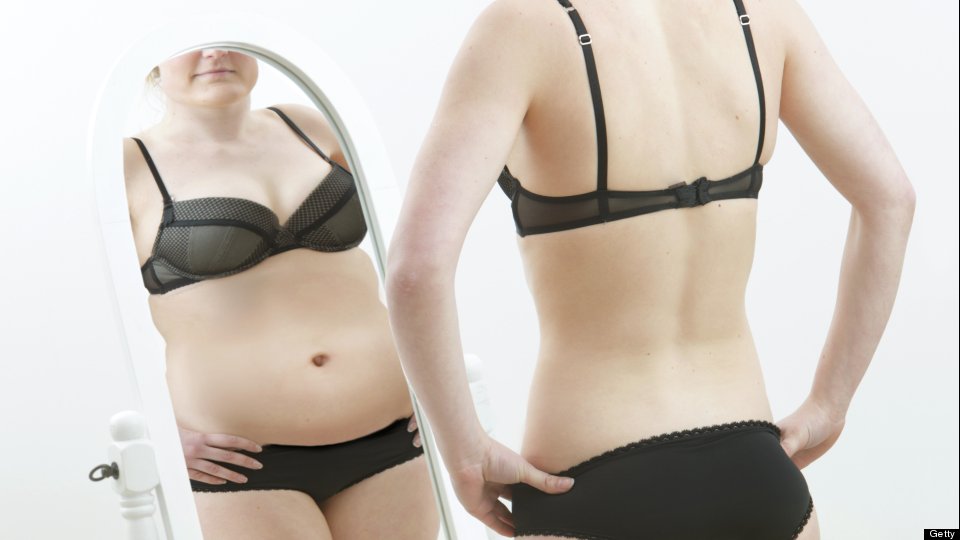
It almost seems to be an inherent part of a woman’s nature to be self-effacing, so much so that women often downplay or neglect their beauty and talents. In fact, I am willing to bet that if you placed an average looking man and an average looking woman in front of a mirror and asked them to assess their physical appearance, the man would concentrate on his assets, while the woman would immediately zone in on her imperfections and problem areas. Though the natural human tendency is to practice self-enhancement, in which we rank our abilities or physical attractiveness as higher than it actually is, women are exposed to physical ideals which bust their confidence and often plant a seed of self-loathing. How can an average woman feel good about herself when she sees rail thin models in fashion magazines who are excessively Photoshopped? Consider this: the average high fashion model has these body statistics:

Fashion Editorial Model
FEMALE: Usually 5’8” – 6’0” (175 cm) in height. Tall, thin build, narrow hips, smaller bust, and usually young. Ages start at fourteen up to early twenties.
Weight: 113 – 128 lbs.
Bust: 32” – 34”, cup A, B, sometimes C
Waist: 26” maximum
Hips: 35 1/2” maximum

Thank goodness the tide is turning in favor of a healthy, realistic view of women’s bodies. Women are beginning to understand that fashion magazines depict a view of the female form which is so far removed from reality that it isn’t reasonable to compare themselves to it. I love this passage from an article I read on this subject:

Perhaps we’re finally starting to realize that so much of what we see on TV, in the movies and in magazines is actually fake. A few women’s blogs — particularly Jezebel — have become sort of watchdogs for Photoshop fakery in women’s magazines. Most recently, the blog attained an untouched photo of Jennifer Aniston, posting the untouched picture next to the airbrushed photo of the actress that appeared in an Australian magazine.
“I think those are great because they really remind people that what they’re seeing in the magazines isn’t reality,” says David Frederick, a psychology researcher at the University of California, Los Angeles, who co-authored the survey along with researcher Kim Elsesser and professor Janet Lever of California State University, Los Angeles. “You’re taking someone who’s already considered really attractive, and then you’re saying, ‘She’s not enough; we have to do more to her.’ So you’re literally creating an impossible ideal. Even the perfect women aren’t perfect.”

I think it will take a while before we women are completely healed from the skewed perception of ideal female beauty which countless magazines, Barbie dolls, and fashion billboard ads have imprinted on us. It is that skewed view which contributes to the flaw-finding gaze which many women adopt when regarding themselves in the mirror and which makes that reflective surface act more like a funhouse fat mirror.

The Funhouse Mirror Effect Part 1: The Men’s Mirror

break-the-blocks-1

Have you ever seen the cartoon in which a man is looking at himself in a mirror, and instead of seeing his beer belly, balding head and weak jaw, his reflection is that of an Adonis, with a chiseled jaw, washboard abs and a full head of glorious hair? I have encountered quite a few men (especially at the gym) who seem to have a reverse dysmorphia which has them thoroughly convinced that they are America’s Next Top Male Model. While I am all for a certain level of self-confidence no matter how closely a man resembles Golem from Lord of the Rings, I will never understand the boastful behavior and posturing that some less evolved representatives of the male human foolishly choose to display.

I am not suggesting that men don’t have insecurities, because I know they harbor doubts and feelings of inadequacy just like women do. But there is a stark difference between the male tendency to puff out his chest and confidently display his feathers (even if the display looks more like the Charlie Brown Christmas Tree), and the female tendency to amplify any imperfection. Lately I have seen far too many men walking or jogging on the sidewalk who clearly have no business being out in public sans shirt, but they seem completely oblivious to the negative effect their gelatinous bellies and hairy shoulders and back have on passerby. Part of me says bravo on the lack of concern over other people’s opinions, but the rest of me is desperately trying to keep my last meal down.

It appears that men’s inflated self-perception is more honest and congruent with what psychologists refer to as “self-enhancement”, in which people essentially give themselves the benefit of the doubt, exaggerating more desirable personality traits and skills, and considering themselves more physically attractive than they actually are. Of course we would all love to be above average, and thus nudge or enhance our views of ourselves. Believe it, and you can achieve it, I suppose, but it actually works. Most women will be more drawn to an average looking man who exudes confidence over a handsome fella who is self-effacing. Not that I have ever seen a great looking guy who lacked self-confidence, mind you, but confidence is very attractive for both genders.

How To Stay Lean During The Holidays

holidays-holiday-foods-full
It seems that I will continue to uphold my yearly tradition of making my incredible (and incredibly UNclean) fudge for the holidays, as well as my signature turkey stuffing. Since the holidays come only once a year, it seems reasonable to indulge a bit, right? Well, if you’re a fitness fanatic and you have competitions coming up like I do, you can’t exactly throw caution to the wind and consume whatever you want. However, you CAN still indulge in small amounts of rich foods which are not considered clean as long as your other foods are healthy and clean. This means that your abs don’t have to hibernate during the holidays!

There are a few tricks to minimize the amount of bad foods which you may be tempted to devour.  You can consume a small amount of lean protein right before you have a carb cheat.  This will slow down digestion so that the carbs aren’t stored as readily.  Another trick is to drink at least eight ounces of water before you indulge in a decadent treat.  This will help to fill you up so you consume less food afterward.  When you are aware that you will be at a function in which tempting foods will be around, make sure your meals beforehand are kept clean and that you you eat every 2-1/2 to 3 hours to ensure that you won’t be ravenous come party time.

A newer tactic which can often work wonders for some people is to practice an intermittent fast the day before in which you consume a small number of calories, say 400-500, then go to town on turkey day, consuming your maintenance calories then. This seems to work better if you ramp up the week before with a series of intermittent fasts in which you consume your food (maintenance calories +10-20% on training days, then drop to -20% of maintenance on rest days) within a 4 to 8 hour window, then fasting the rest of the time. If you do this, crank up your protein intake so that it is at least 1 gram per pound of body weight. I personally love this diet approach and my body responds well to it, plus I can enjoy all the goodies on Thanksgiving without remorse.

There are food choices which are cleaner than others during the holidays. Though common holiday foods are rather calorie dense, here are a few food items which are lower in calories and fat:

  • Roast turkey breast
  • Green beans without butter
  • Mashed potatoes made with whipped butter and Greek yogurt instead of milk and regular butter
  • Pumpkin Pie

I know some of you are assuming that my cats join in with holiday feasts, but I always put them in my bedroom and lock the door. There are several reasons why I keep my felines away from the holiday table:

1. People food can often be hazardous for animals
2. My cats will run underfoot and probably trip people
3. My cats will suddenly forget the rule about not jumping onto tables and will create an unsanitary environment for guests
4. My cats will turn into pesky little beggars
Holiday-treats

This Thanksgiving will be a bit different since I will wait until the Sunday following Thanksgiving to cook a feast. This is in honor of my friends who are competing at the NPC/IFBB Ferrigno Legacy this weekend. Some of you may also be wondering what I am planning on cooking and eating, so here is my Thanksgiving menu:

  •  20 pound turkey
  • my secret stuffing recipe which has lots of goodies in it but is relatively low in fat and calories compared to other exotic stuffing recipes
  • mashed potatoes made with light butter and sour cream
  • green bean casserole
  • my homemade fudge
  • whole cranberry sauce
  • turkey gravy
  • wine
  • store-bought pumpkin pie

Obviously there are some items on my menu that fall outside of my “clean food guidelines”, but since the holidays only come once a year, I have no qualms about it.   This is the time during which we should count our blessings and spend quality time with the people we love without getting anxious about what we are eating.  However, this does not mean you have free license to go nuts on bad foods for the next month!  If you end up indulging in other foods, don’t beat yourself up.  Instead, enjoy the feast and resume healthy eating the next day. 

Happy holidays!

Oil and Water: Is Crossfit Detrimental For Developing Aesthetic Muscle?

Original post can be found at: http://sportsnutritionsupplementguide.com/training/crossfit/item/1389-oil-and-water-is-crossfit-detrimental-for-developing-aesthetic-muscle#.VGqav_nF-K0

Crossfit-equipment

I will boldly state right now that I’m not a fan of Crossfit, and will be delighted when its novelty wears off. I’ve dedicated my life to supporting, empowering, inspiring, guiding, coaching and otherwise promoting any activity that gets people moving. This is one reason I waited to publicly write about my arguments against the principles of Crossfit. The other more specific reason is that it’s become more common to hear NPC and IFBB competitors ask if Crossfit will enhance their efforts to get into contest shape. If the latter is you, let me cut to the chase. Not only will Crossfit widen your waistline as a result of the constant heavy “functional” lifting, it will also cause cortisol spikes, which make your body hold onto belly fat for dear life.

Before I get into why Crossfit is counterproductive to developing aesthetic muscle, a word to those who have found Crossfit gets them active, and has not caused them injury. Keep it up. If it’s Crossfit you need to keep you moving and motivated to be fit, don’t stop on my account. If however, Crossfit just doesn’t feel right, or your goal is to create your best body, and give you the best chance to stay injury free, read on. You’ll find that you don’t have to become part of the latest fitness craze to reach all of your fitness goals and then some.

CrossFit’s Unnecessary Nine
We begin our class with a review of the nine fundamental exercises that CrossFit is built upon:

Air Squat
Front Squat
Overhead Squat
Shoulder Press
Push Press
Push Jerk
Deadlift Sumo
Deadlift High Pull
Medicine Ball Clean
Oh boy, I can only imagine how many lumbar disc herniations have occurred in weekend athletes as a result of performing most of these movements, not to mention the rotator cuff strains and tears from the stress on the shoulders. First off, it just annoys me to know CrossFit renamed the free squat or bodyweight squat to Air Squat in an effort to be catchy and original. Then again, I see no point in getting a client to perform 200 or 300 “air” squats in a row, not unless your objective is to drive your client to complete exhaustion and overtraining. Based on what I have witnessed with the design of CrossFit regimens, exhaustion and overtraining is the inevitable outcome.

CrossFit routines also incorporate other exercises such as pull-ups and pushups. What bothers me here is that these movements are performed in a high rep range, to the tune of 100 or more. Then the client may be pushed to do tire flips or one of the Olympic lifts that CrossFit has managed to make faddish, even though they were developed over 100 years ago.

One of the calling cards to CrossFit workouts is training at “super high intensity”, which taken in correct doses are fundamental to conditioning. As it is used in CrossFit programming, the benefits are far outweighed by the negatives they incur. In CrossFit context, they tax the central nervous system to an excessive degree. Crossfit fanatics may love the feeling of being pushed to the limit, but this borders on being DANGEROUS. When the body is fatigued to the extent that it is in a Crossfit routine, the risk for muscle breakdown and frank rhabdomyolysis is considerable. No physical discipline is worth the risk of landing in the hospital.

I understand that Crossfit offers a great social environment and a feeling of camaraderie, but at what price? Every single person I know who is a fan of Crossfit has been injured while doing it. The suggested Crossfit regimen of 3 days on, 1 day off is too rigorous when you consider the fact that Olympic lifts are part of the core of Crossfit training. The body simply cannot repair itself in enough time. To fatigue a Crossfit client by having him/her do a WOD (workout of the day for those of you not familiar with Crossfit) and then stack on deadlifts for reps or 5 foot high box jumps is insane.

Benefits drop dramatically when the body is completely depleted like that. The Crossfit ideology of deplete and endure is BS. In contrast, bodybuilders and physique enthusiasts, train hard and heavy, and yes, they often train to depletion or failure, but they certainly aren’t going to attempt 100 pull-ups after destroying a traditional back workout. They understand the law of diminishing returns all too well.

Proponents of Crossfit often state that the training is functional and enhances the day to day activities which people perform. When was the last time you had to do a clean and jerk while on the job? Unless you work as a firefighter, stock room clerk or some other physically demanding work role, I seriously doubt that you are performing movements which mimic what happens while in a Crossfit box. Besides, if you’re injured as a result of Crossfit (or should I say WHEN), you can’t possibly perform any challenging physical movement which strains your injured body part.

For those of you who compete in the NPC or IFBB (or INBA, WBFF, etc.), don’t expect to be able to incorporate Crossfit into your contest prep training and sculpt your physique in the manner required for bodybuilding. I actually had a client who begged me repeatedly to let her do Crossfit two days a week despite my recommendation that she abandon it and focus on traditional weight lifting. I finally acquiesced, and allowed her to incorporate Crossfit as part of her training.

As I had predicted, she sustained an injury, her waist widened from all the heavy complex movements which made her midsection boxy, and she became soft as a result of the cortisol spikes which the high intensity Crossfit training created. After 3 weeks of seeing all her efforts from pre-Crossfit training unravel, I asked her to reconsider her decision to engage in Crossfit. As soon as she stopped doing Crossfit, her waist began to nip in, and her body began to tighten up again. Amen for old school weightlifting!

If it sounds like I am saying you will have to decide between doing Crossfit and competing in any of the bodybuilding divisions, I am. You simply cannot create the nipped in waist and beautiful taper that defines every single bodybuilding division. If you do Crossfit, you will create a strong body (plus some injuries), but you will also widen your silhouette and carry a layer of fat as a result of all that cortisol you will release from constant high intensity training. Look at a typical Crossfit athlete. Shoulders are broad, quads and hams are thick, and the abdominal region is thick and boxy. That is what happens when compound Olympic lifts are performed on a regular basis. If that is your aesthetic ideal, by all means knock yourself out with Crossfit, but you will be destroyed on a bodybuilding stage. On the subject of Olympic lifts, even power lifters have the sense not to rep out on these movements. Yet Crossfitters, blinded by the so-called warrior mentality that leads them to do stupid things that invite injury, will rep out on movements which recruit a tremendous amount of muscle fibers and hence tax the central nervous system. I am willing to bet that the Crossfit nation contends with adrenal burnout, permanent muscle damage, and repetitive tendon and ligament ruptures on a relatively consistent basis, and that such negative aspects will eventually cause the demise of this fad sport.

I will always staunchly defend the focus and the principles behind bodybuilding. I know that NPC and IFBB competitors are true warriors and know how to push through grueling training. I also strongly believe that for the most part, most competitors are smart enough not to over train or invite injury by performing movements which are biomechanically unsound. The world of bodybuilding not only rewards strength, but it also recognizes the aesthetic ideal which all bodybuilders aspire to achieve, regardless of division. Bodybuilding is not about flipping a massive tire across a gym, it’s about sculpting and defining muscle.