Page 106 of 199
Dramatic And Sexy Image From Trudge Photo
yo
SmartShake vs. Cyclone Cup Challege

Sexy In A White Tank Top…B-House Image From December 2014
Pushing Away Fears And Slaying The Dragon

There is no question that I am a chronic overachiever and a very stubborn and determined woman. As a result of these personality traits, I have been able to accomplish every large goal I have set in front of me. However, the process of making my dreams come to fruition has, on occasion, been peppered by self-doubt and procrastination. I know that I have a definite fear of failure and of being average, both of which are traits commonly found in the fitness and bodybuilding industry, and that is part of the reason why I find the industry completely irresistible. However (and this is also quite common in the industry), I have also suffered from a fear of success, and know all too well that such a fear can be even more crippling than any other fear.
If I were to dissect my journey to an IFBB Pro Card through a filter of fear of success, I can see that although I never really wavered from chasing that goal, certain thoughts floated through my head at times which threatened to derail me from my focus. The most prominent aspect of my fear of success was the concern that I might not deserve to become a Pro. It seems strange now, especially since I have been a Pro for almost two years, but I definitely remember thinking that maybe I didn’t have what it took to be a Pro, especially when first place national finishes were stacking up for me without the final reward of IFBB Professional Status. I remember hoping and wishing that the next national contest would be “the one” that would make me a Pro, but in the back of my mind, there was always that kernel of doubt that I didn’t deserve such a reward, and that somehow, I couldn’t deliver what the IFBB expected in their Pros.
Thankfully, everything changed in April of 2013, when my mindset shifted dramatically. Instead of thinking that I wanted a Pro Card and how I wished it would happen, I decided that I ALREADY WAS A PRO and began to embody the attitude that Pros had. Interestingly enough, my attitude change also coincided with the best physique of my life. I trained like a complete machine, never once allowing myself to get rattled or distracted by anything that threatened to sabotage my belief in myself. I was no longer afraid of success. From April until July of 2013, I kept using the hashtag “alreadyPro” to keep myself on track, and it worked like a charm, because on July 6, 2013, I reached my goal and became an IFBB Pro.
In the back of my mind, I was afraid of how things would change once I reached my big goal, and of how I might change as a result of the new status. Reflecting on that now, I fully realize how ridiculous that concern was, because I am still the same person, just with four awesome letters after my name. I had a similar concern when I was in medical school and concerned about how I would change as a person when I finally became a doctor. Though I know that the advanced degree made me somewhat more reserved, I still retained the sarcastic sense of humor I always had and was still just Stacey. I am no better than anyone else because of what I have accomplished, nor has the core of who I am changed in any way. I have been given more opportunities since achieving success in the world of bodybuilding and fitness, and the climate of my daily life has shifted, but all of it has been extremely positive.

On another note, I remember one aspect of my fear of success with the Pro Card hunt which had been a minor concern during my journey, but which became more compelling AFTER I had reached my goal. The day that I won my Pro Card was one of the most incredible days of my life, and I found myself floating on a cloud in a state of wonder, disbelief, elation and relief for a couple of weeks after that event. Then suddenly, I was struck with the realization that since I had slain the beast and finally succeeded in getting that Pro Card, I no longer had a goal to chase. The sword had to be placed in the scabbard and put away. Once that realization set in, I went into a funk for months, and my body followed suit by retaining water and exhibiting signs of metabolic damage. Instead of feeling victorious, I was depressed because I didn’t know what to chase after anymore. I was able to move on by setting new goals, and surprised myself by changing the game plan and focusing on non-contest related pursuits. This shift in goals has created a whole new set of fears and challenges, but my past successes have strengthened my belief in my abilities, and I now feel confident that I will accomplish every one of my new goals.
ALCAT Food Intolerance Testing

I URGE people to get the ALCAT Test done to determine what specific food intolerances they may have. The impact to one’s health from being exposed to such triggers can be significant! I am not talking about food allergy, which is an IgE immune system response that is rapid (seconds to hours) and is typically characterized by hives, shortness of breath, upset stomach and anaphylaxis in some cases. The most common food allergies are to nuts, shellfish, wheat and dairy. Interestingly enough, only about 4% of the United States population has a food allergy. The ALCAT Test does not detect food allergy, but it tests food INTOLERANCE which is far more widespread and insidious.
Food intolerance is characterized by digestive disorders, migraines, obesity, chronic fatigue, aching joints, skin disorders and behavioral issues. It has been stated that upwards of 70-80% of the US population has food intolerance. Unfortunately for many, those food intolerance symptoms are often identified as individual problems and treated as such, thus treating the symptoms and not the cause. The ALCAT Test is now considered the, “gold standard” laboratory method for identification of non-IgE mediated reactions to foods, chemicals, and other substances.
Some insurance plans will cover part or all of the expense of the testing…We at Urban Med recommend the Comprehensive Wellness Panels 1, 2, and 3, which include testing of 150 to 200 Foods, plus Food Additives/Colorings, Environmental Chemicals and Molds. These panels run from $675 to $850. Here’s the thing: though the testing is pricey, it is very specific. In addition, you get a detailed rotation diet for reintroduction of the foods which you have intolerance to after you have eliminated them for the recommended period (3 months for moderate intolerant foods, 6 months for severe intolerant foods). This information can be invaluable if you are suffering from unexplainable conditions or conditions which are resistant to medications or other interventions.
I finally got mine done in January for the first time despite the fact that I have counseled and tested patients using this technology for over three years. I had suspected that I had some intolerance to certain foods which the ALCAT test confirmed, but I was astonished by some of the other results.
These panels are extensive and specific, and only require a blood draw. You can explore your options for obtaining testing here: https://www.alcat.com/alcattesting.php
The different panels which are offered by ALCAT are listed here:
https://www.alcat.com/test_panels/
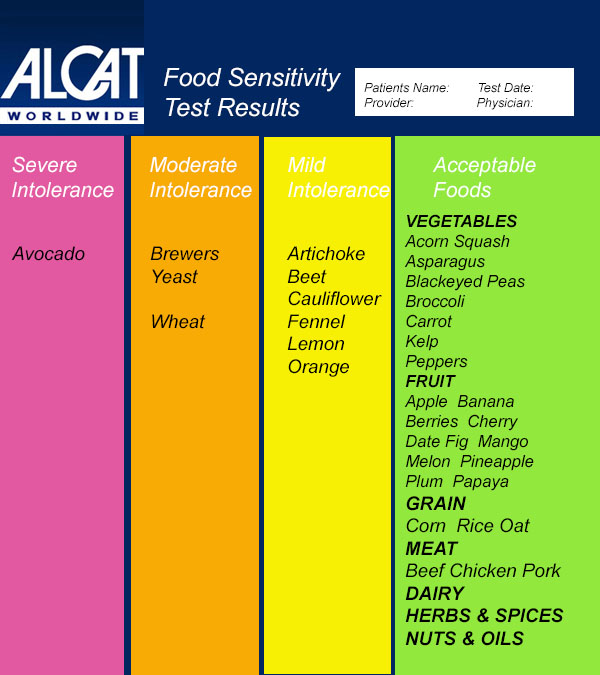
Here is a sample test result sheet:
Do Anti-Inflammatory Medications Hinder Muscle Growth?

There has been a heated debate over many years within the bodybuilding community about whether anti-inflammatory medications like ibuprofen (Advil, Motrin) and naproxen sodium hinder muscle growth. These medications inhibit the synthesis of prostaglandins, which also play a role in muscle synthesis. All it took was one clinical study published in the Journal of Clinical Endocrinology and Metabolism to put bodybuilders into a panic about reduced protein synthesis, and it didn’t matter that such results were found in laboratory rats. While there is some evidence to suggest that the anabolic signal is shut off when anti-inflammatories circulate in the bloodstream, nothing is absolutely conclusive, and what might be seen in the rat model might not necessarily be the case for humans.
While I will never advocate chronic use of painkillers and anti-inflammatory agents, I think they definitely serve a purpose when acute injury is present. When I find myself in the middle of disputes with bodybuilders who INSIST that a few days on such medications will completely destroy all their efforts in the gym, I simply shake my head in frustration. If you are injured and your lifting is adversely affected by the injury, whether it be a muscle strain, a ligament tear, or a minor disc herniation, you need to be aware that training through that injury, especially when it deranges your form and causes other body parts to compensate for the injury, will end up really messing you up over time. I honestly think that a minimal decrease in muscle mass over the course of a few days is preferable to the imbalance and asymmetry which usually occur when a bodybuilder foolishly pushes through heavy workouts despite an injury which has a domino effect on the body.
Common sense, and medical expertise, dictate that the inflammation must be removed from the area, most commonly through short term administration of anti-inflammatory agents, ice, and rest. Trust me, if you follow a regimen like this, you won’t lose all the muscle you have built over the years. Be sure to take these medications with food, and if you have any history of gastric ulcers. bleeding disorders, or kidney dysfunction, avoid taking them. Remember that I am talking about DAYS, not weeks or months. This is one time when eating constantly has its benefits, since bodybuilders and fitness people can pretty easily fit in their medication administration with one of their meals. I know it’s difficult to back off from training, but if you truly want to HEAL, you must give the injured area time to repair itself. If you insist on continuing to train through the injury, especially, without any medications or other interventions on board, you can count on the injury either lingering or worsening over time.


Bikini Pro Legs For Sure…Image From December 2014 Shoot With B-House
Get Out Of Your Own Way
 Have you ever considered the possibility that you are standing in your own way when it comes to achieving success in your life? Yes, you heard me right. You might not have even known that there was such a thing as a fear of success, and if not, you probably aren’t aware of how a fear of success can sabotage your efforts at getting ahead and put you on a short course to failure.
Though we may crave success deeply and feel driven to set specific goals to get us there, we may cripple ourselves by harboring a feeling that we don’t deserve to have success, or we may question our own abilities. Self-defeating thoughts like, “What if I fail?”, or “Maybe I don’t deserve to be successful” may fester in one’s mind. However, some people entertain an even more frightening thought which is “What if I succeed?” and may be so paralyzed by that fear that they talk themselves out of pursuing a goal which gives them purpose, joy and passion. Suddenly, the lure of success sours in the face of one’s own fears.
The fear of success is more powerful than the fear of failure because the former can trap individuals into established patterns which are comfortable and which prevent the movement and growth necessary to achieve success. The road to success, after all, is unpredictable and forces people out of their comfort zones. It demands tireless efforts which at times may be stalled by roadblocks, and those obstacles may stack up or appear at critical times when the temptation to give up is immense. As daunting as such challenges are in the pursuit of success, they must be overcome if the goal is to be attained.
A fear of success can manifest as procrastination, whereupon projects may be put on hold and excuses made about why there is no time to complete them. Feelings of guilt may take hold if you happen to attain a certain level of success which eludes your peers, friends or family. You may worry that success will in some ways change you and your environment. Though you may lament your current situation and crave big changes that would serve as markers of success, you might find the idea of all those changes incredibly distressing.
The road to success is also often a lonely one in which you may feel lost, perhaps because others may not understand your journey, or because you may be traveling in uncharted waters with no one to lead the way or guide you. There may be haters who try to derail you from your master plan, which is usually a good sign since it is an indication that you are doing something which is perceived as a threat to your competition. You might also think that once you become successful, somehow that success won’t be sustainable and that the proverbial coach will turn back into a pumpkin.
Success will usually put a spotlight on you and you will get attention. Some of you may believe that the attention is great, but when all eyes are on you, scrutinizing every move you make, you may find that it is incredibly distressing. Success comes with responsibilities which may frighten and intimidate you, and you may feel incredible pressure to prove your worth as a result of that boost in visibility. Contrast that with being ensconced in a comfortable pattern which provides a predictable environment, and you can see why so many people chicken out and drop their big goals. Once you achieve your goal and become a success, the goal you were chasing after becomes irrelevant because the beast has been vanquished. The taste of victory may be sweet, but life may lose its meaning and purpose in the aftermath of such an accomplishment.
There are a number of things you can do to maintain your enthusiasm and focus while carving a path to success:
Keep sight of your goals and purpose – Not only is it important to write down specific goals so that you have a blueprint of how you will achieve success, it is also essential to review those goals regularly to make sure that you stay on track and remember the purpose which drives your efforts. I recommend reviewing your master goals list at least once a week.
Gain knowledge – If you sense that your knowledge base is lagging, invest in educational pursuits which will add credibility and push you towards your goals faster. For example, talk to experts in the field you are trying to excel in, read books on pertinent subjects and take courses. Remember that your heroes can eventually become your rivals if you learn from them and pattern your behavior after them.
Become inspired by the people who believe in you – Chances are that you have people around you (spouse, family members, coworkers, fans) who completely believe in you, are inspired by you, and want to see you succeed. Though you may feel pressure to succeed and a sense of obligation as a result of this, you can focus on the enthusiasm which they have for you and allow it to wash over you and motivate you.
Keep a gratitude journal – It can be so easy to complain about one’s situation and play the victim when things aren’t going as planned, but such behavior only does harm when trying to stay motivated in achieving goals. Shift the focus instead onto all the wonderful things, people and other blessings you have in your life and allow them to fortify your resolve to move forward.
Supplements You Should Be Taking Based On Your Age
Originally published on mensphysique.com on Saturday, 06 September 2014
http://www.rxmuscle.com/blogs/the-lab-supplement-school/11503-supplements-you-should-be-taking-based-on-your-age.html
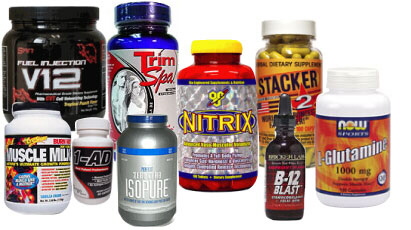
Most of you who are reading this article are probably already taking certain nutritional supplements which are popular among bodybuilding folk, such as conjugated linoleic acid, glutamine, fish oil, whey protein, and glutamine. However, there are basic nutritional demands in everyone which competitors might not be addressing in their daily regimens. In addition, those demands change as we age, as do the supplements which confer optimal health. In an effort to address those demands, I have compiled a list of supplements which you should consider adding to your regimen.
The following supplements serve as core nutrients which people of all ages require:
Multivitamin – I realize that there is some controversy regarding multivitamins, but I happen to be in the camp that is pro-multivitamin. Contest prep meal plans are notorious for being deficient in a multitude of nutrients, underscoring the need for a high quality multivitamin/multimineral supplement.
Vitamin C – This miracle nutrient is a potent antioxidant, assists in wound healing, aids in the absorption of iron from foods, and is critical for the development of collagen. Recommended daily dosages of this important vitamin are anywhere from 1,000 milligrams to 5,000 milligrams, split into 2 to 4 doses.
Zinc – One reason why this mineral is so important for men of all ages is because it is required for sperm production. Zinc is also a potent aromatase inhibitor, but only in doses of 100 milligrams or more per day. If you choose to take high doses of zinc, be sure to also take copper supplementation.
Alpha-Lipoic Acid (ALA) – This is a potent antioxidant which also aids with glycogen uptake. Basically what that means is that ALA will assist your body in metabolizing dietary sugars more efficiently. ALA is also great for brain and liver health. Recommended dosage is 100 milligrams to 300 milligrams daily.
Probiotics – These beneficial bacteria promote intestinal heath and a stronger immune system. The general population can obtain probiotics from milk, yogurt, tempeh and other products, but those who compete may opt for a supplement which will keep one’s diet contest-friendly. Look for formulations which have at least 20 billion live bacteria.
Vitamin D3 – This vitamin has gotten a lot of attention in recent years as a result of research which determined that the vast majority of the human population is deficient. This deficiency is largely the result of wide use of sunblock (thus turning off the body’s production of vitamin D3), and a drop in milk consumption. Why is Vitamin D3 so important? Vitamin D3 is associated with bone health, but may also play a role in the prevention of diabetes, cancer and multiple sclerosis. If you are like a vampire and remain indoors all day, take at least 1,000 international units (IU) daily. I personally take 5,000 IU daily to get the most of its ability to absorb calcium. I also recommend getting vitamin D3 from dietary sources like whole eggs or fatty fish like salmon.
Calcium – Calcium supplementation is essential for individuals who don’t consume lots of dairy or calcium fortified foods. Ironically, calcium supplements are absorbed more readily in the presence of lactose and protein. However, if dairy products are forbidden due to lactose intolerance or contest prep diets, consuming protein when calcium is taken will enhance absorption. Make sure to take vitamin D3 with calcium supplements to further enhance absorption. Recommended dosage is 1,000 milligrams per day, split into two doses.
Add these to your regimen if you are in your 30’s:
Glucosamine – This supplement is especially important for those who lift weights since it can ameliorate pain from joint inflammation. A good daily dosage is 1,500 milligrams. I tend to recommend formulations which contain MSM and NO chondroitin, because I have had too many patients complain of gastrointestinal upset with the chondroitin formulas.
Vitamin B12 – Vitamin B12 is found in animal protein, but the body cannot access it well, and this impairment becomes worse as we age. Because of this, taking a B12 supplement should become a part of your daily regimen if you are over 30.
DHEA – This is a controversial supplement because it has a considerable side effect profile, but I am including it here because so many people who compete can benefit from it as they age. DHEA is a sex hormone precursor which is secreted mainly by the adrenal glands and which is usually abundant in people who are in their 20’s. However, production begins to decline in one’s 30’s, and continues to drop significantly over the decades. It is a key player in maintenance and building of muscle, fat loss, and slowing the aging process. Side effects include heart palpitations, elevated blood pressure, breast enlargement, testicular atrophy, and interactions which certain medications. For this reason, you should consult with a physician to determine if your DHEA levels are low and if you may benefit from DHEA supplementation.
Individuals over 40 should add the following:
Leucine – This is probably the most important supplement you can add to your regimen as you age, especially if you are a competitor, because it helps to offset age-related muscle loss. One of the branched-chain amino acids, leucine is unique in this regard. Add 2 grams of leucine to a couple of your protein-containing meals. Leucine powder is VERY bitter, so make sure to mix it with a tasty protein powder, or take it in capsule form with your whole food meals.
Coenzyme Q10 – This antioxidant aids in ATP production, especially in the heart. It’s a good idea to take at least 30 milligrams per day, but I personally take 100 milligrams daily for the cardiac benefits.
Saw Palmetto – If your bathroom visits in the middle of the night are frequent and are not confined to your water-loading evenings, then you are probably experiencing prostatic enlargement. If this is the case, you might want to consider taking saw palmetto at a recommended dosage of 160 milligrams per day.
Over 50? Stack this supplement onto the above regimens:
Phosphatidylserine – This nutrient is important for optimal brain health. Take 200 milligrams per day.
 dr. stacey naito's blog