
I had to step on the national stage fourteen times before I won my IFBB Pro Card, so I know first hand how frustrating it can be to ALMOST get that Pro Card, and how irresistible the Pro Card hunt can be. This post is for all of you who are chasing down that Pro Card, and is meant to remind you of what you represent and what you have accomplished.
You are AMAZING. You have already won in the eyes of your co-workers, spouse, children, friends, fans, etc. There is no need to feel validated by the contest judges. Just because you hit the stage and you aren’t selected for the glittering top prize does NOT mean you have failed. You are WOW. You are among the best bodybuilders in the world, and are just stuck in that bottleneck with other elite athletes who are vying for the top rung. So don’t take your placing personally. It really ISN’T about the Pro Card.
You already ARE a champion!
Some guy wrote in on my Facebook Fan Page on June 14 at 1:13am with the following question:
“Why is their Xanthan Gum and Sucralose in Whey 100 Ultra Clean when that will make it harmfull to the body how can you loose weight and build lean muscle with those types of harmfull ingredients put in whey?”
I hadn’t seen the question until now, so I wanted to make sure I posted a response. Here it is:
Xanthan gum is a plant based thickening agent which may cause some digestive issues in those who already suffer from digestive maladies, in which case they probably wouldn’t be ingesting whey in the first place. As for the sucralose, there is a huge controversy regarding potential harm from consuming it, yet nothing conclusive. I am personally not a huge fan of sucralose, but truth be told, it is in many food items. In addition, it can be very difficult to make a palatable whey protein formula without sucralose, since stevia can be very bitter. Please be aware that I am not in any way involved with the manufacture of Royal Sport Ltd. products but I definitely consider them to be some of the best in the industry. Bear in mind that the vast majority of sports supplement products are full of additives, so in this case I think we are talking about choosing products which are on the less offensive end of the spectrum when it comes to flavorings and additives.

Menopause can really break a woman’s spirit, for countless reasons. Her ability to reproduce comes to a screeching halt, her nether regions may start to resemble an arid climate, hot flashes may make her feel like she is spontaneously combusting, and she may have mood swings that would make the Tazmanian Devil look like a calm little bugger in comparison. But it’s the weight gain which often upsets menopausal women the most. Menopausal women will notice that if they drop their caloric intake, weight won’t drop at all, even though it may have easily melted off in the past.
That’s because the plummeting levels of progesterone and estrogen also adversely affect a woman’s ability to mobilize fat. Cortisol levels can go unchecked as a result of the low levels of progesterone and estrogen, and any extra calories will end up getting stored as fat. If a menopausal woman is at a caloric deficit, the switch flips in favor of burning muscle instead of turning to the storage fat she so desperately wants to incinerate. This is especially true for the adipose (fat) tissue around the midsection, because cortisol is notorious for padding that area with extra fat, resulting in an ever expanding belly. Another unfortunate consequence of cortisol is that levels will rise dramatically with prolonged intense exercise. The key is to have more abbreviated, yet still intense, exercise sessions so that the cortisol release is also accompanied by a boost in HGH and testosterone, thus conferring a protective effect on muscle.
Basically, the WORST thing you can do if you are in the midst of menopausal hell and struggling with weight gain is to engage in lengthy gym sessions. That might work for a 20 year old, but it can be devastating for a 50 year old. If you are a gym rat like me, you can still train up to six days per week (that’s how frequently I train), but keep your sessions intense but relatively short, between 30 to 60 minutes. If you train beyond that time window, the excess cortisol release will only trigger your body to cling to fat.
Menopausal women also experience an increase in carbohydrate sensitivity, which means that carbohydrate-rich meals which they used to be able to consume in their younger years without much consequence will suddenly wreak havoc on that waistline. The extra carbs settle in for a long and uninvited stay in the midsection and end up making women miserable. Because of this, dietary shifts need to be implemented in which the intake of starches and grains is dramatically reduced, while the consumption of more lean protein and green vegetables is increased. I also strongly recommend supplementing the diet with digestive enzymes and probiotics to optimize gut health and digestion of different foods.
Just me being silly during a shoot with David Harry Stewart earlier this year!


Though I don’t really mention this to people, I deal with almost constant body pain. The bizarre thing is that most of my chronic pain issues are located on the right side of my body. I wake up almost every night from intense pain in my right shoulder whenever I roll onto my right side. The pain in my shoulder is the result of a rotator cuff tear which I sustained in April of 2013 and an acromio-clavicular joint dislocation which occurred in December of 2014.
Then there is my right hip which goes into spasm almost daily, and sends a wicked pain along my tensor fascia lata, iliotibial band and peroneus longus (aka lateral thigh and leg) which at times literally takes my breath away. Fun stuff. I power through the pain, especially when a heavy leg day looms ahead, but this chronic pain has me near tears on some days. I am beginning to wonder if I have tensor fascia lata (TFL) syndrome.
My right tensor fascia lata muscle is always tight and inflamed, as is my right gluteus maximus. When my hip spasms, both of these muscles seize up as well. As a result of this ongoing issue, I often dig my knuckles right into my hip to address trigger points and to get some relief, and I also must get deep tissue massages on a regular basis to keep the spasms in check somewhat. I am actually known at the places where I get massages for being the fitness lady who needs at least 90 minute massages to address my musculoskeletal issues!
I recently stumbled upon a great post, written by by Stephen O’Dwyer, CNMT, which I am pasting here:
How the Tensor Fascia Lata (TFL) Causes Hip Pain
This muscle causes pain in two primary ways:
1) Once the TFL has been tight and ischemic for some period of time (it’s different for each individual), it can develop myofascial trigger points.
Trigger points can then refer pain to other parts of the hip, the groin, the buttocks and even down the leg.
2) When the TFL becomes chronically contracted it can exert a mechanical strain on other muscles by distorting joint movement.
For example the gluteals or the piriformis muscle often suffer from an unnatural “pull” from an excessively tight TFL.
Pain, then, might be felt in one or more of the following areas…
• Deep in the hip joint
• Into the groin
• Wrapping around the outer hip
• Deep in the gluteal muscles
• The sacroiliac joint
• Traveling down the leg
What Causes Tensor Fascia Lata (TFL) Dysfunction?
I have been considering for a long time how the TFL becomes excessively tight and locked up (aka dysfunctional) and have concluded that there are two chief reasons…
1) Weakness in the rectus femoris muscle.
The rectus femoris, the top quadriceps muscle along the front of your thigh, is your secondary hip flexor (after the psoas and iliacus which are your primary hip flexors).
And the rectus femoris muscle so often becomes weak as a result of the second reason for TFL dysfunction…
2) Excessive tightness and shortening of the psoas and iliacus.
This is a common occurrence in many of us who sit for long hours at a desk and/or commuting in our cars. The primary hip flexors, the psoas and iliacus, are put into a shortened position when we’re sitting. This can cause them to adapt to the shortened position.
Chronic shortening of the primary hip flexors, the psoas and iliacus, can causes the secondary hip flexor, the rectus femoris, to atrophy.
I believe this occurs, in part, because short hip flexors will abbreviate your stride thus reducing a full and natural leg swing.
In runners who are heel strikers this problem can be even more exaggerated. The quadriceps, and especially the rectus femoris, are severely underused.
In the reaching stride characteristic of heel strikers, the leg extends and straightens at the knee as the foot hits the ground. This leg movement disables the quadriceps muscles.
An aside for runners: underuse of the quadriceps can be rectified using the “barefoot running technique.” This technique does not require one to actually run in bare feet but rather to…
1) Adopt the upright, “running on hot coals” running method
2) To use a running shoe without the beefed up heels of conventional running shoes which don’t allow your foot to go through its full range of motion.
I recommend the Merrell’s Pace Glove for Women or Merrell’s Trail Glove for Men (the shoe I run in).
How to Treat Tensor Fascia Lata (TFL) Dysfunction
There are three strategies that alleviate excessive tightness in the tensor fascia lata:
1) Direct manual therapy treatment of the tensor fascia lata
I find that putting a client in a side-lying position with a pillow between their knees (and one to support their head and neck) is optimal.
Then direct manual pressure applied at different angles will help to locate the greatest “liveliness” in the muscle (I like to use this word instead of “pain”).
Gentle but detailed work will produce the best, most lasting results.
2) Maintaining flexibility in the entire hip
Stretching of the hip flexors and the entire hip and leg.
See Hip Stretches for excellent video support.
3) Strengthening the quadriceps
I’m not a fan of seated leg extensions on a weight machine to accomplish this.
Much more effective are single leg squats. If squats are not possible due to pain, then sitting against a wall is an excellent strategy.
Your knees should be at a 90 degree or right angle. Otherwise it’s not stable for your knees.
I love this article because it discusses a very common scenario which I see in my patients and which I am also personally experiencing. I definitely have a weak rectus femoris, partially due to the overactivity and spasm of the psoas and iliacus. Over the years I have had osteopathic manipulation to treat the psoas issue, but it keeps flaring back up. The weird thing is that I don’t necessarily sit for extended periods of time, yet my hip flexors are always tight. So if you have hip pain which never seems to resolve, you should check out the site where I found this article:
http://www.lower-back-pain-answers.com/tensor-fascia-lata.html#axzz3eaeKtVlT
I also highly recommend the stretches demonstrated on this link: http://www.lower-back-pain-answers.com/hip-stretches.html#axzz3eaeKtVlT
If you truly suffer from chronic, daily hip pain, then you can carve out a few minutes each day to perform these exercises. I have been so miserable from the pain in my hip that I am going to start doing these stretches every day. I will post a follow-up after doing these stretches consistently to provide personal feedback on the efficacy of these stretches, but the theory behind these stretches is so solid that I am sure they will make a big positive difference in my hip issues.


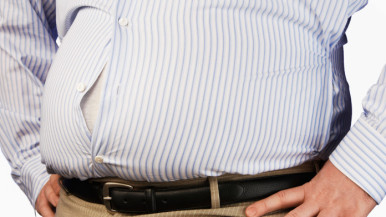
One of the most common questions I get from people is how to lose belly fat and get defined abs. Since a tight midsection is one of the most enviable and desirable body attributes, I am never surprised by these inquiries. I have noticed that there is a relatively common misconception that defined abs come solely from exercise, which is definitely not the case. While a certain amount of development in the abdominal muscles must be present for the washboard appearance which many people covet, an individual’s food choices often interfere with the quest for six-pack abs.
If you really want to see abdominal definition, you need to eliminate the following foods from your diet:
SUGAR
Processed foods (including crackers, luncheon meats, cheese, chips, breads)
Foods high in saturated fat (red meat, fast foods)
Salad dressing
Alcohol
Though it may be difficult at first to eliminate the foods listed, you will notice over time that your palate will adjust and that food cravings will subside. That’s because processed foods and sugar set up a vicious cycle in which you crave more bad foods when you consume them. Cut them out of your meal plan, and your cravings will subside. Another benefit of avoiding these foods is that you will avoid the rapid spikes in blood sugar and insulin which they trigger. Why is this important? Because sharp spikes in insulin release promote increased fat deposition in the midsection.
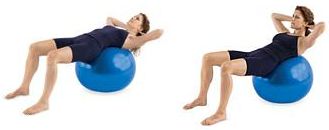
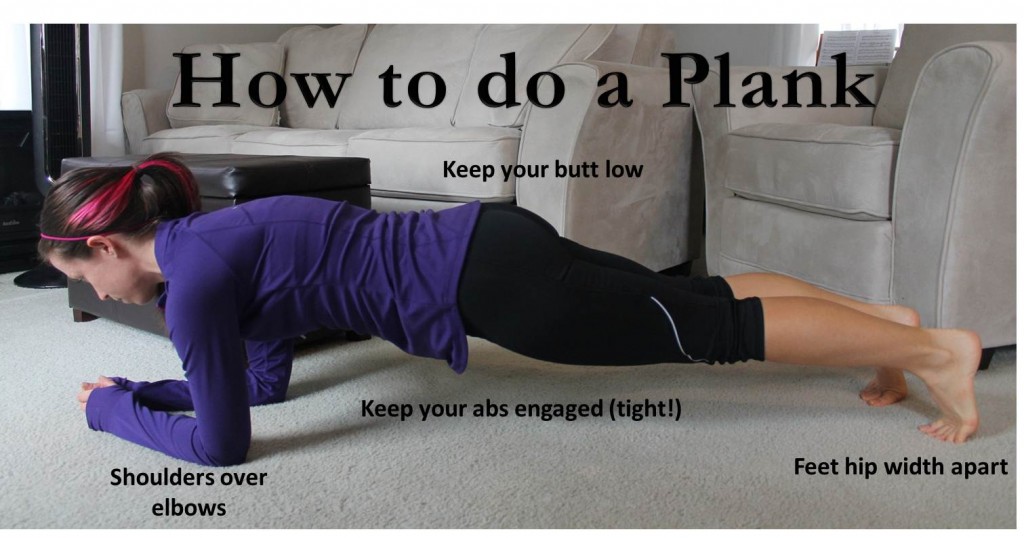
If your abdominal muscles haven’t seen a sit-up in years, you should also incorporate abdominal exercises into your regimen. Here are my three favorite abdominal exercises which work for everyone, from beginners to advanced athletes:
bicycle crunches

ball crunches
planks
If you are consistent with making healthy food choices and getting regular exercise, chances are good that you will see a toned tummy if you are already at a normal weight. If you are overweight, the healthier food choices will help you to slim down and get rid of belly fat, putting you on course for a tighter midsection.

Are you looking for a trainer to help you get into the best shape of your life? Please check out the NEW Competition Strong Trainer Directory, which has trainers in various locations across the U.S., Bermuda and Barbados. I am honored to be listed as one of the trainers in this directory, and am excited to watch this directory grow as more trainers and coaches are added.
Please click on this link to see my bio on this great site, and be sure to check out the other fantastic trainers listed too!

