Exercise, Self-Care, and Finding the Right Balance to Boost Your Overall Wellness

Photo credit: Pixabay.com

Please check out this excellent article by Shiela Olson which explores the delicate balance between pushing yourself to the next level and nurturing yourself at the same time.

– By Sheila Olson of fitsheila.com

You’ve decided you’re ready to stop perpetuating a cycle of sleeping in on weekends, spending weeknights slumped over in your couch, and eating out at greasy burger joints every other meal. You’re ready to live a healthier and happier lifestyle, and you’ve known the answer all along — diet and exercise. Diets aren’t very effective when practiced every other week, and fitness requires you to keep up and even build up the intensity over time.

So, what’s the secret?

The Importance of Prolonging Good Fitness

When someone decides they are ready to start running every day, or some other form of exercise, they typically feel this fire within themselves to keep it up. You go in for your first day, and you feel exhausted, but you also still feel pretty good knowing that you’ve taken your first step at getting healthy. After a few more gym sessions, you notice that you aren’t just tired but also sore, and that goodwill for better living starts to feel a little less compelling.

It’s natural to give it your all the first few times before your mind and body start to naturally resist the transformation that is occurring. It’s the kind of transformation that people from all walks of life seek to make their lives better. It’s why so many recovering addicts start running and bodybuilding. Exercise not only changes how we look on the outside but how we feel on the inside. It reduces stress and boosts positive self-image and confidence.

The process of transformation can be difficult and uncomfortable at times, especially when you’re just starting out, which is why it is important to not overdo it. If you work too hard or put too much emphasis on your physical fitness, you run the risk of burning out and not making the kind of progress you are looking for.

The Meaning Behind Self-Care

Right now, the buzzword of the day seems to be self-care. People are starting to collectively realize that we don’t need to punish ourselves to live our best lives. Exercise shouldn’t be something you dread to do but something you look forward to. To remedy this natural resistance to living healthier and a fitness-oriented lifestyle, people are turning to self-care as a way to supplement diet and exercise and avoid burning out during the process.

One of the ways you can practice self-care is by leaving plenty of rest days in between workouts to give your body time to recover. Recovery is essential to practicing good physical fitness and ensuring you have enough energy to keep going back to grind week after week. Self-care also addresses showing yourself love in alternative ways. Exercise is important for our physical health, but we also need to consider our mental and emotional health as well. Beyond exercise, there are a number of activities you can do, such as meditation, reading a book, or pursuing a hobby, that can all fill a specific need you have in your life.

The Need for Balance in Your Life

When you approach your physical fitness as just one piece of the puzzle, then you can start looking at other ways to enhance your life, while not overdoing your diet and exercise. You won’t just be working hard, you’ll be working smart. You’ll know that there are many activities you can work on to improve your overall well-being. By balancing out these different self-care activities, you will always make yourself better while also keeping a very diverse routine. Some days, you will be focused on your physical fitness, but when you need to rest and recover, you can then switch gears and focus on your mental and emotional health as well.

Once you decide it’s time to make a change, you’ve already started your journey to improve your wellness. You may have attempted to change your life a few times now, but all of those past experiences were just the lead up to this one moment where you finally committed to achieving personal wellness and living your best life.

Photo Credit: Pixabay.com

Understanding Delayed Onset Muscle Soreness

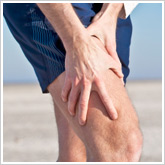
DOMS Have you ever adopted a new workout regimen, then ended up kicking your ass so hard that you became discouraged from the pain you experienced after your workouts? If so, you were probably taken by surprise when delayed onset muscle soreness (DOMS) set in. What often occurs is that people adopting new exercise regimens may become quickly discouraged, usually because they don’t understand why they are so sore, and will back off from exercising without ever getting a chance to maintain consistency. However, DOMS may be a beneficial signal that your workouts are challenging enough to make a difference.

DOMS typically develops between 24 to 72 hours after physical activity, and is considered a relatively normal and common result of activity that challenges muscle tissue. One popular but flawed theory is that the microscopic tears which occur in the muscle fibers after exercise, coupled with the release of lactic acid and protons, are responsible for the muscle soreness which characterizes DOMS. Mizumura and Taguchi determined in an important study that neurotrophic factors are produced by muscle fibers and satellite cells, and are critical for the development of DOMS symptoms. They also determined that damage to muscle fibers was not a necessary component of DOMS, further suggesting that a neurological cascade is what results in the post-exercise soreness.

For the most part, the aches and pains which characterize DOMS are assumed to be a sign that your muscles are adapting to the activity which caused them to develop in the first place. Rather than shying away from physical activity in the long term, the general recommendation is to take it easy for a few days, while still exercising, until the pain subsides. However, those of us who are gym rats and fitness freaks will tend to adopt the “Suck it up, buttercup!” mentality, powering through workouts as best we can while our bodies scream out in general agony.

So what can you do if you have DOMS and you want to lessen the severity and duration of the soreness? The truth is, not much. However, here are some suggestions which you might want to try. Keep in mind that none of these suggestions is proven to ameliorate DOMS, but none will worsen the symptoms either.

• consumption of plenty of water both during and after exercise
• consumption of a protein-rich meal after exercise
• glutamine
• cherry juice
• vitamin D supplementation
• compression garments
• Epsom salts
• application of heat

One thing to bear in mind is that if you are consistently working out at the same intensity, your muscles will become familiar with that intensity, essentially adapting to it. This phenomenon is called the repeated bout effect (RBE), and basically means that you will most likely notice a drop-off in DOMS episodes. If you suddenly increase the intensity or duration of your workouts, the chance of developing DOMS will return.

Obviously if you believe you have a specific injury, and not DOMS, then get it evaluated and rest up.

REFERENCES
Mizumura K, Taguchi T. Delayed onset muscle soreness: Involvement of neurotrophic factors. J Physiol Sci. 2016 Jan;66(1):43-52.

How I Stay In Shape These Days


Image shot by Tim Sevard in October of this year.

Since many people have been asking me about how I have been keeping in shape these days, I decided to devote a blog post to the subject. Though I am retired from competing, and am no longer bodybuilding stage-ready, I model frequently, and I also hold myself to very high standards when it comes to body conditioning. The most important factor in staying lean year round is FOOD, so I make sure to eat clean about 95% of the time. I consume about 100 to 120 grams of protein daily, all from whole foods rather than protein powders, and I drink plenty of water throughout the day. I limit my consumption of sugar and avoid processed foods.

Supplements are also an important part of my daily life. Most of the supplements I take have been in my daily regimen for many years, and I rarely miss a day’s dose. They are what I rely on to keep my body healthy at the cellular level. My goal is to maintain my health without ingesting prescription medications. In fact, the only prescription substance in my regimen is bioidentical progesterone cream.

I continue to challenge my body with frequent exercise, and still rely mostly on weight training for the bulk of my exercise. However, I incorporated aerial classes into my regular routine a couple of years ago for an extra challenge. At one point, I had been taking aerial classes 3 to 4 days per week, but my body was screaming out in agony. After a visit with my orthopedist, we discovered that I had arthritis in both elbows and my neck, and numerous issues in my shoulders, so I decided to back off from the intense aerial schedule I was following. These days, I only take a lyra class once every couple of weeks.

I have also been attending kundalini yoga classes on average of one day per week, and I love the unique physical, mental, and spiritual challenges which they present. Though kundalini yoga is a highly meditative form of yoga, the movements (called kriyas) are INTENSE, and I must often take breaks during these movements. I highly recommend this form of yoga for anyone who wants an intensely spiritual experience.

As for weight training, I train an average of six days per week when I am in town. I have adjusted my weight training to support aerial arts movements like straddle mounts, single knee hangs, pullovers and splits, and work my posterior chain (back, glutes, hams) more vigorously than my anterior chain. I usually follow a split consisting of three leg days and three upper body days which are further split (eg, back/arms, delts, chest/abs). I have also been changing the exercises, rep ranges, and lifting styles on a weekly basis to keep myself challenged. It’s definitely worked, because I am getting delayed onset muscle soreness from almost every workout.

Hot Logic Mini Review…These Make GREAT Holiday Gifts!

Here’s another review of the Hot Logic Mini, which is an ingenious product! It comes in six great colors, and can be plugged into any electrical source. You can even use this while traveling in your car!

Go to http://www.hotlogicmini.com to order, and make sure to enter my discount code STACEYNAITO for 20% off your order!

Switch Up Your Gym Routine!

Are you bored with going to the gym and doing the same old thing? If so, it’s time to switch things up! Simply by changing the repetition range, lifting technique or body part split, you can infuse your workouts with something new and exciting. If you really want to ramp up your routine, add plyometrics or calisthenics, or perform supersets or giant sets.

If you don’t exactly know how to make the changes I am suggesting, I have broken down different exercise elements so that you can easily make changes to your workout routine which will keep you interested.

CHANGE REPETITION RANGE – If you have a habit of doing four sets of 15 repetitions regardless of which exercise you are doing, how about switching it up? Perhaps you can do a warmup set at the same weight which you usually eke out 15 reps, but push yourself to do 20 really good reps. Then increase the weight and do 3 sets of 8-10 reps, and perform them with intensity.

STACK REP RANGES IN PYRAMIDS – Another thing you can try is pyramids, which basically consist of gradually increasing or decreasing the rep range, while decreasing or increasing the weight lifted accordingly. You can perform ascending, descending, or ascending-descending pyramids.

Ascending Pyramids = You will gradually increase the weight used, and decrease the number of repetitions accordingly, with each set. For example, your first set may be 20 repetitions, the second 15 reps, the third 10 reps, and the fourth set 7 reps. Ascending pyramids are effective for increasing strength since you gradually increase the load on the muscle worked.

Descending Pyramids = You perform your first set at a heavy weight, eking out about 6 to 8 solid reps. Subsequent sets will consist of gradually decreasing the weight used, and increasing the number of repetitions accordingly. For example, the second set may consist of 10 reps, the third 15 reps, and the fourth set 20 reps or to complete failure. Descending pyramids are effective for increasing muscle girth since the gradual drop in weight enables you to perform sets to failure.

Ascending-Descending Pyramids = With this pyramid approach, you gradually increase the weight used, and decrease the number of repetitions accordingly, with the first few sets, then DECREASE the weight used and increase the number of reps to finish out the routine. Because of this, I recommend performing odd numbers of sets. For example, your first set may be 20 repetitions, the second 15 reps, the third 8 reps, the fourth set 15 reps, and a fifth and final set can consist of 20-25 reps.

CHANGE THE NUMBER OF SETS PERFORMED – If you are in a rut because you always perform four sets of every exercise, challenge yourself and do 5 or 6 sets. A great way to shake out the cobwebs in your routine is to go for volume, perhaps performing 8 to 10 sets of each exercise to really work your muscles to exhaustion.

CHANGE YOUR LIFTING TECHNIQUE – Many people tend to perform exercises rather rapidly every time they train, so they don’t really focus on what they are doing. There are a couple of ways in which you can challenge yourself and break through plateaus if you have this tendency. One method is to perform negatives, which basically means that after you lift the weight in the concentric phase (in a bicep curl, this would be the phase in which you curl the weight toward your shoulder), you slowly return the dumbbell to the starting position for a count of 5 or 6 seconds. Another great method is rest-pause, in which you perform a repetition at a normal rate, pause briefly, then go to your next repetition forcefully. When using rest-pause technique, slightly increase the weight used to really challenge yourself.

CHANGE YOUR BODY PART SPLIT – If you always train legs on Tuesdays and chest on Fridays, perhaps you might want to switch things up. If you aren’t seeing enough desirable changes in your lower half, add another leg day and focus on the areas which you would like to improve. If you always train your entire body every time you hit the gym, start splitting up body parts so that you devote more time to getting maximum recruitment in the muscles you train.

ADD PLYOMETRICS OR CALISTHENICS – Adding ballistic movements like plyometrics or calisthenics can serve as the catalyst for rapid body transformation. Just be careful if you have hip, knee, or ankle issues. Try adding moves like jumping jacks, jump squats, mountain climbers, burpees, and X-jumps.

PERFORM SUPERSETS OR GIANT SETS – Try stacking two or more exercises together without resting in between exercises to increase muscle fiber recruitment. You can either stack weighted exercises, or perform a combination of weighted moves and plyometrics.
Examples are:
Leg press machine/jump squats
Incline bench chest presses/pushups/dumbbell pullovers

Working For Free – REPOST

bloggers-working-free

Have you ever completed a work project which offered no compensation except for a pat on the back? If so, did it bother you? It should have. By agreeing to slave away (pun definitely intended here) at an assignment with full awareness that you would receive absolutely no monetary compensation, you just devalued yourself.

I am not talking about volunteer work, or favors which you offer to do for a family member or friend. I am also not talking about getting your feet wet by taking on a task in an unfamiliar area so that you can gain valuable experience. I am instead referring to situations in which you are asked to provide your knowledge, expertise and service in an area in which you excel, and are coaxed into it with the promise that it’s a one-time favor, or that there will be compensation sometime in the future, only to discover that the promise was in fact a lie.

As a result of my abiding loyalty to companies, friends, family, and pets, I am the type of person who never leaves. You can count on me, and I honor my word. One of my faults is that I assume that other people are the same way, and even when I can plainly see that I am being taken advantage of, I often still hang on. This type of behavior spilled over into the world of medicine, wellness and fitness for a while, but a couple of years ago, I cut off all of the companies and individuals who got too much of a good thing for too long, essentially my time, services and knowledge for free.

In one situation, one company asked me to provide professional services on a monthly basis, stating that it would be unpaid to start out with, but that compensation would be given after a few months. Next thing I knew, I had provided those services free of charge for eighteen months! When I fired a warning shot, essentially stating that I no longer wanted to work for free, the company responded by inferring that the “exposure” I was receiving from them was payment enough. The funny thing is, I didn’t need the exposure, nor was this company in a position to help me. I merely agreed to the arrangement as a temporary favor to them, sort of a good faith move. All it ended up doing was getting me stuck in a monthly obligation which I got zero benefit from doing. Once I realized this, I severed ties immediately. Though I used very professional and polite language, it felt so good to tell them that I was done being an indentured servant. No longer did I have to put their assignments in my calendar, or resent the fact that each one of those assignments chewed up a good hour or two of my time.

More recently, I agreed to complete an assignment for free simply because I found it intriguing, and I had a small pocket of time in which to complete the assignment. I also felt that it was a good way to introduce my skill set to the company. However, I made it very clear that the assignment was isolated, and that if the company wanted my services in the future, I would only consider paid assignments.

Time is money, and because I hold a medical degree and a bachelor’s degree, am a board certified physician, and have worked in the fitness industry for three decades, I have value which deserves proper compensation. Would you like to work for free, especially if it is in an area in which you have expertise? Let’s face it, we all need to find a way to bring money in. We have skills, we have knowledge, and we deserve to get a financial return for services rendered in our chosen work environment.

If you are the type of person who has a tendency to take on more than your schedule can handle, perhaps it’s time to evaluate your obligations and see if any of them are a threat to your self-worth. If they are unpaid, uncontracted, require your skills in an area in which you are considered an expert, and are contributing to a decline in your quality of life because they are a time burden, then you should consider dropping those obligations.