Banish PMS Article For Oxygen Magazine Online

banish-pms

Please check out original post here: http://www.oxygenmag.com/article/banish-pms-10130

Here are 9 ways to deal with moodiness, soreness, bloating and cravings when it’s that time of the month.

Go with the flow? Easier said than done. Your monthly visitor is not only inconvenient, but it’s also frequently preceded by annoying symptoms like irritability, fatigue, pelvic cramps, acne and bloating to name a few. While not every woman gets PMS, most women get at least one symptom a month.

Fortunately, there are numerous measures you can take to alleviate the symptoms of PMS. Exercising regularly, breathing and relaxation techniques, avoiding alcohol, sugar, salt and caffeine, and consuming small, frequent meals to stabilize blood sugar are all effective methods for easing discomfort, but there are numerous over-the-counter supplements that have demonstrated effectiveness in managing the most common symptoms.

Magnesium
Magnesium levels fluctuate during a woman’s cycle. The higher the estrogen or progesterone, the lower the magnesium, which in turn brings on PMS symptoms. That’s why supplementing with magnesium is a good idea. It has a calming effect, and it also reduces the swelling, breast tenderness and. A well-tolerated dosage is 400 milligrams before bedtime. Women who have more severe mood swings from PMS might prefer a more bioavailable form of magnesium called magnesium glycinate. This form also decreases the hot flashes, which some menopausal women experience.

Dose: Recommended dosage is 250 milligrams one to three times daily, and should be taken with food.

Calcium
Studies have found that women who take calcium supplements, experience less severe PMS symptoms than those who don’t. Calcium supplementation can reduce fatigue, depression, mood swings, tension and anxiety, bloating and breast tenderness, and cramping and generalized aches and pains.

Dose: Take 400 milligrams three times daily.

Vitamin B6
Women who experience mood swings right before their periods tend to benefit greatly from taking vitamin B6. It’s also effective for symptoms of menopause, morning sickness, depression, acne and bladder inflammation.

Dose: Take between 50 to 600 milligrams per day in two to three divided doses.

Vitamin E
Vitamin E reduces the production of prostaglandins, which are responsible for cramps and breast tenderness.

Dose: Take 400 international units daily.

Chromium Picolinate
Chromium picolinate affects insulin, glucose and serotonin in ways that can decrease sugar and balance mood and appetite.

Dose: A dose of 200 micrograms three times daily is optimal.

Alpha Lipoic Acid
Alpha lipoic acid, or ALA for short, is effective in regulating blood glucose, optimizing carbohydrate consumption and reducing sugar cravings.

Dose: Effective dose ranges are between 100 to 200 milligrams, taken two to three times daily.

Vanadyl Sulfate
This supplement has an insulin-like effect on the body and has been shown to regulate blood sugar levels, which makes it adept at curbing those wicked sugar cravings.

Dose: Take 10 milligrams three times daily.

B-Complex
B-complex formulations consist of the following: B complex capsule contains the following vitamins: folic acid, thiamine (B1), riboflavin (B2), niacin (B3), panthothenic acid (B5), pyridoxine (B6), cyanocobalamin (B12) and biotin. This complex supports memory, improves mood, decreases anxiety and combats the effects of stress. It also boosts metabolism, thus increasing energy. I have encountered remarkable responses to B-complex in people who have suffered from depression and who did not respond to prescription antidepressants.

Dose: I recommend 100 mg per day.

Gamma-Linoleic Acid
Gamma-Linoleic Acid is an omega-6 fatty acid, which are considered essential fatty acids, meaning, they are necessary for human health, but the body can’t make them. They play an important role in brain function as well as normal growth and development. They help stimulate skin and hair growth, maintain bone health, regulate metabolism and maintain the reproductive system. GLA helps fight inflammation which is why it’s effective in treating the symptoms of PMS, such as menstrual cramps and breast tenderness, especially when taken in tandem with magnesium and vitamin B6.

Dose: Take 500 to 1,000 milligrams per day.

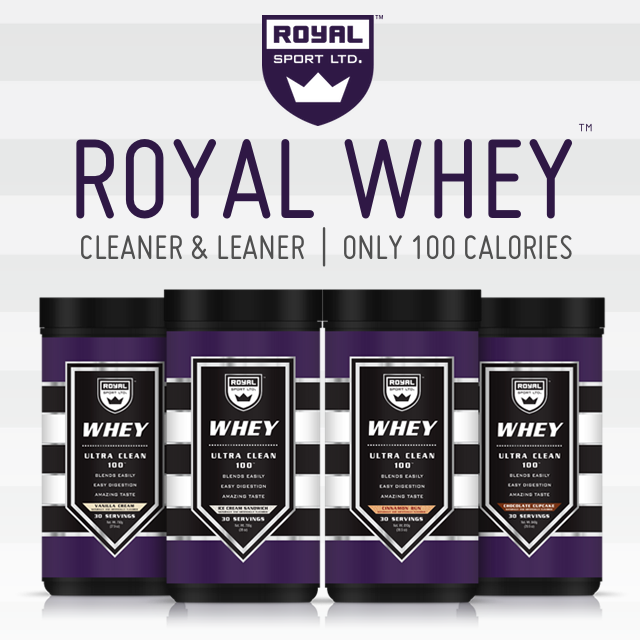
My Go-To Protein: Royal Sport Ultra Clean 100 Whey

royal_whey

I am not kidding when I say that Royal Sport Ltd.’s Ultra Clean 100 Whey is my staple whey protein source! It mixes quickly and thoroughly, is gluten free, and has no preservatives, no added sugars, no hydrogenated oils, and no artificial colors, dyes, or fillers. One scoop delivers 20 grams of protein in 100 calories. Oh, and then there are the flavors: Ice Cream Sandwich is my absolute favorite and has a decadent flavor which has me tricked every time into thinking that I am having a dessert! I also love the other flavors, Chocolate Cupcake, Cinnamon Bun and Vanilla Cream, and rotate through all four of the flavors during the week. If you are looking for an ultra clean whey protein which won’t cause digestive upset, definitely check out Ultra Clean 100 Whey!

https://royalsportltd.com/ultra-clean-100

Could You Be Undernourished?

Bodybuilder-FoodOriginally written for and published by sportsnutritionsupplementguide.com

If you are a fitness fanatic or competitor, you may assume that you are adequately nourished because you practice clean eating. However, that might not necessarily be the case. Shockingly, many people who are in the fitness world suffer from under-nutrition as a result of consuming limited types and amounts of foods in an effort to reach a super lean state. Think about it: if you are limiting caloric intake during a contest prep phase, have eliminated foods which become demonized during prep such as fruits and peanut butter, and aren’t supplementing your body with the nutrients it needs, then you are probably undernourished. Such nutrient deficits can have a serious negative impact on your health if practiced for an extended period of time.

Under-nutrition is a nutrient or energy deficiency, while malnutrition can represent either a deficiency or an excess of nutrients. Some individuals (especially women) in the fitness world continually follow meal plans which are unbalanced and extremely low in calories and are thus chronically undernourished. Such a state of deficit can be amplified if certain medical conditions such as leaky gut are present, because whatever nutrients are supplied to the body might not be absorbed properly.

Mild cases of under-nutrition are often symptom-free, while more severe cases are usually symptomatic. Some deficiencies can cause permanent damage to the body, for example, blindness with severe vitamin A deficiency. Typical symptoms of under-nutrition vary based on the specific deficiency, but can include:

Joint and bone pain
Ringing in the ears
Difficulty breathing
Poor night vision
Sores at the corners of the mouth
Muscle weakness
Impaired immunity
Fatigue
Delayed wound healing
Dry skin and hair
Bleeding gums
Skin rashes
Easy bruising
Digestive problems
Dizziness
Irregular or halted menstrual periods
Depression

It can be difficult to determine whether a symptom is reflective of a nutrient deficiency or some other cause, but if your diet is restrictive, there’s a decent chance that a nutrient deficiency is to blame. The following nutrients are being highlighted here because they are most likely to be lacking in a fitness person’s diet.

Vitamin D3: The majority of the U.S. population is deficient in this vitamin, which is not only important for bone health but also reduces the risk of heart disease, type 2 diabetes, and many types of cancer. Here’s the challenge: very few foods contain vitamin D3 (egg yolks, fatty fish like salmon), and the skin only makes vitamin D3 in response to exposure to sunlight. Common symptoms of vitamin D3 deficiency are muscle aches and joint pain, both of which could mistakenly be brushed off by bodybuilders as the consequence of heavy lifts at the gym. If you want to supplement with vitamin D3, take 5,000 mg per day.

Calcium: Have you ever gotten a mad craving, especially in the middle of contest prep, for fatty foods or soda? Both cravings can be a sign of calcium deficiency. Calcium is essential for formation of healthy bone tissue and plays a vital role in nerve impulse conduction. Because the typical fitness meal plan excludes dairy sources, a calcium deficiency can sneak up on fitness people. Take 500 milligrams twice daily.

Iodine: This element is essential for the production of thyroid hormones. Main dietary sources of iodine include table salt, eggs, seafood, and dairy products. However, table salt is avoided by most fitness people, as are dairy products, increasing the risk of developing an iodine deficiency. Ironically, though sea salt provides many of the minerals which are missing in table salt (such as magnesium and potassium), it also potentially creates iodine deficiency since it is not fortified with iodine.

It may be difficult to tell if an iodine deficiency exists in the early stages because symptoms don’t surface until the thyroid gland reacts to the lower iodine levels. By that time, the symptoms of hypothyroidism have usually kicked in, such as fatigue, constipation, dry skin, depression and weight gain. The good news is that iodine supplements are available. Iodine deficiency can also be remedied by consuming seafood, kelp and meat products.

Magnesium: Have you ever noticed that your cravings for chocolate are intensified as you get closer to a contest date, or right before you ladies hit “that time of the month”? Chocolate cravings are a common signal that the body is deficient in magnesium. Deficiencies of this important mineral are quite common among regular folk and bodybuilders. Magnesium is important for hundreds of bodily functions, has a calming effect, and keeps the digestive tract moving optimally. It also has a protective effect against high blood pressure. If you prefer to supplement magnesium with a tablet, take 400 mg at night. If you prefer food sources of magnesium, almonds are an excellent source, providing 80 milligrams per ounce. Spinach, legumes, seeds, unrefined whole grains, and cashews are also good sources of magnesium.

Potassium: Lack of this mineral can wreak havoc on contest prep since it is excreted during the diuresis phase of most contest prep regimens. Potassium is present in every cell of the body, is essential for energy production, guards against high blood pressure, and maintains fluid balance. Daily needs range about 5,000 milligrams daily, and can be obtained from fit-friendly foods like spinach, sweet potatoes and broccoli, but during final week prep, the loss of potassium during the water-shedding phase must be compensated for in order to avoid cramping, weakness, tingling, numbness, nausea, vomiting or palpitations. Severe potassium deficiency can be life threatening and must be corrected quickly.

Zinc: Some women have intense food cravings right before their periods which can be a sign of zinc deficiency. Zinc plays a vital role in cell division, DNA synthesis, immune system function, and protein synthesis. A deficiency of zinc can result in hair loss, skin rashes, frequent colds and other infections, insomnia, loss of taste or smell and decreased libido. If you prefer to obtain zinc from food sources, turn to red meat, wheat, oats, eggs, nuts, peas, and leafy green vegetables. Otherwise, a 50 milligram daily supplement will suffice for most individuals.