CoQ10’s Benefits

CoQ10 ChartCoenzyme Q10 is an essential nutrient found in every cell of the body which is involved in cellular energy production. It confers a protective effect against damage from free radicals, thus also classifying it as an antioxidant. CoQ10 can be found in a multitude of foods, but is especially high in beef, peanuts, sardines, mackerel and organ meats.

CoQ10 has demonstrable effects against cardiovascular disease, cancer, and periodontal disease, and is also said to boost recovery from exercise. However, the most documented effect on health which CoQ10 has is its beneficial effect on treating hypertension. People with hypertension have CoQ10 levels which are below normal, and these same individuals have shown a reduction in blood pressure when supplemented with CoQ10.

Another strong benefit of CoQ10 supplementation is treatment of periodontal disease. CoQ10 can reduce the swelling, bleeding, pain and gum recession which characterize the disease. However, pairing this supplement with vitamin C would yield stronger benefits.

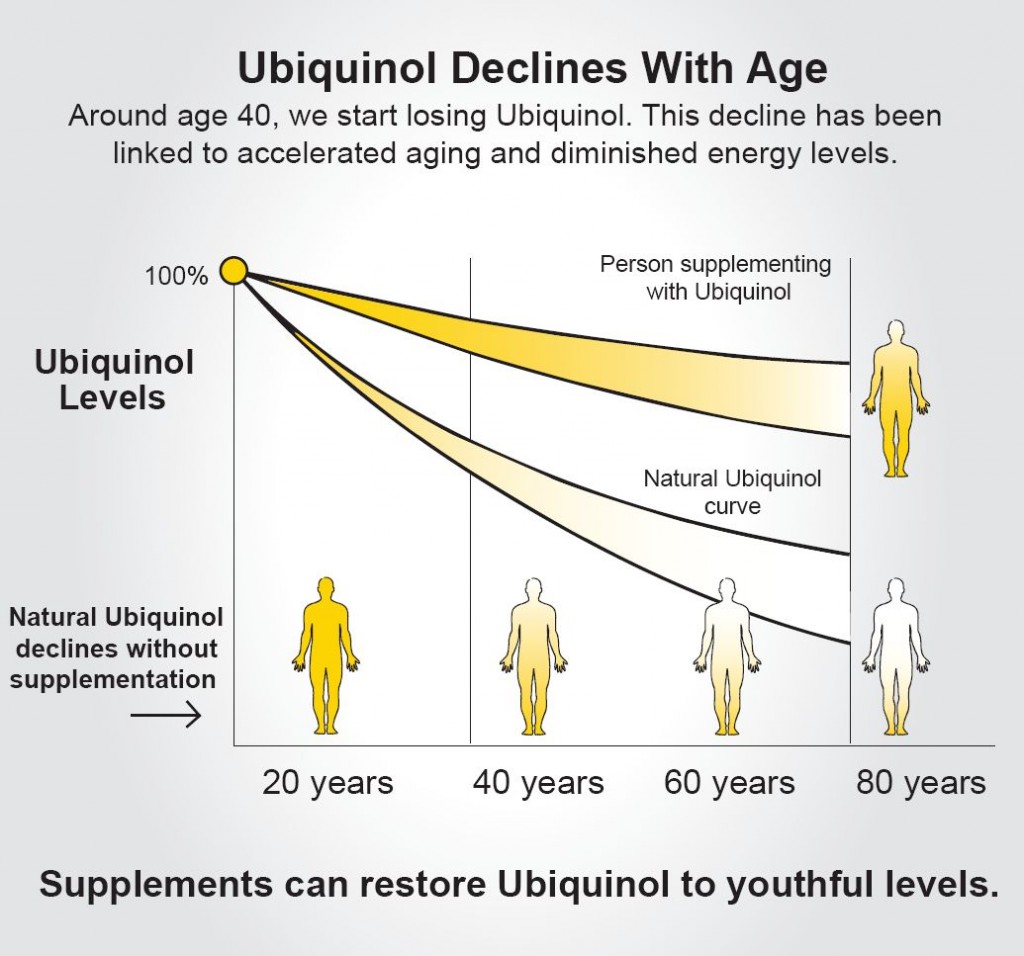
Some individuals take CoQ10 to reverse skin damage and preserve the collagen and elastin in skin. Levels of CoQ10 decrease with advancing age, resulting in decreased ability to produce collagen and elastin, so taking CoQ10 orally or applying it topically may boost skin repair.

Most individuals should supplement with 100 milligrams of CoQ10, but if insomnia occurs, take half the dose and only take it in the morning. Side effects at high doses (300 milligrams or more per day) include rashes, abdominal pain, nausea, dizziness, headache, fatigue and sensitivity to light. Individuals who are taking warfarin may experience a diminished response to the blood thinner when taking CoQ10. Diabetics will experience decreased insulin requirements when taking CoQ10.

Magnesium Supplementation

MagnesiumMagnesium is an essential mineral which is involved in over 300 biochemical reactions in the body, including energy production, transmission of nerve impulses, regulation of body temperature, detoxification, and formation of healthy bones and teeth. It also aids in the body’s absorption of calcium. As if this wasn’t enough, magnesium is involved in protein synthesis, muscle function and normal parathyroid function. It prevents the development of osteoporosis, coronary artery disease, stroke, constipation, diabetes, high blood pressure, migraines, kidney stones, gallstones, insomnia, depression, anxiety, and also enhances the bioavailability of cholesterol and vitamin B6. Women also gain relief from the symptoms of premenstrual syndrome and menopause when they have sufficient levels of magnesium.

Be careful not to oversupplement with magnesium, because in large doses it can cause low blood pressure, muscle weakness, fatigue, diarrhea and nausea. Magnesium can also interact with some heart medications, antibiotics and diuretics. Anyone with significant disease or illness should be evaluated by a physician before taking magnesium supplements.

Magnesium can be found in whole grains, fish, leafy green vegetables, dark chocolate and nuts (particularly almonds), but it is difficult to get the recommended daily allowance from food sources alone. You can take 400 milligrams per day in two or three divided doses. Chelated forms, which are forms ending in “-ate” (citrate, taurate, glycinate) tend to be better absorbed by the body and are preferred over other forms. There are also magnesium topical formulations available which some say is a more readily absorbed form.

What Is Folic Acid?

Folic acid is one of the B vitamins which is essential for the formation of new cells as well as the formation of DNA. The natural form is known as folate and is found in foods such as leafy green vegetables, asparagus, lentils, yeast, mushrooms, organ meats, bananas, melons, lemons, orange juice and tomato juice. Most people do not get adequate amounts of folate from foods sources, and the body does not assimilate the natural form as readily as folic acid, which is the manmade form.

The most well known use of folic acid as a supplement is in women who are trying to get pregnant and in pregnant women. Folic acid is documented as a safeguard against neural tube defects which occur very early in prenatal development. The risk of neural tube defects is reduced by 50 to 75 percent in women who take at least 400 micrograms of folic acid daily for at least one month before conception and throughout the first trimester of pregnancy.

Women who have sufficient intake of folic acid and folate also have significantly reduced risk of developing high blood pressure later in life. It is believed that folic acid reduces the risk of high blood pressure by causing blood vessels to relax, thus improving circulation.

Folic acid is used in treating folic acid deficiency, poor intestinal nutrient absorption, ulcerative colitis, liver disease, alcoholism, and end-stage kidney disease. It is also used to treat anemia and heart disease, memory loss, vitiligo, nerve pain, muscle pain, depression, age-related hearing loss, Alzheimer’s disease, osteoporosis and restless legs syndrome. It is also used topically to treat gum infections and gum disease. Additionally, folic acid can be used in a preventative manner for age-related macular degeneration, colon cancer, and cervical cancer.
folic acid
There are some side effects associated with high doses of folic acid, such as diarrhea, stomach upset, abdominal cramps, irritability, excitability, nausea, gas, behavior changes, skin reactions, rashes and pernicious anemia. A safe daily dosage of folic acid for most people is 400 micrograms per day.

Biotin For Healthy Skin, Nails and Hair

Woman touching her faceBiotin is a B vitamin which is naturally present in the human body and which is important for numerous metabolic functions. It is a carbon dioxide transporter and also expedites the processing of carbohydrates, protein and fat. As a result biotin can be a great component in a weight loss plan. Biotin’s involvement in carbohydrate processing also makes it responsible for maintaining normal blood sugar levels. It can also help to lower cholesterol levels, but be aware that it may interfere with the effects of some cholesterol-lowering medications.

There is extensive evidence to suggest that biotin plays an important role in the maintenance of healthy skin and nails. Those who suffer from eczema, seborrheic dermatitis or brittle nails often benefit from supplementation with this nutrient. Biotin is also helpful in treating a number of hair issues such as hair loss, reduced growth, thinning hair, and dull, brittle hair. I have put patients on biotin who have reported stronger, healthier and thicker hair after taking biotin for a few months.

This supplement is relatively inexpensive and carries rare and minimal side effects. The most common side effect reported is cystic acne at the chin and jawline and subsides after a few weeks. If this is something you experience while taking biotin, decrease your daily dosage to 25 micrograms per day.

Most sources recommend a dosage of 30 micrograms per day. However, I have taken 5,000 micrograms daily for many years and have not experienced any untoward effects.

Swat Fuel Fat Burners – Superior Products!

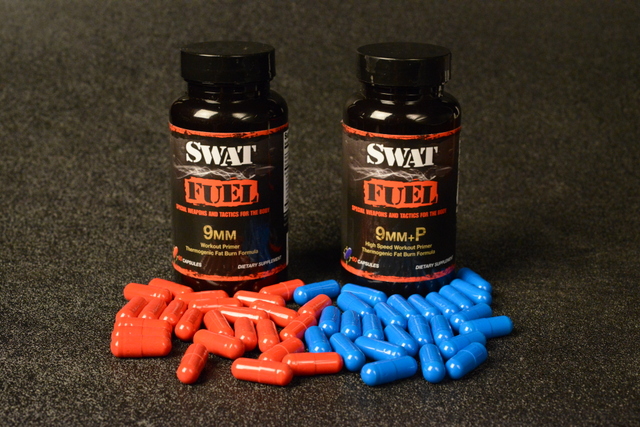
If you are looking for a revolutionary fat burner which provides sustained energy for an entire day and which also works as a potent pre-workout booster, you need to check out 9mm and 9mm+P from Swat Fuel. I am not joking – prepare to be amazed.

I am not easily impressed by sports supplements because there are so many products out there that over-promise and under-deliver. However, I can honestly say that Swat Fuel 9mm and 9mm+P are unique and superior to any other thermogenic fat burners on the market. These products were originally formulated for law enforcement individuals and military personnel to specifically provide sustained stamina and energy which lasts the entire day and does not produce jitters. These products optimize fat metabolism and are excellent for use as pre-workout boosters to maximize your energy and stamina during your lift. Even if you don’t work out, you can count on these powerful formulations to increase energy levels without the usual jitters or crash that many thermogenics cause.

9mm is a powerful thermogenic and pre-workout formula, but if you are trying to lose weight or you want to become ripped, opt for 9mm+P which also contains a natural appetite suppressant.

Prepare to SWEAT LIKE A PIG during your workouts when you take these supplements! Also make sure to hydrate very well when taking either product. Even from the first time I took 9mm, my reaction was one of total surprise. As the sweat poured off me and I noticed that I had laser focus with my lift, I just kept saying, WOW. I was truly blown away, and I continue to be impressed by the fact that this product delivers true to its description.

Every time I take this stuff, I am drenched in sweat about five minutes into my lift. No other thermogenic has ever had this effect on me. What amazes me is that my heart does not race, I do not get the jitters, and my workouts are much more powerful than on the days when I don’t take it.

Go to http://swatfuel.com/solidfuel.aspx to order, and remember to enter discount code 1HOTHAPA for a generous discount at the time of your order. 9mm and 9mm+P

Supplements Women Need

Find original post at:  http://www.rxmuscle.com/rx-girl-articles/7082-supplements-women-need.html

Natural Woman

The number of nutritional supplements which are available today can be pretty intimidating to those who are not familiar with the benefits which they confer on those who take them.  If you also consider the performance supplements which are marketed to fitness-minded individuals, and which are marketed mostly to men, women are often left bewildered.  Since it is my aim to address the issues of women in this article, I will not discuss general supplements such as multivitamins, CLA, fish oil, CoQ10 or the like.  Rather, I will focus on supplements which have demonstrated efficacy in treating female-specific woes.

Biotin:   This substance promotes growth of healthy hair and nails and is something I have taken daily for many years.  Though I have horribly thin nails (and continue to suffer from them despite biotin), my hair has actually gotten considerably thicker in the past ten years, and I honestly believe that biotin has played a large role with respect to my hair health.  Another great benefit of biotin is the demonstrated effect it has on regulation of blood glucose.  I recommend taking the maximum dose possible, 5,000 micrograms per day.

Calcium:  Calcium is a mineral which is a critical component of bone health.  There are three mistakes I see people making when taking this supplement:

  1.  Taking it without Vitamin D or magnesium – Both Vitamin D and magnesium must be present in order for the body to be able to absorb calcium.
  2. Taking it on an empty stomach – Calcium is best absorbed when taken with food.
  3. Taking large doses at one time – The body is unable to absorb much more than 500 milligrams of calcium at one time.  Since the general daily dose in women of childbearing age is 1,000 mg, supplementation should be broken up into 2 doses of 500 milligrams each per day.

DHEA: Dehydroepiandrosterone (DHEA) is a precursor hormone which is produced in the adrenal glands which is later converted to sex hormones such as estrogen and testosterone.  Levels of DHEA fall with advancing age and can also decline as a result of exposure to stress.  Signs of declining DHEA include stress, fatigue, memory loss, depression, dry skin, and decreased libido.  Women are struggling with infertility may also find that DHEA will increase their fertility by promoting hormonal balance and ovulation.  I generally feel that any woman over the age of 35 would benefit from supplementation with DHEA at 5 to 15 milligrams per day.

Folic Acid:  Many women are aware that supplementation with folic acid decreases the risk of neural tube defects in a developing fetus, but not many know that folic acid has been proven to lower blood pressure in women and prevent development of hypertension.  A daily dose of 800 micrograms is advised.

ALA:  Alpha lipoic acid, or ALA for short, is effective in regulating blood glucose, optimizing carbohydrate consumption and reducing sugar cravings.  Effective dose ranges are between 100 to 200 milligrams, taken two to three times daily.

Chromium Picolinate:  Chromium picolinate can decrease sugar cravings and is effective at regulating blood glucose.  A dose of 200 micrograms three times daily is optimal.

Vanadyl Sulfate:  This is another supplement which can curb sugar cravings.  Take 10 milligrams three times daily.

Phosphatidylserine Complex:  This supplement supports the adrenal glands during stressful times.  Those with poorly functioning adrenal glands should not take this supplement.  A daily dose of  200 milligrams taken earlier in the day is recommended.

Thin Hair? Eat More Protein!

Hair PicIt is normal to lose some hair each day since hair loss is part of the normal growth cycle.  A normal rate of loss is 50 to 100 strands each day, so a loss of more than this range could signal health issues which must be investigated by a physician.  Common causes of hair loss include surgery, medications, illness or trauma and are often temporary.

However, I know that many people don’t suffer from excessive hair loss but simply lament the fact that they have thin, limp, lifeless hair.  For these people I always advise them to practice proper nutrition which supplies all the vitamins and minerals they may be lacking in.  I also advise them to avoid overstyling hair and to use hair treatments which replenish dry, brittle, and overprocessed hair.  But the number one most important recommendation I have is to EAT MORE PROTEIN!

When you consume insufficient amounts of protein, your body shifts hair growth into the resting phase which halts growth.  Basically, low protein intake equals starving your hair (not to mention your entire body).  I have had patients approach me for advice on what to do about their thin hair and I always tell them to crank up their protein intake.  Every patient who has heeded my advice has returned to me two to four months later ecstatic because they have noticed that their hair is growing faster, has become thicker and appears healthier.

Though I have always been blessed with a mane of thick, straight hair I also experienced a surge in hair growth right after I began competing four years ago.  In August of 2009 I went from ingesting about 70 grams of protein a day to a range of 120 to 170 grams per day.  Then in January of 2010 I did a stupid thing and shaved off too much hair from my neckline, leaving a one inch arc of shorn hair around the nape of my neck.  I figured I had to wait forever for it to grow out.  By July of 2010 the area I had mistakenly shaven had grown EIGHT INCHES.  That’s more than one inch per month, while a human’s average monthly hair growth is one-half inch.  It was amazing to me and proof of protein’s effects on cell growth.  Of course I did sort of feel like a freak of nature over this insanely rapid rate of hair growth!

My hair growth has stabilized somewhat since then and now grows at about an inch per month with a daily protein intake of 120 to 140 grams of protein per day.  My hair is thicker, shinier, and has become even more of a pain to deal with than ever before (and I have always had long hair).  The color has even deepened (with the exception of those evil gray hairs that lurk on the crown of my head) and I have developed more of a natural wave.

In summary, I attribute the health of my hair to the following:

  • High Protein Intake
  • Balanced diet
  • Biotin supplementation
  • Fish oil and flaxseed oil
  • CLA
  • Minimal heat styling (I always let my hair air-dry and only style it for photo shoots and competitions)
  • Regular conditioning treatments
  • Regular trims (now I have no choice but to get regular trims because my stylist layered my hair, which I LOVE)


Boost your protein intake and you will soon reap the rewards of thick, luscious hair!

Sorting Through Protein Powder Types

Patients, clients and strangers ask me constantly what protein powders are the best, from the type to the brand and flavor.  The difficulty I have in giving a definitive answer is because different types of protein are better suited for different times of the day.  Another issue lies in the fact that I do not suffer from lactase deficiency or food allergies, so what works for me might not work for someone else.  In keeping with this challenge, I am going to discuss the different types of protein powder that are available with a small amount of advice on which protein to turn to for different tasks.


Keep in mind that protein powders can be derived from animal sources (whey, casein, egg white) or vegetable sources (soy, rice, hemp).  Generally speaking, animal proteins are nutritionally superior, so they should be chosen over vegetable sources unless someone follows a vegetarian or vegan diet.


WHEY PROTEIN:  When whole milk is broken down, 20% consists of whey protein and the remainder is casein protein.  Whey protein is the most reasonably priced protein and is very high in quality.  It also has the best flavor and mixes relatively well.  Whey protein is absorbed in the digestive system quickly, so it is the preferred protein source post-workout or whenever a rapidly available protein source is needed.


There are two types of whey protein available:

  1. Whey Concentrate – This is the cheaper version and is also low enough in lactose that even lactose-sensitive people can tolerate it.  It is also low in fat and carbohydrates, making it an excellent protein source for the majority of the population.
  2. Whey Isolate – This form is almost completely fat free and is also lactose free.

Some whey protein formulas have a blend of the two types, and may also have casein protein blended in as well (see description below for casein).


CASEIN PROTEIN:  This is also referred to as milk protein, and is absorbed much more slowly than whey protein.  Because of this, casein protein is commonly the protein of choice in bodybuilders before bedtime since the slow absorption is optimal for maximum muscle growth during sleep.  There are two types of casein protein:

  1. Micellar Casein – This is the superior form and is made by separating the casein portion of milk from lactose, whey and fat via microfiltration.  Microfiltration does not involve heat so micellar casein is not denatured like other forms of protein.
  2. Calcium Caseinate – This is the most soluble form of casein and mixes easily in fluid, but tends to contain high amounts of sodium (often MSG as the form of sodium).


EGG WHITE PROTEIN:  This protein source is naturally low in fat and calories but is more expensive than mild-derived proteins.  It is a good choice for individuals with milk allergies and is also considered a perfect protein because it contains all the building blocks of life.  Egg white protein is easily digested and absorbed so it is a good source of protein right after a workout.


SOY PROTEIN:  Soy protein supplies the body with all eight essential amino acids and is comparable in digestibility to animal protein sources.  It is best used as a meal replacement powder.  However, I am always concerned about the estrogenic effects of American soy products and tend to discourage the use of soy protein in my patients.


HEMP PROTEIN:  This protein has a lower bioavailability than other protein powders and is also lowest in protein.  It is slightly higher in fat than other sources but is high in fiber.  My advice is to choose other types of protein unless you have dietary restrictions or food allergies.


RICE PROTEIN:  This protein powder may be a good choice for people with milk allergies, but its bioavailability is also lower than the animal based proteins.  It is created by isolating the protein portion from brown rice.