Category Supplements
The BEST Pill Containers Ever
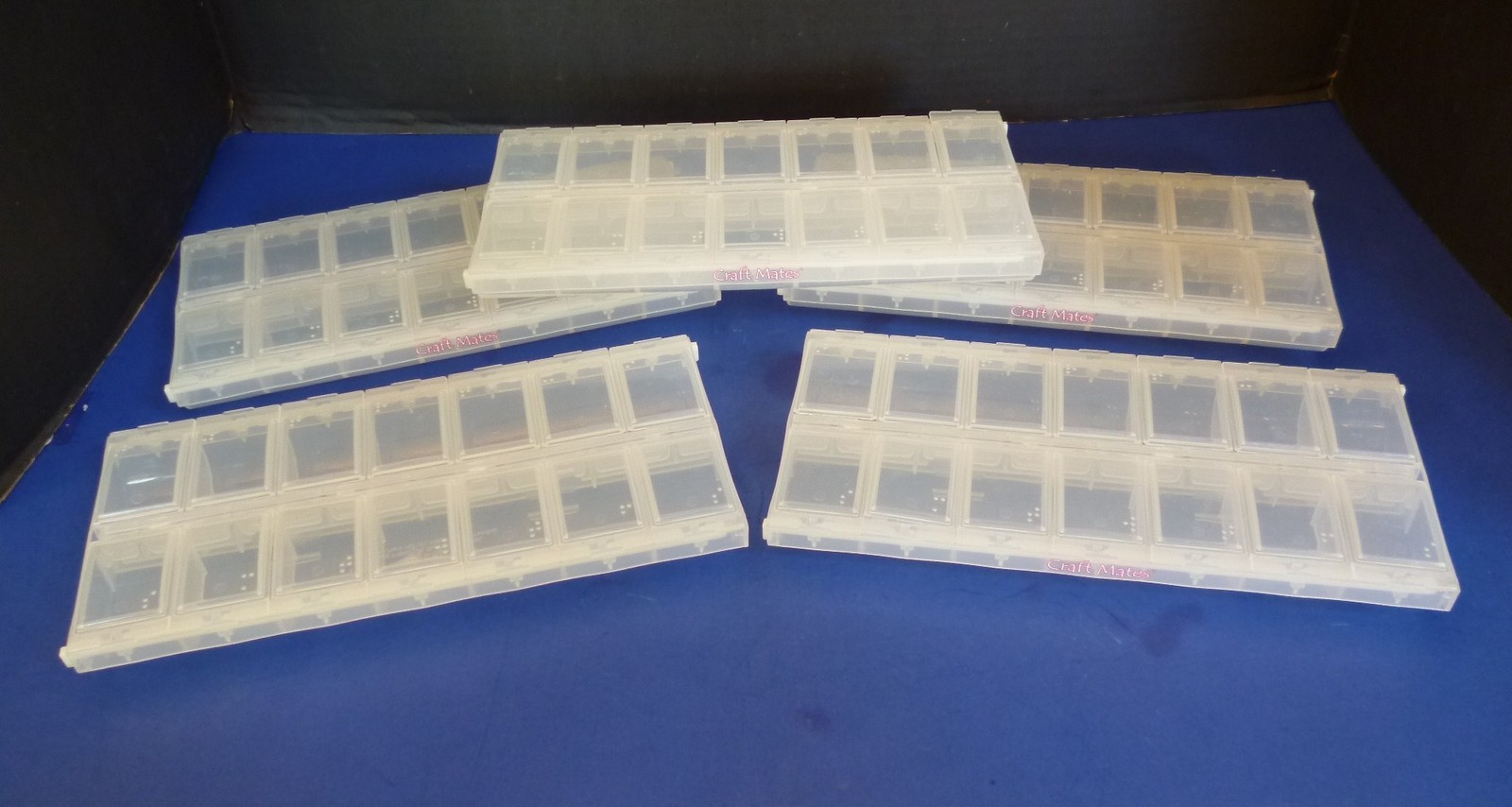 If you are looking for a great pill and supplement storage container which has large bins and is sturdy enough for travel, you should consider getting craft storage containers. The container which I love is by CraftMates and was purchased about four years ago from Michaels Arts and Crafts. This container can be found on Amazon:
Here is the company description of the product:
APOTHECARY PRODUCTS-CraftMates Lockables: Organizers. Build your own customized storage system! Whatever your craft of choice with Lockables Organizers you can keep everything neat and tidy and right at hand when you need it. Just choose your storage case and individual organizers based on your specific organizing needs. The patented lockbar system of the organizers allows you to open one bin at a time so there is no bin spillage or migration! Perfect for brads; beads; buttons; sequins; needles; pins; embellishments and more! This package contains one 14 compartment clear plastic organizer (1-1/4x9x4-1/4in) with purple lockbar. Imported.
I have used many different types of pill organizers and have been unimpressed by all of them. The rotating organizers seem to rotate too much when in a bag, spilling the contents, screwtop containers and towers unscrew in bags, and the rectangular organizers have lids which either pop open or break after prolonged use. The CraftMates container is a stark exception. In order to open a bin, you have to press a latch at the end. I find this mechanism superior to the locking pill organizers I have seen. Apparently beads and buttons are deemed more precious than supplements!
I have used this organizer every day for the last four years and have traveled with it, completely incident free. I swear by these containers and think everyone who takes a lot of supplements should be using these.
My YouTube Video About Pre-Workout Formulas
Two Magic Ingredients To Prevent Diabetes
 Diabetes mellitus is a devastating disease which affects every organ system in the body and which affects over 300 million people worldwide, with over 4 million deaths resulting from diabetes-related complications each year. With such staggering statistics, it makes perfect sense to change one’s eating habits so that lower glycemic index foods are favored over high index foods. In addition, one can look into insulin mimetics. Insulin mimetics are substances which mimic the action of insulin, thus supporting it and guarding against the development of insulin resistance which precedes progression into diabetes.
 One insulin mimetic is methyl hydroxychalcone polymer (MHCP) which is found in cinnamon. Unless you have severe heartburn, you can and should eat cinnamon daily. I always recommend sprinkling cinnamon on oatmeal or cream of wheat, but you can also take cinnamon in capsule form. Another insulin mimetic is lipoic acid, which increases the expression of glucose receptors on muscle cells. For individuals who are susceptible to insulin resistance, I highly recommend incorporating both of these substances in to their daily regimen. Start with 300 milligrams of alpha lipoic acid and sprinkle cinnamon onto your morning oatmeal.

Omega Fatty Acid Benefits
Unless you have been living under a rock you have heard a fair amount about omega 3 and omega 6 fatty acids, both of which are used in supplements. The reason why omega 3 and omega 6 fatty acids are packaged together in supplements is because they are essential, meaning that while our bodies require them, we are unable to manufacture them and must obtain them from outside sources. Omega 9 fatty acids are non-essential, meaning that our bodies manufacture them as the need arises. Research has shown that omega 3 fatty acids are by far the most important of the different types.
Omega fatty acids reduce low density lipoprotein (LDL, or bad cholesterol) stores in the body and reduce inflammation in the body. In so doing, they decrease the risk of heart disease as well the risk of Alzheimer’s disease and cognitive decline. Those of you who prefer to get nutrients mostly from food sources will find high levels of omega 3’s in fatty fish such as salmon, tuna and mackerel, as well as walnuts and flax, while omega 6 sources include soybeans, sunflowers, nuts and seeds.
 However, if you have a concern that you might not be able to get sufficient amounts of omega 3’s into your daily diet, you can take supplements. Beware of supplementation with omega fatty acids if you have a blood clotting disorder or are taking anticoagulant medications such as aspirin or warfarin. My favorite supplement is Ultimate Omega from Nordic Naturals (pictured here). This is completely burpless, meaning that you won’t get a fishy “repeat”after taking these gel caps.
The Other Carnitine Molecule – Brain Booster
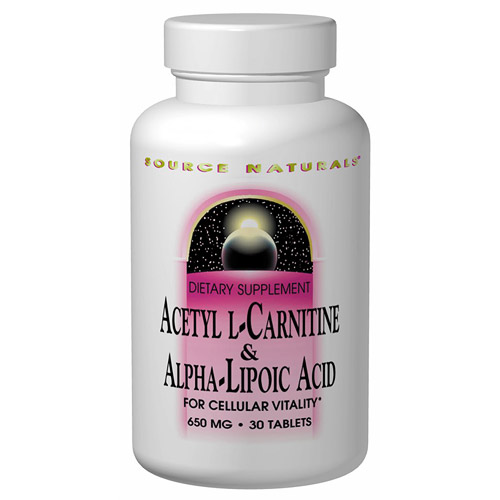
Since yesterday’s post discussed the energy and fat loss benefits of L-carnitine tartrate, I thought it might be best to discuss the brain boosting benefits of the other carnitine molecule which is used commonly as a supplement. Acetyl-L-carnitine helps to reverse some of the functional impairment which occurs in the energy powerhouses of cells known as the mitochondria, thereby improving cellular function. The natural oxidative process which occurs in cells has a cumulative and damaging effect on mitochondria which compromises cellular function throughout the body, but most notably in the brain. Numerous studies have confirmed that cognitive function is enhanced when subjects are given acetyl-l-carnitine. The most powerful safeguard against oxidative damage and free radical formation is to supplement with BOTH acetyl-l-carnitine and alpha-linoleic acid (ALA).
General recommended daily doses are the following:
Acetyl-l-carnitine: 500 to 1,500 milligrams per day
ALA: 150 to 450 milligrams per day
Source Naturals is a good brand to take and it offers a supplement which combines both acetyl-l-carnitine and ALA in one tablet. Each tablet has 500 mg of acetyl-l-carnitine and 150 mg of ALA, so you could safely take this supplement one to three times daily.
L-Carnitine For Energy And Fat Loss
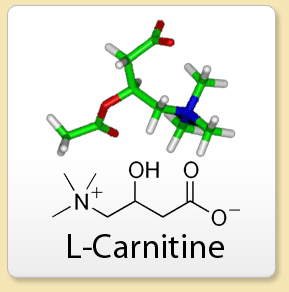 I am personally a big fan of l-carnitine supplementation and make sure to add it to my intra-workout drink each day that I train. This amino acid compound, consisting of lysine and methionine, can be found in a couple of different forms. This article discusses L-carnitine tartrate, which is the form known to benefit athletic performance and recovery.
There are a couple of important points to consider when supplementing with carnitine. First of all, insulin must be present in the body for carnitine to enter muscle. One way of taking carnitine is to ingest carnitine with carbs so that there is an insulin release, but another effective option is to ingest carnitine with omega-3 fatty acids. Omega-3 fatty acids optimize cell membrane health, thus making cells more sensitive to insulin. Carnitine serves as a delivery system for fatty acids, so if carnitine levels are high, more fatty acids will be shuttled into cells to be utilized for energy. Conversely, when carnitine levels are low, fewer fatty acids are moved into the cells and are instead stored as fat. Supplementation with carnitine before intense exercise will switch the focus on burning fat rather than utilizing glycogen stores, resulting in longer sessions before glycogen stores are depleted. In addition, the presence of carnitine inhibits production of lactic acid, so recovery from intense exercise is more rapid.
Carnitine is not only an excellent performance supplement, it also serves as an excellent means of addressing metabolic syndrome. Metabolic syndrome, characterized by diabetes, atherosclerosis and high cholesterol, can be countered by carnitine’s ability to induce fat loss, prevent atherosclerosis and minimize the development of diabetes. After several months of carnitine supplementation, carnitine levels reach a level at which energy production and performance are enhanced. For this reason, it is best to consider carnitine an essential supplement in your daily regimen rather than as something taken only periodically.
Take 500 to 2,000 milligrams of l-carnitine tartrate daily with omega-3 fatty acids and a small amount of carbohydrates.
New YouTube Video About Flaxseed
Overcaffeinated
 I enjoy drinking coffee and I also take thermogenic fat burners from time to time which have caffeine in them. However, I am well aware of the fact that caffeine is a drug with considerable potential to cause dependence. In light of this, I will play devil’s advocate and present an argument against regular caffeine consumption.
Caffeine is a powerful stimulant which signals your pituitary gland to trigger the adrenal glands to make stress hormones epinephrine and norepinephrine. These hormones cause vasoconstriction, increased pulse and increased respiratory rate which impart a feeling of alertness. The concern with such a cascade is that chronic daily intake of caffeine in amounts as low as 300 milligrams per day may cause your adrenal glands to burn out. If adrenal function starts to plummet, you may turn to more caffeine to get the same energy boosting results. Caffeine also reduces serotonin levels, increasing the tendency towards insomnia and the jitters. The typical image of the person who has had too much coffee and is hypervigilant is a prime example of this.
Energy drinks pack at least twice the amount of caffeine that a cup of coffee does, and with the surge in popularity of such drinks, it is no surprise that adrenal exhaustion is becoming more prevalent. Another concern with high intake caffeine is the depletion of vitamin C and the B-complex vitamins. There is less concern with individuals who supplement properly and practice balanced nutrition, but such depletion can be disastrous for an overly stressed individual who skips meals and fails to replenish depleted nutrient stores.
 dr. stacey naito's blog