Shirataki Noodles: My Latest Food Obsession

Recently I have been completely obsessed with shirataki noodles because they satisfy pasta cravings with none of the guilt. Shirataki noodles are made from the konjac yam, which contains a water-soluble fiber called glucomannan. Though they have been available in Asian markets for a long time, they are gaining popularity among people who must adhere to low carbohydrate diets. The folks at Quest Nutrition also made a brilliant move and came up with their own brand of shirataki noodles, so now people in the fitness industry are aware of these great pasta alternatives.

There are two different types of shirataki noodles available, both of which I enjoy. Straight shirataki noodles have zero net carbohydrates and no gluten, whereas tofu shirataki noodles have a small amount of net carbs and a less slippery texture. Both forms are package in water and must be rinsed before cooking, as the water they are packaged in has an odd, ocean-like odor. The noodles are very slippery (less so for the tofu type) and really don’t have any flavor of their own, so you must add some type of sauce of liquid seasoning to make them palatable. However, these noodles act like sponges and do a great job of absorbing flavors which are added to them during cooking. The high fiber content in shirataki noodles imparts a sense of fullness and slows digestion, making these noodles lifesavers when it comes to curbing cravings.

Shirataki noodles are a bit expensive, so I try to ration out my supply. However, get actual cravings for them and enjoy putting a meal together. My favorite prep method is very simple: I heat up the noodles for a minute, then I add sesame oil, soy sauce, white pepper, ginger, vegetables and chicken or shrimp for a delicious Asian style meal which fills me up.

Here are the most popular brands available:

http://www.miraclenoodle.com/ These noodles run aboout $4 per package and are available at major grocery stores.

http://www.miraclenoodle.com/
These noodles run aboout $4 per package and are available at major grocery stores.

http://www.house-foods.com/ These noodles are a bit cheaper at about $2 to $2.50 per bag, but they are more perishable than the non-tofu type.  You can find these in the refrigerated Asian foods section in major grocery stores.

http://www.house-foods.com/
These noodles are a bit cheaper at about $2 to $2.50 per bag, but they are more perishable than the non-tofu type. You can find these in the refrigerated Asian foods section in major grocery stores.


How Emotional Eating Can Derail You From Your Fitness Goals

emotional-eating ice cream - Copy

Rather than discuss well-known emotional eating disorders such as bulimia, I will concentrate on binge eating which many women engage in from time to time.  It is important to recognize this behavior if it becomes a regular pattern, because frequent emotional eating warrants a diagnosis of binge eating disorder and requires treatment and intervention.

Binge eating is characterized by eating compulsively to cope with negative emotions and stressful situations.  A binge eater is rarely hungry when she begins to eat and will continue to eat well after she is full.  Such episodes can last for up to two hours or can occur off and on throughout the day.  The binger feels guilty both during and after the episode, but will not attempt to counteract it by fasting, taking laxatives, vomiting, fasting or over-exercising.  A strong lack of self-control as well as feelings of shame will accompany this behavior pattern.  There is a strong association between binge eating and depression.  Binge eating is also driven by social components such as social pressure to be thin, emotional and sexual abuse, parental criticism of a child’s weight, and the use of food as reward or punishment.

Food cravings are usually the strongest when you are in emotional crisis.  You may reach for food for comfort or to serve as a distraction.  Consider the following highly stressful events and think about whether you reached for comfort foods during such times:

  • Financial problems
  • Health problems
  • Work issues
  • Relationship issues
  • Fatigue
  • Family issues

Though some people will lose their appetites when stressed and will refrain from eating, many others will engage in impulsive eating in an effort to deal with negative emotions.  This may be relatively harmless if such emotional eating occurs on a very rare occasion, but becomes a serious problem when it is used as the only coping mechanism for stressful situations or negative emotions.  Just bear in mind that if you have a rare moment of weakness, it is important to recognize it as just that and to prevent yourself from spiraling into excessive feelings of guilt over the incident.  If you engage in an episode of emotional eating, learn to forgive yourself and have a fresh start the following day.

 
Why We Engage in Emotional Eating


What occurs almost invariably when we eat emotionally is that we turn to cookies, cakes, candy, fried foods and breads rather than to healthy foods.  There is a biochemical basis for such behavior.  Carbohydrates which are high in sugar or fat release dopamine in our brains which in turn stimulates the brain’s pleasure center, creating a sense of euphoria.  These foods are usually associated with pleasurable memories, such as cake which you may have looked forward to on your birthday, or macaroni and cheese as a treat after school when you were a child.


Food can also serve as a happy distraction from conflict or stressful events by stimulating the aforementioned pleasure centers.  What will frequently occur is that an excessive amount of these foods will be consumed.  However, if you remain aware of such automatic connections between food and mood and realize when you are eating for reasons other than hunger, you can break this cycle and get back on track with healthy eating habits which are associated with true hunger.


How To Combat Emotional Eating


  • Keep a food diary.  Get in the habit of writing down everything you eat and drink, including the quantity, the times at which you eat, your emotional state while eating the meal, and your level of hunger.  By doing this you may see patterns which will reveal your emotional relationship with food.


  • Remove tempting foods.  Avoid stocking comfort foods in your home if you find that they are difficult to resist.  And by all means avoid making trips to the grocery store if your emotions are spiraling out of control!


  • Practice stress management.  Yoga, meditation, and relaxation techniques are effective methods of managing your stress.


  • Determine whether you are truly hungry.  Many times people may believe they are hungry when in reality they are actually emotionally distraught and desperately searching for a way to defuse such emotions.


  • Make sure you consume adequate calories.  Individuals who are trying to lose weight will often restrict their calorie intake too much, and will turn to the same foods in an effort to remain on track without rewarding themselves with an occasional treat.  Adding variety to your meal plan will also help to keep you on track.


  • Distract yourself.  If you get an urge to snack when you aren’t truly hungry, distract yourself by watching a movie, calling a friend, reading, listening to music, or taking a walk.


  • Consume healthy snacks.  If an urge to snack between meals strikes, choose a low-calorie snack such as vegetables with seasoned nonfat Greek yogurt, fresh fruit, low fat cottage cheese or rice cakes.


  • Get enough sleep.  Getting enough sleep is an important component in decreasing cravings for comfort foods.


  • Eat at regular intervals.  Consume smaller meals every three to four hours to keep you from feeling hungry or deprived.


  • Focus on the experience of eating.  Learn to eat in a mindful manner, in which you pay attention to your meal and only your meal.  Become aware of the sensations associated with eating.


  • Reward yourself.  It is both physically and emotionally unhealthy to practice excessive calorie restriction for prolonged periods.  Allow yourself to have a favorite food or meal once each week.


  • Connect with your emotions.  When a food craving hits during an emotional time, write down the emotions you are experiencing, such as sadness, loneliness or anger.


  • Seek professional help if emotional eating is frequent.  There are countless support groups which you can join which will help you to develop insight as well as the skills to avoid engaging in such behavior.


One last note: make sure to get vital nutrients into your diet on a daily basis. I recommend taking a multivitamin several times a day to optimize absorption, and my favorite is SWAT Fuel’s .40 Caliber. SWAT Fuel’s .40 Caliber Multivitamin delivers high bioavailability on a three time dosing regimen each day and is suitable for everyone, but it is especially great for individuals who tend to experience intestinal discomfort from multivitamin formulas.

You can order .40 Caliber directly from the website: http://swatfuel.com/products.aspx

Sugar And Cognitive Decline

hero-cookie-candy-bars
How can sugar be such a bad thing when it tastes so wonderful? Well, you might want to consider the consequences of indulging in sweet treats on a regular basis. Consume a diet high in processed sugar and you can almost count on experiencing a pronounced cognitive decline with advancing years. Numerous studies have revealed a decline in cognitive function after consuming processed carbohydrates. A 2011 study published in the British Journal of Nutrition examined habitual sugar intake in over 700 nondiabetic middle-aged subjects of Puerto Rican descent. The results showed that consumption of sugary beverages resulted in lower MMSE scores, while a higher total sugar consumption resulted in lower word list learning scores. Numerous other studies have shown a strong correlation between insulin resistance and lowered cognitive function.

sugary-drinks

As it is, cognitive function begins to decrease by our late 20’s with memory problems surfacing about ten years after that. Some individuals are already doomed to develop insulin resistance with increasing age, and this is magnified dramatically when processed carbohydrates are consumed on a regular basis. Processed carbohydrates such as refined sugar are absorbed more rapidly, causing a surge in insulin release. When this occurs frequently, the result is an increase in insulin resistance. Another consequence of increased blood sugar is decreased blood flow, which also inhibits cognitive function.

By no means am I saying that you have to COMPLETELY eliminate all sugar from your diet all the time (though it isn’t a bad idea). If you allow yourself the RARE indulgence, such as birthday cake, that is fine. The more insidious culprits are the sugary sodas, flavored yogurts and packaged crackers which tend to creep into regular diets. They may be tasty to many people, but they carry a heavy consequence. Knowing all of this, why would you risk “dumbing down” and increasing your dementia risk by eating sugary foods all the time? Now, that is just stupid.

Eliminating sugar from your diet is a great step towards improved health and mental clarity, but you should also make sure to get vital nutrients in on a daily basis. I recommend taking a multivitamin several times a day to optimize absorption, but most of the large brand multivitamin formulations out there are dosed once daily. In addition, the bigger brands do not have high bioavailability. What I love about SWAT Fuel’s .40 Caliber Multivitamin is that the nutrients in the formulation are highly bioavailable, and the supplement is taken three times daily. This is my personal choice of multivitamin, and yes, I do take it three times daily. This formulation is very clean and doesn’t cause the intestinal upset that some multivitamins can cause.

You can order .40 Caliber directly from the website: http://swatfuel.com/products.aspx
References:

Br J Nutr 2011 Nov; 106(9):1423-32.

Replace That Mattress

mattress
The Better Sleep Council states that mattresses should be replaced every 5 to 7 years, and that the springs in most mattresses will lose their function in that span of time. What is interesting, though, is that other tests on mattresses which are conducted by independent companies have found that many mattresses hold up 8, 9 even 10 years after purchase. So what is the rule of thumb with mattress replacement?

The main factor in determining when to replace a mattress is sleep quality. Since we spend (or should spend) one-third of our lives sleeping, it is imperative to have a mattress which imparts comfortable sleep. So if you have a mattress which is 5 or more years old, you might want to assess whether the quality of your sleep has diminished recently, if you awaken with back pain, or if you are tossing and turning to get comfortable in bed.

My personal story is that I have been sleeping on the same mattress for almost 9 years now, and though it has a 3 inch pillowtop and used to feel like a cloud, I am noticing that I cannot find a comfortable spot on my mattress. As a result, I have decided to ring in the new year with a new mattress, provided I can scrape up the money to buy one. The other tricky thing will be to find one which I love, and which I can afford. Some mattresses go for several thousand dollars, which is far beyond what I can even hope to afford.

Keep in mind that many mattress stores have no interest financing so that you can make your purchase without paying anything for months on end. It may be time to schedule a visit with your spouse or significant other to a mattress store to find a mattress which will improve the quality of your slumber.

It All Adds Up

good-or-bad foods
When you add the label of “forbidden” to a food, it suddenly becomes quite irresistible, revealing the human tendency to become lured by temptation. Of course it doesn’t help that these so-called forbidden foods are full of sugar and other substances which trigger more cravings. You may be the type of person who occasionally nibbles on a food which is ordinarily on the do-not-eat list, or you may find yourself in a pattern in which you rationalize your dietary transgressions and cannot stop the behavior. If your indulgences are frequent, you have probably noticed the evidence accumulating around your waistline.

While competitors must follow rigid meal plans which discourage the consumption of any fat-laden or sugary treats, those of you who do not compete can follow a clean diet 90% with the occasional treat and suffer minimal consequences, However, individuals who do not follow rigid meal plans may be consuming nutrient-poor foods laden with saturated fat and sugar far more often than they realize. They may also be tricked into ordering a meal which seems to be clean, such as a chicken caesar salad, only to find out that the salad dressing alone can obliterate any possibility of consuming a healthy meal. The temptations continue when people are trying to keep up with busy schedules and ordering less than foods out of hunger and exhaustion. More temptations may also be lying in wait at home. Perhaps you have rationalized a nightly glass of wine or a Pop Tart as a treat for a busy day at work, but when this is practiced on a daily basis, it will surely trap you in a “one step forward, two steps back” pattern which will prevent you from achieving your fitness goals. Suddenly the clean and healthy diet is followed only about 40%, meals are random, and the risk of malnutrition also emerges as a result of erratic and unhealthy eating practices.

The key is to follow nutritional guidelines which will ensure that you get the nutrients and calories which your body requires. If it is too difficult to determine what it is that you need to consume on a daily basis for optimal nutrition, hire a nutrition coach to give you structure and consistency. You will still be able to enjoy the occasional treat, as long as you remember that moderation is the key. Another valuable habit to implement is the daily intake of a multivitamin, preferably one which is taken several times a day to optimize absorption. What I love about SWAT Fuel’s .40 Caliber Multivitamin is that it has high bioavailability of nutrients along with a three time per day dosing recommendation. This is my personal choice of multivitamin, and yes, I do take it three times daily. This formulation is very clean and doesn’t cause the intestinal upset that some multivitamins can cause. I can tell that I actually feel more energized when I take this particular multivitamin as opposed to other brands.

You can order .40 Caliber directly from the website: http://swatfuel.com/products.aspx

Eggs Are Superfoods

eggs
If you haven’t already incorporated eggs into your regular meal plan, you should. Eggs are an excellent source of protein, and also provide all eight essential amino acids which are necessary for optimal muscle gains. Eggs are also packed with the following nutrients:

· Vitamin A
· Vitamin E
· Vitamin K
· Vitamin B12
· Riboflavin
· Folic acid
· Iron
· Zinc
· Calcium
· Selenium
· Choline

You may have been duped into believing that eggs should not be eaten due to the fat content in the yolks. However, there are only 2 grams of saturated fat and a total of 5 grams of fat in an average egg. The body actually requires a certain amount of saturated fat for proper function, which translates to about 20 grams of saturated fat on a 2,000 calorie per day diet. If you add only four whole large eggs to your daily diet, you will get 20 grams of quality protein with only 8 grams of saturated fat. As for the cholesterol content in egg yolks, it has been determined that dietary cholesterol does not raise blood cholesterol levels. In fact, consumption of eggs can improve blood lipid panels.

Here is a macronutrient breakdown of one large egg:

· 71 calories
· 6 grams protein
· 5 grams fat
· Zero carbohydrates
· 211 milligrams cholesterol
· 70 milligrams sodium
· 37 milligrams Omega 3 fatty acids
· 574 milligrams Omega 6 fatty acids

As a general rule, I purchase large or extra-large eggs for our household so that I can get the most protein possible. The larger eggs cost only a bit more than small or medium eggs and are a very cheap and high quality protein source which can be consumed during contest prep.

Individuals who want to gain muscle, especially during a bulking phase, should incorporate egg yolks in order to meet the high energy requirements that such a phase demands. Eggs are very easily digested and absorbed and can help to ensure a balanced diet. They are also quite versatile and can be eaten with other foods in omelets and high protein pancakes. If you want a quick snack which provides a good amount of protein, you can hard-boil eggs, making them a portable food source which can easily be packed in a food cooler for the day.

One of the best ways to ensure proper nutrition on a daily basis is to take a multivitamin. Though many multivitamins are dosed as one pill daily, the body cannot utilize all the nutrients in one large dose, so it is more beneficial to the body to take a multivitamin several times a day to optimize absorption. What I love about SWAT Fuel’s .40 Caliber Multivitamin is that it has high bioavailability of nutrients along with a three time per day dosing recommendation. This is my personal choice of multivitamin, and yes, I do take it three times daily. This formulation is very clean and doesn’t cause the intestinal upset that some multivitamins can cause.

You can order .40 Caliber directly from the website: http://swatfuel.com/products.aspx

How To Succeed With Your Fitness Goals

For those of us who are in the fitness world, especially those of us who compete, there is so much structure to our regimens that it is easier to keep ourselves in line. We are conditioned to keep our blinders on and stay the course with food and training. But those who are not immersed in the world of fitness and bodybuilding tend to struggle more with a regular regimen. If no specific fitness or health goal is defined, people tend to zigzag with their regimens, adding more unscheduled fun meals, more alcohol, and more missed trips to the gym.

If you are one of those people who tend to fall off track more easily, there are some guidelines which you can follow (listed below) which will help to keep you in line. More importantly, however, you need to remind yourself WHY holding yourself accountable is beneficial. When you hold yourself accountable, you stoke a fire that propels you towards your health goals. By staying on track, you develop a “can-do” attitude which extends into all areas of your life.

Do somethingHere are some tips on how to keep you on track with your eating habits and exercise plan.

1. Train with a trainer. When you work out with a trainer, you become accountable to that trainer. You need to show up and do the work!
2. Train with a friend. Similar to training with a trainer, when you and a friend agree to meet for a workout, you hold each other accountable. I always recommend setting a day and time and then prohibiting each other from cancelling, no-showing or rescheduling.
3. Prep and pack your food in advance. Prepare your day’s food the night before and store it in individual serving containers so that you can easily pack them into a bag the next morning.
4. Keep junk foods and snacks out of your kitchen. If you have tempting foods in your kitchen, you risk sabotaging your own efforts to stay on a healthy eating plan.

Remember that you can maintain focus on healthy patterns. Keep your eye on the prize!

Mineral Oil Sensitivity

I was compelled to revisit this topic because I foolishly went against my better judgement and used a product which I happen to hate, with disastrous results. I hate Lubriderm products and think they are a scam due to the presence of mineral oil. Mineral oil is a very cheap filler which is used in skincare products and cosmetics. What many people don’t realize is that some individuals suffer from mineral oil sensitivity and truly cannot come into contact with it. Sadly, I am one of those people.

Lubriderm is touted as a “dermatologist tested” product, which basically doesn’t mean a thing. Apparently the dermatologists who tested this product weren’t aware of the fact that mineral oil can be a very reactive substance for a segment of the population. I for one have ALWAYS been reactive, though I could never understand as a child why I always broke out in itchy rashes within an hour of being exposed to baby oil. To this day, a high concentration of mineral oil will drive me into an itchy frenzy. This was the main reason why I hesitated when the idea of trying Lubriderm once again, but my stubbornness won out.

I used Lubriderm lotion for normal to dry skin for one week, and during that entire time, experienced itchy skin which only got worse at night, as well as a diffuse papular (raised) rash which covered my shoulders, arms, and thighs. On the last day in which I used the Lubriderm, I actually broke out into hives on my thighs!

As soon as I stopped using Lubriderm, the rash cleared up without any intervention. This was a clear sign that I was indeed still very sensitive to mineral oil, and that it was tragic that products could still be found which listed mineral oil among its top 5 ingredients.

PIt’s important to bear in mind that mineral oil is manufactured from crude oil, and as a result can cause pronounced reactions in people who are sensitive. Such reactions aren’t confined to skin rashes, but also include headaches Mineral-Oilor joint aches. Mineral oil can also disguise itself as petrolatum, paraffin, or propylene glycol.

lease please please be aware that mineral oil sensitivity is very real!

Leaky Gut

food-allergy-leaky-gut-inflammation
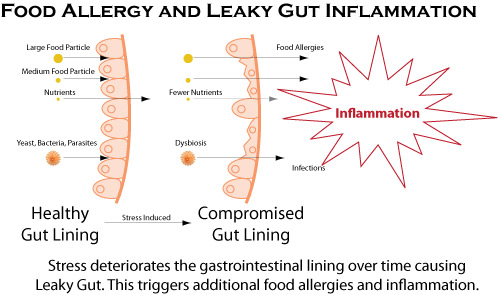
If you suffer from sudden food sensitivities, aching joints, digestive upset, fatigue or weight gain, you may be suffering from leaky gut, which is also referred to as increased intestinal permeability. Leaky gut is characterized by the opening of pores in the small intestine, resulting in undigested food particles, bacteria, and toxins traveling to the bloodstream. The presence of these substances in the bloodstream triggers an immune response, whereby the body builds antibodies to the foreign substances but also attacks itself, creating food allergies and autoimmune disorders.

You are probably wondering how something like this occurs and if you are at risk. Let’s look at the main causative factors leading to leaky gut syndrome:

1. Chronic constipation – If you are usually constipated, toxins will often build up in stool, irritating the intestinal lining and causing inflammation, which then causes the pores in the small intestine to expand. In severe cases, Crohn’s Disease, irritable bowel syndrome,or colitis can occur.

2. Chronic stress – The immune system really takes a beating when subjected to chronic stress. If the immune response is compromised, pathogenic bacteria can cause widespread inflammation in the intestines, and leaky gut is a common result.

3. Dysbiosis – This is an imbalance between beneficial and harmful bacteria which can result from antibiotics or poor diet. Inflammation develops, causing the pores to widen.

4. Toxins – We are exposed to many thousands of toxins, but the worst offenders are found in our water supply, pesticides, and in certain medications.

leaky-gut
What Is The Solution If You Have A Leaky Gut?

I have several dietary recommendations for treating a leaky gut.

1. Glutamine – I am already a big fan of glutamine in general, but especially for those who suffer from leaky gut. This amino acid has specific activity in the intestine, and restores healthy soft tissue in the region. Over time, regular supplementation with glutamine has a protective effect against intestinal disease. I tend to be fairly aggressive with glutamine and recommend 6 to 8 grams per day, or more if you engage in frequent exercise.

2. Fish oil – Try to find a formula which contains primarily omega-3 fatty acids. You can also increase your consumption of salmon.

3. Digestive enzymes – Digestive enzymes will aid in the breakdown of food substances, especially in older individuals and those suffering from leaky gut. Try taking them with every meal.

4. Betaine hydrochloric acid – Some people produce insufficient amounts of hydrochloric acid, which is needed to break down food in the stomach. If that is the case, betaine hydrochloric acid optimizes the process.

5. probiotics – Most individuals will benefit from adding probiotics into their daily regimen. Make sure to take at least 25 billion units per day for optimal gut health.

My Nutrition Coach Certification

NAFC-Logo-05
Despite the fact that I am a fully licensed and board-certified physician, and also hold a Bachelor’s Degree in Exercise Science, I realize that some people get hung up on specific certifications. My education covered nutrition in exhausting detail, which is why I am able to customize meal plans for clients and patients based on a myriad of factors. However, I also obtained a Nutrition Coach certification from NAFC to fortify the credentials I already had.

For those of you who are curious about the course, here are some details:

NAFC’s Nutrition Coach Foundations delivers scientifically-based nutrition education so health and fitness professionals can better serve their clients.

Develop the skills, knowledge and abilities to successfully work with clients seeking goal-based nutritional guidance.
Gain an occupational advantage with enhanced education and a credential to differentiate you from your competition!

NAFC’s Certified Health & Fitness Coaching course blends sound basic science with the latest in nutritional science along with proven coaching skills to help you successfully guide your clients toward better health, better performance, and a better body!

In Section I of this course, you’ll get a strong introduction to the basic sciences; in Section II you’ll become immersed in the field of nutritional science; in Section III you’ll learn about the art & science of being an effective coach; and finally in Section IV you’ll go through a step-by-step set of instructions on how to implement nutritional coaching competently & profitably (including over 30 pages of questionnaires and assessment tools to use with your clients).

No other nutrition certification puts all of these components together. No other nutrition certification was written by a physician with over 35 years of experience in the areas of nutrition, fitness, personal training, anti-aging medicine, and performance enhancement.

The National Association for Fitness Certification was established in 1992 to provide scientifically-based, standards-focused education and training for Group Fitness Instructors, Personal Trainers, and Wellness Consultants. The NAFC’s combination of demanding standards, practical application of scientific principles, and affordable program pricing have defined it as the most rapidly-expanding certifying organization in the industry today.

The NAFC was established by a forward-thinking group of fitness professionals, representing expertise in fields including Exercise Physiology, Adaptive Physical Education, Medicine and Nursing, and Professional Coaching. Their desire was to enhance current fitness certification standards by providing access to convenient and comprehensive – yet practical and affordable – education and skills.

The NAFC follows guidelines established by the American College of Sports Medicine, emphasizing practical information with respect to a comprehensive knowledge base.