The Unmotivated Client

lazy client

If you have been working as a trainer for a while, you know that motivating some clients can be as challenging as pulling teeth. You know the type of clients I am talking about, who moan and complain about the training regimen, who lean heavily upon the phrase “I can’t”, and who make you want to rip your hair out in frustration. You became a fitness professional partially due to your passion for fitness and partially out of a deep need to inspire others and to guide them towards reaching their fitness goals, right? So why would some people resist your efforts to help them when it should be obvious that you have created a career around getting people fit? Sometimes clients can be so highly resistant that no trainer or coach will ever be able to get through to them, but sometimes the trainer may have a hand in the breakdown in communication.

One of the biggest rifts which can occur between a trainer and a client is one in which the trainer has forgotten how to relate to the average person. While a trainer’s immersion in the world of gyms and exercise equipment is a natural outgrowth of his interest in fitness, that immersion might cause him to forget somewhere along the way that fitness newbies might not understand or be able to relate to the “gym is life” mindset. Non-fitness people are often extremely intimidated by health club or gym environments for a multitude of reasons. They may find the experience of navigating through a plethora of exercise equipment completely terrifying. They may question their ability to perform exercises with the proper degree of coordination, balance and strength. Though clients hire trainers for their expertise and their ability to motivate, some of them are so reliant on their self-defeatist thoughts, simply because the pattern is familiar, that they often sabotage the trainers’ efforts. Such clients may even hold onto the notion that asking their trainers too many questions may be embarrassing, and if the trainers aren’t very perceptive, breakdowns in communication can easily occur.

The most successful trainers and coaches understand that there is a great deal of psychology behind personal training. For every gung-ho client who is ready to give 100%, there is a client who is indecisive and non-committal. You will have the best chance of building a rewarding trainer-client relationship with the latter type of client if you make an effort to address his or her concerns. Instead of focusing solely on the physical component of training, you will become far better as a trainer if you tap into the mental and spiritual components of your client’s transformation. Another important skill which you should develop is the willingness to adapt a client’s training regimen so that it accommodates any true physical limitations. If you practice a militant approach with all of your clients without taking into account valid physical restrictions, you run the risk of not only injuring your clients, but also of losing your clients’ interest and respect. Make sure to clearly define goals with your clients which are congruent with what they hope to achieve, not what you think they want to achieve.

Eating Clean Makes All The Difference

This abdominal definition truly comes from eating clean 98% of the time.  There are no tricks to this.  I also train abs only one day per week and keep my routine down to about 7 minutes.

This abdominal definition truly comes from eating clean 98% of the time. There are no tricks to this. I also train abs only one day per week and keep my routine down to about 7 minutes.

Last week a guy at the gym approached me and asked me a question I hear frequently, which was “What exercises would you recommend for me to get six-pack abs?”. My response didn’t have anything to do with specific abdominal exercises, but centered around nutrition. I asked the guy what his diet was like, and he revealed that he was of Italian descent and just HAD to have pasta several times per week. He also admitted that he spent many of his evenings drinking an appreciable amount of alcohol. So I told him that his eating and drinking habits guaranteed that he would never see a washboard across his midsection, no matter how many crunches or planks he did. He was so intent on finding a way to get a toned midsection without changing his eating habits that he repeated his question a second time, which made me shake my head and wish him luck as I walked away.

If you are committed to getting a lean midriff, you MUST change your eating habits! You simply cannot have your cake and eat it too when it comes to coaxing those lovely abdominal lines and cross cuts out of hiding. Don’t kid yourself into thinking that you can somehow get a quick fix by doing a cleanse to repair the damage of a poor diet, or that you can perform a plethora of abdominal moves to somehow melt all the fat that is sitting around your waist. The only effective way to etch those abs is to consume whole foods with minimal to no processing, such as lean meats, grains such as quinoa, rice, and oats, fresh vegetables, fruits, nuts, and eggs. If you are worried that these foods lack the flavor you crave from consuming processed foods, check out the various seasonings, flavored mustards, hot sauces, and other condiments which can add a new dimension to your food.

Once you make the switch to a healthy food regimen, you will probably notice a lot of subtle changes in your overall well-being, such as more energy and clearer skin. After a while, you might even notice your abs peeking out!

Hold Yourself Accountable (repost)

do not give up

I posted this a couple of years ago, but felt it was a good idea to repost, so here you go:

It can be very difficult to stay on track with a structured meal plan or training regimen. Heck, I have even heard people talk about how difficult it is to remember to take daily supplements or to floss regularly. The parent inside of each of us often struggles to keep everything in line so that guilt doesn’t set in. When we fall off track, it can be very easy to rationalize the errant behavior, reasoning that perhaps we needed the extra carbs or needed to take a day off training after all.

For those of us who are in the fitness world, especially those who compete, there is so much structure to our regimens that it is easier to keep ourselves in line. We are conditioned to keep our blinders on and stay the course with food and training. But those who are not immersed in the world of fitness and bodybuilding tend to struggle more with a regular regimen. If no specific fitness or health goal is defined, people tend to zigzag with their regimens, adding more unscheduled fun meals, more alcohol, and more missed trips to the gym.

If you are one of those people who tend to fall off track more easily, there are some guidelines which you can follow (listed below) which will help to keep you in line. More importantly, however, you need to remind yourself WHY holding yourself accountable is beneficial. When you hold yourself accountable, you stoke a fire that propels you towards your health goals. By staying on track, you develop a “can-do” attitude which extends into all areas of your life.

Here are some tips on how to keep you on track with your eating habits and exercise plan.

1. Train with a trainer. When you work out with a trainer, you become accountable to that trainer. You need to show up and do the work!
2. Train with a friend. Similar to training with a trainer, when you and a friend agree to meet for a workout, you hold each other accountable. I always recommend setting a day and time and then prohibiting each other from cancelling, no-showing or rescheduling.
3. Prep and pack your food in advance. Prepare your day’s food the night before and store it in individual serving containers so that you can easily pack them into a bag the next morning.
4. Keep junk foods and snacks out of your kitchen. If you have tempting foods in your kitchen, you risk sabotaging your own efforts to stay on a healthy eating plan.

Remember that you can maintain focus on healthy patterns. Keep your eye on the prize!

Building An Empire

gonna build an empire

I love the fact that the notion of building one’s empire has become a trendy thing recently. In keeping with the warrior mentality which has spread like a brush fire among ambitious, talented people, I am also hard at work building an empire of my own. I regard every single day as a new brick to add to the foundation of that empire, and I am bound and determined to reach all the goals I have placed in front of me.

The limiting factor in my empire building efforts is my skill set in marketing and branding. While social media platforms have made it easier than ever before to market products or services for free, I still get overwhelmed with all the elements which go into a successful marketing campaign. Branding is even more challenging for a hybrid like me who is much harder to define and who has a relatively diverse potential audience.

my passion

Nevertheless, all of the things I am passionate about, coupled with my fierce drive to leave a lasting and positive impression on the world, keep me focused and moving forward. There are times when I feel like I am trudging in mud, because I might not know the technical aspects of putting a banner ad together, or how to add a sound byte to one of my websites, but it’s all a learning process for me, and it definitely keeps me on my toes!

I am

Vegan Protein Options

277688793121a154f99d38c67e862b30

I am an unapologetic omnivore and would miss animal protein too much to ever cut it out of my meal regimen. However, I understand and respect the fact that other people may choose to avoid meat. Though it can be a challenge to consume sufficient protein if you’re vegetarian or vegan, it can be done, even if you compete in bodybuilding contests or other sports.

Daily protein intake for the average individual should be around 0.8 gram of protein per kilogram of body weight, but I recommend a MUCH higher intake for weightlifters. For example, though I am 116 pounds, I typically consume anywhere from 120 to 170 grams of protein per day, spread out over 5 to 7 small meals. If I were vegan, though, I would consume one or two additional meals per day to ensure that I got enough protein in my system to maintain muscle mass.

Vegans and vegetarians need to be careful with their consumption of nuts and seeds, because they have a high caloric density and are packed with fat. Another challenge is the fact that plant protein sources are notorious for being incomplete proteins, which means that they don’t provide all the amino acids the body needs to function. Soy is a main source of complete plant protein which I never recommend (exceptions are tofu and tempeh), and I advise my patients and clients to avoid soy protein powder, soy milk, and other soy based products like the plague for a multitude of reasons. That leaves grains like quinoa and amaranth on the very small list of complete plant proteins which I recommend to vegetarians and vegans.

A certain amount of creativity must exist in the diet of a vegetarian or vegan in order to ensure that all the amino acids the body needs are eaten. What I mean by this is that protein sources should be combined so that whichever amino acids are absent in one protein source will be provided by another. In general, grains, seeds or nuts can be paired with legumes to form complete proteins. One great example is nut butter on bread. Another great option is brown rice and chick peas.

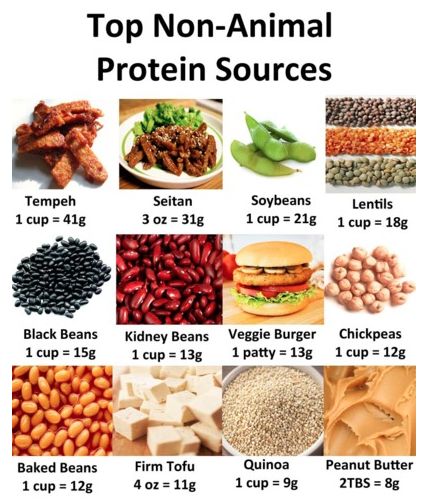
Below is a list of the best vegan protein sources.

Tofu

Tempeh

Soybeans

Lentils

Pinto, kidney, or black beans

Garbanzo beans

Quinoa

Almonds

Cashews

Walnuts

Peanuts

Sesame seeds

Avocado

Broccoli

Spinach

Kale

Sweet potatoes

Veggie burger

Veggie sausage

The Magic Of Meditation

meditation-cognitive-bias

Meditation is something I have engaged in regularly for over ten years, but my practice had dwindled in the past two years to a session every few months. This was partially due to the fact that the death of my meditation teacher had rattled me so deeply that I was unable to sit in a meditation without being distracted at some point by my own grief.

It took a major life event from early April to wake me up and make me realize that by neglecting my meditation practice, I had made my spirit weary and unbalanced, Since the cadence of my life had changed rather dramatically and suddenly, I decided that adopting regular habits like meditating would be good for me. I have been able to carve out time in my schedule to meditate daily over the last few weeks, and the effects have been profound and positive. On some days, I only have a few minutes to set up my zafu (meditation cushion), light incense and the candles on my meditation altar, and sit in the moment for mindfulness meditation, but I still make sure I meditate before crawling in bed each night. I am not joking when I say I think more clearly, feel more calm, and experience less anxiety after meditating daily over the last few weeks. I now look at my daily meditation sessions as important daily workouts for my mind and spirit. I swear that even my gym workouts are better as a result of meditation, because I am more focused and calm during gym time than I used to be. Things which used to irritate me sort of glide off me now.

Regular meditation has made a tremendous difference in my general demeanor and my outlook on life, and now I honestly look forward to my sessions. I strongly encourage everyone to meditate regularly, especially anyone who feels beaten down by life or who deals with constant stress. Meditation provides an excellent outlet for stress, and can lessen symptoms of depression, reduce blood pressure and boost immunity.

Before you say that there’s no time to meditate, I am willing to bet you that there are a few minutes each day you can spare to nurture your spirit. You can either take a few minutes first thing in the morning to sit and meditate, or do it right before you go to sleep. If you feel intimidated by the idea of sitting on a meditation cushion, you can simply sit on the floor comfortably, close your eyes, and focus on your breathing. Each time you inhale, allow your chest to expand, and pull your shoulders back. When you exhale, imagine pushing away all of the stress of the day, out of your body, and into the air. Keep breathing slowly and deeply with your eyes closed, and try to empty your mind of any random thoughts or feelings which may come up.

For a more detailed description of a great breathing meditation, read on. The original link can be found here: http://www.mindful.org/a-five-minute-breathing-meditation/

A 5-Minute Breathing Meditation To Cultivate Mindfulness

Reduce stress, anxiety, and negative emotions, cool yourself down when your temper flares, and sharpen your concentration skills.

By Greater Good Science Center | February 26, 2016

How do you cultivate mindfulness? One way is to meditate. A basic method is to focus your attention on your own breathing—a practice simply called “mindful breathing.” After setting aside time to practice mindful breathing, you’ll find it easier to focus attention on your breath in your daily life—an important skill to help you deal with stress, anxiety, and negative emotions, cool yourself down when your temper flares, and sharpen your ability to concentrate.

Time required:

15 minutes daily for at least a week (though evidence suggests that mindfulness increases the more you practice it).

How to do it

The most basic way to do mindful breathing is simply to focus your attention on your breath, the inhale and exhale. You can do this while standing, but ideally you’ll be sitting or even lying in a comfortable position. Your eyes may be open or closed, but you may find it easier to maintain your focus if you close your eyes. It can help to set aside a designated time for this exercise, but it can also help to practice it when you’re feeling particularly stressed or anxious. Experts believe a regular practice of mindful breathing can make it easier to do it in difficult situations.

Sometimes, especially when trying to calm yourself in a stressful moment, it might help to start by taking an exaggerated breath: a deep inhale through your nostrils (3 seconds), hold your breath (2 seconds), and a long exhale through your mouth (4 seconds). Otherwise, simply observe each breath without trying to adjust it; it may help to focus on the rise and fall of your chest or the sensation through your nostrils. As you do so, you may find that your mind wanders, distracted by thoughts or bodily sensations. That’s OK. Just notice that this is happening and gently bring your attention back to your breath.

Find a relaxed, comfortable position. You could be seated on a chair or on the floor on a cushion. Keep your back upright, but not too tight. Hands resting wherever they’re comfortable. Tongue on the roof of your mouth or wherever it’s comfortable.

Notice and relax your body. Try to notice the shape of your body, its weight. Let yourself relax and become curious about your body seated here—the sensations it experiences, the touch, the connection with the floor or the chair. Relax any areas of tightness or tension. Just breathe.

Tune into your breath. Feel the natural flow of breath—in, out. You don’t need to do anything to your breath. Not long, not short, just natural. Notice where you feel your breath in your body. It might be in your abdomen. It may be in your chest or throat or in your nostrils. See if you can feel the sensations of breath, one breath at a time. When one breath ends, the next breath begins.
Be kind to your wandering mind. Now as you do this, you might notice that your mind may start to wander. You may start thinking about other things. If this happens, it is not a problem. It’s very natural. Just notice that your mind has wandered. You can say “thinking” or “wandering” in your head softly. And then gently redirect your attention right back to the breathing.
Stay here for five to seven minutes. Notice your breath, in silence. From time to time, you’ll get lost in thought, then return to your breath.
Check in before you check out. After a few minutes, once again notice your body, your whole body, seated here. Let yourself relax even more deeply and then offer yourself some appreciation for doing this practice today.

One of the most beautiful things about meditation is that you can be fully in the moment, without holding onto the trappings of your day. Work obligations, chores, errands, and any other mundane distraction can wait. It’s a wonderful escape from the physical world and the ultimate way to attain balance and peace. Plus it’s free!

Fitting Into Your Skinny Jeans Is ALWAYS A Victory

IMG_20160501_083051

I have a pair of M.E.K. denim jeans in size 24 which I wasn’t able to wear for about 3 years due to my booty and leg building workouts and a battle with water retention issues in my midsection. I came very close to getting rid of them, since I could only fit into my 25’s all this time. Then a few weeks ago, I put on my 25’s and they were hanging on me, so I decided to give the 24’s a try.

TA-DA, they fit!

Fitting into Skinny Jeans

I was pretty happy when I could pull the 24’s over my butt, and when I was able to button them up without tugging, jumping up and down, or lying on the floor, I was ecstatic. I know that my hips look very narrow in the pic I posted, but it’s truly just the angle of the image. My hips measure about 33 inches (they were 34 inches for all of 2015), but every part of me has shrunken down, gotten leaner and more compact. The fact that a pair of jeans which I thought would only take up space in my armoire finally fit again made me almost giddy. I don’t feel “too skinny”, and at 115 pounds, I know for a fact that’s not true. I no longer feel like I want to pack on a bunch of muscle to build up my quads and glutes. I would rather let the natural ectomorphic tendencies of my body to take over a bit now. Since my body is doing it without me trying, why fight it?

It’s such an extraordinary feeling when you fit into your “skinny” jeans, isn’t it?

The Importance Of Iodine

detoxadine-magento_1

There is a rather insidious mineral deficiency which happens to run rampant in our society, and which negatively impacts the function of an endocrine gland which gets a lot of attention: the thyroid. The mineral I am talking about is iodine, and chances are that you are deficient in it.

The thyroid gland cannot synthesize thyroid hormones without iodine, so if your iodine stores are negligible, you have been doing your thyroid gland a major disservice. Add a stressful lifestyle to the mix, and you pretty much have locked in significant issues with thyroid function.

You might argue that you use sea salt, and since the sea contains most of the earth’s iodine, doesn’t that count? The problem is that most of the iodine is lost during the crystallization process. And forget about Morton’s Iodized Salt. The amount of iodine in that product is so small that it wouldn’t even begin to address a deficiency.

If you’re a health “nut” and have banned gluten-containing foods from your diet, that means that breads which may offer a decent source of iodine are no longer options for you. Those of you who are exercise fanatics (and yes, I am one of those people for sure) excrete quite a bit of iodine through your sweat, and if that iodine isn’t somehow replaced, you are going through each day in a state of severe iodine depletion. Another significant factor in the development of iodine deficiency (which, by the way, affects about 75% of the population) is the fact that people with cardiovascular issues are advised to limit their intake of salt. If you are a fitness person, especially if you compete, you probably avoid salt like the plague, which is not a good thing for your iodine stores or your thyroid function.

Dr. David Brownstein, who wrote a brilliant study called Iodine – Why You Need It And Why You Can’t Live Without It, claims that optimal health is not possible if someone has an iodine deficiency. Over time, the suffering thyroid gland can impact heart health, and can be implicated in the progression of certain types of cancer.

Symptoms of iodine deficiency include fatigue, dry skin, brittle hair, constipation, or depression. If you have a few stubborn pounds that you can never lose despite every intervention, or if you have water retention issues, low iodine levels may be the culprit.

Whatever you do, though, don’t pay attention to the RDA guidelines, because they are too tiny to make any difference in your iodine stores. The best dosage I recommend is 6.25 milligrams daily for several weeks, then taper off gradually (every other day for a week or two, then every two days, then stop). Beware of any bowel overactivity or acne breakouts, as those can be indicative of iodine intolerance. If you have any major medical issues, seek the advice of your physician before embarking on an iodine replacement regimen.

If you don’t want to take supplements, you can eat kelp snacks or seafood. Another important thing you can do to maximize the availability of iodine stores in your body is to avoid consumption of soy products, which block iodine absorption.

“Do You Still Compete?”

First Place Masters Bikini 35+ B Class, Team Universe, July 2013

First Place Masters Bikini 35+ B Class, Team Universe, July 2013

Whenever I hear that question now, I have mixed feelings, which range from a sense of longing for the stage, to complete relief that I have not stepped onto a bodybuilding stage for close to two years now. My short answer to the question, “Do you still compete?” is “Probably not.”

Though I competed in four Pro Bikini events, I was struggling so much with metabolic damage and perimenopause that I often think it wasn’t the best idea to jump onto the Pro stage only 4 months after I won my IFBB Pro Card. That sort of strategy might work for a twenty-something competitor who is at the top of the heap, but it didn’t work for my 47-year old body which had been beaten down physically, emotionally, and mentally. I honestly needed a break, but I pushed through, and as a result had ho-hum placings.

It has taken over three years for my body to return to a level of leanness which I feel comfortable with. I know you might assume that I was in a massive spiral with my weight and body fat, but it wasn’t THAT bad, at least not compared with many other competitors who spiral. Nevertheless, I spent over two years with excess fluff that I was not accustomed to at all, and I couldn’t stand how I looked or felt.

Here’s the breakdown of my stats throughout the years:

From age 21 through 43: Between 104-109 lbs., 11-13% body fat
2010 – Age 44: 112-113 lbs., 12% body fat
2011 – Age 45: 114 lbs., 12% body fat
2012 – Age 46: 115 lbs., 12% body fat
2013 – Age 47: FIRST HALF OF YEAR: 117 lbs., 11% body fat SECOND HALF OF YEAR: 119-126 lbs., 13-18% body fat
2014 – Age 48: 121-125 lbs., 14-18% body fat
2015 – Age 49: 119-123 lbs., 12-15% body fat
2016 – (soon to be 50): 115-119 lbs., 11-13% body fat

It has been a veritable see-saw for me over the years. I also firmly believe that I would not have gone through menopause as early as I have if it had not been for all the metabolic insults I made to my poor body as a result of competing. Since 2013, I have investigated every possible cause for the water retention issues which rather suddenly hit me. This year I have FINALLY been able to rid myself of the excess fluid around my midsection, but somehow that was at the cost of the fullness in my glutes which I had worked so tirelessly to achieve during the years in which I competed.

If you ask me what my plans are for competing, don’t be surprised if I evade the question. I realize with each passing day that competing is no longer something which I rely on to define who I am. I have paid my dues and proven my worth, and though I completely understand why people have a drive to compete, I am no longer chomping at the bit to throw on a ridiculously expensive, blingy bikini and stripper heels and put myself at the mercy of a panel of judges.

It Isn’t Just About Fitness: How Fitness Goals Impact Your Entire Life

My latest article for Sports Nutrition Supplement Guide is on the impact that fitness goals can have on every aspect of your life. You can see the original post via the link below, or read the article here as well.

FitnessGoals_310x250

http://sportsnutritionsupplementguide.com/inspiration-motivation/train-perform/item/1585-it-isn-t-just-about-fitness-how-fitness-goals-impact-your-entire-life

You may already be immersed in a fitness plan which enhances your physical strength and flexibility, improves performance, and keeps your physique in tip-top shape. But being physically fit confers a multitude of mental benefits which you might not be aware of. As a matter of fact, the link between physical health and mental health is so strong that people who brush off regular exercise as a time-consuming task are depriving themselves of optimal health and well-being.

Simply by engaging in 30 minutes of moderate intensity exercise 3 to 4 days per week, you can help manage or even prevent mild depression and anxiety through the release of endorphins in the brain. In addition, regular exercise increases energy levels, enabling you to power through a busy day more efficiently. Individuals who exercise regularly also tend to enjoy more restful sleep.

Those of you who hit the gym or engage in other types of physical activity several days per week may also have noticed that simply by being in an exercise environment, your worries and negative thoughts have a tendency to melt away, lending a lot of validity to the phrase “iron therapy”. The sense of community which exists within gym settings or other events (such as 5K races, mud runs, rock climbing events, and other activities) can also be a very effective means of eradicating any feelings of loneliness or isolation.

People who struggle with depression are more likely to be sedentary, and levels of GABA, serotonin, dopamine, and norepinephrine tend to be much lower than in people who work out regularly. Conversely, levels of stress hormones, such as cortisol, tend to be higher in sedentary individuals who suffer from chronic depression and anxiety. A study by the University of California San Francisco determined that women who exercised for 45 minutes over a 3-day period showed fewer signs of cellular aging compared to their inactive counterparts. Other studies have demonstrated that as little as three hours of regular exercise each week can reduce the symptoms of mild to moderate depression as effectively as pharmaceutical antidepressants.

Regular physical activity also benefits cognitive function. Researchers have discovered noticeable physical differences between the brains of people who engage in regular exercise when compared to inactive people. Several studies have found that the hippocampi in fit individuals is much larger. Why is this important? Because the hippocampus is largely responsible for spatial memory, and it is also one of the first regions in the brain to be affected by Alzheimer’s related damage. Exercise also boosts levels of growth factors in the brain which are responsible for higher cognitive functions such as concentration, attention, memory and learning.

Lastly, regular exercise boosts self-esteem and improves body image, contributing to a greater sense of well-being and confidence. Think of how exciting it is when you reach a training goal, such as increased strength or flexibility, weight loss, or a positive change in body composition.

In summary, when you train your body through regular exercise, you also boost brain health and create a greater sense of overall well-being.