What The Hell Is “If It Fits Your Macros” Anyway?

You have probably heard about the “If It Fits Your Macros” (or IIFYM) trend which has been increasing in popularity within the fitness and bodybuilding world. It’s not surprising that the concept was embraced and developed by people within the industry who were sick and tired of adhering to monotonous, restrictive meal plans in which the vast majority of foods were labeled as evil and forbidden. On a personal note, I jumped on the IIFYM bandwagon as well because I was fed up with avoiding certain so-called “bad” foods and also dealing with metabolic burnout from years of caloric restriction. What surprised me was the positive manner in which my body responded to taking in maintenance calories as opposed to constantly functioning at a caloric deficit which only served to slow down my metabolism.

The term macro refers to the principal nutrients which the body requires: protein, fat, carbohydrates. IIFYM dictates that as long as you fulfill the energy needs of your body, you can obtain calories from any food source. Let’s face it: your body needs a certain amount of protein, carbohydrate and fat, along with fiber and micronutrients such as vitamins and minerals in order to function optimally, but it doesn’t scrutinize every macronutrient gram as it is thrown into the body. On the other side of the coin, it is also important to bear in mind that most proponents of IIFYM do not consume large amounts of junk food either. As long as quality protein is consumed in adequate amounts to contribute to muscle growth and repair, along with micronutrients and dietary fiber to support normal digestion, it shouldn’t matter if a small percentage of caloric daily intake is obtained from discretionary or junk food items.

My personal opinion is that the quality of carbs still should come into play if you are employing an IIFYM approach. However, if the majority of carbs comes from quality sources such as oats, sweet potatoes and brown rice, a small amount of junk carbs (cookies, Pop Tarts) shouldn’t tip the balance too much. I am a fan of carb BACKloading and believe the largest insulin spike should come at night before you sleep, since you will be fasting for several hours.

I know some of you are still reading this with great skepticism and want to hold onto your six boring meals of tilapia and green beans every day, refusing to accept the concept of loosening the reins a bit and actually enjoying a variety of foods. IIFYM doesn’t mean that you lose control and eat whatever you want, whenever you want. What it DOES mean is that foods will no longer be forbidden or “bad”, and that you can actually consume them on a fairly regular basis as long as you keep track of your daily nutrient intake.

The main drawback of IIFYM is that you must track your food intake, which in a sense is another form of food fixation. However, there is a greater chance that you will meet your body’s nutrient needs than if you follow a cookie cutter, calorie restricted, orthorexia lover’s contest prep meal plan. When clean eating is followed 100% and the majority of food sources are banned, caloric restriction is almost inevitable. Such caloric restriction, when practiced for an extended period of time, will cause fat loss to stall and metabolism to slow down.

How about if you met your macronutrient needs without having to banish most foods from your diet? So many people in the world of fitness suffer from orthorexia, a psychopathological condition in which foods are labeled as “good” or “bad”, and in which individuals become socially isolated over their need to eat “correctly”. I have seen so many competitors struggle with an increasing difficulty in losing fat, so their coaches restrict their calories even more and ban more foods from their meal plans. Fruit, healthy fats, and healthy carbs are stripped away in an effort to lean the competitor out. Another thing to consider is what food deprivation does to people. If a food is “bad”, suddenly the temptation to indulge in that bad food is intensified.

You might want to consider trying IIFYM if you are in a slump with your current meal plan. You may feel like a hamster on a very boring and restrictive “clean eating” wheel in which you are only allowed to eat very specific foods in certain combinations. For some of you who have been doing this incessantly for years, you may have noticed over time that it has become more and more difficult to lose weight. Your meal plan is probably VERY rigid and VERY boring, consisting of foods you are probably so sick of that if you never had to eat them ever again, you would rejoice in the streets for days. Give IIFYM a try. You might be pleasantly surprised at how your body responds.
Weight Training Won’t Make You Big, Ladies!

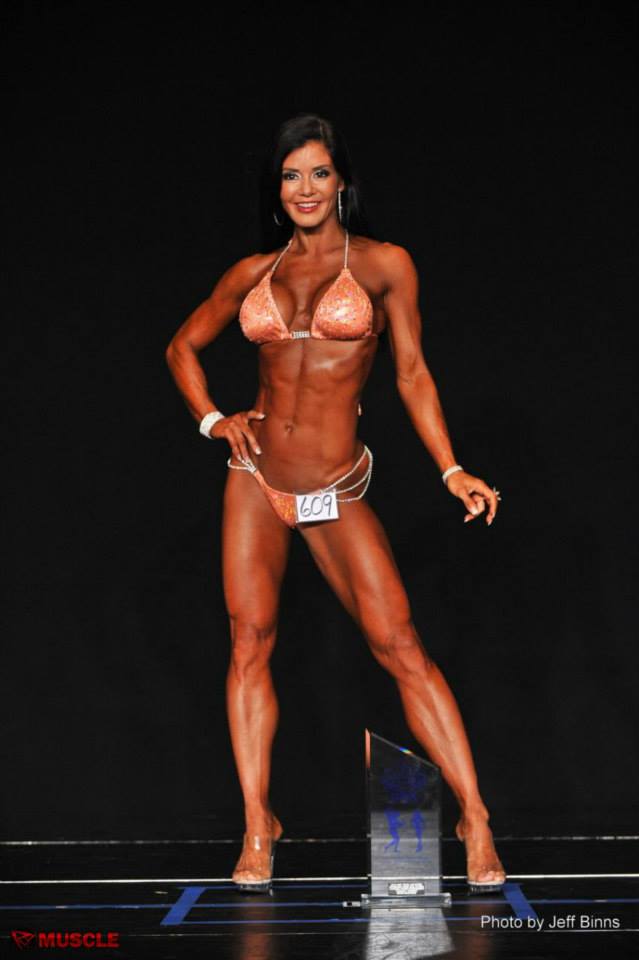
This was taken the day I won my IFBB Pro Card. I was training 4-5 hours a day at the gym, lifting heavy. I never got bigger than this, nor did I want to.

It still boggles my mind how many women are afraid to lift weights for fear that they will become huge and look like big, hulking men. How wrong they are! I will tell you right now that the answer to the question which serves as the title of this feature is, completely, unequivocally, NO. I often speak with female clients and patients of all ages who lament the fact that they cannot get the sculpted, lean bodies they covet, despite working out regularly. The problem stems from a couple of things:

1. They do not feed their bodies properly.
2. They do not lift weights, or if they do, they do not practice a lifting regimen that would bring about the physical changes they want.

I see ladies at the gym who will jump on a cardio machine for 20 to 30 minutes of easy cardio, then, if they had an indulgent night of eating or partying, they may extend their cardio sessions for a longer period of time at the same intensity. Before or after this, they may hit a few sets of uninspired exercises with light weights. These women barely break a sweat, yet they expect their bodies to transform. I’ve got news for you: that type of workout will ensure that you remain at the same level of fitness, and over time, you will see what little conditioning you may have plummet despite all your consistency.

It is a gross misconception that by lifting light weights and taking it easy at the gym, they will avoid getting bulky and will tone their muscles. Women are built differently than men, and simply do not have the testosterone levels necessary to build significant, bulky muscle mass. You need to challenge your body and create the muscle microtears necessary to build shapely, lean muscle. That means you need to lift heavier weights and break a sweat!

There are a multitude of benefits to lifting heavier weights, which I detail below.

CURVY, LEAN MUSCLE:

When you lift heavier weights, you will be rewarded with better muscle definition. Lifting very light weights will never challenge the muscles, so the muscles will never grow. I know I have scared some ladies, but think about a woman who has great muscle tone, but is still lean and feminine. A woman like that lifts weights that are heavy enough to spark muscle growth. If you follow suit, you will end up lean and more defined without being bulky.

GREATER OVERALL STRENGTH:

By lifting heavier weights, you will become stronger, and everyday activities will become easier to perform. You will also gain more structural stability from the greater muscle density which can protect your back and your joints.

IMPROVED BALANCE, COORDINATION AND POSTURE:

By improving muscle tone through weight training, you will enjoy better balance, greater overall coordination, and better posture.

IMPROVED BONE DENSITY:

Resistance training improves bone density by stressing the bones, thus triggering bone growth. This confers a protective effect against development of osteoporosis, especially in petite women.

HIGHER METABOLISM:

When you work out with heavier weights, you create tears in the muscles worked. When you do this, you expend a greater number of calories in order to repair those microtears.

LOWER BODY FAT:

Your body fat stores, particularly in the midsection, will be better utilized when you perform weight training with heavier weights.

PREVENTION OF MAJOR DISEASES:

Challenging weight training with heavier weights will reduce your risk of high blood pressure and heart disease. It will also lower LDL cholesterol while raising HDL cholesterol. In addition, your risk of diabetes and breast cancer will drop significantly.

BETTER IMMUNE SYSTEM FUNCTION:

Moderate exercise reduces stress, and by doing so, enables your body to produce more white blood cells to combat infection. In addition, the shift in attention from the troubles of the day while you are weight training will reduce the stress which can suppress your immune system.

GREATER WELL-BEING:

Vigorous resistance training boosts endorphin (natural opiates produced in the brain) levels, which create a sense of well-being. It will also stave off depression and produce a more restful sleep.

REDUCED PMS SYMPTOMS:

As stated previously, weight training is a terrific mood elevator and regulator. It also has a positive impact on hormone levels, increasing blood levels of estrogen, growth hormone, and testosterone. This counteracts the drop in estrogen and rise in progesterone which occurs right around the time before menstruation.

My Just Float Experience

What is Floating – Just Float, The World’s Largest Float Therapy Center

Yesterday I had a pretty remarkable experience, floating for an hour in a room devoid of light and external noise. The 1,000 pounds of Epsom salt which saturated the pleasant, tepid water caused my body to float effortlessly. Since I meditate daily, I welcomed the release that came with being untethered by my senses, gently hovering in a state of incredible relaxation.

For those of you who are wondering what the process is, you shower before entering the chamber to remove oils, lotions and pollutants from your skin and hair. Then you step into the tub which is softly illuminated. Once you lie in the water and adjust to your body’s buoyancy, you can turn off the lights and allow the soothing music to lull you into a state of stillness. The music fades away, leaving your breathing as the only steady sound.

At the end of your session, the music and lights slowly return. You exit the tub and rinse off the salty water.

Forty dollars (intro price) and an hour later, I definitely think the experience was well worth it.

If you are in the Los Angeles area, and you would like to try floating, please click on this link: http://justfloat.com/

Fight Aging With Whey Protein

Original post can be found at:

http://www.sportsnutritionsupplementguide.com/health-wellness/anti-aging/item/1519-why-whey-protein-is-the-key-to-anti-aging#.VZ2WSvlViko

Fitpicture310x250

Adequate protein intake is vital to anyone seeking to preserve muscle mass, especially since the aging process threatens the loss of all that hard-earned muscle through a process called sarcopenia. Sarcopenia causes a loss of muscle mass and strength in all individuals as they age, even in die-hard gym addicts.

The aging process hits us with a double whammy because 1) our dietary protein needs increase over time, and 2) our ability to synthesize new proteins plummets as a consequence of diminished levels of testosterone, human growth hormone, and insulin-like growth factor-1. In other words, it becomes tougher and tougher to meet the aging body’s protein needs, and the result is a loss of muscle.

One of the biggest challenges in meeting the protein demands of the body as we age is the physical challenge of consuming adequate protein. Protein powders are an excellent means of meeting protein requirements in a low bulk form since they are dissolved in liquid. Whey protein in particular is an excellent protein source for anyone over the age of 30, provided they have no issues with allergy or intolerance to whey.

Whey protein is rich in branched chain amino acids, especially leucine, which is considered the most important branched chain amino acid for protein synthesis, especially in older people. Branched chain amino acids are also responsible for proper dermal collagen protein synthesis, so they play a huge role in the condition of the skin, maintaining its suppleness and tone.

Another age-related benefit of supplementing one’s diet with whey protein is the presence of lactoferrin, which fortifies bone and prevents osteoporotic fractures by activating osteoblasts. Whey protein also contains high levels of cysteine, an amino acid which boosts glutathione production. Glutathione, an antioxidant with powerful anti-aging effects, steadily declines naturally as we age, and since its production relies on the presence of cysteine, the introduction of whey protein into a meal plan can guard against age related diseases.

Whey protein has profound effects on glucose metabolism as well. It reduces serum glucose levels in healthy individuals while impairing glucose tolerance in diabetic and obese individuals. When consumed consistently as part of a sensible high protein meal plan, the result is a reduction in body weight and an increase in fat oxidation. This is due to the release of leptin, cholecystokinin, and glucagon like-peptide 1, all of which create a feeling of satiety.

In summary, the benefits of whey protein are numerous and significant, especially for older individuals. If you have yet to incorporate whey protein into your meal plan and you have been lamenting the ravages of Father Time, do yourself a favor and add whey protein to your daily regimen.

References: Sousa G et al. Dietary whey protein lessens several risk factors for metabolic diseases: a review. Lipids Health Disc. 2012;11:67

Macafem Video Review on YouTube

Please check out my review of Macafem which was shot in 2015. Macafem is a supplement designed to address the symptoms of perimenopause and menopause (hot flashes, night sweats, mood swings, etc.). I have not been approached, paid, or otherwise encouraged by the makers of Macafem to put a review together. This video is merely my unbiased review of the product from my personal experience taking it.

I am still taking Macafem, and my symptoms of night sweats and hot flashes have pretty much subsided. I also lost all the water weight I was carrying while I went through menopause.

How To Be As Prepared As You Can Be for Your Big Run

Those of you who enjoy running should definitely read this article!

I am delighted to share the following article which was written by Jason Lewis. Jason Lewis is passionate about helping seniors stay healthy and injury-free. He created StrongWell.org to share his tips on senior fitness.

Mike Tyson once said “everyone has a plan until they get punched in mouth.” For those about to compete in a major race, the logic still applies. Everyone has a plan for their run until they come face to face with some of the harsh realities of race running. It can be hard, and you may face what feels like insurmountable obstacles. But if you prepare yourself properly, you can make sure you have the best chance possible to beat whatever punch – metaphorically speaking of course – comes your way. Here are some tips.

Know how to properly hydrate

If there’s one thing that any runner must know, it’s proper hydration. Dehydration lowers your blood volume and when you have lower blood volume your heart has to work extra hard to get blood (oxygen) to your muscles. Long story short, you can’t run your best when dehydrated. So, drink as much water as you can before, during, and after your runs?

Not exactly. Overconsumption can be an issue. For the most part, you should drink when you’re thirsty – no more, no less. Don’t overcomplicate things. Here’s a good resource on how to properly hydrate for certain types of runs.

One big question is whether water is good enough, or should you hydrate with sports drinks. Both are true, actually. Water is fine, but there are some benefits to Gatorade. Sports drinks contain carbs (in the form of sugars) and electrolytes (which you lose when you sweat) – two things your body needs when participating in demanding physical activity.

Find a routine and stick to it

You should develop a routine surrounding your runs and keep it the same through training and through race day. Eat the same thing before, during, and after runs. Wear the same shoes and clothing. Get the same amount of sleep the night before. Listen to the same music. This routine, if you keep to it, will help your body and mind stay strong through the tough stretches.

Know how to treat common running injuries

Running puts a good amount of stress on your body – whether it’s trail running, city running, or even practicing in a gym or on a treadmill. If you run a lot, you’re going to get hurt at some point. There’s no getting around it. It’s vital that you know how to deal with sprains, scrapes, blisters, and more. The shorthand guide is to always ice a sprain, stretch a cramp, pressure a wound, and leave a blister intact. For more on this, check here.

Know why you’re running

Sure, you’re running for the exercise and the feelings of personal accomplishment. The runner’s high isn’t an unwelcome byproduct. But in the end, running is about a mentality – even a spirituality for some. Focus on how running gives you a mental boost and makes you a stronger person: push yourself to achieve goals you never thought possible; give yourself a chance to find a stronger you through self-discovery; heal from a broken past; overcome seemingly impossible obstacles. As Jim Friedrich says in the article The Spirituality of Running, “What we do with our bodies manifests and expresses inner states, the sacred ground of our being. But bodily practices can also induce inner states.”

Whether you’re running for fun, a charity 5K, or a marathon – the principles of proper running preparation are pretty much the same. If you know how to hydrate, deal with inevitable injuries, and stick to what you know works, you will have a good chance at succeeding in whatever you do. “Success” is whatever you want it to be – only you can decide your own criteria.

Photo Credit: Pixabay.com

Stuck In Mud Types

Have you ever met someone who always comes up with a reason why he or she can’t do something that would be beneficial to his or her well-being?

I honestly can’t help people like this, because they aren’t where they need to be in order to embrace true change. They shoot me down every single time I make a suggestion, and it my quarter decade of experience as an exercise scientist and coach, my 13 years of experience as a physician, and my nutrition certification don’t matter at all to them. It takes every bit of self-restraint I can muster to refrain from berating them for their idiotic reasoning. Their thought patterns are so circuitous and toxic that sitting through a consultation with them (FYI they will usually demand more time than what is allotted for the visit) makes me want to get up and walk out the door.

These are the same people who will blame others who genuinely try to guide and help them in their wellness and fitness efforts when they fail to do their part in following sound advice. I can spot them from a mile away, and when they come to me, I absolutely cringe.

If you are one of these types, I have a suggestion for you. If you’re so miserable with where you are at health-wise or fitness-wise, and your methods haven’t worked, then CHANGE IT UP. Allow others to guide you without you attacking them and naysaying them. Try the foods you insist you can’t stand.

I have had clients tell me that they refuse to eat anything except a small handful of foods. Here are a few examples of food items which former clients insisted on eating daily (note that they refused to eat anything other than the food items listed):


1. Kale, hard-boiled eggs, wheat toast

2. Bagels, eggs, cheddar cheese, guacamole

3. Tortillas, hummus, Yoplait yogurt

4. Cottage cheese, dark chocolate, oranges

All four people who reported these diets were upset that they weren’t meeting their fitness goals. However, when I suggested to them that they needed to increase the variety of foods consumed to ensure proper nutrition, they shuddered, stating that they didn’t like ANYTHING else. Talk about stubborn…and foolish!

How Technology May Be Saving Aging Brains

Our brains are precious cargo which govern all that we do. One of the most mystifying things about these organic motherboards is that they are constantly changing and adapting to our environment, even as we continue to age. Of course, that also means that as we age, we can experience a decline in function.

Now that we are deeply immersed in a major technological age, our very sensitive noggins are also being shaped by the endless stimulation by iPhones, smartphones, computer interfaces, Mp3 players, Bluetooth, even self-driving vehicles. The speed at which technology is evolving is so rapid these days, that it is almost impossible to keep up, but somehow, our gray matter will be affected, either positively or negatively, by these advancements. Most scientists have begun to believe that the impact is mostly positive.

There is a new generation of young people who have little to no clue about what it might be like to play outside and to enjoy the fresh air, because they would much rather play video games, surf the internet, or dig around in the world of social media. The trade-off is that these millenials tend to have faster decision-making skills and can also navigate through the newer computer interfaces and platforms with great ease.

There’s actually a term coined for the generation which has been exposed to computers and cellular phones since birth: digital natives. Their brain circuitry actually differs from older individuals who haven’t had the same lifelong exposure to tech gadgets. There’s a possibility that older brains may get a similar benefit from using the high-tech devices which are so ubiquitous these days. Dr. Small from UCLA performed a study which examined older individuals who had some experience searching online, and discovered that those individuals did indeed have more activity in the decision making portions of the brain than subjects who had never searched online before. Since the brain alters its neural connections with each experience, it makes sense that our inner wiring will change, even as we age.

Sequential Compression Devices For Recovery

I’ve been using the Air Relax sequential compression device for a couple of months now, and have incorporated regular treatments into my post-workout regimen. Whenever I train legs (three days a week), I make sure to do a 15 minute treatment at some point during the day. For the most part, it feels fantastic, like a therapeutic massage, but every now and then, the leg sleeves will clamp down like vice grips on a strained area like my calf and inspire me to chant, “ow, ow, ow, owwww!” in quick succession. Despite these isolated moments of torture, I always feel better after the treatment is finished, and my limbs don’t feel as heavy or as cramped as they usually do post-lift.

There are two types of individuals who can benefit from using sequential compression devices. The first group consists of sedentary or bedridden patients who run the risk of developing deep venous thrombosis. The second group consists of athletes, ranging from weekend warriors to elite Olympians. The benefits of sequential compression include enhanced lymphatic drainage, improved blood circulation, enhanced mobilization of lactic acid and other waste products from muscle tissue, and a massage component which is rather pleasant.

If you decide to purchase a sequential compression system for home use, I heartily recommend the Air Relax version, because it is quite affordable for under $400 (versus $1,500 for one major competitor’s version), and it inflates to pressures over 200 mm Hg, qualifying it as a FDA 510K Class II cleared medical grade device.