Category Nutrition
Carbohydrate Sensitivity
YouTube Video About SWAT Fuel Supplements
Why I Am Against Instant Oatmeal
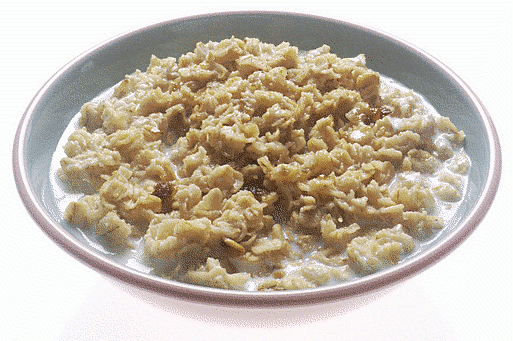 I know people lead very hectic lifestyles these days, and believe me, I can relate. Work, training, meetings, appointments, chores, errands, modeling, fitness and bodybuilding events, writing, shooting videos, and managing websites and social media keep me going at a frenetic pace every day. Yet I make sure I have a few minutes to prepare a nutritious morning meal every single day. I become very irritated when I hear patients and clients say that they have ZERO time to prepare a nutritious breakfast. Are you serious about not having even five minutes in the morning to take care of your own health? Come on.
Patients often proudly tell me that they are eating oatmeal every day, but when I ask them what type, they tell me they grab the instant variety. This irritates me to no end. You still have to put the oatmeal in a bowl, boil the water which takes about three minutes, then mix. When I make my old-fashioned oats, I combine them in a saucepan with water and a dash of cinnamon, then let the mixture cook for three minutes. So what if I take an extra 30 seconds to transfer the cooked oatmeal into a bowl?
Another thing I think is disgusting about instant oats is that the oat and water mixture often does not mix well, so you have a gloppy, soupy mixture which has to set for at least a minute so that it will thicken. Halfway through that extra minute in which you are waiting for your instant oatmeal to thicken, I am already eating my old-fashioned oatmeal.
You may wonder what the big deal is about eating the plain oats versus the instant variety. There are artificial flavors, thickening agents, sugar, and salt in the instant packs which lowers the nutrient density of the oatmeal. In addition, since there is so much processing which occurs in the manufacture of the instant variety of this food item, vitamins and minerals are added to replace what has been stripped from the original oats. Why go through all this when you can choose the least processed version which is the most nutritious?
Bear in mind that the cereal industry is counting on you grabbing the instant variety because of its attractive packaging. Guess what? The instant oatmeal is far more expensive than the old fashioned oats which have one item on their ingredient list: “OATS”. Just because a food item comes in a single serving envelope and only requires you to add hot water does NOT mean it will shave off significant time from your morning meal prep. Remember what I mentioned earlier about total prep time? Here’s a reminder:
INSTANT OATMEAL PREP:
Tear packet and pour oatmeal into bowl (5 seconds)
Boil water (3 minutes)
Pour water over oat mixture and stir (20 seconds)
Let sit for 1 minute to thicken (1 minute)
TOTAL PREP TIME = 4 minutes, 25 seconds
OLD-FASHIONED OATMEAL PREP:
Combine oats and water in a saucepan with a dash of cinnamon (10 seconds)
Cook mixture on medium heat for three minutes, stirring occasionally (3 minutes)
Remove from heat and pour into bowl (10 seconds)
TOTAL PREP TIME = 3 minutes, 20 seconds
If you insist on eating instant oatmeal, at least go for the healthier versions. The best out there is Trader Joe’s Organic Oats and Flax Instant Oatmeal, which contains: organic rolled oats, organic dehydrated cane juice solids, organic flax seed, sea salt.
Emotional Eating
Find original post at: http://www.rxmuscle.com/rx-girl-articles/6941-emotional-eating.html
Rather than discuss well-known emotional eating disorders such as bulimia, I will concentrate on binge eating which many women engage in from time to time. It is important to recognize this behavior if it becomes a regular pattern, because frequent emotional eating warrants a diagnosis of binge eating disorder and requires treatment and intervention.
Binge eating is characterized by eating compulsively to cope with negative emotions and stressful situations. A binge eater is rarely hungry when she begins to eat and will continue to eat well after she is full. Such episodes can last for up to two hours or can occur off and on throughout the day. The binger feels guilty both during and after the episode, but will not attempt to counteract it by fasting, taking laxatives, vomiting, fasting or over-exercising. A strong lack of self-control as well as feelings of shame will accompany this behavior pattern. There is a strong association between binge eating and depression. Binge eating is also driven by social components such as social pressure to be thin, emotional and sexual abuse, parental criticism of a child’s weight, and the use of food as reward or punishment.
Food cravings are usually the strongest when you are in emotional crisis. You may reach for food for comfort or to serve as a distraction. Consider the following highly stressful events and think about whether you reached for comfort foods during such times:
- Financial problems
- Health problems
- Work issues
- Relationship issues
- Fatigue
- Family issues
Though some people will lose their appetites when stressed and will refrain from eating, many others will engage in impulsive eating in an effort to deal with negative emotions. This may be relatively harmless if such emotional eating occurs on a very rare occasion, but becomes a serious problem when it is used as the only coping mechanism for stressful situations or negative emotions. Just bear in mind that if you have a rare moment of weakness, it is important to recognize it as just that and to prevent yourself from spiraling into excessive feelings of guilt over the incident. If you engage in an episode of emotional eating, learn to forgive yourself and have a fresh start the following day.
Why We Engage in Emotional Eating
What occurs almost invariably when we eat emotionally is that we turn to cookies, cakes, candy, fried foods and breads rather than to healthy foods. There is a biochemical basis for such behavior. Carbohydrates which are high in sugar or fat release dopamine in our brains which in turn stimulates the brain’s pleasure center, creating a sense of euphoria. These foods are usually associated with pleasurable memories, such as cake which you may have looked forward to on your birthday, or macaroni and cheese as a treat after school when you were a child.
Food can also serve as a happy distraction from conflict or stressful events by stimulating the aforementioned pleasure centers. What will frequently occur is that an excessive amount of these foods will be consumed. However, if you remain aware of such automatic connections between food and mood and realize when you are eating for reasons other than hunger, you can break this cycle and get back on track with healthy eating habits which are associated with true hunger.
How To Combat Emotional Eating
- Keep a food diary. Get in the habit of writing down everything you eat and drink, including the quantity, the times at which you eat, your emotional state while eating the meal, and your level of hunger. By doing this you may see patterns which will reveal your emotional relationship with food.
- Remove tempting foods. Avoid stocking comfort foods in your home if you find that they are difficult to resist. And by all means avoid making trips to the grocery store if your emotions are spiraling out of control!
- Practice stress management. Yoga, meditation, and relaxation techniques are effective methods of managing your stress.
- Determine whether you are truly hungry. Many times people may believe they are hungry when in reality they are actually emotionally distraught and desperately searching for a way to defuse such emotions.
- Make sure you consume adequate calories. Individuals who are trying to lose weight will often restrict their calorie intake too much, and will turn to the same foods in an effort to remain on track without rewarding themselves with an occasional treat. Adding variety to your meal plan will also help to keep you on track.
- Distract yourself. If you get an urge to snack when you aren’t truly hungry, distract yourself by watching a movie, calling a friend, reading, listening to music, or taking a walk.
- Consume healthy snacks. If an urge to snack between meals strikes, choose a low-calorie snack such as vegetables with seasoned nonfat Greek yogurt, fresh fruit, low fat cottage cheese or rice cakes.
- Get enough sleep. Getting enough sleep is an important component in decreasing cravings for comfort foods.
- Eat at regular intervals. Consume smaller meals every three to four hours to keep you from feeling hungry or deprived.
- Focus on the experience of eating. Learn to eat in a mindful manner, in which you pay attention to your meal and only your meal. Become aware of the sensations associated with eating.
- Reward yourself. It is both physically and emotionally unhealthy to practice excessive calorie restriction for prolonged periods. Allow yourself to have a favorite food or meal once each week.
- Connect with your emotions. When a food craving hits during an emotional time, write down the emotions you are experiencing, such as sadness, loneliness or anger.
- Seek professional help if emotional eating is frequent. There are countless support groups which you can join which will help you to develop insight as well as the skills to avoid engaging in such behavior.
DHEA To Reduce Aging and Build Muscle
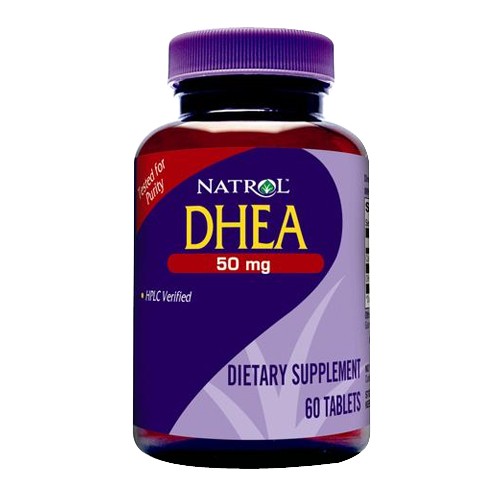 Dehydroepiandosterone (DHEA) is a weak androgen produced in the adrenal glands that is a precursor for testosterone. It is converted in the body into androstenedione, which is then converted into testosterone. DHEA levels are highest when we are in our 20’s, then decline significantly as we age.
DHEA has been used to treat depression, adrenal sufficiency, obesity, vaginal atrophy, and erectile dysfunction, but it is most commonly used to reverse the aging process and build muscle. It is especially effective in men with flagging testosterone levels who do not wish to take testosterone directly.
Men can benefit from taking 25 to 50 milligrams or more per day. If men decide to supplement with higher doses, guidance from their primary care physicians is advised beforehand. If DHEA dosing is too high, men can develop breast tissue and high blood pressure.
Women have a much trickier time with DHEA, and many can only tolerate 5 to 10 milligrams without experiencing side effects. Side effects in women include abnormal periods, oily skin, facial hair, and mood changes.
Usually side effects are mild, such as fatigue and headache. Another relatively common side effect is insomnia, so it is a good idea to take DHEA in the morning. Do not take DHEA if you have heart disease, liver disease, diabetes, high cholesterol, thyroid problems, polycystic ovary syndrome, or blood clotting disorders.
YouTube Video Props To P28 Foods!
Caffeine Pros and Cons
 Caffeine certainly gets a lot of love in our society, found in coffee, energy drinks, soft drinks, energy pills, fat burners, and even foods like yogurt. There is a ton of controversy surrounding caffeine consumption, with some camps celebrating its benefits while others are quite anti-caffeine. Here is a short list of pros and cons of caffeine.
PROS:
Boosts memory
Improves concentration
Decreases fatigue
Speeds up reaction times
May lower risk of Alzheimer’s disease
CONS:
May trigger high blood pressure in susceptible individuals
May cause jitters
May decrease bone density
May produce dependence
Dehydrating due to its diuretic effect
I know many of you may be wondering what is considered an acceptable level of caffeine consumption. According to researchers from the Linus Pauling Institute at Oregon State University, a daily intake of 300 to 400 milligrams per day (which is equivalent to 3 to 4 six-ounce cups of coffee) is acceptable and carries minimal health risks. However, if you consume caffeine daily and choose to decrease your caffeine consumption, make sure to do it gradually. Abrupt drops in caffeine consumption can cause withdrawal symptoms such as headache to occur. On the flip side, excessive caffeine consumption can also cause symptoms which include insomnia, heart palpitations, nausea, vomiting and tremors. Bear in mind that caffeine is considered a drug with the power to create dependence in those who consume it regularly and in large amounts.
Supplements Which Support an Underactive Thyroid
Normal thyroid function is dependent on a multitude of nutrients, so a deficiency in any of them can send an individual into diminished active thryoid hormone levels and a spectrum of symptoms. The best way to support thyroid function is to take the following natural supplements.
Vitamin B complex: People with underactive thyroids commonly suffer from vitamin B12 deficiency.
Vitamin D – This is another vitamin which is commonly deficient in the majority of the population. Vitamin D is necessary for thyroid hormone production, so take 800 to 1,000 International Units (IU’s) to protect thyroid function.
Vitamin E – Vitamin E aids in converting T4, which is the inactive form of thyroid hormone, into active T3. Recommended daily dosage is 400 to 800 IU’s.
Zinc – Zinc is involved in the signal to produce thyroid hormone. Take 10 milligrams (mg) or more daily. It is also important to take copper along with the zinc. You need to take 1 to 2 mg copper for every 10 mg zinc taken.
Omegas – Omega fatty acids have a protective effect on the thyroid gland and decrease inflammation.
Selenium – Selenium is critical for promoting conversion of T4 into T3. Take 200 micrograms daily.
Vitamin C – Vitamin C is a strong antioxidant and should be part of any regimen that is targeted at protecting the thyroid. A reasonable daily dose of vitamin C is 2000 mg.
Foods Which Boost a Sluggish Thyroid
Though I am trained in traditional Western medicine, I strongly believe in the power of foods and recommend dietary changes as much as possible when treating a whole spectrum of diseases. Since thyroid dysfunction is relatively common, I am providing a list of foods which can be beneficial with an underactive thryroid gland, as well as foods to avoid.
Try to incorporate the following foods into your regular meal regimen to boost thyroid function naturally:
Eggs
Turkey
Beef
Saltwater fish such as tuna or halibut
Shellfish
Seaweed
Coconut oil
Sunflower seeds
Walnuts
Pecans
Mushrooms
There area some foods which you should limit or even eliminate from your diet due to their tendency to interfere with thyroid function. They are:
Soy
Cabbage, broccoli, cauliflower, Brussels sprouts, kale
Spinach
Peanuts
Almonds
 dr. stacey naito's blog