Stuck In Mud Types

Have you ever met someone who always comes up with a reason why he or she can’t do something that would be beneficial to his or her well-being?

I honestly can’t help people like this, because they aren’t where they need to be in order to embrace true change. They shoot me down every single time I make a suggestion, and it my quarter decade of experience as an exercise scientist and coach, my 13 years of experience as a physician, and my nutrition certification don’t matter at all to them. It takes every bit of self-restraint I can muster to refrain from berating them for their idiotic reasoning. Their thought patterns are so circuitous and toxic that sitting through a consultation with them (FYI they will usually demand more time than what is allotted for the visit) makes me want to get up and walk out the door.

These are the same people who will blame others who genuinely try to guide and help them in their wellness and fitness efforts when they fail to do their part in following sound advice. I can spot them from a mile away, and when they come to me, I absolutely cringe.

If you are one of these types, I have a suggestion for you. If you’re so miserable with where you are at health-wise or fitness-wise, and your methods haven’t worked, then CHANGE IT UP. Allow others to guide you without you attacking them and naysaying them. Try the foods you insist you can’t stand.

I have had clients tell me that they refuse to eat anything except a small handful of foods. Here are a few examples of food items which former clients insisted on eating daily (note that they refused to eat anything other than the food items listed):


1. Kale, hard-boiled eggs, wheat toast

2. Bagels, eggs, cheddar cheese, guacamole

3. Tortillas, hummus, Yoplait yogurt

4. Cottage cheese, dark chocolate, oranges

All four people who reported these diets were upset that they weren’t meeting their fitness goals. However, when I suggested to them that they needed to increase the variety of foods consumed to ensure proper nutrition, they shuddered, stating that they didn’t like ANYTHING else. Talk about stubborn…and foolish!


How Technology May Be Saving Aging Brains

Our brains are precious cargo which govern all that we do. One of the most mystifying things about these organic motherboards is that they are constantly changing and adapting to our environment, even as we continue to age. Of course, that also means that as we age, we can experience a decline in function.

Now that we are deeply immersed in a major technological age, our very sensitive noggins are also being shaped by the endless stimulation by iPhones, smartphones, computer interfaces, Mp3 players, Bluetooth, even self-driving vehicles. The speed at which technology is evolving is so rapid these days, that it is almost impossible to keep up, but somehow, our gray matter will be affected, either positively or negatively, by these advancements. Most scientists have begun to believe that the impact is mostly positive.

There is a new generation of young people who have little to no clue about what it might be like to play outside and to enjoy the fresh air, because they would much rather play video games, surf the internet, or dig around in the world of social media. The trade-off is that these millenials tend to have faster decision-making skills and can also navigate through the newer computer interfaces and platforms with great ease.

There’s actually a term coined for the generation which has been exposed to computers and cellular phones since birth: digital natives. Their brain circuitry actually differs from older individuals who haven’t had the same lifelong exposure to tech gadgets. There’s a possibility that older brains may get a similar benefit from using the high-tech devices which are so ubiquitous these days. Dr. Small from UCLA performed a study which examined older individuals who had some experience searching online, and discovered that those individuals did indeed have more activity in the decision making portions of the brain than subjects who had never searched online before. Since the brain alters its neural connections with each experience, it makes sense that our inner wiring will change, even as we age.

Sequential Compression Devices For Recovery

I’ve been using the Air Relax sequential compression device for a couple of months now, and have incorporated regular treatments into my post-workout regimen. Whenever I train legs (three days a week), I make sure to do a 15 minute treatment at some point during the day. For the most part, it feels fantastic, like a therapeutic massage, but every now and then, the leg sleeves will clamp down like vice grips on a strained area like my calf and inspire me to chant, “ow, ow, ow, owwww!” in quick succession. Despite these isolated moments of torture, I always feel better after the treatment is finished, and my limbs don’t feel as heavy or as cramped as they usually do post-lift.

There are two types of individuals who can benefit from using sequential compression devices. The first group consists of sedentary or bedridden patients who run the risk of developing deep venous thrombosis. The second group consists of athletes, ranging from weekend warriors to elite Olympians. The benefits of sequential compression include enhanced lymphatic drainage, improved blood circulation, enhanced mobilization of lactic acid and other waste products from muscle tissue, and a massage component which is rather pleasant.

If you decide to purchase a sequential compression system for home use, I heartily recommend the Air Relax version, because it is quite affordable for under $400 (versus $1,500 for one major competitor’s version), and it inflates to pressures over 200 mm Hg, qualifying it as a FDA 510K Class II cleared medical grade device.

The Fifty-Something Zone


Today I transition from being a 50 year old to being a 50-something.  It’s such a strange reality for me to move past the half-century mark, despite the fact that my joints ache more, my skin is losing its firmness, and rogue gray hairs threaten to disrupt the mass of dark brown hair on my head.  My mind and spirit are stuck in an early 30’s zone, so I am constantly in a strange disconnect between how I feel mentally and where my body is chronologically.

Since my 50th birthday last July, I have received promotional mail from AARP and Forest Lawn Mortuary, which is extremely disconcerting.   In valiant protest, I have increased my involvement in aerial arts, dabbled in other pursuits like fencing, and have maintained a 5 to 6 day weightlifting schedule each week.

To be honest, turning 50 caused me to fret a bit about my overall health, so I decided to obtain a full medical workup, including bloodwork, MRI’s of my injured left shoulder and neck, a mammogram and colonoscopy.


These were the results:

  1. Bloodwork results were completely normal, and as always, my HDL was over 70 and my LDL was under 100.
  2. MRI of my left shoulder revealed moderate bursitis, widespread inflammation, severe biceps tendinitis, and widespread tendinopathy.  The good news is that my shoulder issues don’t warrant surgical intervention.
  3. MRI of my cervical spine revealed dessication of multiple intervertebral discs and osteophytes at multiple levels.  Basically, my neck reveals that I am a dried up old bitch.
  4. Screening mammogram revealed a suspicious 5mm mass on my right breast, which was further evaluated with more views.  It turned out to be a small cyst.
  5. The colonoscopy prep was definitely not enjoyable, but my days of water loading for contests made drinking the vile electolyte prep solution (bastards gave me the unflavored version…blech) a bit more tolerable.  Aside from a small polyp, my colonoscopy was unremarkable.

Evidently, my body is doing a pretty good job of fending off aging.  With a clean bill of health, I will continue to engage in my physical pursuits, eat clean food, meditate daily, and be thankful.


Of Bikinis And Medical Degrees

In contrast with the illusion that society is prepared to welcome empowered women with open arms, I have met with a tremendous amount of opposition when I am evaluated for my medical expertise. Wanna know why? Because I competed onstage in blingy bikinis, because I continue to model in bikinis, and because I am not afraid to flaunt what I am blessed to still have. And it pisses me off.

You would think that societal influences have relaxed enough to allow a female physician to flaunt her femininity without getting dinged for it, but I continue to encounter resistance. In keeping with this double standard, there aren’t too many female docs who are confident enough to push the envelope and post images which may be considered more alluring. Female doctors are expected to remain covered up, with very little skin showing, in social media posts. I’m not talking about jeans and a t-shirt. I’m talking about professional business attire and a white coat, or scrubs. Evidently women who are physicians aren’t allowed to reveal who they are outside of the clinical setting. That’s ridiculous, and I refuse to give in.

If a client has a narrow-minded view of physicians and expects me to fit the mold of an uber-conservative nerdy person, that client will quickly reject me. I think it’s utter nonsense that my credibility has been questioned, simply because I also happen to be a model. I have a LIFE. I have a certain manner of dressing which includes a certain fashion flair. The way I dress for work is by no means gaudy or slutty, but because of my abhorrence of ultra conservative clothing and the white doctor’s coat, it is obvious that I refuse to play the stereotype game.

Tell me this: how the hell am I supposed to feel empowered when narrow-minded idiots insist on throwing their judgment on me? I admire a strong, intelligent, educated, accomplished person who also happens to beat the aging process and who isn’t afraid of flaunting it. Such people are courageous, not scandalous.
As a fully credentialed, board certified physician who also happens to be deeply involved in fitness, bodybuilding and modeling, I know that I stand out a bit in a sea of medical professionals, and to be honest, I am proud of it. A good portion of the world also seems ready for such empowered career women, but when those women are being considered for an ad campaign or other large scale project, they are quickly criticized and cast aside for their fortitude and boldness.

I don’t see why I should feel a drop of shame for modeling in bikinis. What the &*%@ is wrong with bikinis? Women all over the world wear bikinis, and even dare to go sans suits in some locales. So why should I be made to feel like I am being scandalous if I model in a bikini? I have modeled my entire life, and I have no plans to stop at all, especially if I have a physique which is bikini-worthy.

My life is so varied, full and exciting that I can easily escape the dry and often depressing climate of medicine and enjoy something that has twists and turns. None of my other pursuits diminish what I bring to the table as a healer. If anything, they add a humanness and relatability which I think my patients appreciate. I have said before and will say again that I have never been, nor will I ever be, a “typical” physician (whatever that means). So don’t try to mold me into something I am not.

Why Long-Term Care Coverage Is Vital

The chances of you being in a position in which you can no longer take care of yourself are staggering. Seventy percent of people over the age of 5 will need some type of long-term care at some point, with 20 percent of them requiring it for a period of more than five years. If you have disability insurance, that doesn’t cover long-term care. I have heard some people grumble about the cost of long-term care insurance, which averages about $2,000 for a healthy, single 55-year old. The policy I have had in place since 2004 has premiums which will total $2,700 for 2017, and the premiums will increase to almost $2,900 next year. However, that’s a fraction of what I would have to pay if I didn’t have the insurance. The Genworth (the company I have my policy under) 2016 Cost of Care Survey reported that median annual cost of an assisted living facility is almost $44,000, and the median monthly cost of a private nursing home room is over $90,000.

I signed up for my policy shortly after my mother suffered from, and survived, a brain aneurysm in 2004. She was in a skilled nursing facility from 2006 until 2013, then was transferred into an assisted living facility. In a way, luck was on her side, because she had no financial resources and qualified for Medicaid and Medicare. She is now a participant in the ALW program. However, the bulk of her monthly Social Security benefit (less than $1,200) goes to the facility in which she resides. In no way was I willing to take the chance of relying on a government agency to rescue me in my elderly years if I find myself in need of long-term care.

I HIGHLY recommend securing long-term care insurance if you are over the age of 30. You cannot rely on the government to come to your aid if you end up requiring long-term care, and it’s unfair of you to expect loved ones to carry the financial burden of your care.

Those Filthy Beards

According to a recent New Mexico study in which beards were swabbed for cultures, it was determined that beards contain just as much fecal matter as a toilet. To be fair, some beards had normal amounts and strains of bacteria which were consistent with what a microbiologist would expect from swabbing facial hair, but a few had
enough enteric bacteria (bacteria found in excrement) to cause illness in humans.

Ewwwwwwwwww.

Do yourself and others a favor and make sure to wash your hands frequently, scrub your beard clean at least once a day, and avoid touching your beard.

“Where’s The Restroom?” – Overactive Bladder

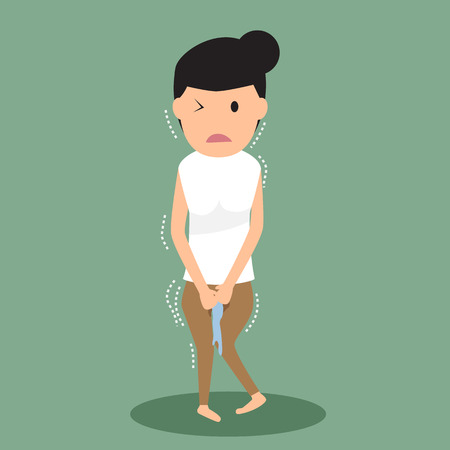
I’m sure you know that feeling when a very full bladder prompts you to secure the nearest restroom facility so that you can relieve yourself from the pressure. Now imagine having that feeling throughout the day, every day. People with overactive bladder have to use the restroom constantly, and at times may have urine leakage. They deal with signals from the brain which erroneously tell the bladder to empty itself when the bladder isn’t even full. The result is that the bladder contracts, creating a strong urge to urinate.

People who suffer from overactive bladder urinate much more than normal (which is up to 8 times per day), and may urinate up to 30 or more times per day. Even when a sufferer urinates, he or she may feel as if the bladder still has urine in it. Restroom visits may be stacked together, sometimes within 10 to 15 minutes of each other.

Two-thirds of people who have overactive bladder experience the dry type, while the remaining third have the wet variety, which is characterized by leakage of urine. Advancing age is a primary risk factor for development of this condition, but the following also play a role:

Presence of urinary tract infection
Nerve damage from surgery
Trauma
Neurological diseases such as multiple sclerosis, Parkinson’s or stroke
History of bladder stones
History of bladder or prostate cancer
Post-menopausal
Consumption of spicy foods, caffeine and alcohol


If you have any of the following symptoms, you should seek medical evaluation and treatment:

Use the restroom more than eight times a day
Cannot sleep through the night without waking up at least 1 or 2 times to urinate
A sudden and intense urge to urinate
Urine leakage

Some lifestyle modifications can lessen the symptoms of overactive bladder. They include maintaining a normal weight, drinking less fluid in the evening, smoking cessation, and limiting the consumption of alcohol and caffeine. Pelvic floor exercises can be incorporated to strengthen the supporting muscles and provide some relief. As a last resort, a number of prescription medications exist to treat overactive bladder.

Kybella For Double Chins

kybella

Kybella (deoxycholic acid) is an exciting treatment from Allergan for reduction of excess fat under the chin. The treatment is performed in series, in an average of two to four treatment sessions. Results are permanent.
kybella-figure-10

If you are in the Los Angeles area and are interested in a Kybella treatment, please contact me at stacey@staceynaito.com for pricing and to schedule a consultation.

Spring Into A More Youthful Appearance With Bellafill

bellafill_logo

Have you been looking for an injectable filler which lasts years instead of months? Consider getting a Bellafill treatment. Unlike hyaluronic acid based fillers like Juvederm and Restylane which dissipate within nine months to a year on average, the polymethylmethacrylate (PMMA) microspheres found in Bellafill are permanent implants which stimulate cells in the skin to produce collagen over an extended period of time. The FDA has granted approval to the makers of Bellafill to claim that the effects last 5 years or more. This approval was based on the response to treatments, which were then monitored over a five-year period, in more than 1,000 subjects treated with Bellafill.

Bellafill also contains bovine collagen, which has very low chance of reactivity in patients. Nevertheless, a skin test (very similar to a tuberculin skin test) is performed during a Bellafill consultation and the patient is instructed to report any skin changes from the test. Once Bellafill is injected, the bovine collagen provides a temporary and immediate fill which persists for approximately 6 weeks. By the time the bovine collagen wears off, the body has already begun producing its own collagen to replace it.

b4aft

If you are in the Los Angeles area, please contact me at stacey@staceynaito.com for pricing, and to schedule an appointment for a consultation and treatment.