Natural Antidepressant Combinations I Recommend

Despite the fact that I was trained in the traditional ways of medicine, I prefer to utilize natural supplements and foods to treat conditions, only turning to prescription medications as a last resort for my patients. I have a particular aversion to prescribing antidepressant medications, and honestly believe that such meds only serve as a bandage for the root cause, which almost invariably is a combination of hormonal imbalance and malnutrition.

When a patient comes to me complaining of symptoms of depression, I always recommend the following three supplements as part of the patient’s daily regimen:

Vitamin D
Folate 800 mcg
B-Complex

Once my patients are on this daily regimen for a few weeks, I have them visit for a follow-up to see if their symptoms have improved. If the improvement is marginal, I add SAMe and 5-HTP to the regimen, both of which are great for treating pain issues. As the patient treatment progresses, I order hormonal assays, checking the thyroid, adrenal glands, DHEA, IGF-1, testosterone, progesterone, and estradiol. If anything is off balance (and in most cases, something is), I will treat the imbalance directly with organ support compounds and bioidentical hormone replacement therapy.

In addition to natural supplements, I also recommend that patients consume whole foods, and avoid processed foods at all costs. I encourage them to find balance in their daily lives, and often demonstrate breathing exercises or discuss meditation with them. I also remind them to stop and enjoy what they have in their lives, to be grateful for what they have instead of dwelling on what they lack.

Rather than turn to SSRI’s, please consider the natural approach first if you are dealing with depression!

If you are in the Los Angeles area, and you would like to schedule an exam, please call Urban Med at (213) 406-8055 to make an appointment.

Yes I Write Prescriptions. No I Won’t Write One For Your Brother.

As a fully licensed, board-certified physician, I have written my share of prescriptions over the years for medications, imaging studies, etc. I recognize that it is an incredible honor and privilege to be able to write scripts, and I never take advantage of it. However, there are people out there who think nothing of asking me to write prescriptions for them, simply because I am a fully credentialed physician conveniently standing there in front of them. What is especially irritating is when people dare to ask me to conduct curbside consultations or write prescriptions for their family members or loved ones who not only aren’t there with them to be examined, but who are complete strangers to me. Tell me, how in the world am I supposed to conduct a medical evaluation on a complete stranger, sight unseen? These same individuals also tend to get offended when I kindly tell them that their loved one needs to be seen in person by a qualified medical professional who can assess their condition and administer the appropriate treatment.

So if you are the kind of person who is in the habit of asking doctors to do similar favors for you or your family, please understand that your requests are unreasonable and inappropriate. If your husband, sister, son, cousin, or best friend needs medical attention, do the responsible thing and either tell that person to go see a doctor, or take that person to the doctor.

Of Orifices and Zero Freedom

As a physician, I have had the incredible honor and privilege of studying every part of the human body, to the most minute detail. I have hovered over cadavers which were fileted and displayed for they eyes of inquisitive medical students, and scrubbed in on colon resections, open heart surgery, neurosurgery, cataract removal, etc. During my first month of internship as a newly minted physician, I massaged a dying heart with my gloved hands (no, the patient didn’t survive). I have also delivered over 40 infants via vaginal and Cesarean methods, and have pronounced the demise of patients in the wards. In fact, there are many stories I have collected over the years, some incredibly sad, some disgusting, some frightening, and some infuriating, but all true, and all part of my experience as a doctor.

I knew full well that by signing up for an education in medicine, I would be subjected to disgusting, morbid, frightening things, and that I would face mortality on a regular basis. However, after several years of working in family practice, I began to notice that I wasn’t thrilled with the fact that I examined orifices of every kind on a very regular basis. Whether it was a nostril, a mouth, an ear canal, an anus, a urethral meatus (layman’s term pee-hole), or vagina I had to examine, I was never thrilled about it, and the orifices below the belt were certainly much more bothersome to address. My intense dislike of such examinations, combined with the tedium of primary care and the low insurance reimbursement for services and procedures provided, caused me to retreat from primary care and focus more on the areas I had more interest in, namely, physical medicine, cosmetic dermatology, and anti-aging medicine, all of which are much cleaner and which do not require me to conduct examinations on private parts.

Another feature of primary care which made me cringe was the intense demand on a practitioner’s time. The only time it ever seemed reasonable for me to literally lose sleep night after night as a physician was when I was in training. At this point, there is no way you could convince me that such a thing is healthy, and I refuse to sign up for that. I won’t give up weekends to take on three stacked 12-hour work shifts, and I will not give up the few holidays I celebrate (Thanksgiving, Christmas Eve, Christmas Day, New Year’s Eve, and New Year’s Day) in order to work. As it is, I give up other major holidays to work, but since the work I perform on those holidays is in bodybuilding and fitness, I don’t mind it at all.

I love being a physician, and I find it incredibly rewarding to make a positive impact on my patients. However, I will not sacrifice balance in my life, or the freedom to pursue my other interests, in order to prove to society what a good physician I am. I don’t believe for a second that running oneself into the ground working as a physician ever sends a positive message to others. I don’t ever want to be the kind of doctor who is saddled with so many chart notes to write that an entire weekend is devoted to completing them. Not for me.

Lasty, I think it’s so strange that society still assumes that doctors are supposed to give their time and knowledge at a moment’s notice, on demand, yet I don’t see those same demands placed on people in other industries. I can’t tell you how many times I have been in a brief conversation with a complete stranger, who dares to ask me a medical question as soon as my profession is revealed. I swear, one of these days I am going to get a t-shirt made that says, “THE DOCTOR IS OFF-DUTY RIGHT NOW…NO MEDICAL QUESTIONS PLEASE”!

When Your Joints Rebel: How To Modify Your Lifting Regimen So You Can Train With Joint Issues

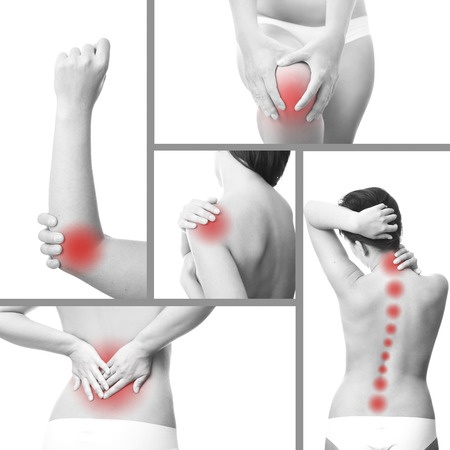
You are a beast in the gym…that is, until a joint injury or flare-up from arthritis, bursitis or sprain threatens to deflate your motivation as a result of the pain. While it is always important to take preventative measures to protect the joints, such as warming up the surrounding soft tissues properly, using proper form during exercises, and taking supplements which promote joint health, there may be times when joint discomfort is so significant that a little TLC needs to be added to the regimen. The recommendation of complete rest usually falls on deaf ears when a fitness fanatic is the one suffering from joint woes, because the general mindset for such an individual is to push through the pain and continue training. However, in most cases, the pain and inflammation will throw a wrench in the works by adversely affecting range of motion and strength. As long as the joint pain isn’t severe, and is not caused by direct, acute injury to the joint, exercises can usually be modified to alleviate load stress on the affected area.

There are a number of exercise modifications which can be made to weightlifting exercises to minimize the loading on affected joints while still effectively training surrounding muscle groups. Bear in mind that you might not be able to perform certain exercises at all, even with a modified grip or stance. The most important thing is to pay attention to your body and stop doing anything which exacerbates the joint discomfort.

SAVE YOUR SHOULDERS AND ARMS

Since shoulder joint issues are relatively common, most of the suggestions made in this article for exercise modifications for the upper body will take this into account. Depending on the degree and location of shoulder pain, you might still be able to perform shoulder presses, but do not perform them behind the neck as they can cause impingement. Incidentally, you will also need to avoid pulling the bar behind your head when doing lat pulldowns. To perform overhead presses, use a straight bar with a grip slightly wider than shoulder width apart, or use dumbbells, and use a light weight. Another exercise which should be modified when shoulder pain is an issue is the bench press. Chest presses should be avoided on an incline bench due to increased abduction and a corresponding increased shear stress and strain on the glenohumeral joint.

Shoulder joint pain can also interfere with lower body barbell exercises like the back squat and lunges. Since the barbell must be stabilized across the back, the shoulder must remain in an externally rotated and abducted position. Even barbell deadlifts force the shoulder into a gravitational load in extension which can be enough to aggravate shoulder joint issues if a heavy weight is used. Modifications to these exercises include performing front squats while holding onto a kettlebell or dumbbell, and switching to dumbbells when performing lunges and deadlifts.

Most cases of shoulder pain from joint instability or arthritis can make it impossible to perform a plank for an extended period of time due to the superior-posterior stress across the shoulder joint complex, but this is easily remedied by modifying the plank so that you rest on your forearms instead of your hands, thus shortening the lever arm and decreasing the stress load.

If you have issues with your elbows, it is wise to avoid pullups, pushups, mountain climbers, overhead tricep extensions and planks, but bicep curls may also be difficult to do, especially as you supinate and flex the elbow. The elbow joint is a tricky one to train around, and the best approach is to completely avoid any direct movements which involve the elbow flexors if the pain is severe. If the pain is minimal, regular dumbbell bicep curls, hammer curls and cable tricep extensions can be performed with light weights. Using a false grip on dumbbells (in which the thumb is not engaged in opposition around the bar), using a cuff around the arm with a cable assembly, or switching to weight plates with a neutral (palms in) grip can also be helpful in minimizing the strain on the elbow stabilizers during delt training routines.

Wrist pain can often be eradicated by using lifting gloves which have wrist support to counteract some of the stress. Since bench dips can aggravate sore wrists, they should be avoided and replaced with cable tricep extensions, which can be performed without extending the wrist. Traditional pushups also force the wrists into a hyperextended position, but a simple switch in hand position, in which the fingers point out to the sides, with hands at least shoulder width apart, will minimize joint stress during the down phase of the movement.

WEIGHT BEARING JOINTS

If you have issues with the joints in your lower extremities (hips, knees, ankles, feet), ballistic movements, such as the ones performed in plyometrics and calisthenics, should be avoided. Unfortunately, exercises which are considered staples in a weightlifter’s regimen, such as squats, lunges and leg presses, can also wreak havoc on achy hips and creaky knees, especially if poor form and heavy weights are used. It’s best to trade these in, at least for a while, and instead turn to leg lifts on all fours, wall sits, front leg raises against a wall, and single leg deadlifts, all of which decrease the load on the hips and knees while still providing good isolation.

Since ankles and feet take the brunt of weight bearing, they should be babied when flare-ups occur, which means that calf raises, leg presses, and squats should be avoided and replaced with moves which do not require excessive joint motion under a loading force. Foot stance should be maintained at shoulder width to maintain the ankle position in a neutral plane and avoid any inversion or eversion. Mat exercises are also an excellent alternative to hardcore standard weight machines when dealing with joint flare-ups in the ankle or foot.

OHHHHH MY BACK

The incidence of low back pain is extremely high, especially among fitness devotees. Since it is usually triggered by extreme positions of flexion or extension, something as simple as standing with your heels on two weight plates and dropping the amount of weight lifted can be enough to maintain a more upright position and avoid the excessive lumbar flexion often seen with back squats. Another modification which spares the low back as well as the knee is performing Bulgarian squats, which keep the upper body in a vertical plane.

If you experience joint pain in your neck or upper back, you should avoid exercises mentioned earlier such as behind the head lat pulldowns and military presses, both of which cause excessive flexion in the cervical spine. In some cases, you will need to omit exercises which involve the use of a barbell behind the neck since this type of load increases flexion stress. You can modify these movements by using dumbbells or by switching to a machine, for example, switching from barbell squats to hack squats.

The most important thing to remember is to listen to your body and stop any movement if you feel sudden pain. By training wisely and making necessary modifications while your joints are inflamed, you will be able to bypass injury and continue to make gains at the gym.

Anti-Inflammatory Meds and Muscle Growth

NOTE: This was originally written for Oxygen Mag digital version.

There has been a heated debate over many years within the bodybuilding community about whether anti-inflammatory medications like ibuprofen (Advil, Motrin) and naproxen sodium hinder muscle growth. These medications inhibit the synthesis of prostaglandins, which also play a role in muscle synthesis. All it took was one clinical study published in the Journal of Clinical Endocrinology and Metabolism to put bodybuilders into a panic about reduced protein synthesis, and it didn’t matter that such results were found in laboratory rats. While there is some evidence to suggest that the anabolic signal is shut off when anti-inflammatories circulate in the bloodstream, nothing is absolutely conclusive, and what might be seen in the rat model might not necessarily be the case for humans.

While I will never advocate chronic use of painkillers and anti-inflammatory agents, I think they definitely serve a purpose when acute injury is present. When I find myself in the middle of disputes with bodybuilders who INSIST that a few days on such medications will completely destroy all their efforts in the gym, I simply shake my head in frustration. If you are injured and your lifting is adversely affected by the injury, whether it be a muscle strain, a ligament tear, or a minor disc herniation, you need to be aware that training through that injury, especially when it deranges your form and causes other body parts to compensate for the injury, will end up really messing you up over time. I honestly think that a minimal decrease in muscle mass over the course of a few days is preferable to the imbalance and asymmetry which usually occur when a bodybuilder foolishly pushes through heavy workouts despite an injury which has a domino effect on the body.

Common sense, and medical expertise, dictate that the inflammation must be removed from the area, most commonly through short term administration of anti-inflammatory agents, ice, and rest. Trust me, if you follow a regimen like this, you won’t lose all the muscle you have built over the years. Be sure to take these medications with food, and if you have any history of gastric ulcers. bleeding disorders, or kidney dysfunction, avoid taking them.

Remember that I am talking about DAYS, not weeks or months. This is one time when eating constantly has its benefits, since bodybuilders and fitness people can pretty easily fit in their medication administration with one of their meals. I know it’s difficult to back off from training, but if you truly want to HEAL, you must give the injured area time to repair itself. If you insist on continuing to train through the injury, especially, without any medications or other interventions on board, you can count on the injury either lingering or worsening over time.

What Are You Waiting For?

While working at a recent bodybuilding event, I had a very interesting conversation with one of the attendees. He was a 42 year old man who revealed to me that he had a couple of health concerns, and who very clearly stated that he wanted to be healthy for his sons (one son was about 10, and the other was about 13). He had a habit of eating fast food daily, and he never exercised because he figured that he was at a normal weight and didn’t need to work out.

He told me that he was so busy with work and with taking the boys to all their practice sessions that there was no time right now to train or to clean up his eating habits. He went on to say that he figured he would wait until the boys were older before he got into an exercise program and cleaned up his diet.

I very nicely told him to make every effort to fit in 10 or 15 minutes of intense plyometric or calisthenics work each day, between work and carting the boys around for their soccer and baseball practice sessions, but deep inside I was incredibly frustrated. I even told him that if he indeed waited a few years until the boys were older, major disease processes like diabetes or high blood pressure could emerge and put him in a dangerous health situation. However, I could tell that my words fell on deaf ears, and that this man would not take any steps towards a healthier lifestyle.

I honestly and truly believe that when it comes to anything in life, where there’s a will, there’s a way. If someone truly wants to positively impact his or her health, then steps can be taken immediately to develop a consistent regimen. There have been plenty of people who have made excuses and lived in denial, who were suddenly stricken by stroke or heart attack. Once a major event like that occurs, assuming someone survives it, there’s a big wake-up call and the person is forced to make the changes he or she didn’t want to make years ago.

Why wait?

Macafem Video Review on YouTube

Please check out my review of Macafem which was shot in 2015. Macafem is a supplement designed to address the symptoms of perimenopause and menopause (hot flashes, night sweats, mood swings, etc.). I have not been approached, paid, or otherwise encouraged by the makers of Macafem to put a review together. This video is merely my unbiased review of the product from my personal experience taking it.

I am still taking Macafem, and my symptoms of night sweats and hot flashes have pretty much subsided. I also lost all the water weight I was carrying while I went through menopause.