The Joy of Old Age. (No Kidding.)

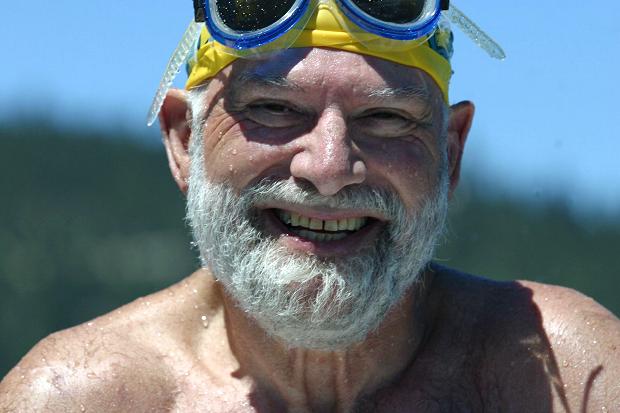
Oliver Sacks swimmer
I am sharing this essay which was written by the late Dr. Oliver Sacks for the New York Times. It is a delightful essay which honors old age.

Original post can be found at:
http://www.nytimes.com/2013/07/07/opinion/sunday/the-joy-of-old-age-no-kidding.html

LAST night I dreamed about mercury — huge, shining globules of quicksilver rising and falling. Mercury is element number 80, and my dream is a reminder that on Tuesday, I will be 80 myself.

Elements and birthdays have been intertwined for me since boyhood, when I learned about atomic numbers. At 11, I could say “I am sodium” (Element 11), and now at 79, I am gold. A few years ago, when I gave a friend a bottle of mercury for his 80th birthday — a special bottle that could neither leak nor break — he gave me a peculiar look, but later sent me a charming letter in which he joked, “I take a little every morning for my health.”

Eighty! I can hardly believe it. I often feel that life is about to begin, only to realize it is almost over. My mother was the 16th of 18 children; I was the youngest of her four sons, and almost the youngest of the vast cousinhood on her side of the family. I was always the youngest boy in my class at high school. I have retained this feeling of being the youngest, even though now I am almost the oldest person I know.

I thought I would die at 41, when I had a bad fall and broke a leg while mountaineering alone. I splinted the leg as best I could and started to lever myself down the mountain, clumsily, with my arms. In the long hours that followed, I was assailed by memories, both good and bad. Most were in a mode of gratitude — gratitude for what I had been given by others, gratitude, too, that I had been able to give something back. “Awakenings” had been published the previous year.

At nearly 80, with a scattering of medical and surgical problems, none disabling, I feel glad to be alive — “I’m glad I’m not dead!” sometimes bursts out of me when the weather is perfect. (This is in contrast to a story I heard from a friend who, walking with Samuel Beckett in Paris on a perfect spring morning, said to him, “Doesn’t a day like this make you glad to be alive?” to which Beckett answered, “I wouldn’t go as far as that.”) I am grateful that I have experienced many things — some wonderful, some horrible — and that I have been able to write a dozen books, to receive innumerable letters from friends, colleagues and readers, and to enjoy what Nathaniel Hawthorne called “an intercourse with the world.”

I am sorry I have wasted (and still waste) so much time; I am sorry to be as agonizingly shy at 80 as I was at 20; I am sorry that I speak no languages but my mother tongue and that I have not traveled or experienced other cultures as widely as I should have done.

I feel I should be trying to complete my life, whatever “completing a life” means. Some of my patients in their 90s or 100s say nunc dimittis — “I have had a full life, and now I am ready to go.” For some of them, this means going to heaven — it is always heaven rather than hell, though Samuel Johnson and James Boswell both quaked at the thought of going to hell and got furious with David Hume, who entertained no such beliefs. I have no belief in (or desire for) any post-mortem existence, other than in the memories of friends and the hope that some of my books may still “speak” to people after my death.

W. H. Auden often told me he thought he would live to 80 and then “bugger off” (he lived only to 67). Though it is 40 years since his death, I often dream of him, and of my parents and of former patients — all long gone but loved and important in my life.

At 80, the specter of dementia or stroke looms. A third of one’s contemporaries are dead, and many more, with profound mental or physical damage, are trapped in a tragic and minimal existence. At 80 the marks of decay are all too visible. One’s reactions are a little slower, names more frequently elude one, and one’s energies must be husbanded, but even so, one may often feel full of energy and life and not at all “old.” Perhaps, with luck, I will make it, more or less intact, for another few years and be granted the liberty to continue to love and work, the two most important things, Freud insisted, in life.

When my time comes, I hope I can die in harness, as Francis Crick did. When he was told that his colon cancer had returned, at first he said nothing; he simply looked into the distance for a minute and then resumed his previous train of thought. When pressed about his diagnosis a few weeks later, he said, “Whatever has a beginning must have an ending.” When he died, at 88, he was still fully engaged in his most creative work.

My father, who lived to 94, often said that the 80s had been one of the most enjoyable decades of his life. He felt, as I begin to feel, not a shrinking but an enlargement of mental life and perspective. One has had a long experience of life, not only one’s own life, but others’, too. One has seen triumphs and tragedies, booms and busts, revolutions and wars, great achievements and deep ambiguities, too. One has seen grand theories rise, only to be toppled by stubborn facts. One is more conscious of transience and, perhaps, of beauty. At 80, one can take a long view and have a vivid, lived sense of history not possible at an earlier age. I can imagine, feel in my bones, what a century is like, which I could not do when I was 40 or 60. I do not think of old age as an ever grimmer time that one must somehow endure and make the best of, but as a time of leisure and freedom, freed from the factitious urgencies of earlier days, free to explore whatever I wish, and to bind the thoughts and feelings of a lifetime together.

I am looking forward to being 80.

R.I.P. Dr. Oliver Sacks

Oliver Sacks

Dr. Oliver Sacks, eminent neurologist and brilliant author who explored strange neurological aberrations in books such as “The Man Who Mistook His Wife for a Hat,” died on August 30th at his home in Manhattan at the age of 82.

I was stunned when I read his post on Facebook in February which revealed that he had terminal liver cancer. The original source of the cancer was a melanoma in his eye which had been treated nine years ago.

Dr. Sacks was not only a highly respected neurologist and researcher, he was a prolific and incredibly gifted writer. More than a million copies of his books are in print in the United States, though the book he was most well known for was “Awakenings,” which was made into a movie starring Robin Williams. He was so popular that he received about 10,000 letters a year. Regarding the plethora of letters he received, he stated, “I invariably reply to people under 10, over 90 or in prison.”

I first met Dr. Sacks in 1986 during a book reading of “The Man Who Mistook His Wife For A Hat.” Though I had known for years that I wanted to become a physician, and that I had a specific passion for neurology, my meeting with Dr. Sacks re-ignited that passion. I devoured that book, and from that point on was a devoted fan, not only of his writing, but of him as a clinician and humanitarian. I have every book which Dr. Sacks wrote and thoroughly enjoyed reading them (I have yet to read “Hallucinations” and “On The Move” which were his most recent tomes). I was thrilled when Dr. Sacks had a book signing for “Oaxaca Journal” in 2002, and I made sure to attend that signing, speak with him, and have him sign my copy. I was a physician by then, and in the middle of residency training. Though I had ended up in family practice rather than neurology, my fascination for neurological cases was very much intact, and my admiration for Dr. Sacks only increased over the years.

In tribute to one of my medical idols, I am posting an essay which Dr. Sacks wrote in February of this year for the New York Times.

Original post can be found at:
http://www.nytimes.com/2015/02/19/opinion/oliver-sacks-on-learning-he-has-terminal-cancer.html

A MONTH ago, I felt that I was in good health, even robust health. At 81, I still swim a mile a day. But my luck has run out — a few weeks ago I learned that I have multiple metastases in the liver. Nine years ago it was discovered that I had a rare tumor of the eye, an ocular melanoma. The radiation and lasering to remove the tumor ultimately left me blind in that eye. But though ocular melanomas metastasize in perhaps 50 percent of cases, given the particulars of my own case, the likelihood was much smaller. I am among the unlucky ones.

I feel grateful that I have been granted nine years of good health and productivity since the original diagnosis, but now I am face to face with dying. The cancer occupies a third of my liver, and though its advance may be slowed, this particular sort of cancer cannot be halted.

It is up to me now to choose how to live out the months that remain to me. I have to live in the richest, deepest, most productive way I can. In this I am encouraged by the words of one of my favorite philosophers, David Hume, who, upon learning that he was mortally ill at age 65, wrote a short autobiography in a single day in April of 1776. He titled it “My Own Life.”

“I now reckon upon a speedy dissolution,” he wrote. “I have suffered very little pain from my disorder; and what is more strange, have, notwithstanding the great decline of my person, never suffered a moment’s abatement of my spirits. I possess the same ardour as ever in study, and the same gaiety in company.”

I have been lucky enough to live past 80, and the 15 years allotted to me beyond Hume’s three score and five have been equally rich in work and love. In that time, I have published five books and completed an autobiography (rather longer than Hume’s few pages) to be published this spring; I have several other books nearly finished.

Hume continued, “I am … a man of mild dispositions, of command of temper, of an open, social, and cheerful humour, capable of attachment, but little susceptible of enmity, and of great moderation in all my passions.”

Here I depart from Hume. While I have enjoyed loving relationships and friendships and have no real enmities, I cannot say (nor would anyone who knows me say) that I am a man of mild dispositions. On the contrary, I am a man of vehement disposition, with violent enthusiasms, and extreme immoderation in all my passions.

And yet, one line from Hume’s essay strikes me as especially true: “It is difficult,” he wrote, “to be more detached from life than I am at present.”

Over the last few days, I have been able to see my life as from a great altitude, as a sort of landscape, and with a deepening sense of the connection of all its parts. This does not mean I am finished with life.

On the contrary, I feel intensely alive, and I want and hope in the time that remains to deepen my friendships, to say farewell to those I love, to write more, to travel if I have the strength, to achieve new levels of understanding and insight.

This will involve audacity, clarity and plain speaking; trying to straighten my accounts with the world. But there will be time, too, for some fun (and even some silliness, as well).

I feel a sudden clear focus and perspective. There is no time for anything inessential. I must focus on myself, my work and my friends. I shall no longer look at “NewsHour” every night. I shall no longer pay any attention to politics or arguments about global warming.

This is not indifference but detachment — I still care deeply about the Middle East, about global warming, about growing inequality, but these are no longer my business; they belong to the future. I rejoice when I meet gifted young people — even the one who biopsied and diagnosed my metastases. I feel the future is in good hands.

I have been increasingly conscious, for the last 10 years or so, of deaths among my contemporaries. My generation is on the way out, and each death I have felt as an abruption, a tearing away of part of myself. There will be no one like us when we are gone, but then there is no one like anyone else, ever. When people die, they cannot be replaced. They leave holes that cannot be filled, for it is the fate — the genetic and neural fate — of every human being to be a unique individual, to find his own path, to live his own life, to die his own death.

I cannot pretend I am without fear. But my predominant feeling is one of gratitude. I have loved and been loved; I have been given much and I have given something in return; I have read and traveled and thought and written. I have had an intercourse with the world, the special intercourse of writers and readers.

Above all, I have been a sentient being, a thinking animal, on this beautiful planet, and that in itself has been an enormous privilege and adventure.

Correction: February 26, 2015
Because of an editing error, Oliver Sacks’s Op-Ed essay last Thursday misstated the proportion of cases in which the rare eye cancer he has — ocular melanoma — metastasizes. It is around 50 percent, not 2 percent, or “only in very rare cases.” When Dr. Sacks wrote, “I am among the unlucky 2 percent,” he was referring to the particulars of his case. (The likelihood of the cancer’s metastasizing is based on factors like the size and molecular features of the tumor, the patient’s age and the amount of time since the original diagnosis.)

No Wind In The Sails?

Switch OFF

Original post can be found at:

http://www.sportsnutritionsupplementguide.com/health-wellness/men-s-health/item/1509-no-wind-in-the-sails#.VYHDM_lViko

Erectile Dysfunction

The fact that erectile dysfunction is far more prevalent than people want to admit to underscores the importance of discussing the topic, especially within the fitness and bodybuilding world. For some men, the explanation could be flagging testosterone levels, while with others, the use of anabolic steroids can significantly interfere with sexual performance.

Other causes of erectile dysfunction include idiopathic low testosterone levels, alcohol abuse, obesity, smoking, prostate issues, high blood pressure, diabetes, and high cholesterol. Such medical issues are exacerbated by the use of anabolic substances, especially when cycled over an extended period of time. If a man is experiencing the symptoms of erectile dysfunction, a full history and physical should be performed along with lab work to determine the probable cause of the dysfunction. It is also critical for the sufferer to disclose the use of any anabolic agents or over the counter testosterone boosters, since any of those substances can interfere with normal sexual function.

It is important to bear in mind that when exogenous (outside of the body) testosterone is used, the body’s own production of endogenous testosterone ceases. This might be acceptable for the man who is suffering from clinically low serum testosterone, since he is truly unable to manufacture the amount of testosterone necessary for normal male function, but there are men out there with normal testosterone levels who foolishly decide to supplement with exogenous testosterone in an effort to glean the energy and mass boosting benefits which it promises. What often happens is that libido and physiological sexual response take a nosedive.

Other culprits in the loss of sexual function include anabolic substances, T3, diuretics, and estrogen blockers. Yes, that’s right…the substances which bodybuilders often turn to in order to optimize muscle growth will often rob them of the ability to perform sexually or even have any inkling of sexual desire. While some men might not care about such a loss of desire or function, others are devastated. A bodybuilder might have such a “nose to the grindstone” type of attitude with respect to training that he might not address the issue until a frustrated partner decides to bring the issue up and demands that he address it.

So why is testosterone so important anyway? Testosterone is a vital component in the production of erections. Though this is overly simplified, low testosterone essentially often equates with poor erectile response. Another phenomenon which occurs is that low testosterone levels abolish the ability of the body to aromatize some of the testosterone to estrogen, which activates the brain’s sexual arousal centers and also causes a corresponding vasodilation in the male member.

The great irony in all of this is that bodybuilders who look like they are the ideal representation of virility are often sexually debilitated as a result of androgen manipulation. When anabolic agents are taken over the long term, natural testosterone production plummets, the testes atrophy and erectile dysfunction often results.

For bodybuilders and non-athletes alike, the key is to obtain bloodwork from a physician who is experienced in diagnosing endocrine disorders. For non-athletes, serum studies are often more straight forward and reveal either low testosterone, high serum glucose, high cholesterol, or abnormal thyroid function. In contrast, a serum panel for a bodybuilder who has been flirting with anabolics for an extended period of time may have a cold dose of reality after seeing the results. At any rate, it is well worth the effort to ferret out the root cause of erectile issues.

Yes I AM A Doctor!

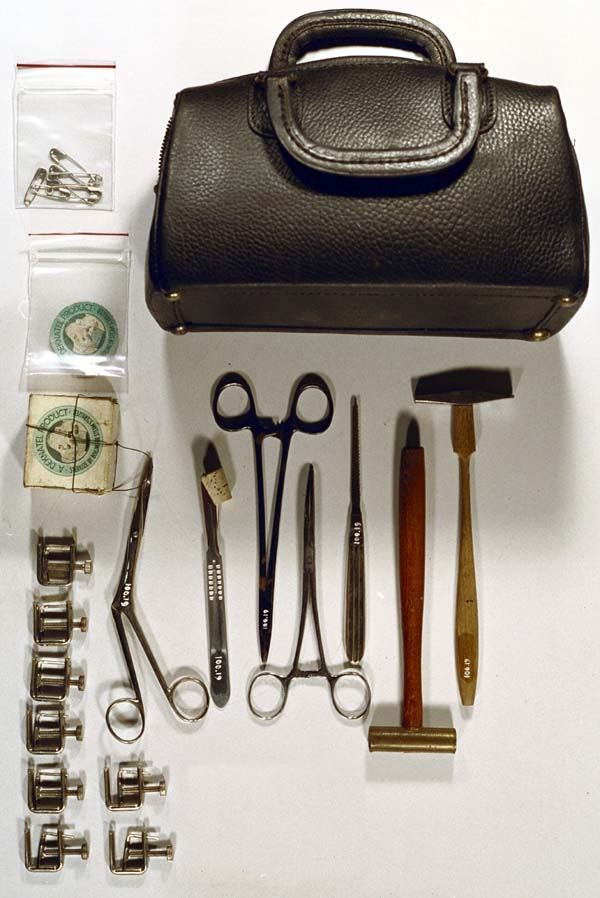
doctor-bag2It appears to be a lifelong curse for me to have to deal with people who never seem to take the fact that I am a bona fide medical doctor seriously. I can’t tell you how many times I have heard friends exclaim, “Oh wow, you’re like a DOCTOR doctor? I had no idea!”, as if my medical training and career are somehow not supposed to be taken seriously by those near and dear to me. I want to yell, “YES, I am a doctor! Why didn’t you believe me the first time I told you? Why do I have to somehow prove it to you?” What irks me is that I don’t see these people doubting the abilities of their friends who work in any other industry, be it certified public accounting, law enforcement, or any other respected profession. I honestly resent the insinuation that my credentials somehow don’t count because I don’t wear a white coat all the time (by the way, I can’t STAND wearing those polyester nightmares) or flaunt my professional title like a badge.

For those of you in the group which questions what my credentials are, I will be very clear. I completed four years of medical school which culminated in my medical diploma. After that, I completed my internship year (which was also my first year of family practice residency training) and became licensed as a physician. Two more years of residency training in family practice followed, then I sat for my specialty boards and became board-certified in family practice. I am not a nurse or a physician’s assistant (though those professions are highly respectable and draw some of the smartest and most compassionate people on the planet). Degreed. Licensed. Board-certified. Physician a.k.a. Medical Doctor. Yessir.

I may not be conservative or conventional, but I expect the same amount of respect as a physician who chooses to fit the mold and wear conservative attire and a white coat. My patients refer to me as Dr. Naito, not as Dr. Stacey or Stacey. I have worked VERY hard to become a physician, and I also recognize how hard my colleagues work as well. That is why when I am around other physicians, I err on the side of caution and refer to them as DOCTOR and not by their first names unless they specifically ask me to refer to them on a first name basis.

“Are You Sure You Broke It?”

It’s amazing how much an injury to a small area can hurt like the dickens! I recently fractured my right great toe by dropping a 25 pound weight plate on it (oh, the hazards of being a gym rat…) and have been dealing with a tremendous amount of pain from the injury. I had done the exact same thing (albeit with a 10 pound weight plate) on the left great toe back in 2002 and experienced pain in my toe for a full year, so I am dreading having to endure the healing process again. Driving has become a major hassle, because pressing on the gas and brake pedals loads a pressure on the extremity which radiates to my poor broken digit. I am now limited to wearing flip flops and a couple of pairs of athletic shoes with larger toe boxes which accommodate the swelling somewhat. I say somewhat because the athletic shoes I have worn have created nasty blisters on the top of my toe, creating a completely different type of pain which is stacked upon the deep bone pain. Oh what fun.

When I shared the news that I had broken my toe, a couple of people had asked me if I knew it was broken, and one person kept yammering on about what to do to treat the fracture. I am a medical doctor who has seen more than my share of fractures, and I KNOW what a fracture looks like. What I don’t understand is how people can ask me if I know for sure, or how they can tell me I need to see a doctor for it. Rest assured, I am in excellent hands with my doctor: ME.

Here is a collage of images taken of my toe from 30 minutes post-injury to 36 hours post-injury. No X-ray will aid in the diagnosis, nor will it change the treatment course. Yes, it IS broken. This injury will definitely set me back with training and competing because I will not be able to perform plyometric exercises, treadmill work, calf work or lunges for a while. However, I will not be deterred from continuing to train around my injury, and will take this opportunity to develop a heightened awareness of pushing through the heel while performing exercises which target the glutes. Who knows, maybe this injury will be a blessing in disguise, a tool to help me round out a problem area?
11070823_915230171840753_242384502001139566_n

Do You Have Lower Back Pain? Check Out The VacuPractor

PIC_8905_1_TP

PIC_8915_1_TP

If you have lower back pain, you should check out the VacuPractor! The VacuPractor is a doctor-recommended and FDA registered device which relieves pain, decompresses vertebrae in the spine, and stretches the muscles naturally. It does so by utilizing an outward pull on the lower back, stretching the muscles in the area, and relieving pressure on disks and nerves. This device is easy and safe to use.

Use of the VacuPractor improves many lower back conditions, including the following:

low back pain
herniated discs
degenerated discs
compressed discs
back injuries
hip injuries
sciatica
spinal stenosis

I enthusiastically endorse the VacuPractor and encourage my patients, clients, friends, and followers to use it. I have been able to arrange a special price for all of you which is almost 50% off the price which is listed on the VacuPractor site! Instead of paying $89.95, you will only pay $50 if you enter my discount code at checkout. This is absolutely the lowest price you will find anywhere for the VacuPractor. There is also a 90 day money back guarantee, no questions asked.

Please make sure to enter the discount code “stacey” at checkout!

VacuPractor.com