Of Encyclopædias And The Dewey Decimal System

books, reading, library, school, study, encyclopedia, education

For those of us who were kids before the computer age, research wasn’t instant—it was an event.

If you needed to look something up, you didn’t “Google it.” You got up, walked to a shelf, and physically pulled down a heavy book. Information had weight. It had a smell. It had thin, almost tissue-like pages and tiny print crammed into double columns.

The Pride of Encyclopædia Britannica

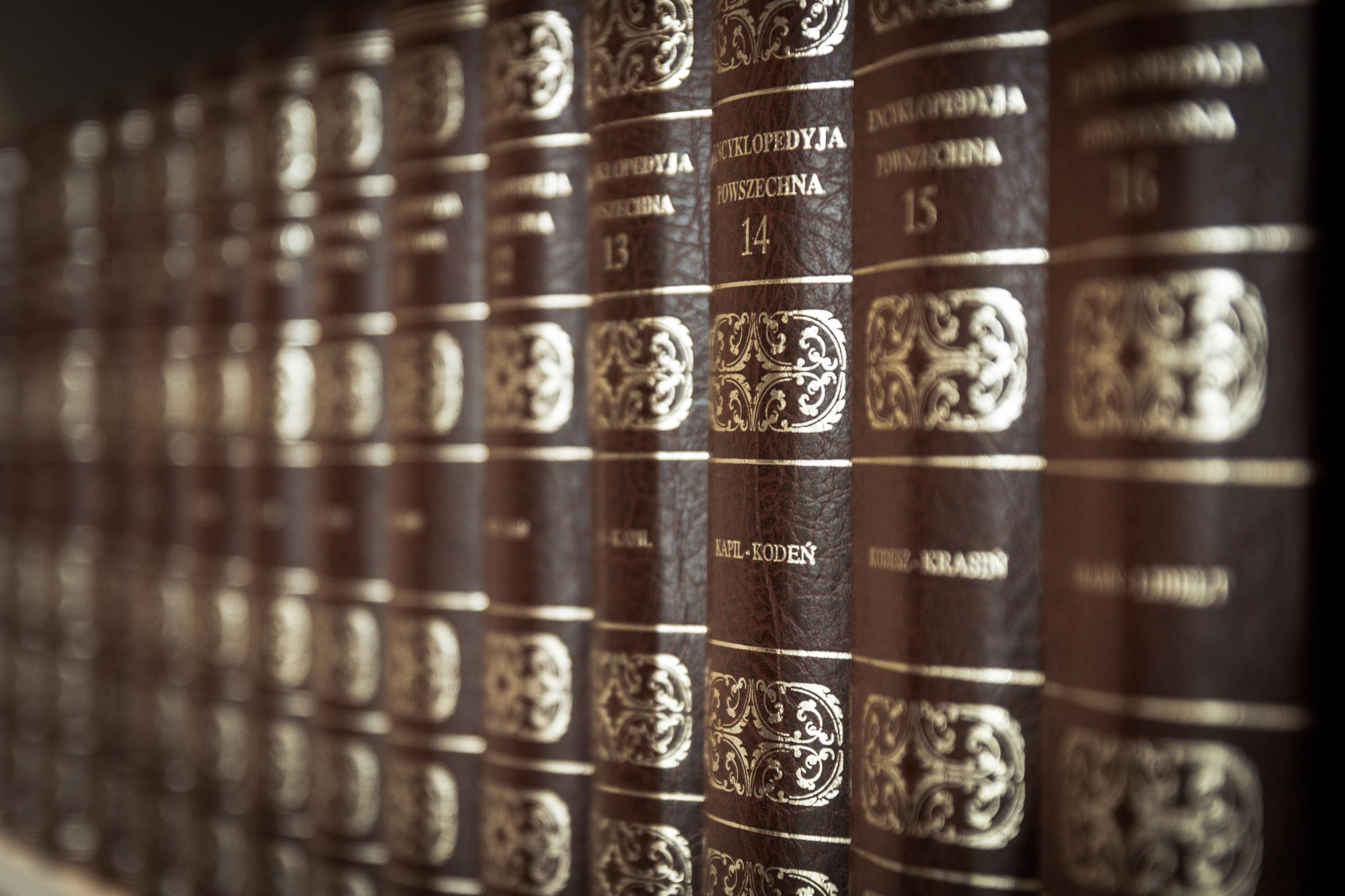
In many homes, owning a full set of Encyclopædia Britannica was a point of pride. Those volumes—often bound in dark leather or gold-lettered spines—sat in living rooms like a declaration: We value learning here.

They were expensive. Really expensive. Families didn’t just casually buy them. Salesmen would come door to door, making their pitch at the kitchen table. Parents would agree to installment payments, and the set might arrive one volume at a time. There was something ceremonial about sliding the newest letter into place on the shelf. As a matter of fact, my mother had to order each volume separately, and because she couldn’t afford to buy a bookcase, my home research sessions required me to dig through large boxes which housed the volumes, an especially tedious task if the volume I required was at the bottom of the box.

If your family didn’t own Britannica, you might have had something like World Book instead—or you relied on the library. Either way, research meant flipping to the correct letter, scanning entries alphabetically, and following cross-references at the bottom of the page: See also: Mesopotamia.

And that was another thing—we learned to browse. You’d start looking up “Egypt” and end up twenty minutes later reading about papyrus, pyramids, or Cleopatra. You discovered things by accident because you had to pass them physically to get where you were going.
Row of Books in Shelf

The Library and the Dewey Decimal System

The public library felt almost sacred.

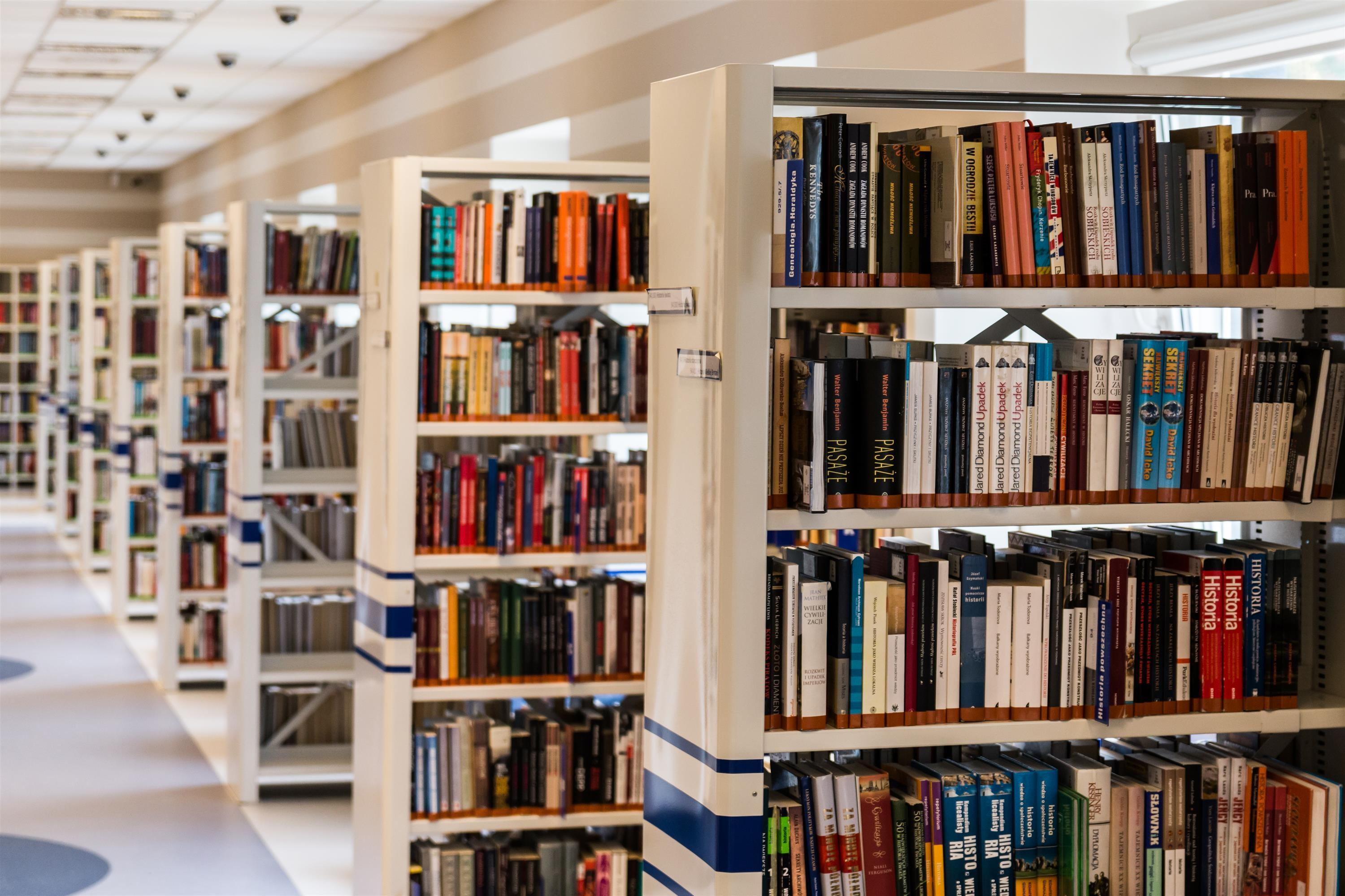
First came the card catalog—long wooden drawers filled with index cards. You flipped through them by author, title, or subject, copying down call numbers in pencil.

Then you had to decode the Dewey Decimal System. Every book had its numerical address:

  • 500s for science
  • 800s for literature
  • 900s for history

Once you had the number—say 940.53 for World War II—you’d go hunting down the aisle, scanning the spines in numerical order. It was like a treasure hunt. Sometimes the book wasn’t there. Maybe someone else had it. Maybe it was mis-shelved. That was part of the adventure.

And when you found it, you felt like you’d earned it.

Microfiche and the Glow of the Machine

If you needed old newspaper articles or archival materials, you didn’t scroll—you used microfiche or microfilm.

You’d load a transparent sheet or spool into a bulky reader machine, turn knobs, and watch enlarged pages of tiny, photographed print glow onto a screen. The machine hummed. The image jittered. You scrolled slowly, hoping not to overshoot the date you needed.

Printing a copy involved a loud clunk and the smell of warm toner.

It wasn’t convenient. It wasn’t fast. But it felt serious. Research required patience, and patience created focus. You couldn’t open fifteen tabs. You worked with what was in front of you.

What We Gained (and Lost)

There was frustration, yes. But there was also depth.

You couldn’t skim five sources in thirty seconds. You had to read. You had to navigate systems. You learned how information was organized—alphabetically, numerically, hierarchically. You developed a kind of mental map of knowledge.

Today, answers are immediate and limitless. Back then, knowledge felt finite but tangible. It lived on shelves. It arrived one volume at a time. It glowed on a microfiche screen.

And when you finally found the answer you were looking for, it felt like discovery—not just retrieval.
The Origin Of Æ

The letter Æ (lowercase æ), often called ash, has a long and fascinating history that connects ancient writing systems to modern European languages.


1. Origins in Ancient Alphabets

The story begins with the Greek alphabet. Greek had a letter called Ancient Greece diphthong αι (alpha + iota), which represented a sound similar to the “ai” in aisle (in early pronunciation).

When the alphabet spread westward, the Ancient Rome adapted parts of the Greek writing system into the Latin alphabet. In early Latin, the diphthong ae represented a sound like the “ai” in aisle as well.


2. From “AE” to a Single Letter

In classical Latin writing, A and E were written separately (ae). However, over time:

  • The pronunciation shifted from a diphthong (“ai”) to a simpler “e” sound.
  • Scribes began writing the two letters together as a ligature (a combined character).

This combined form became Æ, especially in medieval manuscripts.

Examples in Latin:

  • Caesar
  • aeternus
  • aer

In some later spellings, especially in English, the ligature was simplified to just e (e.g., medieval instead of mediæval).


3. Use in Old English

In England, during the Old English period (around 450–1100 CE), æ became a full letter of the alphabet, not just a stylistic combination.

It represented a distinct vowel sound — something like the “a” in cat.

Example:

  • dæġ (modern English: day)

Old English scribes borrowed the letter from Latin manuscripts and adapted it to represent a native sound.


4. Use in Modern Languages

Today, æ is still used as a distinct letter in several languages:

  • Iceland
  • Denmark
  • Norway

In these languages, it represents a vowel sound similar to the “a” in cat or a slightly broader front vowel.


5. Æ in Modern English

In modern English, æ is mostly stylistic or archaic. You may see it in older spellings like:

  • archæology
  • encyclopædia
  • mediæval

Today, these are usually written without the ligature (archaeology, encyclopedia, medieval).


Summary

The letter æ:

  • Originated from the Greek diphthong αι
  • Became ae in Latin
  • Fused into a ligature in medieval writing
  • Became a full letter in Old English
  • Survives today in Scandinavian and Icelandic alphabets

It’s a great example of how writing systems evolve over time — shaped by pronunciation changes, scribal habits, and cultural exchange.

Genetic Ancestry Tests And The Rabbit Hole

Image ID : 62594744
Source: 123rf.com

If you are considering ordering and completing one of those genetic ancestry tests (popular ones are 23andme, Ancestry, and MyHeritage, all of which I have now completed), be prepared for the possibility that you might be on the crest of a journey down into the rabbit hole.  I’ve heard far too many stories of people who made startling discoveries relating to their genetic background and genealogy which at times resulted in conflict within the family.  Mysteries may unfold which leave you with more questions than you may have ever had about your family members or your ethnic makeup.

If we consider the phrase, going down the rabbit hole, we can enter said rabbit hole without thinking that the journey will be as long or as confounding as it can be.  That’s how it was for me initially, and now I find myself searching more than ever before for the puzzle pieces which could solve the many mysteries my biological father left when he died. Although I knew the circumstances surrounding my conception were akin to a soap opera, I never in my wildest imagination expected my story to unfold the way it has.

Before I dive into my own story, and wiggle through the proverbial rabbit hole, I’m going to share this passage from Lewis Carroll’s “Alice In Wonderland”:

“In another moment down went Alice after it, never once considering how in the world she was to get out again.

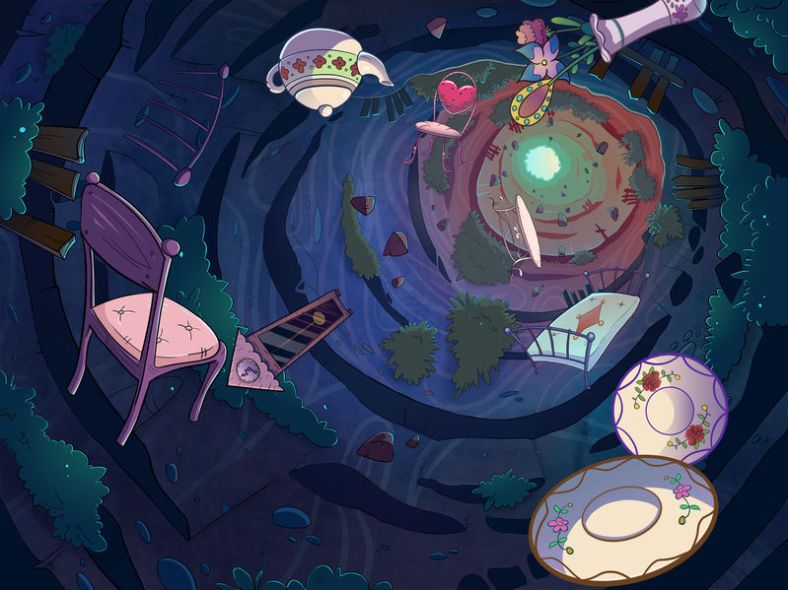
The rabbit-hole went straight on like a tunnel for some way, and then dipped suddenly down, so suddenly that Alice had not a moment to think about stopping herself before she found herself falling down a very deep well.

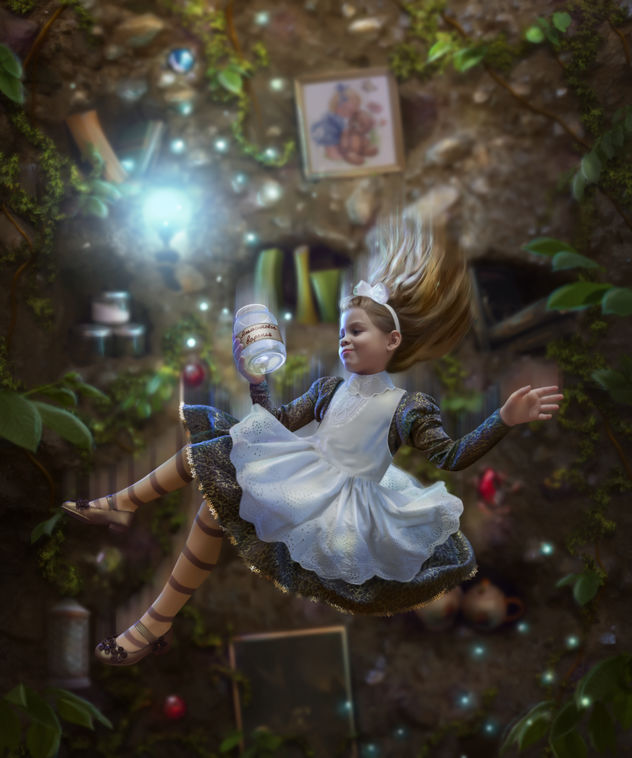
Either the well was very deep, or she fell very slowly, for she had plenty of time as she went down to look about her and to wonder what was going to happen next. First, she tried to look down and make out what she was coming to, but it was too dark to see anything; then she looked at the sides of the well, and noticed that they were filled with cupboards and book-shelves; here and there she saw maps and pictures hung upon pegs. She took down a jar from one of the shelves as she passed; it was labelled `ORANGE MARMALADE’, but to her great disappointment it was empty: she did not like to drop the jar for fear of killing somebody, so managed to put it into one of the cupboards as she fell past it.

`Well!’ thought Alice to herself, `after such a fall as this, I shall think nothing of tumbling down stairs! How brave they’ll all think me at home! Why, I wouldn’t say anything about it, even if I fell off the top of the house!’ (Which was very likely true.)

Down, down, down. Would the fall never come to an end! `I wonder how many miles I’ve fallen by this time?’ she said aloud. `I must be getting somewhere near the centre of the earth. Let me see: that would be four thousand miles down, I think–‘ (for, you see, Alice had learnt several things of this sort in her lessons in the schoolroom, and though this was not a very good opportunity for showing off her knowledge, as there was no one to listen to her, still it was good practice to say it over) `–yes, that’s about the right distance–but then I wonder what Latitude or Longitude I’ve got to?’ (Alice had no idea what Latitude was, or Longitude either, but thought they were nice grand words to say.)”

Source: 123rf.com
Image ID : 42904359
Copyright : Eugeniu Frimu


Thanks to 23andme, a half sister I had never known about contacted me at the end of January with the startling news that we were indeed siblings.  Three days after our initial contact, another half sister surfaced on the site, and we slid down the rabbit hole even farther.

It took some time for the other half sister to respond to our connection requests, but we three are all now in communication with each other.  I have met one half sister and was even able to help her celebrate her latest birthday in February.  The other half sister is lining up a visit so that we can all three see each other face to face and forge the bond we never got a chance to develop as children.

We also have a half brother whom we are trying to locate, but there are numerous barriers, including the fact that we don’t know his name or birthdate, are unaware of which country he currently resides in, and the fact that he evidently is the type of person who would not welcome the news that he has three half sisters.  I have known about this half brother since our father’s death in 1997, but he never signed up for genetic testing analysis, which means we don’t have the convenience of a genetic testing service to do make the connection for us.

We want to find out more about our family tree, but it will be difficult at best to ferret out such information because I have limited knowledge of our father’s mother tongue (Hungarian), and I have no idea who would be privy to such information.  Our father’s place of death is also a mystery, which also means that it will be challenging to discover where he was interred.

Curiouser and curiouser, indeed.