Lose Weight Through Wellness

Photo via Pixabay

Here’s another informative article by Sheila Olson
just in time for the new year!  fitsheila.com

Drastic diets and torturous exercise classes don’t work for long-term weight loss, and these days, we know why. In part, this is because depriving ourselves of things we love is not healthy or sustainable. Instead, we should all try to approach weight loss through wellness-focusedactions and self-care. Here’s how to do that.

Exercise

The best kind of exercise is the one you actually do. This means that finding an exercise routine that’s both fun and convenient is crucial for long-term weight loss.

A home gym can be a great way to do this -check out this guide by HomeAdvisor to figure out the best exercise equipment for you and where to place it. If exercise is enjoyable and accessible, you have no excuse to avoid it. If you do still find yourself skipping workouts, try asking yourself these questions to find out why.

Sleep

Sleep is what allows your mind and body to relax, refresh, and prepare for a new day. What few people know is that a lack of good sleep can also lead to weight gain by messing with your hormones and stress levels.

Set up a nightly “good sleep” routine. It should be soothing and relaxing, making your body and mind feel ready for rest. You should also avoid digital screens in the hours leading up to your bedtime, as these may be negatively impacting your sleep.

Food

Weight loss happens in the kitchen, not the gym. Ourbodies aren’t that effective at burning off calories we consume, so it’s unrealistic to expect exercise to do all the work when our diet remains unchanged.

However, we also need to remember that food is wonderful and useful. It is not the enemy. We have learned to classify certain foods as “good” or “bad,” but this creates an unhealthy relationship with nutrition. This article by Well and Good has some great tips for getting rid of this mindset and finding balance in our diets.

Many of us tend to forget the importance of health, both physical and mental, when trying to lose weight. By focusing onhealthy habits rather than the numbers on a scale, we shift our attention to our internal well-being rather than external appearance. In the proces, weight loss becomes a consequence of a healthy lifestyle rather than the driving reason for having one.

Enough With The Retirement Talk!

Copyright: pinkomelet

Almost every time I look at my computer these days, I’ll see at least one featured article on Yahoo! which discusses retirement.  I’m not exaggerating when I say it happens almost daily, and it’s making me mental.  

I know the population is aging, and that baby boomers and GenX’ers are trying to prepare and plan for their golden years, but this is getting ridiculous.  The media and the internet have unabashedly latched onto the subject, and now there is a constant barrage of anxiety-provoking articles with headlines and titles such as: 

Do you have what you will need to retire?

Are you prepared for your golden years? 

Beware of the pitfalls of investing in an IRA

Watch out for these “retirement killers” 

I’ll read one article which sets me at ease, because I am on track with what it says I need to do.  Then the next day I’ll read an article which either contradicts what I read the previous day, or which has such a doomsday vibe that it basically states that almost everyone is in danger of not having enough money to ever retire.  Does this mean that we will all be living under freeway overpasses, eating dog food?  

Honestly, all these articles seem to do is to stir up worry which affects how I function throughout the day.  And though I can try to let it go, the next day another article will appear which will wash away my feelings of security and accomplishment regarding my retirement portfolio.   

Who else has noticed this trend?

A Beach Inspired Haven

I’ve had a fixation with beach-themed bathrooms for over a decade now, and love using shells and beach-themed décor as fun accents to remind me of the ocean and the beach. When I moved to a new residence this past January, I decided to really have fun with the beach theme, and I took it to the extreme.

One of the features I have displayed in my bathroom is a collection of clear containers which hold sand and shells from different beaches I have visited.  Included in this collection are sand and shell samples from Hawaii, Costa Rica, Bali, Thailand and the Maldives.  Whenever I look at my collection, I am transported back to those magical destinations which captured my heart and spirit.

Whenever I feel like escaping to an island getaway, but I am stuck in Los Angeles, I’ll take a bubble bath while surrounded by my sand and shell collection, lit candles, and starfish lights.  It’s a wonderful way for me to recharge and to surround myself with reminders of my favorite terrain.  I also love the fact that I finally have a full bathtub in my bathroom after 20 years of having shower stalls.  Whenever my schedule allows, I try to take a relaxing bath, which beats taking a quick shower any day.

Why we should all stop saying “I know exactly how you feel”

Copyright : adamgregor

I absolutely love this article by Celeste Headlee, which is why I am posting this again on my blogsite.

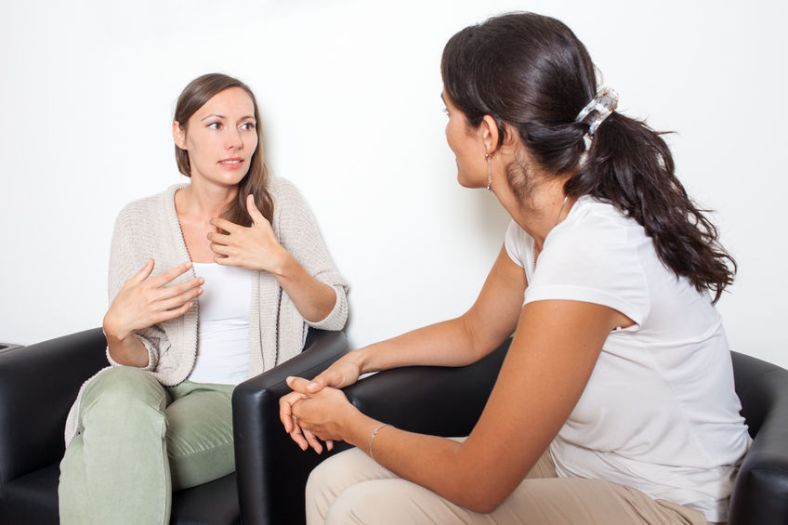
If you’ve ever just wanted to vent about something in your life that was aggravating you, only to be told by someone, “Oh yes, I know EXACTLY how you feel!”, then endure their recollection of an incident which they believe mimicked yours? Basically, such a reaction flips the focus of the conversation to the other person and diminishes the significance of your experience.

Undoubtedly some of you do this, and you feel that you are being empathetic or helpful, when in reality you are forcing people to listen to your story, while you drown out what they have to say. It can often appear as if you are one-upping the other person with your woeful experiences, even though you honestly believe that you are helping.

Here’s the original article, copied and pasted here for you to read. You can also visit the link directly at:
Why we should all stop saying “I know exactly how you feel”

Why we should all stop saying “I know exactly how you feel”
Sep 21, 2017 / Celeste Headlee

You don’t. And you’re also steering the focus away from someone who probably just wants to be heard. Here’s how to be a more considerate conversation partner, says radio host and writer Celeste Headlee.

A good friend of mine lost her dad some years back. I found her sitting alone outside our workplace, just staring at the horizon. She was absolutely distraught, and I didn’t know what to say to her. It’s so easy to say the wrong thing to someone who is grieving and vulnerable.

So I started talking about how I grew up without a father. I told her my dad had drowned in a submarine when I was only nine months old and I’d always mourned his loss, even though I’d never known him. I wanted her to realize that she wasn’t alone, that I’d been through something similar and I could understand how she felt.

But after I related this story, my friend snapped, “Okay, Celeste, you win. You never had a dad and I at least got to spend 30 years with mine. You had it worse. I guess I shouldn’t be so upset that my dad just died.”

I was stunned and mortified. “No, no, no,” I said, “that’s not what I’m saying at all. I just meant I know how you feel.”

And she answered, “No, Celeste, you don’t. You have no idea how I feel.”

Often subtle and unconscious, conversational narcissism is the desire to do most of the talking and to turn the focus of the exchange to yourself.

She walked away and I stood there feeling like a jerk. I had wanted to comfort her and, instead, I’d made her feel worse. When she began to share her raw emotions, I felt uncomfortable so I defaulted to a subject with which I was comfortable: myself. She wanted to talk about her father, to tell me about the kind of man he was. She wanted to share her cherished memories. Instead, I asked her to listen to my story.

From that day forward, I started to notice how often I responded to stories of loss and struggle with stories of my own experiences. My son would tell me about clashing with a kid in Boy Scouts, and I would talk about a girl I fell out with in college. When a coworker got laid off, I told her about how much I struggled to find a job after I had been laid off years earlier. But when I began to pay more attention, I realized the effect of sharing my experiences was never as I intended. What all of these people needed was for me to hear them and acknowledge what they were going through. Instead, I forced them to listen to me.

Sociologist Charles Derber describes this tendency as “conversational narcissism.” Often subtle and unconscious, it’s the desire to take over a conversation, to do most of the talking, and to turn the focus of the exchange to yourself. Derber writes that it “is the key manifestation of the dominant attention-getting psychology in America.”

He describes two kinds of responses in conversations: a shift response and a support response. The first shifts attention back to yourself, and the second supports the other person’s comment.

Example number 1:

The shift response
Mary: I’m so busy right now.
Tim: Me, too. I’m totally overwhelmed.

The support response
Mary: I’m so busy right now.
Tim: Why? What do you have to get done?

Example number 2:

The shift response
Karen: I need new shoes.
Mark: Me, too. These things are falling apart.

The support response
Karen: I need new shoes.
Mark: Oh yeah? What kind are you thinking about?

Shift responses are a hallmark of conversational narcissism — they help you turn the focus constantly back to yourself. But a support response encourages the other person to continue their story. It lets them know you’re listening and interested in hearing more.

We can craftily disguise our attempts to shift focus — we might start a sentence with a supportive remark and then follow up with a comment about ourselves.

The game of catch is often used as a metaphor for conversation. In an actual game of catch, you’re forced to take turns. But in conversation, we often find ways to resist giving someone else a turn. Sometimes, we use passive means to subtly grab control of the exchange.

This tug-of-war over attention is not always easy to track. We can very craftily disguise our attempts to shift focus. We might start a sentence with a supportive comment, and then follow up with a comment about ourselves. For instance, if a friend tells us they just got a promotion, we might respond by saying, “That’s great! Congratulations. I’m going to ask my boss for a promotion, too. I hope I get it.”

Such a response could be fine, as long as we allow the focus to shift back to the other person again. However, the healthy balance is lost when we repeatedly shine the attention back on ourselves.

While reciprocity is an important part of any meaningful conversation, the truth is shifting the attention to our own experiences is completely natural. Modern humans are hardwired to talk about themselves more than any other topic. One study found that “most social conversation time is devoted to statements about the speaker’s own emotional experiences and/or relationships, or those of third parties not present.”

The insula, an area of the brain deep inside the cerebral cortex, takes in the information that people tell us and then tries to find a relevant experience in our memory banks that can give context to the information. It’s mostly helpful: the brain is trying to make sense of what we hear and see. Subconsciously, we find similar experiences and add them to what’s happening at the moment, and then the whole package of information is sent to the limbic regions, the part of the brain just below the cerebrum. That’s where some trouble can arise — instead of helping us better understand someone else’s experience, our own experiences can distort our perceptions of what the other person is saying or experiencing.

The more comfortable you are, the more difficult it is to empathize with the suffering of another.

A study from the Max Planck Institute for Human Cognitive and Brain Sciences suggests that our egos distort our perception of our empathy. When participants watched a video of maggots in a group setting, they could understand that other people might be repulsed by it. But if one person was shown pictures of puppies while the others were shown the maggot video, the puppy viewer generally underestimated the rest of the group’s negative reaction to the maggots.

Study author Dr. Tania Singer observed, “The participants who were feeling good themselves assessed their partners’ negative experiences as less severe than they actually were. In contrast, those who had just had an unpleasant experience assessed their partners’ good experience less positively.” In other words, we tend to use our own feelings to determine how others feel.

Here’s how that translates to your daily conversations: Let’s say you and a friend are both laid off at the same time by the same company. In that case, using your feelings as a measure of your friend’s feelings may be fairly accurate because you’re experiencing the same event. But what if you’re having a great day and you meet a friend who was just laid off? Without knowing it, you might judge how your friend is feeling against your good mood. She’ll say, “This is awful. I’m so worried that I feel sick to my stomach.” You’d respond, “Don’t worry, you’ll be okay. I was laid off six years ago and everything turned out fine.” The more comfortable you are, the more difficult it is to empathize with the suffering of another.

It took me years to realize I was much better at the game of catch than I was at its conversational equivalent. Now I try to be more aware of my instinct to share stories and talk about myself. I try to ask questions that encourage the other person to continue. I’ve also made a conscious effort to listen more and talk less.

Recently, I had a long conversation with a friend who was going through a divorce. We spent almost 40 minutes on the phone, and I barely said a word. At the end of our call, she said, “Thank you for your advice. You’ve really helped me work some things out.”

The truth is, I hadn’t offered any advice. Most of what I said was a version of “That sounds tough. I’m sorry this is happening to you.” She didn’t need advice or stories from me. She just needed to be heard.

Excerpted from the new book We Need to Talk: How to Have Conversations That Matter by Celeste Headlee. Published by Harper Wave, an imprint of HarperCollins Publishers. © 2017 Celeste Headlee.


My International Travel Promise To Myself

Copyright : Sebastien Decoret

Back in 2014, I made a promise to myself that I would visit a foreign country, preferably one I had not visited before, every even-numbered year. I designated every even year primarily as a means to give myself enough time to prepare my schedule and my finances to be able to travel every other year, and I also chose that interval because I felt a strong itch to visit a foreign country in 2014.

Why was I struck with this idea in 2014? One reason was that I suddenly realized that year that I had not taken a bona fide vacation since 2007. The second and more compelling reason stemmed from deep conversations I had with my dear friend and meditation teacher, who was quickly succumbing to a very aggressive and deadly brain tumor. On more than one occasion during my visits with him, he told me, “Don’t wait to do the things you have always wanted to do, because you might run out of time to do them.”

What Rob told me really got me thinking. I thought of how my mom had a number of big dreams dashed because she had always pushed them to the side, believing that she either didn’t deserve to pursue them, or that her dreams would never come to fruition. For example, she had entertained a strong interest in travel, but she always made excuses for why she couldn’t go on vacations or getaways. In fact, the only “vacations” she ever took were when one of her siblings fell ill or died, and she had to fly to Hawaii to visit. I don’t know about you, but I certainly don’t think such trips should ever count as vacations, especially since they are so emotionally difficult. It’s not like my mom went to Hawaii and had a grand time at the funerals she attended.

Though I had traveled to various destinations for reasons other than the death of a relative, I knew that I had also fallen into a similar trap of making excuses about being too busy to take a vacation. So in the Spring of 2014 I decided to travel to Prague to compete in an IFBB Pro event, and figured that I would also visit Hungary, which was on my bucket list of destinations to visit.

My friend Rob passed away on April 29, 2014. After spending several weeks grieving for him, I decided to act upon my proposed travel plans to Eastern Europe. As I was planning the trip, I realized that since I would be in prep for a bodybuilding show, I wouldn’t be able to enjoy Prague as a vacationing traveler, and also realized that I would only have a couple of days to explore Hungary. I ultimately decided not to compete, and instead booked a 7-day trip to Hungary which I completed in September of 2014.

Hungary turned out to be just as magical as I imagined it to be, and I honestly felt like I was honoring my dearly departed friend Rob when I was there. By an incredible stroke of luck, I was able to travel to Sydney, Australia and Bali the following month. Satisfied with having traveled to 3 new countries, I resolved to go somewhere new in 2016.

In March of 2016, I flew to Costa Rica, adding to my list of foreign destinations and keeping my promise to Rob and myself to travel internationally in an even year. After my Costa Rica trip, I wasn’t able to save money consistently for a trip in 2018, but whenever I had a chance to set something aside, I did.

I’m proud to say that I have fulfilled my promise yet again this year, when I traveled to the Maldives in September, and to Thailand earlier this month. Both trips were absolutely amazing, and I feel spiritually richer because of those experiences. I love the fact that I am able to say that I added six new countries in the last 5 years to my foreign travel roster, and I have every intention of adding to the list in 2020. My goal is to save up for a trip to Japan in 2020, but if I am unable to save enough money to travel to that destination, I will select a more reasonably priced excursion so that I can stay on track with my travel goals.

For those of you who are curious about what foreign countries I have visited, here is the list:

England (1980)
France (1980)
Switzerland (1980)
Italy (1980)
Germany (1980)
Austria (1980)
Greece (1980)
Turkey (1980)
Hungary (2014)
Mexico (1986, 1989, 1992)
Costa Rica (2016)
Australia (Sydney) (2014)
Bali (2014)
Maldives (2018)
Thailand (2018)

It will be exciting to think about what countries I will visit in the future. Some of the countries on my list include: Fiji, Bora Bora, Spain, Egypt, Vietnam, Czech Republic, Finland, Ireland, Scotland, Kenya, New Zealand, Nepal.

For those of you who dream of traveling, but who always seem to find a roadblock when trying to plan a trip, how about setting a similar goal to the one I have set for myself? You would give yourself at least a year to save up money between trips, and you would be able to travel to destinations you’ve always wanted to see.

A Spoonful of Laughter

Copyright : Jacek Dudzinski (courtesy of 123RF.com

The curative effects of laughter are now widely known, and many people (myself included) thrive on humorous social media posts. From the time I was a small child, I gravitated towards comedy, watching Carol Burnett, Monty Python’s Flying Circus, Dave Allen (does anyone remember this fella?) and Benny Hill faithfully, all the while leaving my mother puzzled by my intense interest in the funny television variety shows which were the order of the day back in the 1960’s and 1970’s. She became even more concerned when I picked up a copy of Eddie Murphy: Comedian in 1982 and laughed my ass off while listening to the album repeatedly. Eddie’s stand-up style was so off-color for my mother that she bitched and moaned about me listening to him, but I found him hilarious and kept on listening. I have the record album (yes, a vinyl LP) in my collection to this day.

My love of comedy has never waned, and though I don’t watch enough television to get drawn into current sitcoms or other comedic shows, I am in my car often enough that I have developed a habit of listening to comedy while I drive. I find it much more enjoyable to listen to comedy than music while I am in the car, and since SiriusXM has a number of comedy stations, I have them loaded as presets on my radio and rotate through them. I would much rather listen to a comedy bit by a talented stand-up comedian than to toggle through radio stations which often play the same tunes over and over. The fact that I can laugh while driving, especially in Los Angeles, is a godsend. It’s a great way to arrive at my destination in a relatively good mood, even if I have to sit through hellish traffic.

Even if you don’t have SiriusXM, you can catch some pretty amusing morning radio shows. In L.A., I like listening to Frosty, Heidi and Frank. Most large metropolitan areas host morning radio shows which are worth a listen.

Copyright : yuriz (courtesy of 123RF.com)

Move Like A Child

Copyright : maximkabb (courtesy of 123RF.com)

Have you ever given any thought to how children move? The most fidgety of kids will move constantly, and will exhibit a freedom of movement. Children as a whole are far more active and naturally athletic than most adults. Movements such as swaying from side to side, swinging arms, fidgeting, jumping, and skipping are all the dominion of the child. Ordinarily, if an adult dares to move in that manner, he or she would be regarded, and often rightly so, as bonkers.

So what happens to an adult when he or she is allowed to move freely like a child, allowing whatever impulse emerges to direct movement of body parts?

There is one yoga instructor at the yoga studio I frequent who has a habit of encouraging the students to move and shake their limbs, wiggle their hips, and just let loose during one portion of her kundalini yoga class. Do students feel silly when they begin to move? Absolutely. Does everyone begin to enjoy the freedom that such movements can confer on the body, mind and spirit? Oh yes. It is incredibly liberating to be able to shake it like you just don’t care, all in a comfortable and non-judgmental environment.

I think the next best thing to being in a kundalini yoga class with a cool yogi like the one I mentioned, would be to take a dance class, or take part in freestyle dancing at a local club. It’s a great way to de-stress and have fun in the process.

Oui Oui Indeed!

I found this article to be rather amusing, which is why I am sharing it on my blog site.   Of course public urination is a nuisance worldwide, but I love the fact that Parisians have responded to the issue by providing volume loaded individuals with pissing pots! 


https://www.msn.com/en-us/travel/news/paris-encourages-tourists-to-relieve-themselves-in-public-with-exposed-urinals/ar-BBLWi8M?ocid=spartandhp

When you gotta go, you gotta go!  Read more to find out how Paris, France has responded to the issue of public urination.
Copyright : mackoflower

Clean House, Clean Mind!

No one should have to live like this!

The phrase which I have used for the title of this post is one which always intrigued me, perhaps mostly due to the fact that I grew up in a household in which various areas were “clutter zones”. This is not to say that I grew up in a messy home. My mom was actually quite tidy, and a neat freak. But I never saw more than half the surface of the dining room table, since the other half was covered with one foot high stacks of bank statements, other financial documents, greeting cards and letters from family. In like fashion, about a third of our coffee table was piled with astrology guides, tv guides, and other books which my mom was reading. Stacks of papers and magazines sat next to our living room sofa. My mom’s bedroom had banker’s boxes instead of furniture at the foot of the bed.

I also was witness to my mom’s extensive collection of jewelry and clothing. Though we had six closets, only one was filled with my clothing, while all the rest were jam-packed with my mother’s clothing. Some of the clothing had never been worn and had the price tags still attached. I admit that I knew this behavior was unusual, but I did not know how pervasive such behavior was in my mom’s family until I went to Hawaii and saw that my aunts and uncles also practiced the same behavior. Some of my relatives were so extreme in their tendency to hold onto things that they earned the label of pack rats. In fact, when one of my uncles had a severe stroke and had to be placed in a convalescent home, my cousins discovered five-foot high stacks of newspapers throughout the house in a serpentine pattern (leaving just enough room for a person to wiggle through the house), moldy food in the refrigerator, Japanese antiques which were stuffed in a room collecting dust, and a plethora of other collectibles and junk which made it next to impossible for him to use the kitchen, toilet or sleep in his bed.

When my mom became ill in 2006 and had to be placed in a convalescent home, the task of cleaning her apartment fell upon me. The enormity of sorting through all the things my mother had collected was overwhelming, and I shut down emotionally numerous times. I was shocked to find collectibles that had never been displayed, bank statements going as far back as the 1950’s, hundreds of pairs of earrings and shoes, about 150 handbags, etc. Suddenly it was left up to me to determine what items of my mom’s were worthy of being kept. Since these items could not be stored at the nursing home, they were stored in my garage and my closet. My mom still asks about her things and becomes angry if I tell her that we had to sell or give away many of the items she had collected over the decades. I did my best to keep what she deemed most valuable, either monetarily speaking or in terms of sentimental value. It always breaks my heart when I see her upset over losing her things.

My favorite aunt, two years older than my mother, was probably the worst-stricken in the family when it came to hoarding. She never had children and was a widow for 34 years when she finally passed away in 2017 at the age of 86 from ALS. Before she became ill, I remember hyperventilating upon entering her house, because the clutter was so extreme. I used to marvel at her insistence on keeping 60 plastic Smurf miniatures in her tiny bathroom, and used to wonder why she had a collection of about 200 plastic food storage containers when she lived alone. My aunt’s collections were numerous and extensive.

If you have ever tuned into the show “Hoarders” you would get a sense of what my aunt’s environment was like. My aunt’s belongings swallowed up her living space so severely that she was unable to stretch out on her bed, and could barely get to her toilet because there was so much junk in the bathroom. My aunt didn’t have access to her front door for over ten years because she had so much junk stacked up in front of it. Instead, she used the side door leading out from the kitchen to access her residence.

In January of this year I had to move from a place I had been in for close to six years. Though I have gone through my entire adult life very successfully squashing any hoarding tendencies that may be hidden in my genetic makeup, I had still acquired many things over the years. Once I was in the new place and had to sort through everything, I was ready to enter full purge mode, and got rid of a lot of things I no longer needed, and it felt FANTASTIC. That is saying a lot since I go through the bulk of my belongings three to four times a year and perform regular purges.

When it comes to your belongings, don’t allow yourself to become encumbered by them. Don’t hold onto feelings of guilt. If you haven’t used something in a while and it is collecting dust, get rid of it. There is probably someone out there who will use it and will appreciate it. If there is something you haven’t used or worn because you are waiting for the right occasion, either USE IT or let it go! I used to frequently argue with my mom about our differing philosophies about objects. She always told me I was hard on things. Scratches on my watches and my shoes were deemed by my mom to be marks of carelessness, when in contrast, my mom sequestered similar items in boxes and tissue paper for decades, never to be worn or used, in a static, pristine state and hidden under a bed or a drawer. I will continue to use the things I possess and will not worry about wear and tear. I will also make sure that tables and all the living areas of my house serve only their intended purposes, and that my storage areas never get to the point where they are overflowing.

If you know a hoarder, please GET HELP. http://hoardershelp.org/

Sex After 40

By: Dr. Stacey Naito – Physician and IFBB Pro

The Shifting Tide

Those of you about to turn the corner and enter the 40 and over zone may be concerned about the impact that getting older will have on your sex life. You may have questions about whether you must resign yourself to becoming a dried-up old lady, with no fun to be had in the bedroom. Thankfully, the reality is that you can have more fulfilling and enjoyable sex than you had in your 20’s or 30’s.

What’s more, society has gotten wind of the idea that people want to live completely fulfilled lives into their advanced years. It’s true that 40 has become the new 20, and the concept is supported by empowered celebrities like J. Lo proclaiming their eternal youth and sexual vitality without shame. So instead of allowing the aging process to shut you down, it’s time to look forward to a new and more sexually fulfilling chapter in your life.

Why Getting Older Is Great For Your Sex Life

I don’t know about you, but I wouldn’t trade the knowledge and life experience I obtained over my 52 years on the planet to return to my 20’s, because aging has positively impacted every aspect of my life, including what happens behind closed doors. With age comes acceptance of who we are, body flaws and all. Let’s face it, we accumulate stretch marks, cellulite, scars, etc. over time, all of which could send us into a meltdown if we stressed out about them. We have become more comfortable with who we are, which translates to greater body confidence. That body confidence works to our advantage in the bedroom, because we no longer feel uneasy or ashamed of how we look sans clothing. When we are comfortable naked, we can finally relax and enjoy intimate encounters to the fullest.

A woman in her 40’s or 50’s is less likely to take desperate measures to entice her man, such as dressing up in sexy but uncomfortable lingerie, or wearing a pair of high heels guaranteed to aggravate her plantar fasciitis or her bad back. In contrast, it seems there are plenty of women in younger age brackets who follow ridiculous wardrobe guidelines to garner the attention of potential sex partners or followers on social media channels. A woman in her 40’s of beyond doesn’t have the inclination to make a fool out of herself to guarantee a romp in the bedroom. She is older, wiser, and doesn’t have time for such nonsense. She doesn’t feel like she needs to try so hard to win her partner’s favor. Her attitude tends to be more along the lines of, “This is what I got, take it or leave it.” Besides, I am willing to bet that such an attitude is far sexier to a man these days. In addition, most men tend to be more excited about the notion of getting you naked, and once you are in the buff, they aren’t scrutinizing your body for flaws.

Older women are also less selfish in bed, and bolder about declaring what they want. They know their bodies, their likes and dislikes. If single, they are more discerning about how they procure partners, so they are less likely to engage in risky activities which expose them to sexually transmitted diseases. For older women in a relationship, there is a greater likelihood that they have been with the same partner for many years, and have developed a level of intimacy which only comes from a longer term committed relationship. A 40-something woman is usually confident enough to turn to her partner and say, “I really like it when you use your hands on me more”, and not fret about whether her partner will accept her sexual preferences.

Chances are that for older women, there are far fewer household distractions which can impede the natural progression of an afternoon of flirting into a full-blown lovemaking session. Such interludes are pretty much impossible if a baby is crying, or young children are demanding attention. Once children have become old enough to be relatively independent, say from pre-teens on, there may be more opportunities to roll around in the sheets with your partner without any interruptions. That kind of freedom can result in more spontaneous sexual encounters and greater satisfaction.

For those past menopause, Aunt Flo’s monthly visit no longer interferes with any amorous advances. Furthermore, there is no concern about getting pregnant and having an unplanned family addition. It’s incredibly liberating.

Sexual Issues and Aging

Though I have painted a rosy picture of the sex life of older women, there are some issues which can interfere with optimal sexual activity. However, this doesn’t mean that all women over 40 will experience sexual dysfunction. As geriatric psychiatrist and Caring.com senior editor Ken Robbins states, “Impaired sexuality and sexual function aren’t normal consequences of aging.” (https://www.caring.com/articles/sexless-after-40).

Women can experience symptoms of perimenopause as early as 35, and the diminishing estrogen and progesterone levels can result in vaginal dryness and thinning of the vaginal mucosa, both of which can make intercourse painful. If this occurs, make sure to obtain a pelvic exam with a physician who can diagnose and treat the condition. In many cases, a lubricant is sufficient, but hormone replacement therapy may be offered as an option as well.

Some women may experience a decrease in sexual desire as they age, but many others experience a surge in libido from the increased testosterone to estrogen ratio, which increases as estrogen levels continue to diminish. The sexual benefits of testosterone are also enhanced by regular weight training, which naturally boosts testosterone levels in the body. However, the ebb and flow of sexual desire often fluctuates more in women over the age of 40, a result of associated dips and surges in hormonal levels. In addition, the hot flashes, night sweats, and mood swings associated with plummeting progesterone levels don’t exactly make a woman feel amorous.

If you are a woman over 40 who is experiencing symptoms of perimenopause, such as hot flashes, and they are frequent enough to disrupt your daily life, seek the advice of a physician. During your visit, you may ask if the addition of hormonal support supplements like maca or dihydroepiandrosterone (DHEA) would be helpful in decreasing the symptoms you are experiencing.
Most importantly, reduce stress in your daily life, get plenty of rest, and communicate with your partner about any sexual concerns you may have.