Instagram And Instant “Models”

keep-calm-you-re-not-a-model-it-s-just-instagram

Every once in a while, I will stumble upon an Instagram account for an individual who clearly is NOT a model, but who has included “fitness model” in the profile description. A perusal of the user’s images almost invariably reveals NO professional images, but will have a whole slew of half-naked selfies shot in front of a bathroom mirror, or worse yet, on a bed, with a blue steel scowl or a do-ya-think-I’m-sexy pout in every single selfie that just makes me want to laugh. Just because someone WANTS to be a model doesn’t make it so, and no amount of selfies will ever generate the monetary compensation or exposure that would equate with a bona fide modeling career (unless you are Kim Kardashian). It also doesn’t count if you just so happened to have put on some fitness apparel once during a photo shoot with one of your friends who is a photographer, and struck poses which you believe to be fitness poses. Whatever you do, don’t be one of those wannabe fitness models who throws the title of fitness model around like you earned it! And stop using a ton of filters to make your images look better, then peppering them with a hundred hashtags to get more attention. All those things make you seem like a douche.

Fitness models are seen in print and online catalogs, ad campaigns, commercials, fitness expos, and are featured in magazines. The top fitness models make a very decent living doing what they do, and they work HARD for the money they make. That is why I get annoyed when I see a wannabe making false claims on social media. I have actually asked individuals who claimed to be fitness models where they were featured, only to get a flustered, cop-out response which I fully expect. There are some people out there who are photogenic and who have well-muscled, aesthetically pleasing physiques which lend promise to the possibility of a career as a fitness model, but they must prove that they possess the talent and work ethic to make it as fitness models. If you feel that you have some promise, then you can say that you are an aspiring fitness model, but don’t claim the title until you have actually worked as one.

Widow’s Peaks

I have a widow’s peak which has become more prominent in recent years. Most people don’t even realize that I have one until I point it out. However, I tend to part my hair on the side, as do many women who have widow’s peaks, so in general, they are much less noticeable on women than they are on men. Though the expression “widow’s peak” has a negative connotation which refers to the belief that it was a sign of early widowhood, I like the notion which has circulated in more recent decades that it is a sign of beauty. Another thing I like about my widow’s peak is that it comes from my Japanese grandfather, who had a prominent widow’s peak.

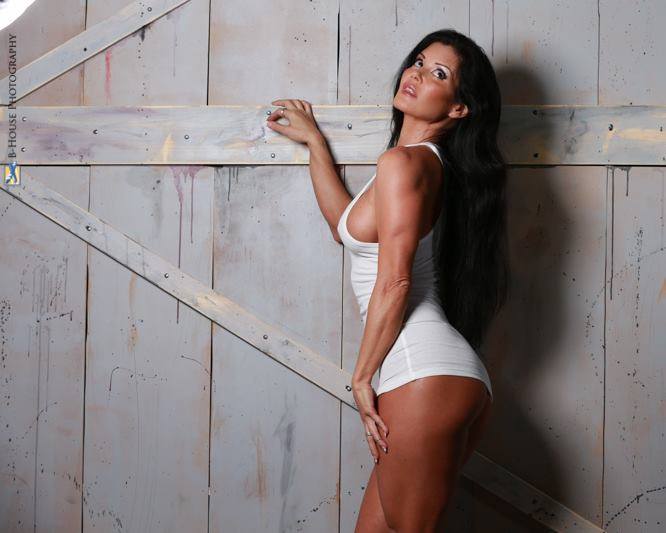
You can see in the image above that even with my hair parted to the side, you can still see my widow's peak.

You can see in the image above that even with my hair parted to the side, you can still see my widow’s peak.

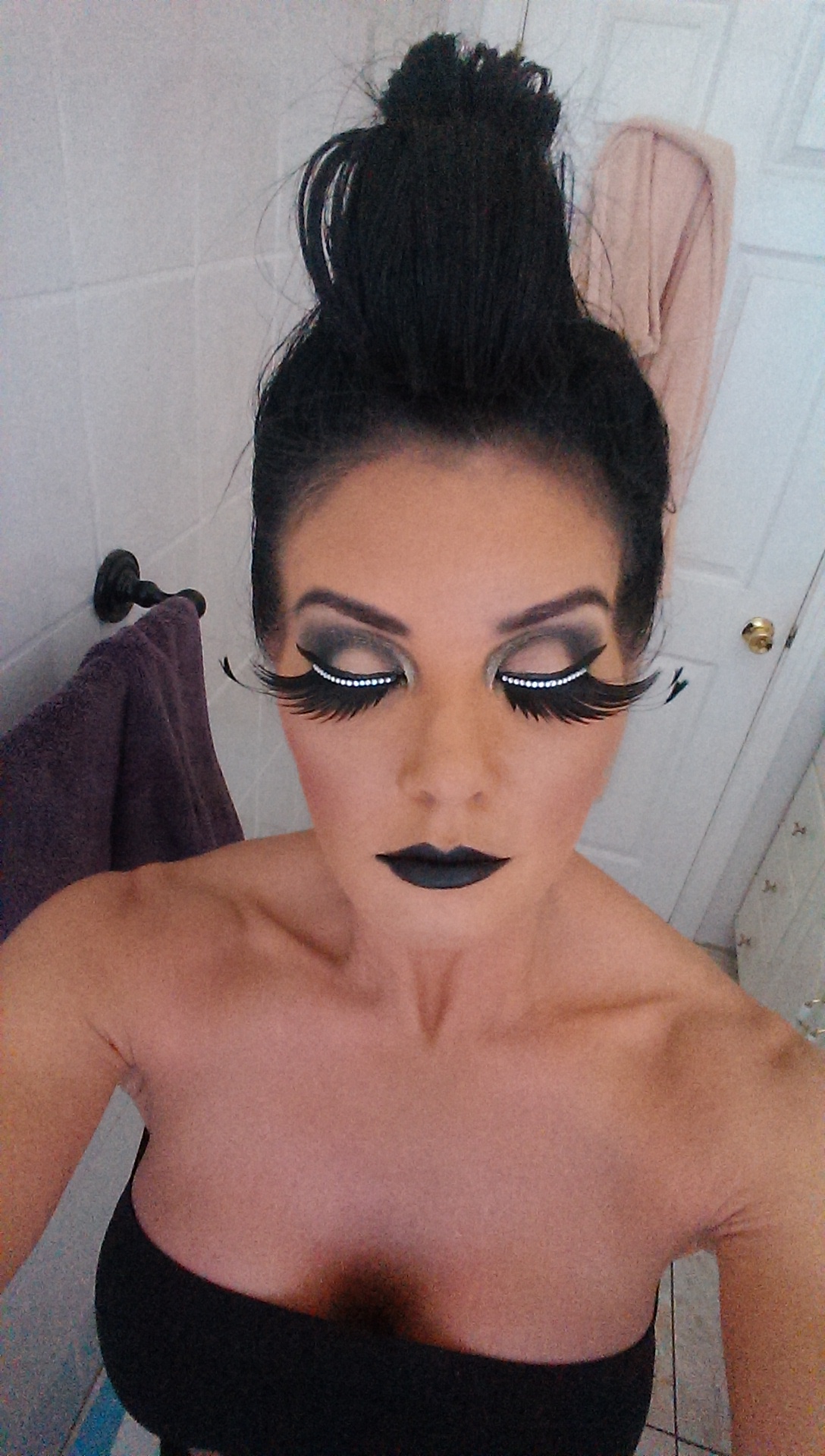
I think my widow's peak lends itself well to the look pictured here (yes, it's me)

I think my widow’s peak lends itself well to the look pictured here (yes, it’s me)

I also adore the fact that Grace Kelly, a classic beauty, had a widow's peak. American actress Grace Kelly (1929 - 1982), circa 1955.  (Photo by Pictorial Parade/Hulton Archive/Getty Images)

I also adore the fact that Grace Kelly, a classic beauty, had a widow’s peak.
American actress Grace Kelly (1929 – 1982), circa 1955. (Photo by Pictorial Parade/Hulton Archive/Getty Images)

What Do You Bring To The Table? Know Your Worth

Originally published on mensphysique.com on Saturday, 06 December 2014

This is part two of an immensely popular article which I wrote for the site.

http://www.rxmuscle.com/blogs/the-business-fitness-modeling-and-showbiz/11909-what-do-you-bring-to-the-table-know-your-worth.html
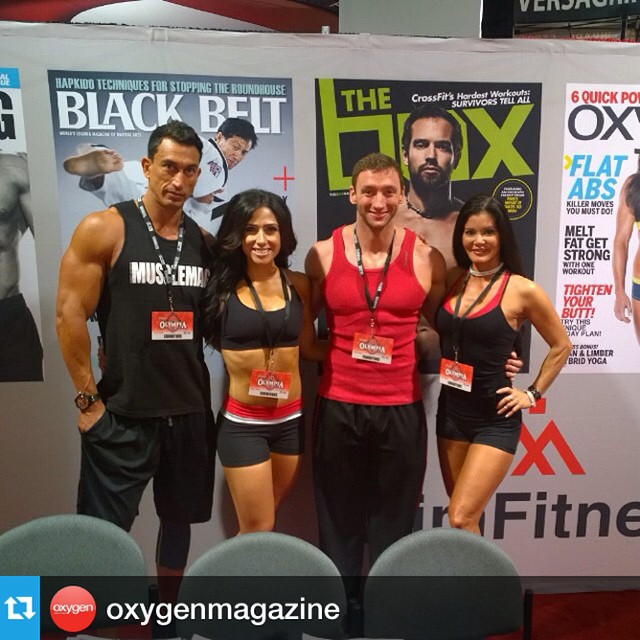
Olympia 2014 foursome
Last month I wrote an article in which I discussed different levels of athlete sponsorship and the tendency of some sports supplement and fitness related companies to use athletes as unpaid salespeople under the guise of being sponsored. This month I am flipping to the other side and discussing athlete value, i.e., what the athlete SHOULD be bringing to the table in terms of marketability, knowledge, and salesmanship when approached for a sponsorship.Both the company and the athlete should have something to offer the other party so that the relationship is a healthy symbiosis which promotes both parties. Essentially, when an athlete and a company work together, they should be working as a TEAM so that everyone can benefit from the union, but this doesn’t always occur.

In some cases, athletes will work tirelessly to promote a brand for little or no compensation, while in others, supplement and fitness related companies put their energies into an athlete, believing that the athlete will enhance the brand, only to have an athlete take advantage and become extremely lazy and neglect his/her end of the deal. While there are athletes out there who have tremendous value and who have built laudable reputations through inspiring articles, e-books, and client transformations, there are countless more who have an exaggerated sense of self-entitlement and who believe that simply because they graced the stage once or twice, they deserve to have everything handed to them for free.

If you are new to competing or to the fitness world in general, you need to be aware that it takes time to build your own brand and to find your place in the industry. Perhaps the best thing you can do at this point is to assess your value and what you truly bring to the table. Companies which are looking for brand ambassadors want someone with a following and a unique presence or message which is congruent with their brand philosophy, so if you aren’t there yet, you had better start working on building your own value.

Let’s start with physical appearance. Those who are successful in the bodybuilding and fitness industry have great physiques which they continue to improve upon over time. Individuals who maintain a relatively consistent weight and conditioning level throughout the year tend to fare best as well since they are close to shoot/contest ready almost all the time. Some of the top signed sponsored athletes are also some of the best looking people on the planet! I’m not saying that you have to have movie star good looks to land sponsorships, but it certainly doesn’t hurt. This is when you need to be VERY realistic about yourself and what you bring into the mix. You should be blessed with good looks or a distinctive, appealing look, or at the very least be photogenic if you expect to land a sponsorship with one of the bigger supplement companies.

Perhaps you are just average looking, or have a face only a mother could love, but you ooze sex appeal and charisma. If you are blessed enough to have such an energetic pull on people, this could work in your favor during booth appearances and videos, and increase interest in the brand you are representing. You are also far more likely to get picked up by a company if you have an enthusiastic and positive attitude. In keeping with this, you should only work with companies which sell products you truly believe in and like, because your enthusiasm for the products will come through naturally as you promote them.

Another valuable trait which increases an athlete’s value is integrity. People who do well in the fitness and bodybuilding industry and who have longevity within it tend to be truthful, sincere, and have strong values. You must have a strong backbone to survive in this highly saturated and fickle industry, and that only comes with knowing who you are and honoring your personal beliefs. If you sell out and take shortcuts, you run the risk of having a very short-lived career.

One of the most powerful ways to connect with your core audience is to show your human side and share stories which allow your followers to relate to you. It doesn’t matter if you show your own body transformations or those of your clients, as long as followers can see a before photo which they can relate to and an after photo which inspires them to take action. Such inspiration becomes even more powerful when you offer to help followers to reach their fitness and wellness goals. People begin to believe in YOU, and that can give you the leverage you need to promote a product line for a brand you represent.

If you have experience and education in fitness, nutrition, business, advertising, medicine, physical therapy, massage, or any other field which may be relatable to your journey in fitness and to the people who follow you, it’s a good idea to fortify such knowledge by becoming an authority. You can do this by creating videos, blog posts and books which showcase your knowledge. This can make you especially valuable to supplement and fitness companies which are considering bringing you on board because you can offer your knowledge as part of the deal which you negotiate with them.

Many companies assess the popularity and reach of an athlete through social media numbers, a tactic which can edge many athletes out of the running for top sponsorship spots if numbers are all they care about. Some athletes have purchased followers or promoted their profiles by paying for them, which has worked in their favor when securing sponsorships, but I don’t recommend this route since many of those paid followers won’t buy products which the athlete promotes. Then there are athletes who desperately want to work in the industry and obtain sponsorships, but have built their following solely on sexy half-naked photos of themselves. These athletes (mostly women) have resorted to using their social media channels solely as a means to post scantily clad selfies which ostensibly generate a ton of likes from the opposite sex. Every athlete who lowers his/her standards to this point where the only value generated is from smutty photos is sure to find that there is no legacy to speak of as time goes on and looks fade.

Even if you build your value and show consistently that you have a strong work ethic, you must continue to meet your end of the bargain. Sometimes companies will give you product as a trial run to see what you will do with respect to adding value to the brand. Some athletes will ramp up slowly, while others will jump right in with social media posts and will do all they can to promote a product. I have also seen some athletes start out as strong cheerleaders for a product, only to fizzle out because they lack self-discipline and consistency. Of course this can also occur on the company’s end, so it behooves both the athlete and the company to check in with each other regularly to make sure that everyone is happy.

Waxing Or Threading?

Originally published on RxGirl on Monday, 08 September 2014

http://www.rxmuscle.com/rx-girl-articles/11509-waxing-or-threading.html
Eyebrow-threading
These days there are many different hair removal methods available, including tweezing, shaving, depilatories, laser procedures, waxing and threading. Many women opt for one of the last two methods mentioned because they are inexpensive and produce relatively long-lasting results. Both waxing and threading have also become so convenient that it is commonplace to see waxing & threading services at nail salons and in malls. As a matter of fact, the threading place I go to is located in a nearby mall.

What’s the difference between waxing and threading?
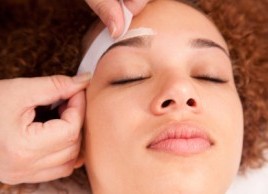
Waxing involves the application of wax (usually hot) in the direction of hair growth, after which a strip of cloth is pressed into the treated area then pulled off rapidly. Those of you who have seen The 40-Year Old Virgin might remember the waxing scene, which pretty much captures and amplifies the painful experience. If you are considering waxing, I can assure you that unless you are as hirsute as Steve Carrell’s character is, you won’t experience nearly as much discomfort.

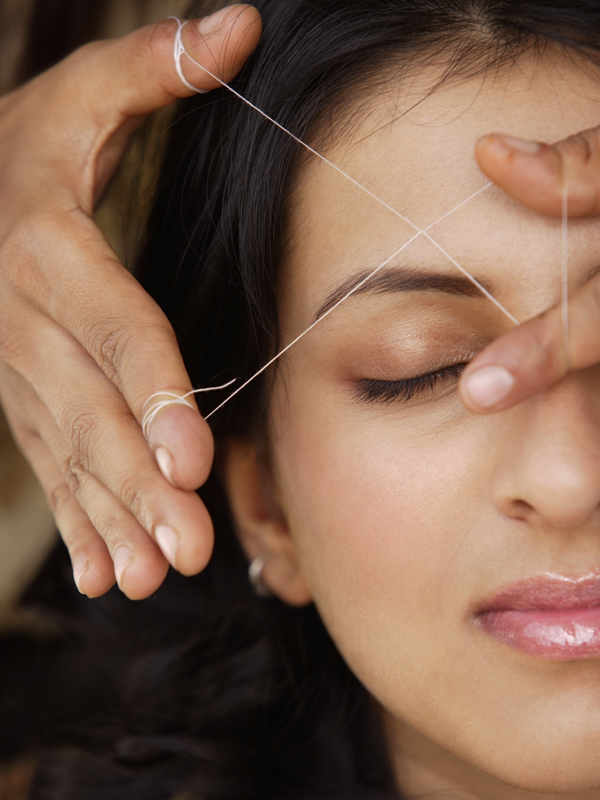
Threading, in contrast, involves thread which is looped around itself and then wound around the technician’s fingers, then rolled over the areas of unwanted hair, plucking the hair rapidly. If you are considering threading solely because you want to escape the discomfort of waxing, you may be in for a surprise, because threading can be a bit intense as well.

Nevertheless, I think it is well worth the discomfort to endure hair removal methods which can last at least a couple of weeks. Let’s look in more detail at the two different methods and how they stack up against each other.
waxingbrow
What I love about waxing:

Waxing is great if you have dense, coarse, thick hair which tends to grow quickly, because the results of waxing tend to last longer than any other method. And since the process is so quick, the discomfort is easily forgotten. Another plus with waxing is that it tends to derange the hair follicles, resulting in impeded hair regrowth.

What I don’t like about waxing:
Waxing can be very messy, and because of that, imparting a precise eyebrow shape can be very difficult to achieve. Another negative is that the hair needs to be at least ¼ inch long before it can be waxed, which means plucking or shaving in the interim are general no-no’s. The wax used can be allergenic, triggering acne flare-ups, rashes, burns and abrasions. If you have extremely reactive or sensitive skin, waxing is not a good option. I also am not keen on the idea of the way that the wax tugs at the skin, causing inflammation and redness which can linger.

What I love about threading:
Threading shapes the brows beautifully, making me a fan right out of the gate. I also love the fact that I don’t have to wait for my hair to grow in before I go in for my next threading treatment. There are no gels or substances applied to the skin, so there is almost no risk of skin reactions from threading.

What I don’t like about threading:
Threading can be quite painful in more sensitive areas like the upper lip. Another limitation is the fact that threading is only done on the face, whereas waxing can be performed on just about any body part.

My personal experience:

I used to have my brows waxed regularly for many years, and put up with the swelling and redness which would persist for days at a time. I also developed rashes on my brow line on several occasions, but toughed it out because I didn’t want to give up waxing. Then I went through two particularly distressing incidents involving my upper lip which prompted me to switch to threading, and I haven’t returned to waxing since.

The first incident occurred when I had a sudden breakout on my upper lip after waxing. Normally I will get one acne blemish at a time, but approximately 24 hours after I had my upper lip waxed, one cystic zit and two whiteheads magically appeared, and of course this was just in time for a photo shoot! This did not deter me from having my upper lip waxed again, but I became very wary of the method. About two months later I returned to have my upper lip waxed, and got a nasty and painful abrasion right above the corner of my mouth immediately post-treatment. I was so upset about it that I finally decided to ban waxing from my regimen.

Once I tried threading I was pleased with the complete lack of skin irritation, and I was amazed at how precise these ladies were with the thread. One caveat is that though threading tends to be very precise, one threader overplucked and trimmed my brows and made them nearly pencil thin, and another threader recently plucked a couple of critical hairs and now I have a little bald spot that I am growing out. Just like with any technician, once you find someone whose style you like, you are best off sticking with the same person so you don’t get any surprises. Expert threaders can be very precise and can make the procedure pain-free.

Though threading is usually quite tolerable, it can hurt like mad, especially in more sensitive areas like the upper lip. During one visit, which happened to be right before my monthly visitor, the pain was so unbearable that I had to stop the treatment on my upper lip. I really mean it when I say it was worse than waxing, because the pain was prolonged. Before I send you ladies scurrying away from threading, I think you will be fine if you simply avoid doing threading right before your period. You can also try a numbing cream or spray beforehand to dull the pain. Generally speaking, most women tolerate threading in the brow area with minimal to no discomfort.

Obviously, there are reasons why both waxing and threading are so popular. It’s a good idea to try both methods to see which one works best for you. However, if you have sensitive skin, you might want to opt for threading since it doesn’t involve application of substances which may irritate the skin.