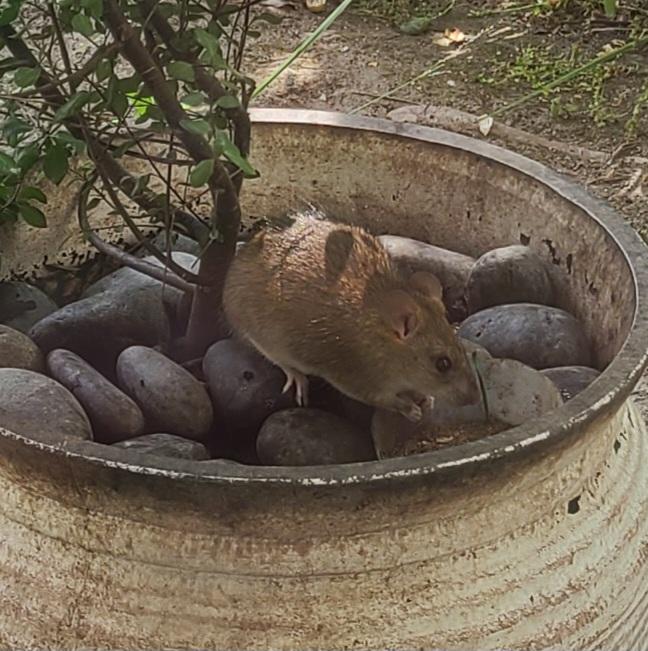
If you had told me last summer that my quiet little balcony would become the front line of a full-blown rodent war, I would have laughed. Yet there I was, by late September, locked in an ongoing ordeal with some of the boldest, most destructive rats I’ve ever encountered.
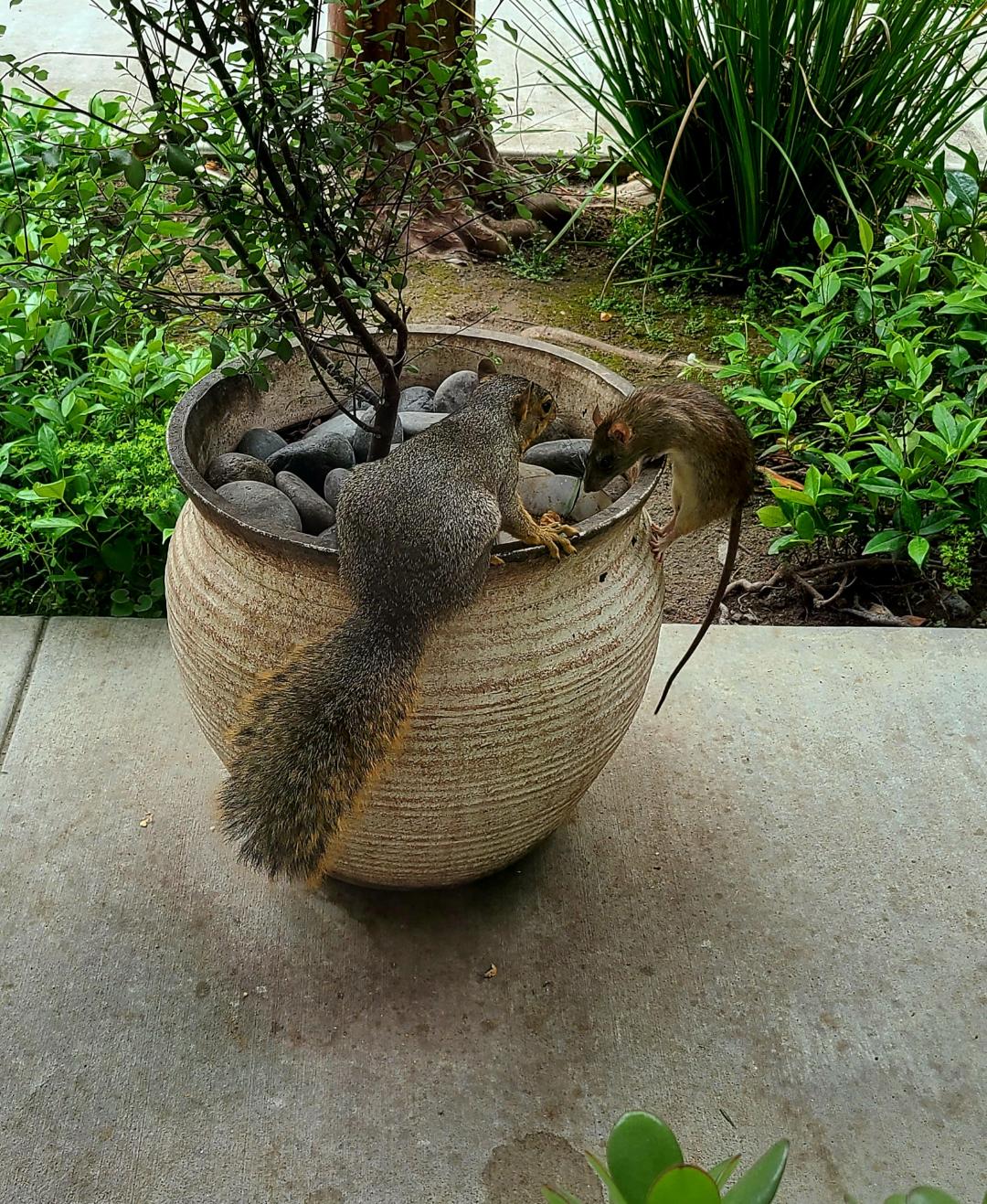
It started subtly—almost innocently. I would see one, maybe two rats joining in on morning squirrel feedings, and I thought they were amusing to watch. Then one morning I realized they had completely severed the lighting adaptor cord which fed the five LED lights in the relaxation fountain on my balcony. That was my first oh no, this is serious moment.
Things escalated quickly after that.
The rats somehow managed to get inside my four-burner propane grill. Imagine getting ready to heat up the grill, only to see a filthy rat scurrying across the grill rack. Needless to say, I quickly resorted to heating up the broiler to cook the steaks I had bought. Despite cleaning and disinfecting the grill, there was no way I would ever put food items on it, so it had to go. Getting rid of it turned into an event worthy of its own sitcom episode. One person had to climb a nine-foot ladder just to reach the balcony, while another lifted the bulky grill up and over the railing so it could be carefully lowered to the ground. All that effort… just to dispose of a grill that rats had claimed as real estate.
As the holidays approached, I hoped things might calm down. Nope. The rats decided to add seasonal flair to their destruction by chewing on one of my Christmas decorations. Festive, but not in the way I’d envisioned.
I tried to handle the rat situation responsibly. I put out bait stations filled with dextrose pellets, confident I was being strategic and humane. The rats, apparently unimpressed by my efforts, ignored the bait stations entirely and went straight for what they really wanted: my hummingbird feeder.
Not only did they attack it—they dismantled it. They chewed off the floral feeding spouts like tiny vandals with dental degrees. That was the moment I realized I needed to level up.
So I did.
I invested in a 76-inch-tall shepherd’s hook, a tube-style squirrel baffle, and a brand-new hummingbird feeder. I also installed ultrasonic deterrents across my balcony, turning it into what I can only assume sounded like an unwelcoming nightclub for rodents.
And finally… it worked.
After weeks of trial, error, frustration, and more than a little disbelief, my efforts paid off. The rats stopped coming. No more chewed cords. No more unwanted balcony guests. No more destruction.
There is one bittersweet consequence: the squirrels rarely visit now, especially since I had to stop morning feedings. I really miss them, especially the ones whom I could hand-feed. Those twitchy-tailed freeloaders were at least entertaining and mostly polite. But in the end, it’s a small price to pay.
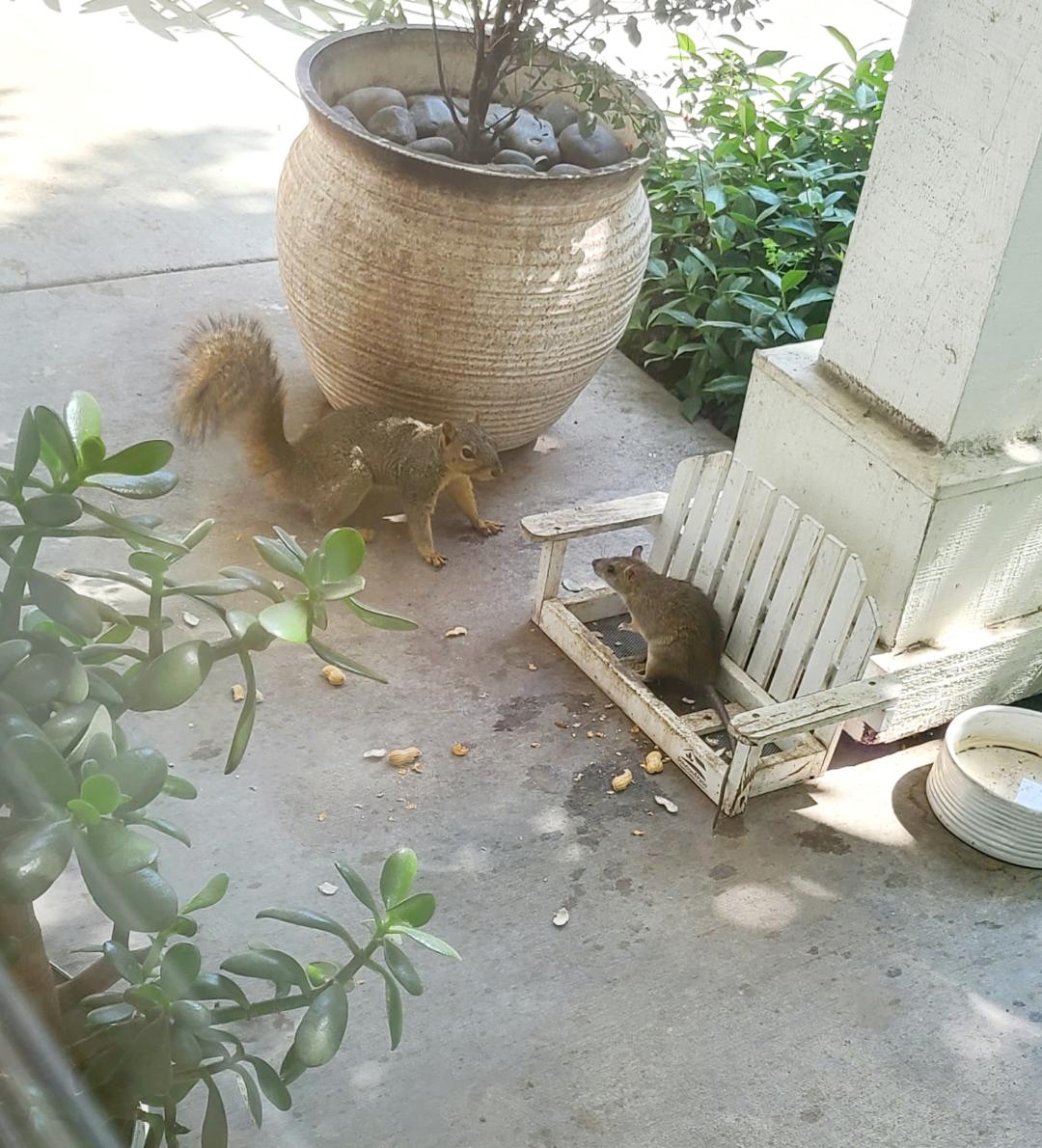
The balcony is peaceful again. The rats are gone. And after everything they put me through, I can confidently say: victory has never felt so satisfying. 🐀🚫

 264442730






 dr. stacey naito's blog