My Just Float Experience

What is Floating – Just Float, The World’s Largest Float Therapy Center

Yesterday I had a pretty remarkable experience, floating for an hour in a room devoid of light and external noise. The 1,000 pounds of Epsom salt which saturated the pleasant, tepid water caused my body to float effortlessly. Since I meditate daily, I welcomed the release that came with being untethered by my senses, gently hovering in a state of incredible relaxation.

For those of you who are wondering what the process is, you shower before entering the chamber to remove oils, lotions and pollutants from your skin and hair. Then you step into the tub which is softly illuminated. Once you lie in the water and adjust to your body’s buoyancy, you can turn off the lights and allow the soothing music to lull you into a state of stillness. The music fades away, leaving your breathing as the only steady sound.

At the end of your session, the music and lights slowly return. You exit the tub and rinse off the salty water.

Forty dollars (intro price) and an hour later, I definitely think the experience was well worth it.

If you are in the Los Angeles area, and you would like to try floating, please click on this link: http://justfloat.com/

Macafem Video Review on YouTube

Please check out my review of Macafem which was shot in 2015. Macafem is a supplement designed to address the symptoms of perimenopause and menopause (hot flashes, night sweats, mood swings, etc.). I have not been approached, paid, or otherwise encouraged by the makers of Macafem to put a review together. This video is merely my unbiased review of the product from my personal experience taking it.

I am still taking Macafem, and my symptoms of night sweats and hot flashes have pretty much subsided. I also lost all the water weight I was carrying while I went through menopause.

How To Be As Prepared As You Can Be for Your Big Run

Those of you who enjoy running should definitely read this article!

I am delighted to share the following article which was written by Jason Lewis. Jason Lewis is passionate about helping seniors stay healthy and injury-free. He created StrongWell.org to share his tips on senior fitness.

Mike Tyson once said “everyone has a plan until they get punched in mouth.” For those about to compete in a major race, the logic still applies. Everyone has a plan for their run until they come face to face with some of the harsh realities of race running. It can be hard, and you may face what feels like insurmountable obstacles. But if you prepare yourself properly, you can make sure you have the best chance possible to beat whatever punch – metaphorically speaking of course – comes your way. Here are some tips.

Know how to properly hydrate

If there’s one thing that any runner must know, it’s proper hydration. Dehydration lowers your blood volume and when you have lower blood volume your heart has to work extra hard to get blood (oxygen) to your muscles. Long story short, you can’t run your best when dehydrated. So, drink as much water as you can before, during, and after your runs?

Not exactly. Overconsumption can be an issue. For the most part, you should drink when you’re thirsty – no more, no less. Don’t overcomplicate things. Here’s a good resource on how to properly hydrate for certain types of runs.

One big question is whether water is good enough, or should you hydrate with sports drinks. Both are true, actually. Water is fine, but there are some benefits to Gatorade. Sports drinks contain carbs (in the form of sugars) and electrolytes (which you lose when you sweat) – two things your body needs when participating in demanding physical activity.

Find a routine and stick to it

You should develop a routine surrounding your runs and keep it the same through training and through race day. Eat the same thing before, during, and after runs. Wear the same shoes and clothing. Get the same amount of sleep the night before. Listen to the same music. This routine, if you keep to it, will help your body and mind stay strong through the tough stretches.

Know how to treat common running injuries

Running puts a good amount of stress on your body – whether it’s trail running, city running, or even practicing in a gym or on a treadmill. If you run a lot, you’re going to get hurt at some point. There’s no getting around it. It’s vital that you know how to deal with sprains, scrapes, blisters, and more. The shorthand guide is to always ice a sprain, stretch a cramp, pressure a wound, and leave a blister intact. For more on this, check here.

Know why you’re running

Sure, you’re running for the exercise and the feelings of personal accomplishment. The runner’s high isn’t an unwelcome byproduct. But in the end, running is about a mentality – even a spirituality for some. Focus on how running gives you a mental boost and makes you a stronger person: push yourself to achieve goals you never thought possible; give yourself a chance to find a stronger you through self-discovery; heal from a broken past; overcome seemingly impossible obstacles. As Jim Friedrich says in the article The Spirituality of Running, “What we do with our bodies manifests and expresses inner states, the sacred ground of our being. But bodily practices can also induce inner states.”

Whether you’re running for fun, a charity 5K, or a marathon – the principles of proper running preparation are pretty much the same. If you know how to hydrate, deal with inevitable injuries, and stick to what you know works, you will have a good chance at succeeding in whatever you do. “Success” is whatever you want it to be – only you can decide your own criteria.

Photo Credit: Pixabay.com

Stuck In Mud Types

Have you ever met someone who always comes up with a reason why he or she can’t do something that would be beneficial to his or her well-being?

I honestly can’t help people like this, because they aren’t where they need to be in order to embrace true change. They shoot me down every single time I make a suggestion, and it my quarter decade of experience as an exercise scientist and coach, my 13 years of experience as a physician, and my nutrition certification don’t matter at all to them. It takes every bit of self-restraint I can muster to refrain from berating them for their idiotic reasoning. Their thought patterns are so circuitous and toxic that sitting through a consultation with them (FYI they will usually demand more time than what is allotted for the visit) makes me want to get up and walk out the door.

These are the same people who will blame others who genuinely try to guide and help them in their wellness and fitness efforts when they fail to do their part in following sound advice. I can spot them from a mile away, and when they come to me, I absolutely cringe.

If you are one of these types, I have a suggestion for you. If you’re so miserable with where you are at health-wise or fitness-wise, and your methods haven’t worked, then CHANGE IT UP. Allow others to guide you without you attacking them and naysaying them. Try the foods you insist you can’t stand.

I have had clients tell me that they refuse to eat anything except a small handful of foods. Here are a few examples of food items which former clients insisted on eating daily (note that they refused to eat anything other than the food items listed):


1. Kale, hard-boiled eggs, wheat toast

2. Bagels, eggs, cheddar cheese, guacamole

3. Tortillas, hummus, Yoplait yogurt

4. Cottage cheese, dark chocolate, oranges

All four people who reported these diets were upset that they weren’t meeting their fitness goals. However, when I suggested to them that they needed to increase the variety of foods consumed to ensure proper nutrition, they shuddered, stating that they didn’t like ANYTHING else. Talk about stubborn…and foolish!

Shut Up, I’m Trying to Concentrate! (Revised Repost)

I-like-the-sound-you-make-when-you-shut-up

There are times when I need absolute silence in order to concentrate. Since I spend a lot of time at home writing, I deal with the constant challenges of coming up with new material, and allowing the creative process of writing to develop. Perhaps the most distracting thing I face when I am trying to focus is NOISE. Whether the noise is from people talking to each other, exercise equipment banging against the floor, car horns blaring, cats playing, doors opening or closing, or people constantly trying to talk to me, any noise except music will get me to the point where I get close to losing it. I am well aware of the fact that I suffer from misophonia, and have dealt with it since med school days, when I had to wear earbuds whenever I sat for exams.

I recently read that a group of psychologists at Northwestern University discovered that highly creative people tend to be more sensitive to noise than the average person. I digested this information with relish, since I certainly hope the fact that I can be easily annoyed by noise when I am in a creative mode is indicative of creative genius, or at least something close! The assertion that creative types are more easily distracted by noise is demonstrated by great novelists like Proust, who apparently would sequester himself in his small apartment, donning earplugs and drawing the blinds while he wrote.

Cat shutting dog up

Basically, I think the general rule of thumb should be that if someone tells you to pipe down, and the person is clearly trying to focus, then SHUT UP!

How To Get Luxurious Hair


FROM THE INSIDE:

Do you have dry, brittle hair? Chances are, your diet is low in biotin, which leads to brittle hair as well as brittle nails. I have taken biotin supplements for the past twenty years, and strongly recommend this supplement for optimal hair health. Take 5,000 mcg daily. If you prefer to obtain biotin naturally from food, then incorporate eggs and nuts into your meal regimen each day.

If your hair complaint centers more around thin, dull, lifeless hair, or slow growing hair, I strongly advise increasing your protein consumption. As long as you don’t suffer from kidney disease, you should be able to safely boost your protein intake daily.

On a personal note, I had a dramatic experience with increased protein consumption and hair growth rates when I began competing in bodybuilding back in 2009. My hair has always grown rapidly, about 1/2 inch per month (average for most people is 1/4 to 1/2 inch per month). Then when I began competing, I more than doubled my protein intake, consuming 120 to 160 grams of protein daily. By coincidence, I had shaved the nape of my neck to thin out my very thick mane of hair at the same time. In eleven months, the shaved portion grew TEN INCHES. Talk about a boost in hair growth!

FROM THE OUTSIDE:

Stop washing your hair daily. When you wash your hair frequently, you strip your scalp of the natural oils which nourish and soften your hair. Trust me, your hair doesn’t get that dirty from sweat, dirt and pollutants in one day. I also strongly recommend the use of conditioner every time you shampoo. A good conditioner will nourish the hair and seal the cuticle to prevent damage from heat styling tools. Apply conditioner to your ends first, then work it up until you are almost at the scalp.

Rinse your hair with cold water after shampooing and conditioning it. Cold water smoothes the outer cuticle, sealing in moisture.

Are you desperately trying to grow your hair out, and just can’t seem to get past a certain length? Do you avoid getting trims in an effort to reach your hair growth goal sooner? The solution is to trim your hair. Why? Because regular trims rid your hair of the split ends which always have an insidious way of creeping up your strands and causing breakage.

If you really want to boost your hair health, consider applying a hair mask or oil every week. You can use a prepared hair treatment, or turn to coconut oil, avocado oil, olive oil, or mayonnaise to treat thirsty hair. I recommend applying your substance of choice on damp hair, leaving in for 15 minutes (you can wrap your hair in a special microfiber hair towel or use a plastic bag or hair cap). Wash hair thoroughly and condition.

Summer is approaching, which means that ponytail and man bun season will be in full effect. If you tend to use thin, elastic hair bands for your updos, consider switching to a soft, fabric headband which can easily do double duty as a ponytail or man bun wrap.

Vino D. Utah Shootout Packing List

The Bonneville Salt Flats are amazing to shoot at, but there are hazards there. Be prepared and pack well!

After attending the Vino D. Utah Shootout event both last year and this year, I felt compelled to compile a survival guide for fellow models who intend on coming to future events. The Shootout is a stellar event, and everyone who attends has the potential to create amazing content which can either be used for portfolios or submissions to publications. However, there are hazards to shooting at the chosen locations, and if you aren’t prepared, your body can get pretty battered.

I paid attention to some key issues which arose last June while on location in Utah, and as a result, I was much better prepared for this year’s event. In an effort to pass some tips along, I have compiled a packing list, with explanations as to why most of these items should be considered essential for the Shootout. Some are pretty obvious, while others may seem strange before you read the explanation.

Sweatshirt or jacket (It can get COLD on location, and the evenings are also brisk.)
Beach towel (This can be used to wipe off sand and salt, and can be rigged up to change wardrobe.)
First aid kit (You can get scrapes, cuts, etc., while on location, so a small first aid kit is definitely good to have.)
Bug spray (There are insects at the ruins and at other locations, and they bite!)
Sunblock (The sun’s rays are BRUTAL on location.)
Sunglasses (Most days are sunny, so you will need shades. Also, the sand dunes are very dusty, so the sunglasses will protect your eyes from flying sand.)
Double-sided tape (This is great to have for those outfits which threaten to create a wardrobe malfunction when the wind whips up.)
Trash bags (These are great for throwing wardrobe in and carrying around while you shoot on the sand and salt.)
Water shoes (These are INDISPENSIBLE for walking on the hot sand of Little Sahara, the salt flats, and the broken glass-littered ruins. Trust me, for less than $10, you can get a pair and protect your feet, while also saving your better shoes from being completely destroyed by the elements.)
Safety pins (Have these in your travel bag in case a clothing item rips or a bra strap breaks.)
Knee pads (These are fantastic for that standard bikini model pose on your knees, especially on the Salt Flats. You can also cushion other body areas, such as your booty and your hips if you are lying on your side. I recommend getting WHITE since it will blend in better with the salt and sand.)
Body wash (Body wash tends to disappear in the house, so I advise packing extra, or a bar of soap, so you aren’t forced to take a shower with no soap!)
Muscle rub like Biofreeze, Tiger Balm or Icy Hot(Not a bad idea, especially considering the pretzel poses we are often asked to hold!)
Lotion (Choose an emollient lotion which really hydrates your skin.)
False lashes and lash adhesive (Pack extra sets…the windy conditions can literally rip the lashes off your lids!)
Scarves (Pick large, flowy scarves which can pick up the wind and make a nice shape behind you.)
Extra hold hairspray (The wind threatens to undo any hairstyle, so if you use hairspray, get the kind that is maximum hold.)
Hair styling tools (Blow dryer, flat iron, waver, curling wand)
Makeup
Sharpie marker (This is for marking your food items so that no one else eats them!)
Phone charger
Battery charger for cell phone
Earbuds (If you want to listen to music in the van, or if you want to wind down at night and shut out extraneous noise, these are good to have.)
Earplugs (The house can be NOISY all hours of the night, so these are also a good idea to wear while you sleep.)
Eye mask for sleep (Since people fly in at all hours, you may be interrupted in the middle of the night by a new roomie, so an eye mask can ensure that your slumber is relatively undisturbed.)
Brimmed hat (This is for the brutal sun’s rays.)
Small scissors (Good to have if you have tags to remove, etc.)
Hydrocortisone (Bug bites and random rashes respond well to this.)
Advil or Tylenol (You never know if you might develop a headache, muscle ache, etc.)
Panty liners and tampons (You never know when Aunt Flow may make a sudden visit.)
Chapstick (The windy conditions really dry out your skin, including your lips.)
Lots of bikinis, lingerie, etc.
CHEAP shoes and boots (Ladies, please don’t take expensive shoes and boots with you to shoot in. The salt from the Salt Flats will DESTROY them. Pack cheaper options which won’t upset you when and if they get chewed up.)
Jewelry (Once again, cheaper options are better than expensive pieces you may lament the loss of. Bold pieces can look amazing on location. Hit places like Forever 21, H and M, Amazon, and the stripper stores for items.)
Body jewelry (This kind of embellishment looks so beautiful when juxtapositioned against the sand or salt flats. I’ve found nice pieces at Aldo, Forever 21, and H and M.)
Tote bag or backpack (A nice, rugged, water-resistant tote bag or backpack is great for carrying your wardrobe items with you on location. You can use the trash bags to carry a few items to a specific shooting spot once you are on location.)
Snack bars (I suggest packing a box or two of your favorite snack or protein bars. Food availability is quite unpredictable on location, en route and at the house. Be prepared!)

If you are flying on Southwest Airlines, take advantage of the two bag allowance and pack a LARGE suitcase with all wardrobe items, and a second medium to large suitcase with your essentials, regular clothing, and any overflow of wardrobe.

Sequential Compression Devices For Recovery

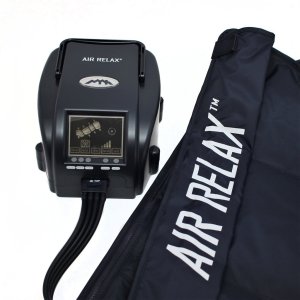
I’ve been using the Air Relax sequential compression device for a couple of months now, and have incorporated regular treatments into my post-workout regimen. Whenever I train legs (three days a week), I make sure to do a 15 minute treatment at some point during the day. For the most part, it feels fantastic, like a therapeutic massage, but every now and then, the leg sleeves will clamp down like vice grips on a strained area like my calf and inspire me to chant, “ow, ow, ow, owwww!” in quick succession. Despite these isolated moments of torture, I always feel better after the treatment is finished, and my limbs don’t feel as heavy or as cramped as they usually do post-lift.

There are two types of individuals who can benefit from using sequential compression devices. The first group consists of sedentary or bedridden patients who run the risk of developing deep venous thrombosis. The second group consists of athletes, ranging from weekend warriors to elite Olympians. The benefits of sequential compression include enhanced lymphatic drainage, improved blood circulation, enhanced mobilization of lactic acid and other waste products from muscle tissue, and a massage component which is rather pleasant.

If you decide to purchase a sequential compression system for home use, I heartily recommend the Air Relax version, because it is quite affordable for under $400 (versus $1,500 for one major competitor’s version), and it inflates to pressures over 200 mm Hg, qualifying it as a FDA 510K Class II cleared medical grade device.