I absolutely love the website Pointer Pointer, which finds a photograph pointing to your cursor every time you move it. Trust me, it’s addictive and fun.
Category General
Send A Letter To Your Future Self
FutureMe is a website on which you can write a letter to yourself and schedule the send date for any time in the future. This is a great tool for setting goals, and it seems pretty entertaining!
How Do You Use A Bidet?

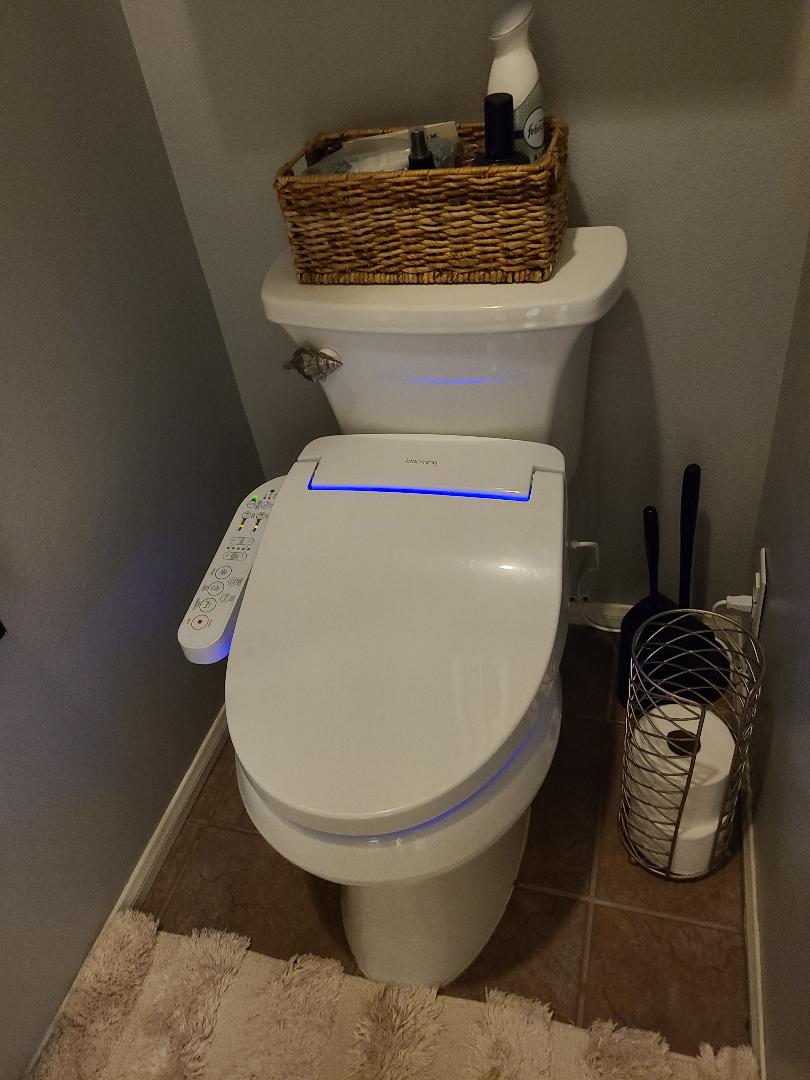
Modern bidet in my master bath
Bidets have surged in popularity over the past four years, primarily due to COVID lockdown restrictions and the toilet paper shortage. But while over 80% of households in Japan have bidets, the United States only boasts about 6% of households which feature bidets, even post-COVID. As someone who has a bidet, and had basic bidet attachments since 2016, I strongly believe that they are far superior to toilet paper and wipes for cleaning the area down under, and they result in a dramatic decrease in toilet paper use. Bidets are environmentally friendly, hygienic, and generally better for your bottom.
Since most American households don’t have bidets, I thought I would share the following video so that you will know what to do if you find yourself perched on a bidet toilet while visiting friends, and are curious about how to use one:
https://youtu.be/y9GqnTpj2So?si=4mXz0ijpLz-9xo0B
I encourage those of you who haven’t used a bidet before to try one when you get the chance. I know the sensation of having water shooting up your keister hole is very strange, but once you get over the initial shock, I promise that you will feel so clean after you use it. No amount of wiping with toilet paper will ever get you completely clean, but water will definitely wash all the residue away.
The history of the bidet is also quite interesting, as bidets were originally an upgrade from a chamber pot. For more information on the history of the bidet, check out this great article:
Bidets Are The Bomb
I am a huge fan of bidets, and truly believe that they are far superior for cleaning the nether regions than toilet paper. When I first got a bidet attachment back in 2016 (pictured below), I ordered two basic units for two different toilets. Because the attachments were very basic, I eventually became accustomed to the jet of cold water which would shoot out.

My first bidet toilet attachment, 2016
Then I visited Japan for the first time in 2020, and all the fancy bidet toilets there completely dazzled me. They were a far cry from the odd-looking bidets I saw in the late 1970’s in the bathrooms of affluent people. In fact, I used to think that only rich people ever bothered to have bidets in their homes, since they had separate plumbing and were not integrated into a toilet design. The bidet toilets in Japan had warm water, dryers, privacy music, and motion-detectors in the lid, and many of them greeted with a welcoming, opening toilet lid and privacy music.
After that Japan trip, I vowed that I would eventually get a fancy Japanese style bidet toilet. I finally got my chance to have an electric bidet toilet seat installed when the toilet in my master bath had to be replaced last November. I bought a model that doesn’t have a motion detector in the lid or privacy music, but all of the other bells and whistles are on the model I have, and I couldn’t be happier. I can’t even imagine life without one of these modern bidet toilet seats.
Why Car Leasing Is A Bad Idea

Image ID:
39108810
Are you currently leasing a vehicle, or are thinking about leasing one? If so, please think through the option thoroughly before committing to it. Generally speaking, leasing a vehicle is a terrible financial decision, with the main exception being that the lease serves as a tax write off for your business. Otherwise, why saddle yourself with a car note, only to be forced to return the car at the end of the lease term? Chances are that you will need to lease another vehicle to replace the previous one, which means you will be locked into another loan, for yet another set of wheels you never build equity on and will never own (not unless you purchase that car at lease end, which I ended up doing in 2017…more on this later).
I fully realize that there are some tempting aspects of car leasing, the first of which is the fact that you get to drive a new car every 2 or 3 years once the current vehicle lease comes to an end. The down payment and monthly payments are also lower than if you were to purchase the vehicle. However, there are numerous other negative aspects of leasing, one of which is the fact that you will be limited to a certain number of driven miles during the lease term. You also cannot make modifications to a leased set of wheels that are permanent, since you are borrowing the car.
I don’t plan on ever renting a car again, because then I’d be paying for the first portion of the vehicle’s depreciation, which is not a sound financial decision. The first mistake I made was when I was lured into a 2- year prepaid lease back in 2009. I had actually allowed a car salesman convince me that keeping the brand-new wheels I had bought outright in 2007 was not the best idea, and that I could easily roll into a prepaid lease. By lease end in 2011, I didn’t have enough saved up to purchase a car, so I rolled into not one, but two consecutive, 2-year leases.
When I realized how much I had been fleeced by the first 3 car leases, (a term which Dave Ramsey loves to use when referring to car leases), I made a promise to myself to save up enough money to purchase the 2015 new leased vehicle outright, and I kept that promise. Once that was accomplished, I set out to save up enough money to eventually purchase my next vehicle without taking out a car loan. I now have a chunk of change set aside (over $50K) for my next vehicle, and I have the peace of mind of knowing that I won’t be kept on the financial hook ever again for a car.
Why Street Kart Racing in Japan is a Must-Do

I recently visited Japan in April and May, and even included a little hop over to South Korea, which was lovely. The cadence of my second trip to Japan was quite different than my first trip in 2020, partially due to the fact that we were concentrating two main areas (Tokyo and Kyoto), rather than scanning the entire country like I did on my first visit. I also made sure to see different areas in Tokyo and Kyoto than I had in 2020, including areas like Harajuku.

Perhaps the biggest highlight of our stay in Tokyo in particular was the two-hour Street Kart Racing event we took part in one evening in the Akihabara district of Tokyo. We donned more sedate haori jackets in preparation for our outing, while the other two participants decided to go full bore with Hopeful Heart Care Bear and Stitch onesies, both of which were hilarious. After a brief lesson on how to operate the karts, we were on our way, a single-line procession of gas-powered street karts on an adventure in Tokyo!
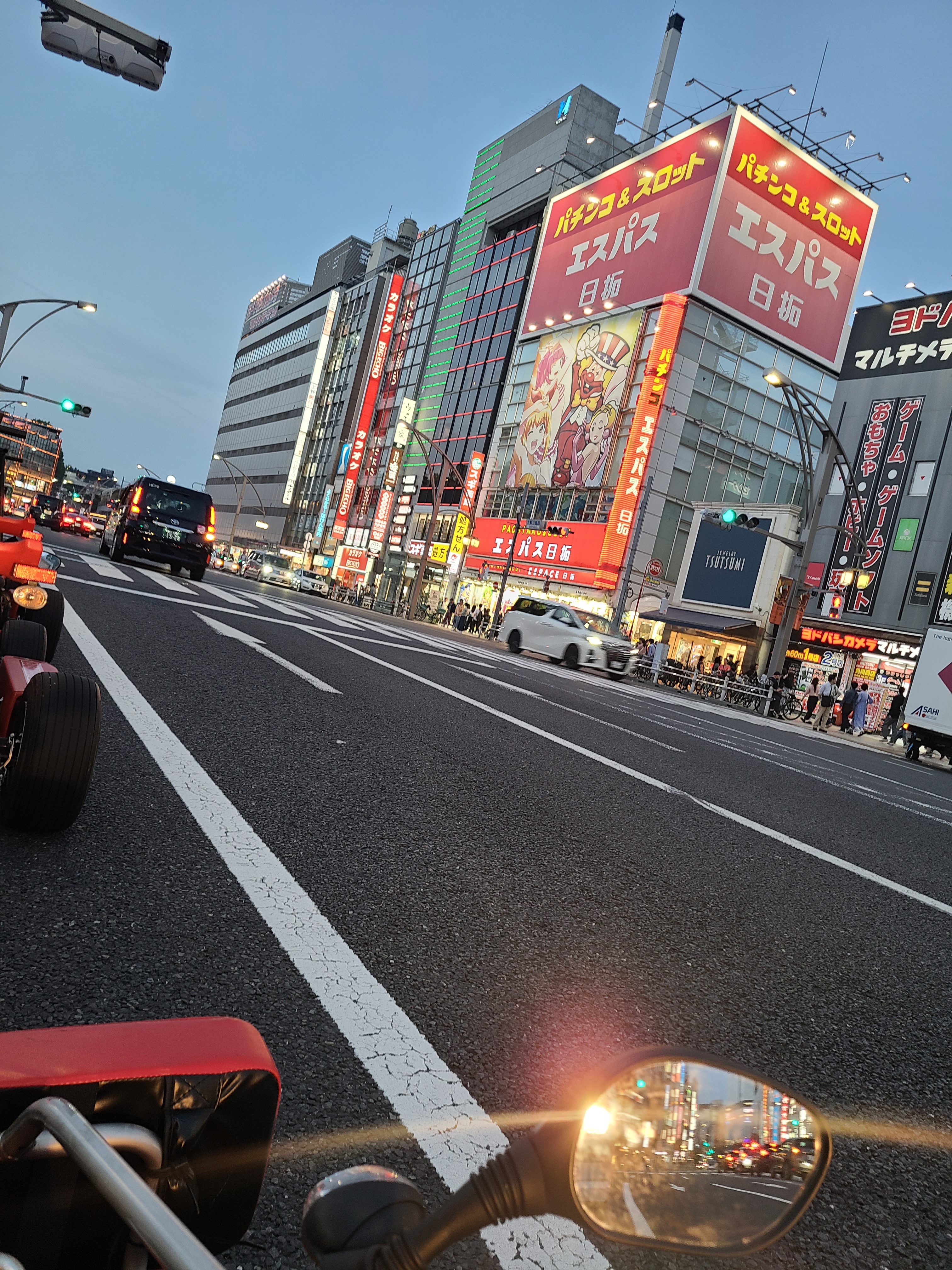
Here is a video I found on YouTube from RCBtrips which shows part of the route we took. It was far more fun and interesting for us to begin our drive at 6 pm, shortly before sunset, then continue our crawl at night, because we were able to see the transition to the display of lights throughout the city.
https://youtu.be/MGbw61MakcU?si=QYecG0FDgiMZJXra
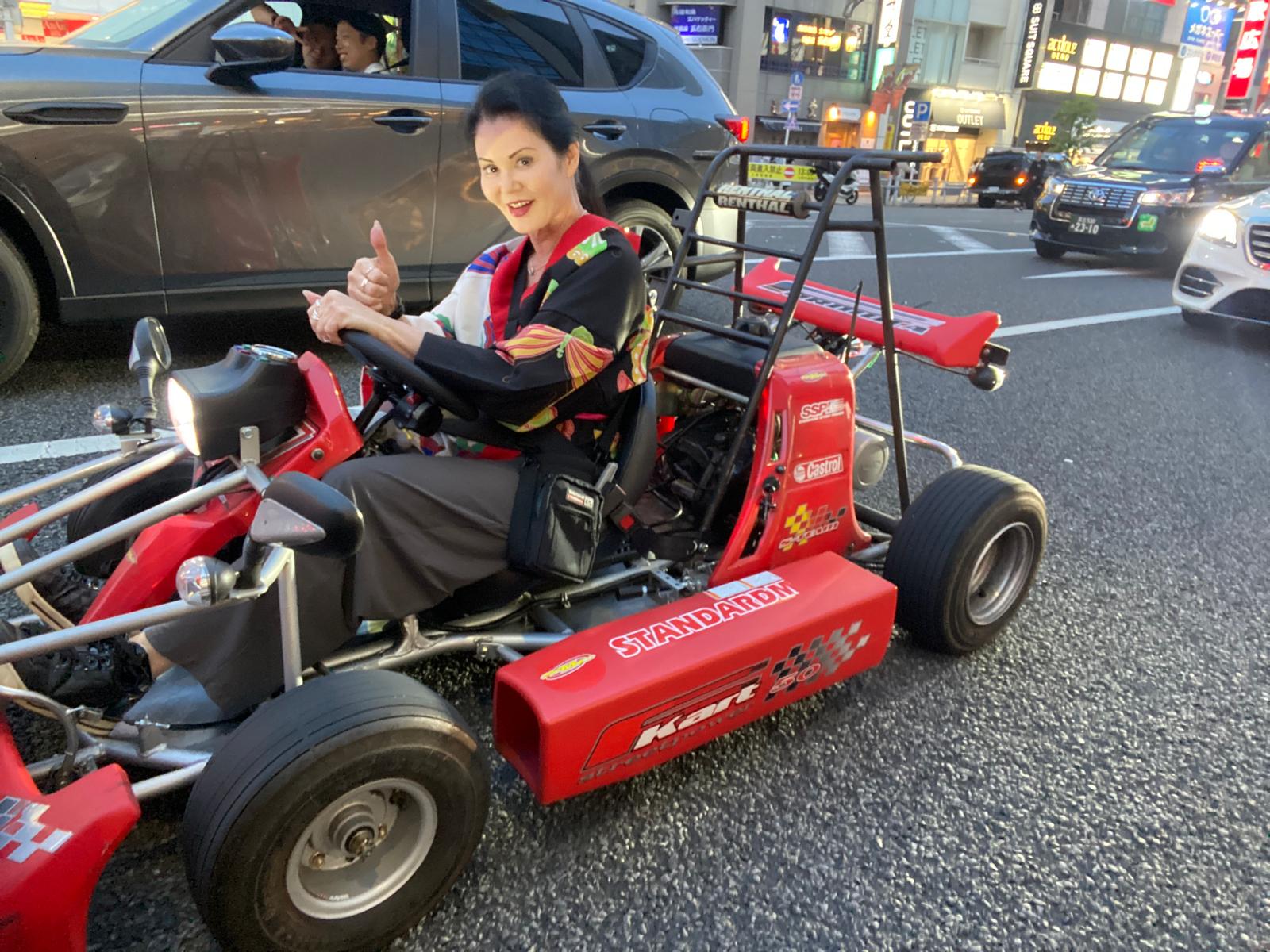
Perhaps the best aspect of driving for two hours on the streets of Tokyo, other than the absolute thrill of driving with the wind in your face, is the fact that this is one of the best ways to see Tokyo. You get to see the lay of the land, and while driving, you are bound to see areas which you want to visit later. I would absolutely recommend this adventure to anyone who is willing to get behind the wheel in a foreign country. It certainly was a lot more fun than the 23-hour stress bomb that characterized my driving experience on Koh Samui, Thailand in 2022. As long as you are willing to obtain an international driver’s permit from AAA (if you reside in the U.S.), you can experience an awesome driving adventure in Japan!
I used Klook to book my driving adventure. Click here to book yours!
If You Have To Carry Credit Card Balances, You Can’t Afford Stuff
I’m sure that the title of this blog post will irk some people, and that’s actually part of the point. Unless you use credit cards only to make large purchases which you will pay in full when you receive the credit card bill, you are playing with fire. Using unsecured credit and carrying balances are sure signs that you cannot afford the items you are buying. I know these are strong words, but credit card debt remains one of the most insidious and dangerous types of debt to carry.
Here are some key reasons why it is so difficult to pay off credit card balances:
- You don’t prepare to pay the balance each month, so the amount continues to grow until it becomes unmanageable.
- Interest rates change over time, and if you miss a payment, make a late payment, or go over limit, your interest rate will syrocket, digging the debt hole even deeper.
- You don’t have enough wiggle room in your budget to make more than the minimum payment each month, so the interest charges often exceed the minimum payment amount, and you slide even more into debt.
As someone who had struggled with credit card debt twice in my life, I know firsthand how much of a challenge it is to surmount such obstacles and get out of debt, but I also know that IT CAN BE DONE. The first time I racked up credit card debt ($30,000 in my 20’s), I eventually managed to pay it all off, then 20 years later, I found myself saddled with $40,000 of credit card debt. Once that was paid off in its entirety, I completely changed my attitude towards credit cards and with money in general, and have spent over a decade with zero credit card debt. I absolutely refuse to go down that road ever again.
If you need to pick up a side gig to make some extra money to pay extra over the minimum monthly payments, then definitely do it. You can either tackle the smallest balance first and work up, or tackle the balance with the highest APR and work down, until everything is paid off. When starting out, just focus on paying extra on the first card, and pay the minimum on the other cards. Once the first card is paid off, employ the “snowball effect” and apply the extra dollar amount you were paying towards the first card to the next card. Continue this strategy until you pay everything off. I have done this, and it absolutely works.
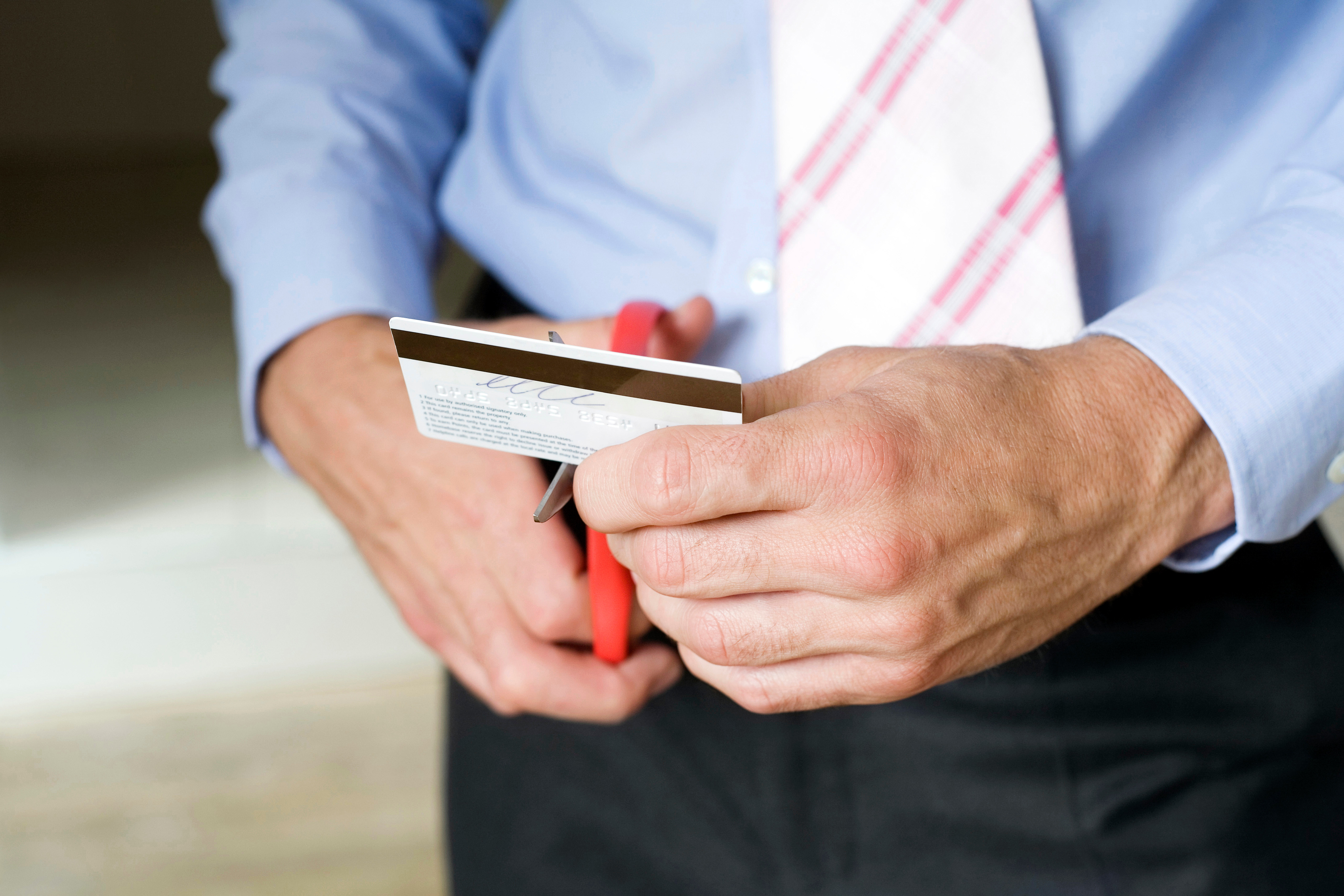
Another thing to consider is to sell items in your home that you don’t need, and apply those funds towards your credit card bills. Once your credit card debt is paid off, keep the card accounts open to ensure that your credit is not damaged by closing accounts. However, cut up the cards, and do NOT use the accounts at all. What I did for the first year after paying off my credit card debt was to use a debit card to keep my spending in check, since the funds were coming directly from my checking account.
Having been completely free of credit card debt and a car note for close to ten years, I feel incredibly liberated and financially healthy. Trust me when I say that paying off your credit cards, and never jumping back into the pool of credit card debt, is the most wonderful feeling ever.
No boats? OK. A clever California homeowner paints a mural to hide a boat in his driveway
I am sharing an article written by Claire Thornton of USA TODAY which details a fun story about a man who was instructed to hide his boat. Read on for the article, or click HERE to see the original post.
A California boat owner’s ingenuity is gaining attention after he commissioned a mural of his vessel to sidestep demands from officials while complying with city codes in his own “tongue-in-cheek” way.
Officials in Seaside, California, told Etienne Constable the boat parked in his driveway needed to be hidden from view or Constable could face a $100 fine. So, the homeowner erected a fence in the middle of his driveway, hiding the boat.
Sort of.
Because the fence showcases a hyper-realistic mural depicting the 19-foot Arima Sea Ranger, the view from the street hasn’t changed much. The “illusion,” as the mural’s artist describes it, lines up perfectly with elements of the real world, like shrubs, as well as the side of Constable’s home, which is just northeast of Monterrey.
“This struck me as the right way to go, and something that makes my house unique,” Constable told USA TODAY.

© Hanif Yanni
Next-door neighbor and longtime artist Hanif Yanni painted the mural − and Constable paid him far more than $100 to do so, the artist said.
City Hall officials, rather than feel defeated by Constable’s roundabout compliance, celebrated his idea.
“I applaud the constituent’s creative approach, which not only addresses compliance but also showcases a community-driven solution,” City Council member Alexis García-Arrazola told USA TODAY.
Artist relied on photos for hyper-realistic look
Yanni said he was motivated to paint the mural because he wanted to help Constable jump through a “bureaucratic hoop” while complying with the rules in a creative way. Now, he said, passersby will be able to view art that didn’t exist before, he said.
Yanni, 42, and Constable, 61, took photos of the boat sitting in the driveway and the artist sketched out an outline on the fence before he began painting.
“It’s kind of this illusion where you can see the boat, and what’s behind it is mixed with the mural,” he said, describing the final product, completed May 3.

The opposite half of Etienne Constable’s boat is visible from behind a hyper-realistic mural, painted by next-door neighbor Hanif Panni. The two men decided to make the mural to comply with a city rule in a creative way.© Etienne Constable
Code violation for parking boat ‘in public view’
In 2023, a Seaside code compliance specialist sent Constable a notice telling him he was in violation of a rule prohibiting residents from parking boats, RVs and trailers in public view − including vehicles parked on private property.
To avoid a fine, Constable needed to erect a screen or other covering shielding his boat from the street.
Such ordinances ensure large vehicles, which can be difficult to maintain, are hidden from sight to keep overall property values high, City Manager Nick Borges told USA TODAY. Sometimes, Borges said, vehicle owners don’t do a job good of cleaning up leaking oil and other sanitary problems tied to vehicles.
“There’s an importance to some of these codes, so that doesn’t occur,” Borges said.

A mural in Etienne Constable’s Seaside, California, driveway perfectly blends into its surrounding, creating an optical illusion, said artist Hanif Yanni.© Hanif Yanni
At the time Constable received his notice about the boat, Borges said, the city was ramping up its code enforcement efforts after years of letting violations fall by the wayside. As a result, Constable was notified of his violation for the first time in July 2023 after having parked the boat in the same spot for around four years, Constable said.
It makes sense that Constable was frustrated, Borges said, because his boat has always appeared to be well-maintained. In the end, the mural was a fun solution, the city manager said.
“The only action to take at this point is a high-five to the owner,” Borges said.

Artists paint a hyper-realistic mural on a fence in the home driveway of Etienne Constable in Seaside, California.© Hanif Yanni
‘I hit a sweet spot’
Constable said he wanted to make a point about “ridiculous” city codes without getting into a legal battle with the mayor’s office.
“I did it to stick my thumb in your eye, but I did it in a way that’s nonoffensive, doesn’t hurt anybody, doesn’t take anything from anyone,” Constable said. “I feel like I hit the sweet spot, and got my point across.”
Constable got the boat four years ago, and often takes it out into Monterrey Bay and toward Santa Cruz and Big Sur, he said. He’s a fan of fishing, often hunting for halibut and rockfish, and when he can, salmon and tuna, he said.
Now, having the mural be a public, artistic part of the neighborhood “is something I’m very proud of,” he said.
Resources and Tips to Help You Relax and Recharge Throughout the Day

Image via Pexels
By Julia Merrill of Befriendyourdoc.org
julia@befriendyourdoc.org
Modern life is busy. You probably have a lot of obligations to juggle, from work to family, friends, school, and more. You might find yourself getting overwhelmed and frazzled regularly. In the big picture, this can lead to mental health issues like anxiety. Read on for some resources and tips from Dr. Stacey Naito’s blog to help you unwind and recharge your battery.
Take a Break to Focus on Your Physical Well-being
Regular exercise is good for your mental and physical health. Try these tips to get more physical activity.
- If you can’t get to the gym, try this total-body home workout. It only takes 15 minutes and requires no equipment.
- You can also get exercise with hacks like skipping the elevator and taking the stairs.
- Yoga is another activity you can do from home that helps to bust stress and improve mental health.
Build a stress-busting mental health toolkit
Get proactive about tackling stress head-on when it arises.
- Make lifestyle changes to keep stress at bay, like trying biofeedback and quitting nicotine.
- Download a guided meditation app to help you stay calm.
- Avoid burnout at work by doing things like planning your day and staying focused.
Natural Remedies
Using natural remedies to relieve stress is important because they often have fewer side effects, can be cost-effective, and work harmoniously with the body’s natural processes to promote overall well-being and resilience. Here’s a list of three natural remedies for stress:
- Exercise: Regular physical activity, such as yoga, jogging, or swimming, can significantly reduce stress levels by releasing endorphins and improving overall mood.
- Meditation: Practicing meditation and mindfulness techniques can help calm the mind, reduce anxiety, and enhance emotional stability.
- THCA (Tetrahydrocannabinolic Acid): As a non-psychoactive precursor to THC found in raw cannabis, options for THCA may have therapeutic properties that help reduce stress without inducing a high.
Create a Relaxation Space at Home
When you need to take a break, curl up in your zen zone. Here’s how to make the perfect soothing space.
- Create a less stressful home by going room to room and decluttering.
- Paint your cozy space in calming colors like light blue or pastels.
- Get a sound machine to play soothing noises like waves and birds chirping.
Know When to Ask for Help
If you’re constantly on edge and unable to relax, even with the above tips, it may be time for support. Here are some resources to help.
- Recognize the signs that you should seek help for your mental health.
- Use your insurance to look up behavioral health services in your area for in-person help.
- If you can’t get help in person, try virtual therapy.
You don’t have to go through life feeling stressed and drained of energy. Making small changes to your daily routine can ensure you feel calm and refreshed. The resources above can help you get a better grasp on your daily well-being.
Read more informative articles on Dr. Stacey Naito’s blog today!
Can You Handle A $1,000 Emergency?

I stumbled upon sobering news from the Bankrate Emergency Savings Report, which reported that only 44% of Americans would be able to cover a $1,000 emergency if it arose. The remaining group of Americans would do the following (according to the December 2023 Bankrate report):
“35% would borrow money, including 21% who would finance with a credit card and pay it off over time, 10% who would borrow from family or friends and 4% who would take out a personal loan.”
It turns out that over 20% of Americans have no emergency savings set aside, leaving them completely unprepared should they experience a significant financial loss such as termination of employment. Another staggering report from Bankrate is that more than one-third of Americans have more credit card debt than emergency savings. Granted, more than half of the U.S. population according to the poll has more emergency savings than credit card debt, but the mere fact that such a large portion of Americans is saddled with significant credit card debt is sobering.
If you are someone who either has no emergency savings, or an insufficient amount to cover at least 3 months of regular expenses, it would be a good idea to focus on putting even a small amount of money into a high yield savings account in order to build up your emergency fund. It’s a good idea to get into the habit of depositing money into an emergency fund at least once a month, especially if you automate it. This way, you are protecting yourself by fattening up your emergency fund on a regular basis. Make sure to steer clear of traditional bank savings accounts, since the average yield on such accounts is 0.59 percent APY.
 dr. stacey naito's blog