
Great Mineral Oil Free Product For Angry, Reactive Dry Skin

Source: 123rf.com
Image ID : 104888033
Copyright : magone


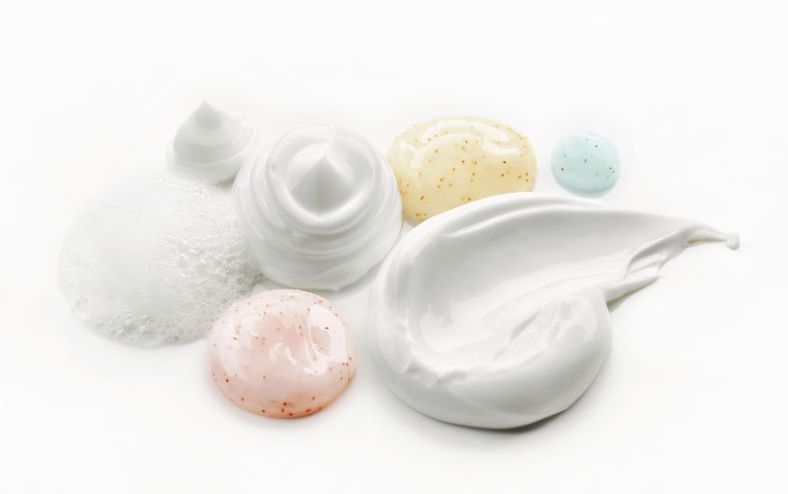
I had spent the last two months of 2020 searching high and low for a natural, rich, mineral-free cream which I could use on my very parched, eczema-tortured skin which developed as a result of an overly aggressive CO2 laser treatment, a 2 month reaction to mineral oil, and the cold, dry winter air. After searching high and low in an effort to find a solution, I stumbled upon a product which fit the bill: Ultra Repair Cream from First Aid Beauty. From the very first application, I got INSTANT relief, and my skin drank this stuff up. I slathered it all over my neck, chest, shoulders, and forehead, and all the itchiness went away almost instantly. Ahhhhhh…

While the cream is extremely thick, almost like frosting, it absorbs quickly and beautifully, and hydrates like a dream. Another thing I appreciate is the fact that this product is fragrance free, and that there is just a nice, clean, very faint neutral scent from the ingredients themselves.

Though I suspect that I will go through the 8.8 ounce tub pretty quickly in an effort to finally heal my angry skin (my entire upper body is suffering), I think it is well worth it, especially since so few creams out there are mineral oil free, and also since this, along with only two other products I have tried (Skyn Iceland Arctic Repair Cream, and La Roche-Posay Cicaplast Baume B5 Balm), have the ability to calm my reactive skin to a point where I don’t feel like I have a million ants crawling all over me.

I will most definitely purchase this cream again. And again. This may be a new holy grail of moisturizers for me!

Great Way To Search For Rentals In Los Angeles

Source: 123rf.com
Image ID : 124956041
Copyright : Andrii Yalanskyi


I absolutely love my current L.A. residence, and I hope that I won’t have to move for a very long time.  I know a number of people who are currently looking for places to live in Los Angeles, and I can certainly say that I don’t envy them, because the whole process of searching for a desirable new abode can be downright daunting.  Thankfully, there’s Zumper, a fantastic comprehensive site on which people can research the rental market to see what the median rent prices are, browse listings, and even schedule viewings directly through the site.

I love the fact that Zumper enables you to research median rental prices for specific regions within Los Angeles County. Recent data by Zumper shows 63% of housing units are renter-occupied in Los Angeles, California, a fact I was not aware of until I visited the site.  I discovered that the current median rental price for a 2 bedroom unit in Los Angeles is at $2,650, with an inventory of 4,087 available rentals.  However, those of you who are familiar with Los Angeles County know that it is an enormous county, and the rental prices vary dramatically depending on what part of the county you are considering.

For those of you who are flexible about where you could live in L.A., or if you just want to browse the more popular parts of the county, you can simply access popular listings here:

https://www.zumper.com/apartments-for-rent/los-angeles-ca


However, since I am an L.A. native, I am pretty particular about which areas I would be willing to set up my cozy home shack.  If I wanted to compare three different cities which I would consider living in, I could pull up findings like this:

Average rent for 2 bedroom rental:

  • Marina del Rey $3,244
  • Silver Lake  $2,796
  • Greater Toluca Lake $2,613


Based on the average rental prices for the above cities I discovered on Zumper, I could then really hone in on details by adding filters to a customized search.  For example, check out the listings for a 2 bedroom unit in Greater Toluca Lake:

https://www.zumper.com/apartments-for-rent/los-angeles-ca/greater-toluca-lake/2-beds?box=-118.36732149124146,34.13775636024786,-118.33268880844116,34.16222653116007


You can make your rental search as specific as you want by adding filters to the search engine such as number of bedrooms, number of bathrooms, pet policy, rental type, lease term, amenities, and even adjacent neighborhoods.  When you find a listing you are interested in, you can peruse photos of the unit and property, send a message to a property manager or owner, and even schedule a tour directly through Zumper.  Who wants to gather phone numbers and contact property managers the hold fashioned way?  I sure don’t, and I simply don’t have the time to sit around and make countless phone calls.  It’s so convenient to jump on Zumper and send messages which take less than a minute to compile.

One important point I would like to make about hunting for rentals, is that it’s a good idea to do an area search for activities you enjoy, so you are sure that the area you are considering moving to can accommodate your interests.  Since I love hiking, one thing I would do if I were considering a move to Toluca Lake would be to look up hiking trails in the area.  Here’s a great resource for finding hiking trails in or near Toluca Lake:

https://tolucalake.com/2020/03/take-to-the-trails/


If you are looking for a great new residence in Los Angeles, make sure to check out Zumper at https://www.zumper.com/rent-research/los-angeles-ca

One Theory Complete Collection Skincare Line

Disclaimer:  This is a sponsored post.  I was provided with free product in exchange for my unbiased review.

Every once in a while, I encounter a skincare line which impresses me so much that I want to praise it from a mountaintop.  This is definitely the case with One Theory Complete Collection, which I recently got a chance to use and review.  You can see in the YouTube video review which I have shared at the top of this post that, though I am not standing on a mountaintop, I am definitely a fan of this skincare line, which is paraben-free, fragrance-free, cruelty-free, and is suitable for all skin types, even sensitive skin like mine.

The Complete Collection includes the following products:

Morning Beat™ Vitamin C Serum | 1 fl oz
Millionaire Sugar™ Retinol Serum | 1 fl oz
HydraMatrix Amino Tea™ Peptide Serum | 1 fl oz
La Rituelle™ Kojic Acid & Green Tea Replenishing Moisturizer | 1.7 oz


One Theory recommends using the following products in sequence for your morning ritual after cleansing and toning your skin:

Morning Glow Routine:

Morning Beat™ Vitamin C Serum
HydraMatrix Amino Tea™ Peptide Serum
La Rituelle™ Kojic Acid & Green Tea Replenishing Moisturizer


In the evening, you will use the following products in sequence:

Night Flow Routine:

Millionaire Sugar™ Retinol Serum
HydraMatrix Amino Tea™ Peptide Serum
La Rituelle™ Kojic Acid & Green Tea Replenishing Moisturizer

One Theory Complete Collection


Morning Beat™ Vitamin C Serum:

Probably my favorite aspect of this serum is the fact that it features the more stable magnesium ascorbyl phosphate molecule as its Vitamin C antioxidant.  This particular form has both hydrating and calming properties, making it ideal for all skin types.  Vitamin C is terrific for combating environmental skin stressors, and it brightens skin beautifully.  When I apply this onto my skin, I get wonderful hydration, great absorption, and a glowy tone.


Millionaire Sugar™ Retinol Serum:

Though I am not the biggest fan of retinol (I just don’t like walking around with flaking skin), I do honor its ability to increase cell turnover and refine the skin, reducing the appearance of fine lines and wrinkles.  Millionaire Sugar™ features a slow release, active 1% microencapsulated form of Retin-A which prevents the retinol from breaking down before it penetrates your skin.  The result is improved skin texture and improved skin renewal.

Imagine my surprise when I developed absolutely NO flakiness or peeling from this product.  My skin was already more radiant after using this product for a few nights.  I am in love with this retinol product, and look forward to rejuvenating my skin each night as I sleep with this wonderful serum on my face.


HydraMatrix Amino Tea™ Peptide Serum:

This product boasts a collagen-boosting peptide known as Matrixyl 3000® which is phenomenal for the area around my mouth and eyes, because it just smooths out fine lines and rough skin patches (which I developed from a fractional laser procedure in November of last year). The addition of cucumber and green tea make this gel incredibly soothing, something my skin really appreciates.  It’s incredible how this serum seems to normalize skin, balancing out redness, dry spots, and oily spots (yes, I still have some oiliness in my T-zone even though I am over the half-century mark).


La Rituelle™ Kojic Acid & Green Tea Replenishing Moisturizer:

Whenever I find a great moisturizer, I get almost giddy with excitement, because they honestly are difficult to find.  From the first time I ever used La Rituelle™, I was completely hooked.  It nourishes my parched skin without sending it into an oily mess, absorbs completely, and imparts such a smooth, amazing finish to my skin that I often don’t bother using finishing powder (I don’t use foundation, just finishing powder to combat shine).

La Rituelle™ provides a gentle barrier to moisture loss and works beautifully with all three facial serums in the One Theory line. Kojic acid, Willow Bark extract, Green Tea, and Ginseng are combined with a bit of glycolic acid in a Hyaluronic Acid base to create a magical moisturizer which has become a personal favorite.


I never recommend products which I do not personally use, so when I say that I am over the moon with the One Theory skincare line, I truly mean it. My skin is luminous, hydrated, and happy with all four products in the One Theory line.  I am also so excited to try their cleanser and toner when they become available, because I have no doubt that they will be outstanding!

To order the One Theory Complete Collection, just click on the link below:

https://www.onetheoryusa.com/collections/all

Chronic Back Pain: How to Sleep Through It

Check out this great article by Karen Weeks on getting a good night’s sleep while battling chronic back pain.  Karen has more great content on her website, https://elderwellness.net/

Image via Unsplash

One of the comforts of going to sleep at the end of the day is the privilege of leaving behind your worries for eight hours. However, if you’re living with chronic back pain, that worry sticks around in addition to the fact that you won’t be able to fall asleep right away, compounding your problems. Getting a good night’s sleep can be difficult if you’re suffering from back pain, but there are ways to make it happen. Dr. Stacey Naito presents tips for learning to love falling asleep while living with chronic back pain.

Yoga Before Bed

Practicing yoga before you head to bed for the night can help stretch your sore muscles and give you a better chance of falling asleep right away. The ancient practice has numerous health benefits, and research has shown that practicing yoga regularly may even reduce the need for pain medication. There are many different poses you can do that are beneficial for back pain. Doing a few poses before bed will help strengthen your muscles and improve your posture, leading to less pressure on your back in your day-to-day life, resulting in less overall back pain.

Utilize Your Smartphone

Technology is there to help you in most areas of your life, including your sleep. There are a number of different apps available aimed at helping you sleep better at night. Sleep Cycle is an alarm clock app that monitors where you are in your sleep cycle each night and wakes you at an optimal time within your preferred time frame so you feel the most refreshed. White Noise allows you to play soothing sounds from your phone to help you either drown out outside noises or add sound to a too-quiet room. Calm is a leading meditation app for beginners, allowing you to try out the art of meditation in order to calm down your mind at night.


Note that some of these apps stay running throughout the night in order to monitor your sleep or to keep you from waking up sporadically. Make sure that your smartphone has enough battery life! You’ll also want to ensure that your home internet connection is running smoothly. Fast and reliable internet service will give you the freedom to run any of these apps overnight without worrying about being disconnected. 

Improve on Your Sleeping Position

We all have preferences when it comes to our sleep positions. Thankfully, there are different ways to improve your preferred sleeping position to help lower your back pain. For side-sleepers, add a pillow between your legs and pull your knees a little toward your chest to stretch out your lower back. If you prefer sleeping on your stomach, place a pillow under your pelvis and forgo the pillow under your head (or switch to a flatter one). For those who like sleeping on your back, place a pillow beneath your knees to add a slight curve to your spine.


Whatever the cause of your back pain, know that it doesn’t have to sentence you to a lifetime of insomnia. Chronic back pain can impact your daily life in a number of different ways, but don’t let it control how much sleep you get at night. Lack of sleep impacts your life even more, causing you to become disoriented, unfocused, and unable to finish your day’s tasks. Use these tips to sleep easier at night and reduce your chronic back pain one night at a time.

Bedroom Plants and Feng Shui

Source: 123rf.com
Image ID : 97990750
Copyright : Katarzyna Białasiewicz


There has been a great deal of controversy surrounding the idea of having plants in the bedroom.  Feng shui experts generally discourage the use of plants in the same room in which you sleep, since plants carry wood energy, a yang energy which may disrupt the sleep patterns of those who experience difficulties with slumber. Ironically, it is considered healing to have a view of plants and nature from a bedroom window. Just don’t bring those plants indoors and you’ll be fine.

Another concern with bringing greenery into the bedroom is that since plants need to be watered, they also bring in water energy, which is considered bad feng shui for bedrooms.  Water energy clashes with fire energy, which brings in passion.  Even paintings or photos which depict water scenes are considered a no-no for the boudoir, so I might need to remove three framed photographs from my bedroom which feature water!

Lastly, most plants release carbon dioxide after dark, which may increase the amount of carbon dioxide in your blood to very high levels, which then increases your breathing rate to bring in more oxygen.  I don’t know about you, but I don’t exactly feel comfortable knowing that plants in my bedroom might rob me of optimal sleep.

If you are really intent on bringing one or more live houseplants into your bedroom, make sure the room is large enough to offset the buildup of carbon dioxide, or choose plants which actually absorb carbon dioxide at night, including spider plants and orchids.  Bring in only one plant in at a time so that you can determine whether the new additions have any negative effect on your sleep.  I avoid any issues with houseplants in my bedroom by keeping them out entirely.  There are plants in my master bathroom which is attached to my bedroom, but they are far enough from my bed, and I haven’t noticed any disruptions since adding the greenery in 2020.

5 Healthy Habits Seniors Can Adopt in the New Year

Please check out this excellent article written by Karen Weeks, which covers healthy habits which seniors can adopt in 2021.

Image via Pexels

By Karen Weeks of elderwellness.net

A brand new year is ahead of us, making it the perfect time to adopt healthy habits like eating nutritiously, exercising regularly, and spending time with loved ones (whether in-person or virtually). Below, Dr. Stacey Naito offers five senior-friendly habits that can be adopted in the new year — and how seniors can go about incorporating them in their lives.

1. Eat Nutritiously

According to the Academy of Nutrition and Dietetics, seniors need adequate amounts of calcium and vitamin D, B12, dietary fiber, healthy fats, and potassium in order to lead long and healthy lives. And fortunately, seniors can get all the nutrients they need by consuming plenty of fresh leafy greens, lean meats, beans, and healthy fats like avocados and fish. Supplementation may also be necessary if calcium, B12, B6, or vitamin D levels are low.


If you’re looking for some ways to eat better this year, try buying a new cookbook or two, purchasing a grocery delivery service, or visiting your local health foods store to stock up on fresh fruits and veggies, healthy grains, and lean proteins. If you’re thinking of paying for a grocery delivery service, some of the best options for produce include Imperfect Foods, Misfits Market, and Farmbox.

2. Exercise Often

Like good nutrition, seniors need plenty of physical activity — including strength training activities, exercises for balance and flexibility, and aerobic activities such as walking, biking, swimming, or dancing. And fortunately, there are several things seniors can do to increase their physical activity in the year ahead:


  • Following along to exercise DVDs or online fitness classes.

  • Walking or biking alone or with friends (while practicing social distancing, of course).

  • Parking further away from store entrances when shopping.

  • Purchasing an elliptical machine, exercise bike, or treadmill.

  • Starting and maintaining a garden.


If you have a medical condition or you’re experiencing body aches or pains, a physical therapist can help you to select the best exercises for you. Plus, many physical therapists are offering virtual services amidst COVID-19.

3. Socialize With Loved Ones

Socializing is tough in the age of the coronavirus, but it isn’t impossible! With senior-friendly video chat software, online multiplayer games and apps, and safe in-person gatherings (like outdoor activities and walks with loved ones), seniors can safely spend more time with their friends and family members in the new year. Regular socialization keeps seniors physically, mentally, and emotionally well — and reduces their risk of cognitive decline and depression.

4. Keep the Mind Sharp

Speaking of cognitive decline, seniors should also make time for brain games and activities in the new year. Brain games keep the mind young and healthy, fight boredom, and improve overall mental well-being. A few brain training activities for seniors include:


  • Jigsaw puzzles, crosswords, and word finds.

  • Classes on cooking, foreign languages, dance, or music.

  • Arts and crafts like knitting, scrapbooking, and upcycling.

  • Reading, coloring, and drawing.

5. Clean and Declutter

Clutter is harmful for a number of reasons. Not only does it create tripping hazards at home, but excess clutter often triggers anxiety, concentration issues, irritability, and even depression. So, if you’ve been feeling especially negative or depressed as of late, the new year is the perfect time to freshen up your living space by cleaning, decluttering, and letting in as much fresh air as possible. Redfin shares a checklist with some ideas for cleansing your home and creating a happier and healthier living space.

New Year, New You

It’s never too late to adopt healthier habits and take steps to improve your life, and these five tips will help you to tackle everything from changing your diet to eliminating excess clutter at home. No matter your age, the start of a new year is the perfect time to reinvent yourself and improve various areas of your life.


Looking for more health tips and advice? Visit Dr. Stacey Naito’s blog at staceynaitoblog.com.

Mineral Oil Sensitivity

Source: 123rf.com
Image ID : 33900955
Copyright : thodonal


Ever since I was a baby, I have had wicked reactions to mineral oil, and consequently have avoided it for the bulk of my life.  My poor mother was unable to apply Johnson’s Baby Oil on me, and had to find other options to moisturize my skin.

Whenever mineral oil is placed on any part of my skin, I experience intense itching within a couple of minutes which starts at the point of contact with the oil, then about a minute or so after that, I develop a fine, sandpaper-like, incredibly itchy rash over my entire body.  I must immediately wash off the oil, then take an antihistamine.  The rash takes hours to subside.

In case you think I am making this up, I have gone for massages and hadn’t paid attention to what oil or cream the therapist was using.  There have been numerous incidents in which I reacted to an oil in the manner I just described above, and upon querying the therapist, discovered without fail that they had applied baby oil, i.e. mineral oil, to my skin.

Strangely, I have never had a pronounced reaction to any other mineral oil based products such as petrolatum, paraffin oil, or paraffin wax, so I have kept items like Vaseline and Aquaphor on hand, and I have never concerned myself with small amounts of mineral oil in body lotions.  However, I have never been comfortable with the fact that mineral oil is ubiquitous, used in everything from lotions, to cold creams, ointments, cosmetics, and personal care products.  Mineral oil is very inexpensive, and helps to lock in moisture, making it desirable for use in skin products.

Source: 123rf.com
Image ID : 81118389
Copyright : Dmitry Pichugin

But let’s think about where mineral oil comes from.  When crude oil is refined to make gasoline and other petroleum products, such as diesel fuel, jet fuel, asphalt, lubricating oils, and biofuels, mineral oil is one of the by-products which is used in household and personal care products.  I know that there are purifying methods used to guarantee that the substances used in personal care products aren’t toxic, but I am a bit bothered by the usage of crude oil distillates and by-products in this way, and would prefer to avoid them.

The reason why I bring all this up is because I had the worst reaction ever to a post-laser treatment cream which I was instructed to use immediately following a fractional CO2 laser treatment which took place in mid-November of 2020.  I hadn’t used the cream much during the first 36 hours following the procedure, but began using it 5-6 times a day from the 36 hour point on.  Within a couple of hours, I began noticing an incredibly itchy, fine, sandpaper-like rash which appeared on both arms, my chest, belly, hips, neck, and shoulders.  I kept using the cream, and the rash became angrier, and completely robbed me of sleep for the next 2 nights before I decided that I had better check the ingredients on the post treatment cream.  Of course the second ingredient listed was mineral oil.

Hence began my quest to find a rich, emollient cream which would soothe my laser torched skin without exposing me to petroleum products.  I couldn’t use Aquaphor because it had petrolatum, so I turned to a shea butter cream I had…which also had mineral oil.  I broke out horribly.  My next idea was to use cocoa butter cream, but that also had mineral oil in it, so the rash persisted.  In desperation, I turned to raw mango butter, but I discovered that my skin wasn’t fond of that substance either.

It has been nearly impossible to find rich, emollient creams which are free of mineral oil.  I have been on the hunt since November, and have looked everywhere.  I know there are others who have sensitive, reactive skin, and I had even focused my search on treatments for eczema and psoriasis.  What shocks me is that the majority of products for those conditions have…mineral oil.  It’s enough to drive one mad.

It has now been over SEVEN weeks since I had the laser procedure, and since that time, I have been on oral antihistamines, gave myself two hydrocortisone injections, and used everything imaginable to try to get my skin not only to calm down, but to also offer hydration.  Incidentally, my skin is so leathery and parched, that I must apply emollient creams every hour to replenish moisture, and I am STILL battling a constant rash and hives all over my upper body.  The combination of the fractional CO2 laser and the mineral oil cream have essentially ruined my skin.

For anyone who even dares to argue that mineral oil sensitivity is not a thing, I challenge you.  Honestly, I’ve lived with this condition for my entire life, and I am extremely irritated by the fact that dermatologists foolishly avoid the subject, as if it was some forbidden topic.  An article by Lisa Mai Møller Jensen is particularly irksome, because she claims that “medicinal white oils have no sensitization potential in human skin, which means they do not trigger allergies.”  I’d like Ms. Jensen to explain why I have had horrible and immediate reactions to baby oil as a baby and as an adult, and why I developed the SAME rash last November after exposure to mineral oil. 

Hopefully there is a light at the end of this skin rash tunnel.  There are three emollient creams which I have ordered which are free of mineral oil and other petroleum substances, and I am keeping my fingers crossed that at least one of them will give me blessed relief.
Are Your Plants Making You Crazy?

Source: 123rf.com
Image ID : 100542878
Copyright : lightfieldstudios


I know there must be a whole slew of you who have jumped aboard the plant-obsessed bandwagon, and who treasure your new jungles as much as if they were your children.  Trust me, I can relate, though this isn’t the first time in my life that I have gone plant crazy and filled my home with living green things.

The first time I went overboard with buying and maintaining plants was back in 2000, when I amassed a collection of over 70 indoor plants in a 2 bedroom cottage-style apartment, and I loved it.  The idea of being surrounded by lush greenery was incredibly appealing, and I was swept off my feet until I went through a divorce which shifted my priorities and pulled me away from my plant hobby.

I took such a sharp about-face that I only had six indoor plants for many, many years, leading into the spring of 2020.  Then shortly after lockdown hit, I found myself at a plant nursery in May and purchased three lovely plants.  Little did I know that I was about to fall deep into plant obsession.  By July, I had over 40 indoor plants, and now, I have about 60 indoor plants.  Some were purchased through Etsy, many were purchased from a local supplier (@Brandontheplantguy on IG), and I even bought some from eBay and Amazon.

Source:123rf.com
Image ID : 126788177
Copyright : Olga Yastremska


Though I feel a certain amount of embarrassment over the fact that my home now declares to everyone that I am a crazy plant lady, I take great comfort in knowing that such an obsession is almost trendy these days.  The truth is, houseplants are more popular than ever, especially in millennials who are pushing against the idea of having children, and who are instead opting for a collection of Hoya or Senecio plants which will never demand that the plant parent pony up for a college education.  That being said, having a plant habit can set one back quite a bit, not only in the cost of the plants, but also the planters, spring water, plant food, insecticides, etc.

Those of you who aren’t captured by the idea of collecting a bunch of potted living things might be scratching your heads and wondering why people have suddenly gone plant crazy.  The COVID-19 restrictions and lockdowns forced us all to stay at home, which meant that suddenly, our home environments took on a greater significance.  This is why there was a surge in home improvement projects which kept the big box home improvement stores packed during a time when many other businesses were floundering.  Plants certainly can beautify a home, and they also clean the air, but probably the most compelling feature about houseplants which appeals to most folks is the fact that they are living things, and with a bit of nurturing, they will grow and thrive.

That being said, plants don’t always thrive, and when they start to droop or otherwise show that they aren’t happy, plant owners may find themselves dealing with a lot of frustration.  Another thing I have noticed about now being responsible for a brood of 60 indoor plants is that I often get pissy when a plant decides to become finicky.  It can make a plant parent downright neurotic to try to determine what a failing plant needs. Maybe there’s too much sunlight and the leaves are getting scorched.  Or maybe there isn’t enough sunlight.  Could it be that the plant needs more/less humidity?  Is the plant getting too much/not enough water? Are there pests on the plant which need to be eradicated? What, what, WHAT does this plant want or need?

Even the task of taking care of the plants which are doing well (thankfully, 99% of my plants are doing extremely well) is a daunting one.  The one day per week when I look at all my plants and determine which need to be watered is a day I have begun to dread, because it takes a full hour or more for me to complete the task, all the while lugging jugs of spring water, plant fertilizer, orchid plant food spray, neem oil, my watering can, my plant log, and a stepladder all throughout the second and third floors of my home.  It’s exhausting.

I know that plant people can relate to what I am about to say regarding plants which stubbornly refuse to do well despite everything, especially popular plants which are supposedly “easy care” plants.  When a plant begins to show that it isn’t happy, I honestly feel like I have failed the plant.  I get frustrated and want to figure out the solution to the plant’s woes.  If the plant refuses to rebound, and is close to its demise, I adopt a very “fed up” attitude, and will very abruptly dump a plant in the trash or banish it outside.  It’s the best way for me to disconnect from that irksome creature and get on with my life.

I now have a trusted list of plants I gravitate towards so that I don’t tear my hair out in frustration.  Here are the plants which I truly do enjoy, because they are all doing well in my home:

  • all my Zamioculcas zamiifolias (including zenzi, raven)
  • all but one of my Hoyas (incuding shepherdii, pubicalyx, retusa, australis, multiflora, tricolor, carnosa compacta, lacunosa, and obovata)
  • my Monstera adansoniis
  • my Philodendron brasils
  • the one Scindapsus pictus which didn’t die
  • my Sansevieria starfish
  • my Pachira aquatica
  • my Beaucarnea recurvata
  • my large Senecio rowleyanus, my Senecio herrianus, and my Senecio radicans

In stark contrast, there are plants which I have had little to no success with despite all my efforts.  The plants which have stirred up a great deal of frustration include ALL peperomias, n’joy pothos, Tradescantia multiflora (quite possibly the messiest plant ever), Othonna capensis (tried two of these plants and finally gave up), and Begonia maculata.  I now avoid those plants in the same way I would avoid a person I didn’t like, and certainly would never welcome them into my home again.

In conclusion, the healthiest way to approach plant ownership is to educate yourself on the particular needs of the plants you have, and if a plant begins to falter, just let it go instead of beating yourself up for not being able to save it.  I actually found out that many nurseries will keep stocking certain plants because they know that the plants will be fussy.  Since many people are stubborn about trying to succeed in nurturing a plant, they will often purchase the same type of plant repeatedly in hopes of somehow figuring out its needs.  I know I did this with Scindapsus, Begonia maculata, Pilea peperomioides, Hoya wayettii, and every time one of these plants would die, I would take the loss personally, as if I was totally responsible.  I’ve learned that it is not worth the heartache, not to mention the financial expense, to keep buying those plants.