My Cats Have A Secret Language

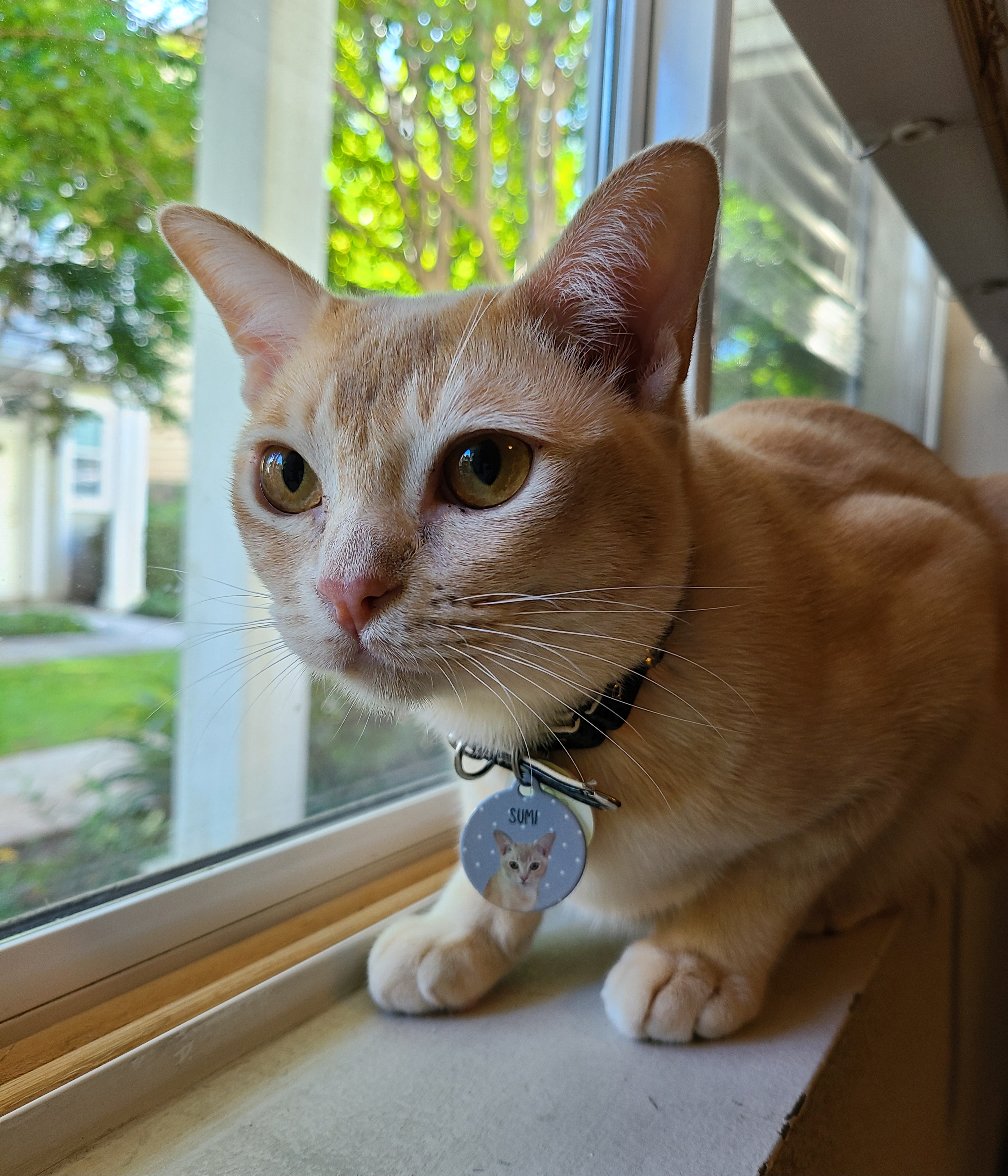
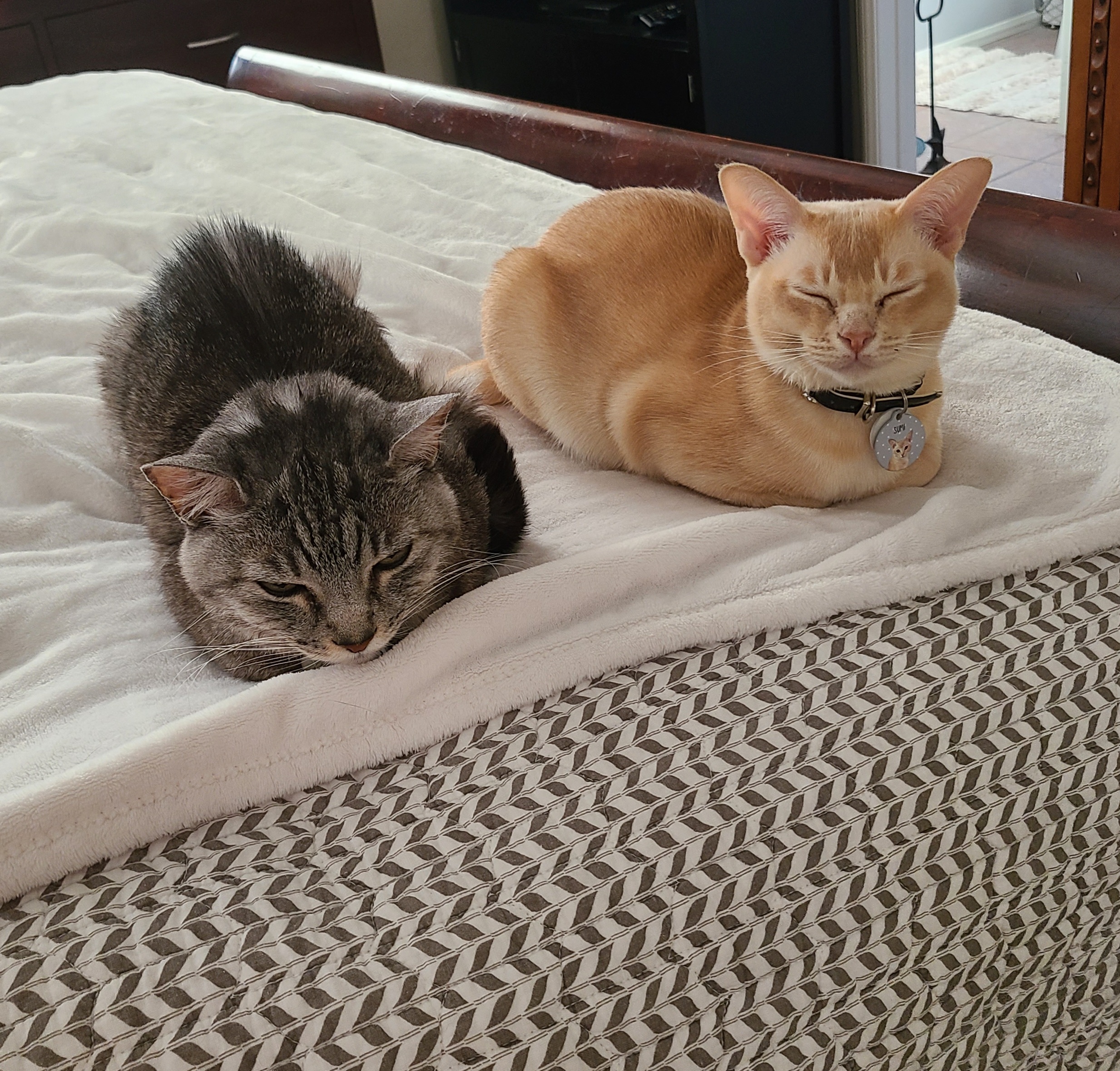
I have lived with cats for close to 38 years, and until several months ago when I got my now 1-year-old cat Sumi, I never experienced a duo of cats who had their own secret language. Sumi was introduced into the household in June, and she quickly bonded with my 2-1/2-year-old cat Koji, which made perfect sense since she was only six months old at the time and wasn’t nearly as interested in being around my two senior cats. A couple of weeks later, I started hearing some very bizarre vocalizations which I knew were coming from Sumi or Koji, but I wasn’t sure which one was making these noises.

The vocalizations I am referring to sound like a combination of meowing and cooing, and they are only heard when Koji and Sumi are play-fighting. Initially, I had assumed that the sounds were emanating from Koji, so I started watching the two kids so that I could find out which feline was making such bizarre noises. I was able to confirm on two occasions that Koji was making those utterances, but then a couple of other times, I distinctly saw that Sumi was the one with her mouth open, creating those sounds. There was also one instance in which I saw both cats making their ridiculous babble, and they were actually doing it in sequence, as if they were communicating with each other.

I have determined that Koji is the instigator, and definitely chatters at Sumi more than she does with him, but they both engage in this adorable and funny vocal interchange quite frequently during playtime.

Uncover the Roots of Stress and Master Effective Management

Image: Freepik

Here’s another fantastic article by Camille Johnson of bereaver.com which offers tips on managing stress.

In the whirlwind of modern life, stress often becomes a constant, yet unwelcome, companion. Its presence can be pervasive, affecting various aspects of our lives. Recognizing the sources of stress and developing effective strategies to manage it is not just beneficial; it’s necessary. This article dives into the primary causes of stress and equips you with practical ways to address them, aiming to bring balance and tranquility to your daily life.

Identify Your Stress Triggers

To manage stress, it’s imperative to pinpoint what triggers it. Stressors vary widely, encompassing aspects like work pressures, relationship dynamics, and personal responsibilities. By understanding these triggers, you can devise targeted strategies to mitigate their impact. This process involves self-reflection and may require changes in both perspective and lifestyle, but the reward is a more peaceful and manageable life.

Prioritize Fitness

Beginning a fitness routine is a powerful tool in combating stress, as it brings both physical and psychological benefits. Engaging in regular exercise leads to the release of endorphins, known as the body’s natural mood elevators, which help in reducing stress levels and enhancing overall mood. Physically, exercise improves cardiovascular health and increases strength and stamina, contributing to a greater sense of well-being and resilience against stressors. Additionally, a fitness routine provides structure and a sense of achievement, which can be particularly beneficial for mental health. It also offers a positive distraction, allowing for a break from daily stressors and the opportunity to focus on personal health and well-being. Discover a balanced and healthier you with customized nutrition and fitness plans from Stacey Naito!

Balance Work and Life

A common source of stress is the struggle to balance professional and personal life. This doesn’t mean compromising career goals but finding a harmony that supports both professional success and personal happiness. Here are some steps you can take to live a balanced life that is less stressful and more fulfilling:

  • Set boundaries: Establish clear boundaries between work and personal life. Define specific working hours and stick to them, avoiding excessive overtime. 
  • Prioritize self-care: Make self-care a non-negotiable part of your routine. Prioritizing self-care ensures you have the energy and resilience to handle work stress.
  • Delegate: Delegate tasks when possible, both at work and home, to reduce your workload and free up time for other activities. 
  • Learn to say “no”: Saying “no” when necessary prevents burnout and allows you to maintain a healthier work-life balance. It’s important to set realistic expectations for yourself and others.

Consider Alternative Stress Therapies

Exploring alternative therapies can provide a distinctive path to stress relief, complementing traditional methods. The following methods have been recognized for their potential in managing stress:

  • Aromatherapy: The use of essential oils like lavender, chamomile, and rose have been shown to promote relaxation and emotional well-being.
  • Biofeedback: Biofeedback techniques use sensors to monitor physiological functions like heart rate and teach individuals how to control them. It can be effective in managing stress by providing real-time feedback on stress responses.
  • Progressive muscle relaxation: This technique involves systematically tensing and relaxing different muscle groups to release physical tension and promote relaxation, making it an effective stress management tool.
  • THCa: Found in raw cannabis, THCa is a non-psychoactive compound that can offer stress relief benefits. It’s typically consumed in its natural form—explore the allure of THCA diamonds.

Practice Mindfulness and Relaxation

Mindfulness is a powerful practice for relieving stress by bringing one’s full attention to the present moment without judgment. By cultivating awareness of thoughts, feelings, and bodily sensations, individuals can better understand their stressors and learn to respond to them in a more balanced way. Mindfulness meditation techniques, such as deep breathing and body scanning, promote relaxation and reduce the physiological effects of stress, such as elevated heart rate and muscle tension. Over time, regular mindfulness practice can lead to increased resilience, improved emotional regulation, and a greater sense of calm, making it an effective tool in stress management.

Cultivate a Positive Mindset

Cultivating a positive mindset can act as a protective barrier against life’s stresses. Adopting an optimistic attitude, acknowledging your successes, setting achievable goals, and engaging in self-compassion are powerful tools in diminishing the effects of stress. Additionally, being in the company of uplifting individuals and consistently nurturing a hopeful perspective not only wards off stress but also enhances overall life satisfaction. These proactive measures contribute to building resilience, enabling you to navigate life’s challenges with greater ease and confidence.

Stress, while an inevitable part of life, doesn’t have to dominate it. By identifying its sources and adopting a comprehensive approach that encompasses physical, mental, and alternative strategies, you can effectively manage stress. This journey is about discovering what uniquely works for you, leading to a balanced and fulfilling life where stress is manageable, not overwhelming. Remember, prioritizing your well-being is not just beneficial; it’s essential.

Why Take Pictures At Burning Man?

I find it ironic that one of my friends from junior high (that’s middle school for you younger folks) has been in the habit of attending Burning Man every year and creating a photo album for each event, since Burning Man is known for its emphasis on impermanence and the transient nature of art and experiences. It’s a place where participants celebrate the idea that everything is temporary, just like the “burning” of the iconic effigy. A man is burned in effigy (The Man) at every Burning Man to symbolize destruction and rebirth. Photography, on the other hand, freezes moments in time, preserving them indefinitely. Isn’t the whole point that time doesn’t matter, that everything is ephemeral? Photos cement things down. By taking photos, you may inadvertently go against the core philosophy of Burning Man, which encourages living in the moment and embracing the ephemeral nature of life.

I also think that by having a means by which you can capture images and videos at Burning Man, you are allowing yourself to be distracted from the Burning Man experience, and cannot fully immerse yourself in the unique environment of Burning Man. Instead of being present and engaging with the art installations, interactive experiences, and the vibrant community, individuals behind the camera may become preoccupied with capturing the perfect shot. This detachment from the experience may dilute the intended impact of the event.

I also have an issue with photography serving as an invasion of the privacy of attendees. Since Burning Man emphasizes a culture of consent and respect for one another, and also since many attendees express themselves through radical self-expression, some may be reluctant to be photographed without their consent. Taking photos without asking for permission can infringe on the principles of consent and respect that are fundamental to the Burning Man community.

Then there are the people who are always striving to create perfect shots so that they can be shared on social media. At Burning Man, this pressure may lead to a competitive atmosphere where participants strive to document the most visually stunning aspects of the event. This can detract from the authenticity of the experience, as people may prioritize getting the “perfect” shot over genuine connection and self-expression. I think it’s also important to remember that photographs can only capture a limited perspective of what is happening at an event as multifaceted as Burning Man. They can’t fully convey the sights, sounds, and emotions that are part of the experience. Relying on photos to remember the event may leave you with an incomplete representation of what you truly encountered and felt, though my friend has always insisted that her albums have enabled her to encapsulate her memories of each event thoroughly.

In conclusion, while some individuals find value in documenting their Burning Man experiences through photography, there is a valid argument that taking photos at such events may be counter to the event’s core principles of impermanence, full engagement, consent, and respect. By prioritizing the experience over capturing it, one can better align with the spirit of Burning Man and fully immerse oneself in the magic of the event.

How To Train A Cat Or Kitten

Copyright: larisikstefania


Training a cat or kitten to learn its name and do basic tricks can be a rewarding experience, but it requires patience and positive reinforcement. I know first-hand that it is indeed possible for cats to play fetch, beg, and sit because I have had numerous cats who were able to understand and perform such commands. My cats also know their names and will come (barring any feline defiance which can kick in at times) when called.

The most basic command which most people would like their pets to learn is to respond to their names and come when called by name. Here are some steps and tips which you can use to reinforce your cat’s learning.

  1. Choose a Short and Distinct Name: Select a name for your cat that is short, distinct, and easy to pronounce. Cats tend to respond better to names with one or two syllables. Use the chosen name consistently. All of my cats have two-syllable names which are easy to pronounce.
  2. Establish a Connection: Spend quality time with your cat to build a bond and trust. Petting, playing, and providing treats are all ways to create a positive association with you. In fact, I would say treats are essential when getting a cat or dog to learn its name, as it serves as positive reinforcement.
  3. Use Positive Reinforcement: Cats respond well to positive reinforcement, such as treats, praise, and petting. Reward your cat when it responds to its name or successfully completes a trick.
  4. Start with Name Recognition: To teach your cat its name, use a calm and friendly tone. Say the cat’s name while making eye contact. When the cat responds, reward it with a treat or affection. Repeat this regularly.
  5. Be Patient: Cats may take time to recognize their name and respond. Don’t get discouraged if they don’t respond immediately. Be patient and consistent in your efforts.
  6. Teach Basic Tricks: When it comes to teaching tricks, start with simple ones like “sit” or “come.” Use treats and positive reinforcement to guide your cat into the desired behavior.
  7. Use Clicker Training: Clicker training can be effective for cats. Associate the sound of a clicker with treats, and use it to mark desired behaviors. Click when the cat responds to its name or performs a trick, followed by a treat.
  8. Keep Training Sessions Short: Cats have shorter attention spans than dogs. Keep training sessions brief, around 5-10 minutes at a time. Multiple short sessions throughout the day can be more effective than one long session. My training sessions with my cats are very brief, about 3 to 5 minutes, and I truly believe that the brevity is what keeps my cats engaged.
  9. Be Consistent: Consistency is key in cat training. Use the same command words and reward system every time. Avoid confusing your cat with different words or signals for the same behavior. I personally always use “sit” and “beg” when training Koji, my 2-1/2-year-old cat.
  10. Stay Positive and Patient: Cats can be independent, so don’t scold or punish them if they don’t respond immediately. Always use positive reinforcement to encourage desired behaviors.
  11. Adjust to Your Cat’s Personality: Every cat is unique, so be flexible in your training approach. Some cats may respond better to treats, while others may prefer play as a reward.
  12. Practice Regularly: Regular practice and reinforcement are essential for your cat to retain what it has learned.

Remember that not all cats will learn tricks, and some may be more responsive than others. The key is to be patient, use positive reinforcement, and focus on building a strong bond with your cat. Training should be a fun and enjoyable experience for both you and your feline companion.

Don’t Call Them ‘Private Parts’

I wanted to share this brilliantly written article by Dr. Rachel S. Rubin, who demystifies the talk surrounding genitalia and sexual health. Hopefully readers will find some encouragement in the language and the wonderful explanations of reproductive physiology and anatomy, and will better understand conditions such as erectile dysfunction. For those of you who would like to check out the original post on Medscape.com, here is the link:

https://www.mdedge.com/familymedicine/article/265321/womens-health/dont-call-them-private-parts?ecd=WNL_FAM_231008_mdedge

By Rachel S. Rubin, MD

Today, I’d like to talk about private parts. You know: the genitals, down there.

I hate all of that. I really wish that we can get to a place where we can talk about genitals and sexual health the same way we do about high blood pressure and diabetes. In fact, when a new patient comes in and they get a new diagnosis of diabetes, you spend time explaining to them how their pancreas works. I don’t remember all the details because I’m a urologist. But you explain the details of diabetes, how it works, why therapy is important, and how it’s very important for quality of life.

I would like us to take that same understanding of anatomy and physiology and use it to explain to patients how their sexual health works because when they understand it, they then have the tools to make it better. I say to patients, “You have to know what parts you have in order to figure out how they drive, right?” We want them to drive better.

Let me give you an example. Many men come to see me with complaints of erectile dysfunction. They refuse to take sildenafil and tadalafil (Viagra and Cialis), saying, “Oh my gosh, those are magic pills. I won’t be a man if take them.” We all know that doesn’t make any sense. I explain to them how their penis works: “Your penis is a muscle. The muscle does two things. It contracts and it relaxes, just like your bicep. It’s just that your penis muscle is smooth muscle, which means it responds to fight or flight. It’s on the autonomic nervous system.”

I explain that if the muscle of the penis is relaxed, it fills with blood and expands. It gets big and hard, and it traps the blood. But when the muscles of the penis are contracted, when they are tight, it squeezes out all the blood, like squeezing out a sponge. So the important thing to do if you want to have good erections is to get the muscles to relax. Relaxed muscle increases erections. I get them to understand that sildenafil and tadalafil are phosphodiesterase 5 inhibitors: smooth-muscle relaxants. Instead of saying, “I need to take Viagra or Cialis because I’m broken,” it’s, “Oh hey honey, I need to take my muscle relaxants because my muscles aren’t working the way that they used to.”

In the future, I’ll go into what happens in erectile dysfunction. We’ll go into what can happen with erectile dysfunction and the many reasons why it happens. It’s getting them to understand that if we get the muscles to relax, you will have better erections. This is how the penis works. It’s why the medicine works. The patients will actually try the therapy and they’ll feel so much better about it. They’ll say, “Oh my gosh, this makes so much sense.” They work on their mental muscles to get the muscles of the penis to relax. Understanding anatomy and physiology helps them understand the treatments, which leads to better outcomes.

How about the female side? If a woman comes to see me reporting that she can’t have an orgasm, part of it is education and understanding the anatomy and physiology. The clitoris and the penis are exactly the same thing. The head of the clitoris and the head of the penis are the same. The clitoris has legs that go all the way down to the butt bone. So everyone is sitting on their genitals right now. The butt bones connect to the bottom of the clitoris or the bottom of the penis. They each have legs called crura. When you get patients to understand where their anatomy is and how it functions, they will then understand how to maximize their quality of life.

The clitoris has smooth muscle just like the penis. When that smooth muscle relaxes, it gorges with blood. When you stimulate it, it can lead to orgasm for most people. But, wait a minute. The clitoris is not inside the vagina. It’s outside. It’s behind the labia majora. If you follow the labia minora up, you get to the head of the clitoris. If patients understand that, they then will understand that penetration is not the way the majority of people orgasm.

I love pictures. I show everyone pictures in my office. They help patients to understand why vibration or outside stimulation on the vulva will allow orgasm to happen. And so instead of patients coming in saying, “I’m broken, I can’t orgasm from penetration,” or, “Dr. Rubin, I’m broken because I can’t get erections,” getting them to understand the anatomy and physiology helps them understand the treatment.

As we go forward, I’ll talk more about anatomy and physiology and how to increase the sexual health of our patients. For now though, please stop calling them private parts. Please use your understanding of anatomy and physiology to educate your patients to have better sexual health and higher quality of life. You may be the only clinician to ever do so, and it will make their life so much better.

Dr. Rubin is an assistant clinical professor, department of urology, at Georgetown University, Washington. She reported conflicts of interest with Sprout, Maternal Medical, Absorption Pharmaceuticals, GlaxoSmithKline, and Endo.

The Whisker

Copyright: dtiberio

This post is dedicated to all perimenopausal and postmenopausal ladies who have had to deal with the shock of seeing a large, angry, black rogue whisker poking out of their chins. You know what I’m talking about, that sneaky little bugger that wasn’t there last night when you were washing your face and getting ready for bed, but somehow mysteriously managed to grow about a half an inch overnight, thick and bold and ready to ruin your day? Yeah, that thing.

I’m not new to these witch hairs, as I have had a few sprout on my jawline and chin over the years, but I am never prepared for these atrocious things when they appear without any warning whatsoever. At least if they looked like strange blackheads in the days preceding their eruption, I’d have some kind of warning, but no, they wrangle so much keratin in no time flat, in a declaration of pure defiance. For some reason, I honestly believed that I had moved past the danger zone, but about two months ago, while I was performing a tweezing touch-up of my brows, I witnessed one big whisker on my chin right at border, asserting itself like a little punk, about a centimeter long, robust and black.

Despite the fact that I know full well that these single chin hairs are formed in response to hormonal fluctuations, I will never get over the fact that they grow lightning fast, that they are always black, and that they serve as reminders of how old I am becoming. What also irks me is that I have undergone laser treatments to eradicate these random, rare (thankfully) strands, but they persist in plaguing me.

Thank goodness for tweezers!

Is Raw Food Good For Cats?

My kitten Sumi at 10 months of age

Feeding raw food to cats and kittens is a topic of debate among veterinarians and pet owners. While some advocates believe in the benefits of a raw food diet for cats, it’s essential to consider both the potential advantages and risks associated with this feeding approach. When I got my cream European Burmese kitten Sumi, the breeder told me that she was accustomed to raw food, so after a few weeks, I acquiesced, looked up the specific brand of raw food, found a local distributor, and purchased the food. Luckily, my kitten and my junior cat (sable American Burmese Koji, who is 1-1/2 years old) both love the raw food, so they now get raw food every morning.

Here are some potential benefits of raw food for cats and kittens:

  1. Nutrient Density: Raw food diets can be formulated to closely mimic a cat’s natural prey diet, which is high in protein and low in carbohydrates. This can provide essential nutrients in a highly digestible form.
  2. Improved Coat and Skin Health: Some cat owners report that their pets on raw diets have shinier coats and healthier skin, which could be due to the higher levels of essential fatty acids found in some raw ingredients. This is definitely true for my cats, including my 14-year-old Tenshi, whose coat had been looking dull until he started eating a small amount of raw food each morning (I have to limit the amount due to his kidney disease). His coat is now thicker and has a sheen to it similar to what he used to have when he was young.
  3. Dental Health: Chewing on raw bones and meat can help maintain dental health by reducing tartar buildup and promoting natural tooth cleaning. I actually get a kick out of watching Koji and Sumi eat raw food, because their wild instincts kick in, and they chew pretty vigorously.
  4. Weight Management: Raw food diets may help with weight management, as they are generally low in carbohydrates, which can contribute to weight gain.
  5. Allergy Management: Some cats with food allergies or sensitivities may benefit from a raw food diet because it allows for precise ingredient control, avoiding common allergens. Koji has some food allergies which I had discovered quite by accident, so it’s a relief to know that he has no issues with the raw food I feed him.
  6. Improved Digestion: Proponents of raw diets argue that these diets are easier to digest and can lead to fewer digestive issues, such as vomiting and diarrhea. Since incorporating raw food into my cats’ diets, I have noticed that vomiting is extremely rare.
  7. Increased Hydration: Raw diets often contain a higher moisture content, which can help keep cats well-hydrated and reduce the risk of urinary tract problems.

My two-year-old, Koji

It’s important to note that there are also significant risks associated with feeding raw food to cats and kittens:

  1. Bacterial Contamination: Raw meat, especially poultry and fish, can be contaminated with harmful bacteria such as Salmonella and E. coli, which can pose health risks to both cats and humans. However, the company from which I purchase raw food, Blue Ridge Beef, uses High Pressure Processing (HPP), a cold-water process that applies pressure on the food that fractures the cell walls of pathogenic bacteria such as Salmonella, E. coli 0157:H7, and Listeria Monocytogenes, killing them while leaving all nutrients intact. I also wash my hands before handling the food, and when I section out the 2-pound chubs, I use a sharp knife to cut the chub into medallions, wrap the medallions in plastic wrap, and then into a freezer bag to re-freeze until feeding time.
  2. Nutritional Imbalance: Formulating a balanced raw diet that meets all of a cat’s nutritional needs can be challenging. Deficiencies or excesses in essential nutrients can lead to health problems. For this reason, I still leave dry and freeze-dried kibble for my cats to graze on, and I also feed them commercial wet food for dinner to ensure a balanced diet.
  3. Parasites: Raw meat can contain parasites, such as Toxoplasma gondii, which can be harmful to cats and can be transmitted to humans.
  4. Choking Hazards: Feeding bones can be risky, as cats may choke or suffer from intestinal blockages. However, I have noticed that Blue Ridge Beef Kitten Mix does not contain any large pieces of bone.
  5. Zoonotic Diseases: Cats on raw diets may be at increased risk of contracting zoonotic diseases, which can be transmitted from animals to humans.
  6. Cost and Time: Preparing and feeding a raw diet can be more time-consuming and expensive than commercial cat foods. I can’t imagine going through the hassle to make raw food for my cats, so I am thankful that I can purchase Blue Ridge Beef products which are almost completely hassle free. I will say that when I purchase a case of fifteen 2-pound chubs, I don’t look forward to tempering the chubs, cutting them into medallions, wrapping them and then placing them in bags, but I only do that every 5 months.

Before switching your cat or kitten to a raw food diet, it’s crucial to consult with a veterinarian who can provide guidance on whether it’s appropriate for your specific pet’s needs and help you formulate a balanced and safe diet. If you decide to feed a raw diet, it’s important to follow best practices for food safety to minimize the risk of bacterial contamination and ensure your cat’s overall health and well-being.

Reese’s Peanut Butter Cup Miniatures

Copyright: serezniy

I have a confession to make: Ever since 1990, I have been in the habit of storing a bag of Reese’s Peanut Butter Cup Miniatures in my refrigerator. Though I very rarely indulge in the delectable nuggets, I am quite protective of my stash, so much so that when my best friend Diane discovered them during her visit this past June, I found myself nervously glancing at the number of treats she would grab each time. By the end of Diane’s visit, the entire 17.6 ounce bag was emptied, so I added Reese’s Peanut Butter Cup Miniatures to my shopping list.

Many people don’t expect someone like me to stash chocolate morsels in my fridge, but it is something I have done for over 30 years, and I have no plans of putting this tendency to a halt. Also, since I indulge in maybe 3 Reese’s Peanut Butter Cup Miniatures every few months, I doubt that my consumption of these mini cups has a severe effect on my health.

For those of you who are curious about what is in Reese’s Peanut Butter Cup Miniatures, here are the ingredients:

MILK CHOCOLATE (SUGAR, COCOA BUTTER, CHOCOLATE, SKIM MILK, MILK FAT, LACTOSE, LECITHIN (SOY) PGPR), PEANUTS, SUGAR, DEXTROSE, SALT, TBHQ AND CITRIC ACID, TO MAINTAIN FRESHNESS.

I recognize the fact that there are two controversial ingredients listed (PGPR and TBHQ), but again, I don’t eat these things very often.

Is there anyone else who shares an obsession with having Reese’s Peanut Butter Cup Miniatures or some other chocolatey treat in their refrigerator?

Why Multi-Cat Households Are More Fun

Clockwise: Tenshi (14), Koji (2), and Sumi (9 months)

Having multiple cats in a household can be enriching and beneficial for both the cats and the humans involved. I can personally attest to this since I have always had more than one cat in my household since 1986, and can’t imagine my life without a gang of felines with whom to share my home. There are people I have known who have had one cat, and almost invariably, the singleton cat has proven to be antisocial, and in some cases, downright mean, while those who have at least two cats notice that their furry kids are friendlier and more curious.

Let’s explore the reasons in detail:

Social Interaction and Sense of Community:

  • Cats are social animals, and living with other cats can fulfill their need for companionship and social interaction. In a multi-cat household, cats can engage in grooming, play, and cuddling with each other, which helps reduce loneliness and stress.
  • Cats create their own little community, which can be heartwarming to witness. They may form close bonds, develop unique rituals, and even communicate with each other through body language, vocalizations, and scent marking.

My boys Koji and Tenshi

Hierarchy and Pecking Order:

  • Multi-cat households often establish a hierarchy or pecking order, with dominant and submissive cats. This hierarchy can help reduce conflicts by establishing clear roles within the group. As an example, my senior boy Tenshi definitely has the upper hand on Koji, even though Koji is full of energy and prone to getting into mischief.
  • Observing the cats’ interactions can be fascinating, as they negotiate and establish their positions within the household’s social structure. This dynamic can teach humans about animal behavior and social hierarchies.

Diverse Personalities:

  • Cats, like humans, have diverse personalities. In a multi-cat household, you’re likely to see a wide range of personalities, from outgoing and playful to shy and reserved. In my household, there is a continuum, ranging from Shima who is the shyest by far, to Koji who has some timid moments, to Sumi whose fearless and diva personality makes her outgoing and demanding (but always on her terms), to Tenshi who is the biggest lovebug and a bundle of lap Velcro.
  • These distinct personalities can provide entertainment and a deeper understanding of feline behavior. It’s fun to watch each cat’s unique quirks and habits.

Socialization and Training:

  • Multi-cat households can help in socializing kittens or newly adopted cats. They can learn from the resident cats and adapt to household routines more easily.
  • Older, more experienced cats can sometimes teach younger ones appropriate behavior and boundaries. Back in 2009, when I got Shima as a 3-week-old rescue, I noticed that she learned to run, purr, and play from the senior cat I had at that time.

Shima (14) and Sumi

Entertainment Value:

  • Cats in multi-cat households often engage in playful and interactive behaviors with each other, such as chasing, wrestling, and play-fighting. These activities can be entertaining for both the cats and the humans in the household. There is no end to the amount of entertainment which I get from watching my cats horse around throughout the day, even if it means that certain items get knocked over during their sessions. My cats keep each other company, which is very important to me when I step out for social outings.
  • Cats can also provide entertainment by watching their antics and observing their unique personalities. Their curiosity and playful nature can brighten up the home.

Reduced Boredom and Stress:

  • Having multiple cats can help reduce boredom and stress for individual cats. They have companions to interact with when humans are not available.
  • Cats can play with each other, which is mentally stimulating and physically engaging, reducing the risk of obesity and behavioral problems.

Human Benefits:

  • For humans, a multi-cat household can be emotionally rewarding. The cats provide companionship, comfort, and entertainment, enhancing the overall quality of life.
  • Multiple cats can also create a sense of purpose and responsibility for cat owners, as they must cater to the needs of a larger group.

While multi-cat households have many advantages, it’s essential to consider the potential challenges, such as introducing new cats carefully, providing enough resources (food, water, litter boxes, and scratching posts) for all cats, and monitoring for any signs of stress or conflicts. Proper care and attention can ensure a harmonious and happy environment for both the cats and the humans in the household.