Television Back In The Day

image 123rf.com

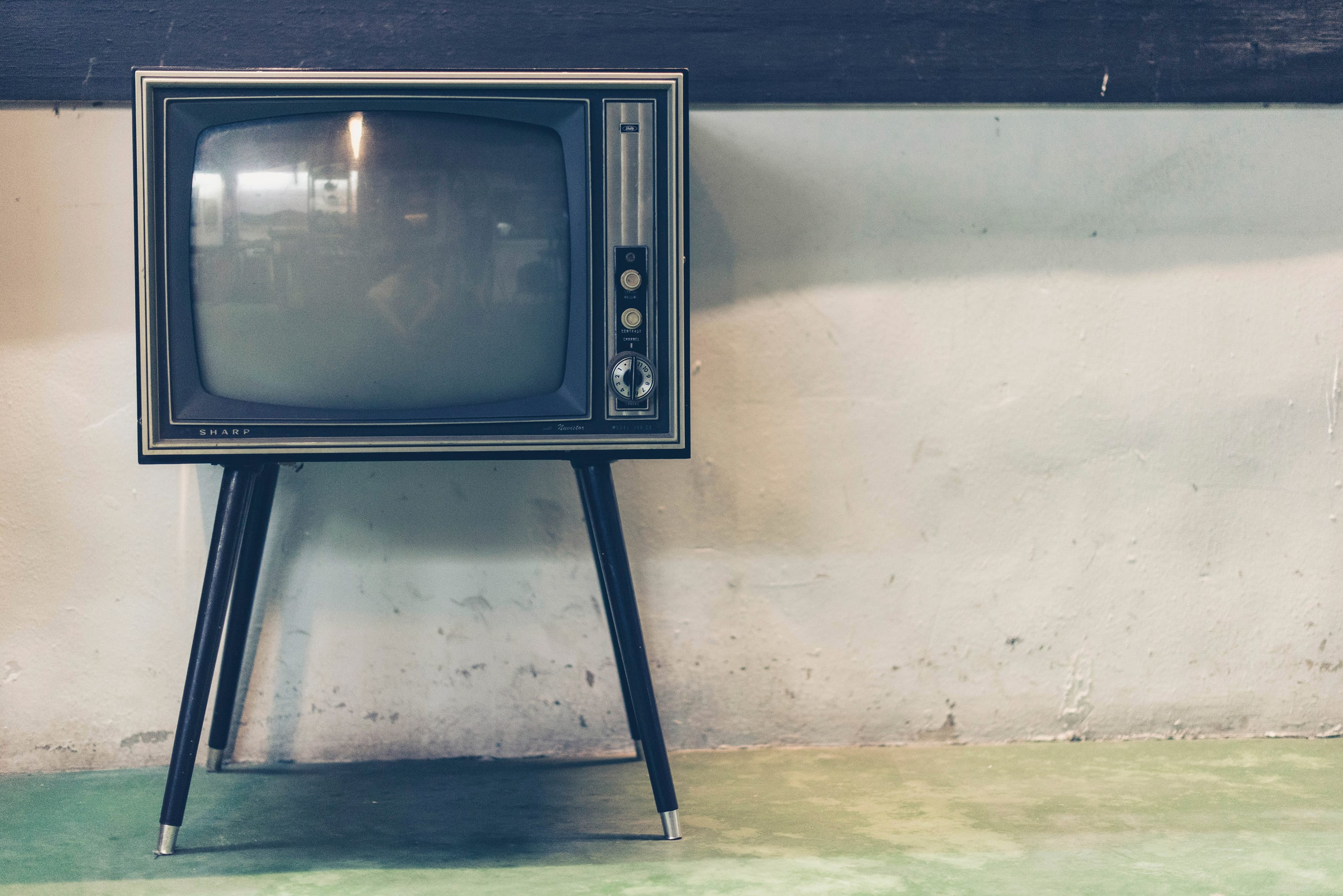
Television in the 1970s and 1980s was a very different experience from watching television today. There were far fewer channels, no streaming services, no DVRs, and no way to simply search for a program and watch it whenever you wanted. Watching television was often something the whole family planned around.

Television programming back in the day

In the 1970s and 1980s, most Americans received television through a handful of broadcast networks, particularly ABC, CBS, and NBC, with PBS providing educational and cultural programming. Later, FOX joined the major networks in 1986. Cable television also expanded dramatically during the 1980s.

Programming was organized around a schedule. There were morning shows, daytime game shows and soap operas, afternoon children’s programs, evening news, and prime-time programs. Prime time was especially important because networks competed for the largest possible audience.

People commonly talked about “Must See TV” before that phrase became associated with NBC in the 1980s and 1990s. If a favorite program came on at 8:00 p.m. on Thursday, for example, you had to be sitting in front of the television at 8:00 p.m. on Thursday.

There was also a strong sense of appointment television. Families might say, “Don’t forget, The Muppet Show is on tonight,” or “We’re watching Dallas.” Missing the episode could mean missing it permanently.

TV Guide

TV Guide was extremely important because it told people what was going to be on television and when. Today we can look at a program guide on the television or search the internet in seconds. Back then, viewers often bought or subscribed to the weekly magazine.

TV Guide contained the listings for programs by day and time, along with articles about television stars and upcoming programs. People would look through the listings and mark the programs they wanted to watch.

In many households, the TV Guide might sit on the coffee table next to the television. It was essentially the search engine and program guide of its time.

TV Times

On the West Coast, another familiar publication was TV Times, which was particularly associated with the Los Angeles television market. For people in Southern California, it was a useful way to see the local television schedule.

TV Times was especially relevant because television schedules could vary by market. What aired at a particular time in Los Angeles wasn’t necessarily identical to what viewers in New York or Chicago were watching.

Sitcoms

Sitcoms were a huge part of television during the 1970s, 1980s, and into the 1990s.

The 1970s produced shows such as All in the Family, The Jeffersons, Good Times, The Mary Tyler Moore Show, MASH*, Sanford and Son, The Brady Bunch, and One Day at a Time. Many sitcoms weren’t simply jokes from beginning to end; they also dealt with subjects such as racism, poverty, family problems, relationships, politics, and changing social attitudes.

The 1980s brought another generation of enormously popular sitcoms, including The Cosby Show, Family Ties, Cheers, Growing Pains, The Golden Girls, Night Court, Who’s the Boss?, and Roseanne.

By the 1990s, shows such as Seinfeld, Friends, The Fresh Prince of Bel-Air, Home Improvement, and Frasier became major television events.

One interesting thing about sitcoms was that the audience often had to wait an entire week for the next episode. There was no “next episode” button. If you really liked a show, you remembered the day and time it came on.

Commercials were part of the experience

Commercials were much more noticeable because viewers couldn’t simply fast-forward through them. A typical half-hour sitcom had commercial breaks throughout the program.

Some commercials became almost as memorable as the television programs themselves. Companies such as Coca-Cola, Pepsi, McDonald’s, Burger King, Kellogg’s, General Mills, Chevrolet, Ford, and many others created advertising campaigns that became part of popular culture.

Commercial jingles could get stuck in people’s heads. Children knew the commercials for their favorite cereals and toys, and commercials during Saturday-morning cartoons were especially important because they were aimed directly at young viewers.

The 1980s and 1990s also saw increasingly elaborate commercials for new technology, automobiles, fast food, toys, and consumer electronics.

How blockbuster films were aired on television

Going to the movie theater was one way to see a blockbuster, but eventually the movie would make its way to television.

The arrival of a major movie on television could be a big event. Networks would advertise the movie heavily beforehand, sometimes for days or weeks. A popular movie might receive a special presentation with a prominent introduction and additional commercial promotion.

There was something special about knowing that a major theatrical film was going to be shown on television that night. The family might plan the evening around it.

Movies could also be edited for television, particularly for language, violence, sexual content, and running time. The film might also be interrupted by commercials.

You had one shot to watch your show

This is probably one of the biggest differences between television then and television now.

If The A-Team came on at 8:00 p.m. and you weren’t home, you missed it.

There generally wasn’t a convenient way to watch it later. You couldn’t go online, open an app, or find the episode on demand.

This created a different relationship with television. People actually arranged their lives around television schedules. Someone might rush home from work, finish dinner early, or tell a friend, “I can’t go out tonight—my show is on.”

If you missed a particularly important episode, you might have to wait for a rerun. And sometimes you didn’t even know when that rerun would happen.

VHS changed everything

Then came the VCR and VHS tapes, and television viewing began to change dramatically.

A VCR allowed people to record a television program and watch it later. Suddenly, you didn’t necessarily have to be home when your favorite program aired.

You could put a blank VHS tape into the machine, program the VCR, and record a show. Later, you could rewind the tape and watch it.

Of course, programming a VCR wasn’t always easy. Many people remember struggling with the clock, recording times, and the infamous blinking 12:00 on the VCR display.

VHS also allowed people to build their own personal movie collections. Instead of waiting for a movie to appear on television, you could rent a movie from a video store and watch it at home. Blockbuster Video became one of the defining businesses of this era.

The VCR therefore represented a major transition: television was beginning to move from “watch it when the network broadcasts it” toward “watch it when you want.”

The biggest difference

The biggest difference between television then and television today is control.

In the 1970s, you watched what the networks decided to broadcast, when they decided to broadcast it. TV Guide or TV Times told you what was coming on. Commercials were part of the experience. If you missed something, you hoped for a rerun.

VHS gave viewers their first real taste of control. You could record a program, pause it, rewind it, and watch it later.

Today, streaming has taken that idea much further. We can watch thousands of programs whenever we want, pause them, skip commercials, watch entire seasons in a weekend, and even watch on a phone.

For people who grew up with television in the 1970s and 1980s, that makes the old experience seem almost unimaginable: you didn’t watch television whenever you wanted—you watched television when television was on.


Of Encyclopædias And The Dewey Decimal System

books, reading, library, school, study, encyclopedia, education

For those of us who were kids before the computer age, research wasn’t instant—it was an event.

If you needed to look something up, you didn’t “Google it.” You got up, walked to a shelf, and physically pulled down a heavy book. Information had weight. It had a smell. It had thin, almost tissue-like pages and tiny print crammed into double columns.

The Pride of Encyclopædia Britannica

In many homes, owning a full set of Encyclopædia Britannica was a point of pride. Those volumes—often bound in dark leather or gold-lettered spines—sat in living rooms like a declaration: We value learning here.

They were expensive. Really expensive. Families didn’t just casually buy them. Salesmen would come door to door, making their pitch at the kitchen table. Parents would agree to installment payments, and the set might arrive one volume at a time. There was something ceremonial about sliding the newest letter into place on the shelf. As a matter of fact, my mother had to order each volume separately, and because she couldn’t afford to buy a bookcase, my home research sessions required me to dig through large boxes which housed the volumes, an especially tedious task if the volume I required was at the bottom of the box.

If your family didn’t own Britannica, you might have had something like World Book instead—or you relied on the library. Either way, research meant flipping to the correct letter, scanning entries alphabetically, and following cross-references at the bottom of the page: See also: Mesopotamia.

And that was another thing—we learned to browse. You’d start looking up “Egypt” and end up twenty minutes later reading about papyrus, pyramids, or Cleopatra. You discovered things by accident because you had to pass them physically to get where you were going.

Row of Books in Shelf

The Library and the Dewey Decimal System

The public library felt almost sacred.

First came the card catalog—long wooden drawers filled with index cards. You flipped through them by author, title, or subject, copying down call numbers in pencil.

Then you had to decode the Dewey Decimal System. Every book had its numerical address:

  • 500s for science
  • 800s for literature
  • 900s for history

Once you had the number—say 940.53 for World War II—you’d go hunting down the aisle, scanning the spines in numerical order. It was like a treasure hunt. Sometimes the book wasn’t there. Maybe someone else had it. Maybe it was mis-shelved. That was part of the adventure.

And when you found it, you felt like you’d earned it.

Microfiche and the Glow of the Machine

If you needed old newspaper articles or archival materials, you didn’t scroll—you used microfiche or microfilm.

You’d load a transparent sheet or spool into a bulky reader machine, turn knobs, and watch enlarged pages of tiny, photographed print glow onto a screen. The machine hummed. The image jittered. You scrolled slowly, hoping not to overshoot the date you needed.

Printing a copy involved a loud clunk and the smell of warm toner.

It wasn’t convenient. It wasn’t fast. But it felt serious. Research required patience, and patience created focus. You couldn’t open fifteen tabs. You worked with what was in front of you.

What We Gained (and Lost)

There was frustration, yes. But there was also depth.

You couldn’t skim five sources in thirty seconds. You had to read. You had to navigate systems. You learned how information was organized—alphabetically, numerically, hierarchically. You developed a kind of mental map of knowledge.

Today, answers are immediate and limitless. Back then, knowledge felt finite but tangible. It lived on shelves. It arrived one volume at a time. It glowed on a microfiche screen.

And when you finally found the answer you were looking for, it felt like discovery—not just retrieval.

My Mom’s Mother’s Day Visit

This past Mother’s Day was punctuated by two strange and special incidents, the first of which occurred about an hour after a floral arrangement I had ordered was delivered to my mother’s gravesite in Hawaii. I was in the midst of cleaning my home and getting ready for a trip to Hawaii in order to put my mom’s sister Alice to rest in the same grave with my mother’s cremains. While I was cleaning, I heard something fall to the floor, so I looked in the direction of the noise to find out what had fallen. A high school English composition book which has sat propped up decoratively on one of my bookshelves was on the floor, but the manner in which it had fallen, as well as the trajectory in which it fell off the shelf, was very odd.

I was nowhere near the bookcase from which the book had fallen, so the disruption lacked logical explanation. The book had been my mother’s, a textbook she had used while in high school. She had given it to me when I was a child, thinking that I would enjoy having it, and told me that she thought it was ridiculous that the book had been published 16 years prior to when she used it as a textbook (primarily due to budget constraints from the Great Depression and World War 2). Since the textbook was published the year my mom was born (1932), I always felt that the book was a representation of her, since it was as old as her.

When the book fell, it somehow flew in an arc over a nearby etagere, a movement which defied the laws of physics. In addition, it fell face up, which made no sense from the position it was in when it was on the shelf. I picked up the book, and instantly felt my mom’s presence around me. I thought to myself, wow, my mom is finally here to visit. It was a very special moment, but since I had more cleaning to do, I put the book back on the shelf and continued to clean.

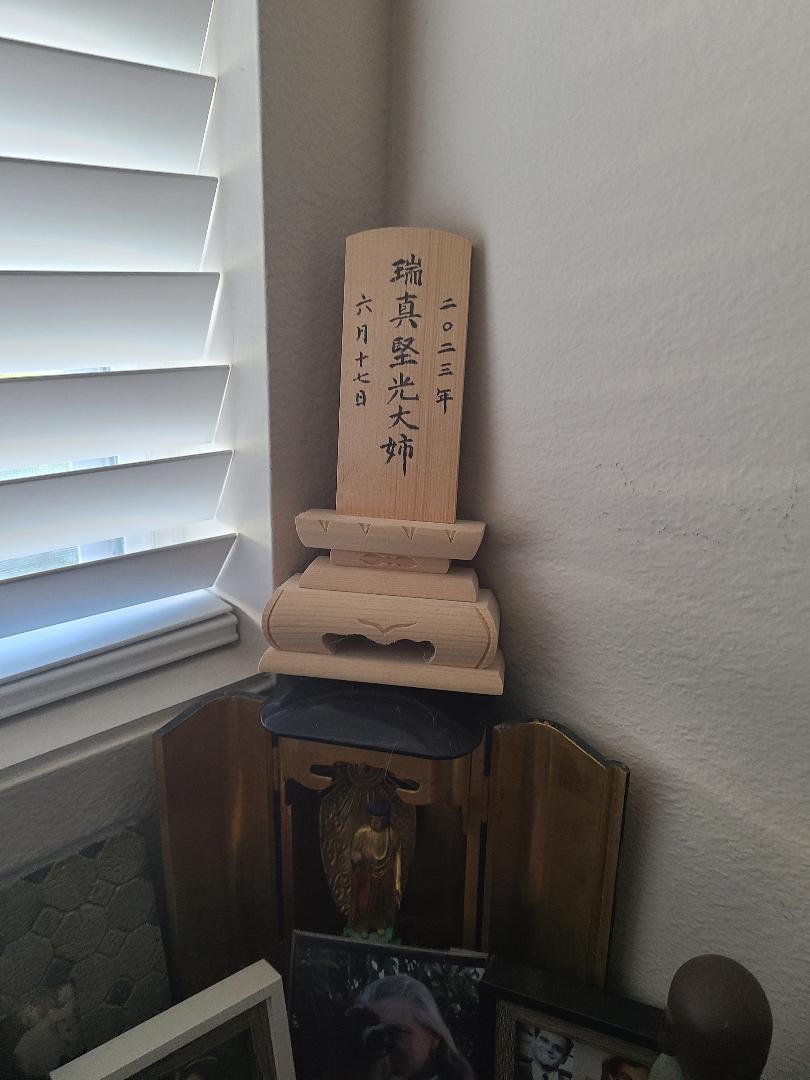
About an hour after the book incident, I went up to my bedroom to clean it. When I walked into the room, I saw that the ihai or spirit tablet from my mom’s funeral was turned sharply to the left so that the front of the tablet was facing the window. None of my cats had been in my room the entire time I was cleaning, so I absolutely knew that my mom was once again communicating with me. I was stunned, since my mother’s spirit hadn’t paid me a visit since her death in June of 2023.

I’d love to hear the stories of others who might have experienced similar visits from departed family members!

Agreeing To Disagree

123rf.com rawpixel image ID 106375134

Agreeing to disagree is an important skill in maintaining healthy relationships, especially with friends and family. In any close relationship, differing opinions are inevitable—whether about politics, religion, parenting styles, or even small things like movie preferences. The ability to respect these differences without letting them ruin a relationship is a sign of emotional maturity and mutual respect. This skill seems to have become incredibly valuable in recent years, mostly as a result of tectonic shifts in politics and socioeconomic affairs.

However, when someone writes you off just because you have a different opinion, it can be deeply hurtful and damaging. It sends the message that your relationship was conditional—based not on love, shared history, or mutual respect, but on intellectual or ideological alignment. This kind of behavior fosters division, resentment, and isolation. Instead of promoting understanding, it encourages an “us vs. them” mentality, where people surround themselves only with those who reinforce their own beliefs.

There are numerous people in my personal life who have recently made certain assumptions about my religious and political views, some of which were accurate, others which were way off the mark. What’s frustrating is that I have felt like I was silenced due to the fact that some individuals assumed I held a specific belief, which was the stark opposite of my stance. It’s downright disappointing to know that I have to keep my mouth shut around such individuals in an effort to protect our friendship ties.

Healthy relationships require space for disagreement. They thrive on open dialogue, patience, and the ability to see the bigger picture—that a person is more than just their opinions. It’s possible to strongly disagree with someone and still love and respect them. Writing someone off just because they see the world differently diminishes the complexity of human beings and reduces them to a single viewpoint.

My Mom’s Eulogy

My mom was the type of woman who didn’t apologize for who she was, and she was fully aware of her abilities.  It always amused me how she made sure I knew how to use basic tools like hammers and screwdrivers, and wasn’t afraid to do things like assemble furniture or fix a hole in the drywall.  However, she was also willing to admit when she was not as adept at certain tasks.  One case in point was cooking.  My mom didn’t really cook, and with the exception of meat loaf, broiled meats, and sukiyaki which was made with canned sukiyaki vegetables and fresh beef, her idea of cooking was looking at the back of the Stouffer’s box to see to what temperature the oven needed to be heated. 

Since Mom was always working so much, she was doing the best she could to provide for me, but even if she had time to cook, it just wasn’t her thing.  So I wasn’t surprised when she VERY eagerly encouraged me to bake and cook after I had revealed to her that I had an interest in doing so.  In fact, when I was 17, I told my mom, “Let’s not go to a restaurant for Thanksgiving this year, I wanna make an entire turkey feast!”  She was doubtful that I could pull it off, but when I did, she told me that I had full permission to repeat the process every subsequent year if I wanted. 

My mother was always interested in spy stories and mysteries, and had told me that she once wanted to become a private detective.  She also wanted to travel internationally, but sadly was never able to do so, mostly due to a lack of money, but also because she was so devoted to work and to me that it would have been difficult for her at best to go traipsing all over the globe. 

By the time I actively began pursuing my own international travel goals, my mom was already ill, so there was no way that she could join me in those travels.  In an effort to bring exotic locales to her, I would share all the photos, videos, and funny stories I had collected from my travels.  I often thought that if she hadn’t had me, she might have been that jet-setter she had dreamt of becoming, but as we all know, life can take us in all kinds of directions we hadn’t anticipated.

Even though I was her only child, my mom probably also really would have been happy to have had other children besides me, and I was able to see her motherly devotion given to others when I got her a Scottish Fold kitten, whom she named Spencer Tracy.  That little dude stole her heart, so much so that I got a bit edged out! After she had had him for about a year, she started referring to the cat as my baby brother!  There was one time when I was at her apartment, and figured I would sleep in my former bedroom, but Mister Spencer would have none of it!  He hissed and carried on so much that I was effectively banished to the sofa for that evening!  What a bratty brother!

Harriet also adored my ex-husband, not only while we were married, but throughout the years after we divorced. Whenever he would visit her at the assisted living facility, my mom would pretty much ignore me, and devote all her attention to him.  This would prompt me to say, “Hey, what am I, chopped liver?”  But I always secretly enjoyed the fact that she was so close to him.  She always had a keen interest in in hearing about other members of her family or my dad’s family as well, and even my friends, some of whom she had never even met in person. 

Over the 19 years after her brain aneurysm rupture occurred, Harriet’s tastes changed, and they were unexpected and interesting. She became a Bingo master, and I could tell she enjoyed being the boss lady, calling out the numbers and monitoring everyone else’s boards.  She won so much virtual money from those Bingo games, I tell you…if that had all been real money, she would have been able to buy something like a television! 

Speaking of television, she cultivated a passion for the Lakers, despite never having followed the NBA, or ANY major league sports for that matter, prior to 2013.  She had Lakers posters in her room, and would talk to me about the games.  Mom also kept up with current events, and was pretty hip for an elderly woman.  She surprised me shortly after Prince had passed away by telling me, with a devilish glint in her eyes, that she thought Prince had been a VERY good looking man. 

All in all, Mom was a remarkable, caring, supportive, tough, honest, opinionated woman, who made sure I developed a backbone. You would be asking for it if you wanted her opinion about something, and this was the case until very shortly before her passing.  I think people actually got a kick out of how sassy my mother could be, even though she could also be cantankerous and defiant. 

Now that my smart, strong, sassy, beautiful, amazing mother is gone and no longer suffering, I can honestly say that I must have been the luckiest person in the world to have had this wonderful woman as my mother, my hero, and my best friend.