The Origin Of Æ

The letter Æ (lowercase æ), often called ash, has a long and fascinating history that connects ancient writing systems to modern European languages.


1. Origins in Ancient Alphabets

The story begins with the Greek alphabet. Greek had a letter called Ancient Greece diphthong αι (alpha + iota), which represented a sound similar to the “ai” in aisle (in early pronunciation).

When the alphabet spread westward, the Ancient Rome adapted parts of the Greek writing system into the Latin alphabet. In early Latin, the diphthong ae represented a sound like the “ai” in aisle as well.


2. From “AE” to a Single Letter

In classical Latin writing, A and E were written separately (ae). However, over time:

  • The pronunciation shifted from a diphthong (“ai”) to a simpler “e” sound.
  • Scribes began writing the two letters together as a ligature (a combined character).

This combined form became Æ, especially in medieval manuscripts.

Examples in Latin:

  • Caesar
  • aeternus
  • aer

In some later spellings, especially in English, the ligature was simplified to just e (e.g., medieval instead of mediæval).


3. Use in Old English

In England, during the Old English period (around 450–1100 CE), æ became a full letter of the alphabet, not just a stylistic combination.

It represented a distinct vowel sound — something like the “a” in cat.

Example:

  • dæġ (modern English: day)

Old English scribes borrowed the letter from Latin manuscripts and adapted it to represent a native sound.


4. Use in Modern Languages

Today, æ is still used as a distinct letter in several languages:

  • Iceland
  • Denmark
  • Norway

In these languages, it represents a vowel sound similar to the “a” in cat or a slightly broader front vowel.


5. Æ in Modern English

In modern English, æ is mostly stylistic or archaic. You may see it in older spellings like:

  • archæology
  • encyclopædia
  • mediæval

Today, these are usually written without the ligature (archaeology, encyclopedia, medieval).


Summary

The letter æ:

  • Originated from the Greek diphthong αι
  • Became ae in Latin
  • Fused into a ligature in medieval writing
  • Became a full letter in Old English
  • Survives today in Scandinavian and Icelandic alphabets

It’s a great example of how writing systems evolve over time — shaped by pronunciation changes, scribal habits, and cultural exchange.


Word Geek

One of the best days for me in May of 1977.

As a child, I was absolutely intoxicated by words. Not just the ordinary, pedestrian ones — I mean the labyrinthine, tongue-twisting, sesquipedalian marvels that felt like verbal acrobatics. I collected them the way other kids collected trading cards.

I didn’t just know the longest word in the English language – pneumonoultramicroscopicsilicovolcanoconiosis — I reveled in it. I made sure to memorize it at the age of 8, savoring each syllable like a procession: pneu-mo-no-ul-tra-mi-cro-scop-ic-sil-i-co-vol-ca-no-co-ni-o-sis. Twenty-three letters? Please. That was merely a warm-up. This beefcake carried 45 letters, and it denoted a coal miner’s lung disease, which was even better since it also appealed to the medical nerd portion of my personality. I wanted words with gravitas, with architectural complexity.

My mom recognized early on that spelling wasn’t just a skill for me — it was a vocation. When I told my mother that there would be a major spelling bee at the end of the 6th grade year, she took it upon herself to quiz me daily in order to fortify my chances of taking home the coveted title and medal. Every afternoon she would sit across from me at the kitchen table with a list. Not pedestrian little morsels like “apple” or “chair.” No. She would lob in “chiaroscuro,” “defenestration,” “antidisestablishmentarianism.” It was our ritual — my daily lexical calisthenics in preparation for the apotheosis: the 6th-grade spelling bee.

And when that day came, I was incandescent with anticipation.

One by one, students were shot down, failing in their efforts to deliver impeccably spelled words, until there were only two of us left: Martha Phelps and me. Martha Phelps was supremely confident, practically effervescent with self-assurance. Then she was given the word facetious. I remember thinking how deliciously ironic it was, because it contains all five vowels in order. She began: F-A-C-E-I-O-U-S… and stopped. Smug. Triumphant.

Except.

Except there was no t.

Mrs. Mackenzie — stately, unflappable — adjusted her glasses and said, without saying a word, turned to face me.

Mrs. Mackenzie repeated the word: facetious.

The room shifted. Martha’s smile curdled.

Oh, I had been waiting for this.

F-A-C-E-T-I-O-U-S.

Each letter placed with surgical precision. The t nestled perfectly where it belonged — the quiet hero of the word.

And just like that, victory. Not by accident. Not by guesswork. By devotion. By daily drills at the kitchen table. By loving words enough to memorize even the absurdly magnificent ones.

I didn’t just win with facetious. I won because I understood that words have bones and ligaments and hidden symmetries. And I adored every single one of them.

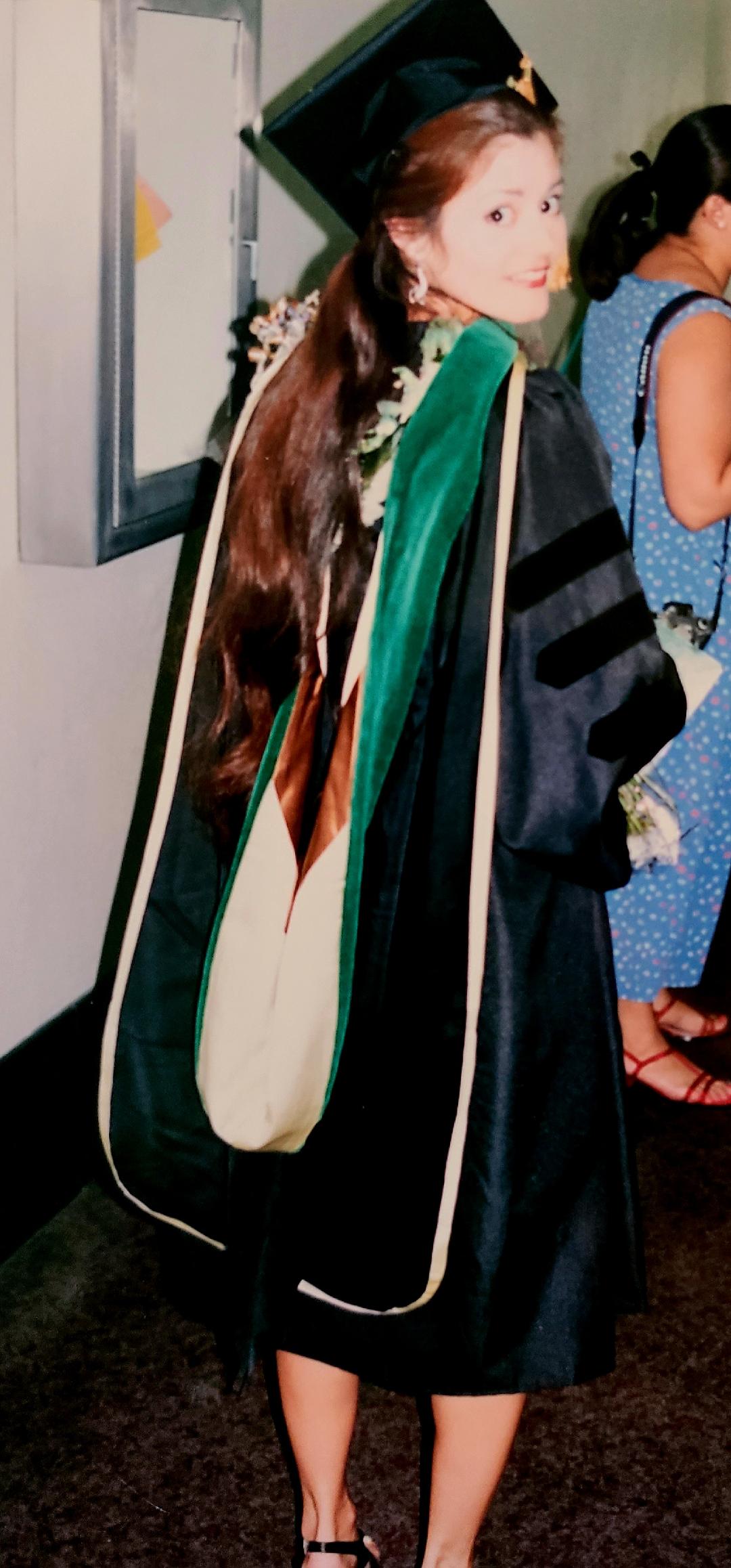
The Hood I Wore At Medical School Graduation

Image 123rf.com
Image ID44309817 tong70

There’s something undeniably powerful about donning a hood during a graduation ceremony, especially since it marks the culmination of years of hard work in a graduate or professional program. When you walk up to the center stage, hood draped across your shoulders, it’s like a visual representation of the dedication, sacrifices, and intellectual growth you’ve achieved. The hood symbolizes a kind of academic mastery—it’s a historical garment, evoking the traditions of scholars going back centuries. You can almost feel the weight of those who’ve come before you, standing on the shoulders of giants as you approach the moment when the degree is officially conferred.

As you take each step toward the stage, there’s an immense sense of pride. You’ve earned this. The hood feels like a badge of honor, a marker of your journey through intense learning, late nights, and possibly even moments of doubt. But all of that fades in the glow of the moment when your name is called, and you walk forward to receive your diploma. There’s a certain grace in the ceremony, too—the rhythm of the procession, the silence that fills the air, and the way the hood falls perfectly over your attire, a quiet but unmistakable signal that you’ve reached an academic pinnacle.

The most meaningful aspect of donning the hood for me at my medical school graduation ceremony was that I asked my mom to put it on me when I walked onto the stage to receive my diploma. My mother always believed in me, encouraged me, and was beaming with pride on the day that I graduated from medical school. I couldn’t imagine anyone else placing the esteemed hood across my shoulders.

A very special day in 2001 for me…

Another cool aspect is how the hood is often tied to your field of study through its color. Each color has a specific meaning, representing the different types of graduate studies or professional disciplines. For instance:

  • White often symbolizes a degree in Arts, Humanities, or Letters, evoking clarity, light, and knowledge.
  • Purple is typically associated with Law, representing authority and the prestige of the legal profession.
  • Green might be worn by those earning degrees in Medicine or Public Health, symbolizing healing and growth.
  • Red is often linked to Theology or Divinity, reflecting the historical connection to religious institutions.
  • Dark Blue or Navy signifies Philosophy, capturing the intellectual depth and complexity of the field.
  • Yellow or Gold can represent Science, linking the pursuit of knowledge with the brightness of discovery.
  • Silver Gray is a color worn by those in the field of Social Work or Library Science, representing service and support for the community.

The fact that each color is tied to a discipline makes the hood a visual and symbolic tribute to the unique paths that graduates have taken. It’s like wearing your field’s identity proudly for a moment before the real world asks you to put your knowledge to use. There’s an elegance in the subtlety of these colors, the way they convey a deep history while celebrating your own place within it.

The hood isn’t just an accessory—it’s a symbol of a journey and a transition, from student to professional, and from learner to expert. The way it fits, the way it feels on your shoulders, and the way it marks your success is incredibly meaningful. How did you feel about the moment of walking with your hood at your graduation?

Daily Duolingo Sessions

My streak as of March 17, 2022

As of today, April 12th, I have completed a 567 day streak on Duolingo, and I have every intention of continuing my daily language practice on the user friendly app. I began this streak with Japanese and Spanish as my daily languages, and added Portuguese at the beginning of March because I want to have some familiarity with the language when I visit Portugal in May. Duolingo is an excellent app for brushing up on languages or even learning a new one, and Duolingo Plus is only $84 per year. For that price, you can practice as many languages as you’d like.

I have practiced a bunch of languages, besides the ones I mentioned previously, on Duolingo over the past several years (French, German, Hungarian, Latin, Italian, and Hawaiian), and I love the fact that I can jump back into practicing any of those languages if I’d like. Though I took French and Latin in high school, I am rusty in those languages, and I only know a small amount of Hungarian, German, Italian, and Hawaiian. It is important for me to polish my Spanish speaking and reading skills constantly, not only because I was immersed in it when I would visit my dad and his children from his second marriage, but also because I don’t want to lose the skills I learned from Spanish classes I took throughout grade school, high school and college. I also feel a responsibility to learn as much Japanese as I can, since I am half Japanese, took Japanese in college, and intend to visit Japan again in the future.

Duolingo truly is a fantastic way to learn any language which is in their system. I highly recommend it!

Ten Words You Need To Stop Misspelling

https://theoatmeal.com/comics/misspelling

https://theoatmeal.com/

Check out Matthew Inman’s amusing blog post which covers ten words he believes people should stop misspelling. I must say that I agree wholeheartedly with Matt regarding the issue of misspelled words. For those who are interested, you can even purchase a poster of the blog post, which could serve as a not-so-subtle reminder to those afflicted with spelling and grammar faults to pay attention.

The Men Who Built America – Financial Titans

When I was a child, American history was taught in a very static manner.  We were expected to memorize important dates and factoids, to the point where epic points in history like the Industrial Revolution, though pivotal and vital to the development of America, seemed dull and uninteresting.  It took imaginative historical books which I have read over recent years, and shows such as “The Men Who Built America”, for a keen interest in American history to ignite within me.

Most recently, I stumbled upon “The Men Who Built America” right around Halloween when I was searching on Amazon Prime Video for an entertaining show to watch. What caught my eye was the fact that the television series was described on IMDB as a miniseries which “shines a spotlight on the influential builders, dreamers and believers whose feats transformed the United States, a nation decaying from the inside after the Civil War, into the greatest economic and technological superpower the world had ever seen. The Men Who Built America is the story of a nation at the crossroads and of the people who catapulted it to prosperity.”  Those words were enough to draw me in.

The focus of this series centers around the lives of Cornelius VanderbiltJohn D. RockefellerAndrew CarnegieJ. P. Morgan, and Henry Ford.

Check out these descriptions of the episodes:

1 “A New War Begins” Ruán Magan David C. White, Keith Palmer October 16, 2012
Cornelius Vanderbilt grows from a steamboat entrepreneur to the head of a railroad empire, and gets into a heated rivalry with James Fisk and Jay Gould; the up and coming John D. Rockefeller founds Standard Oil. Many business owners lay their own rail lines which leads to the Panic of 1873. Later, Rockefeller starts to expand his wealth by diverting his business from the railroads to a new innovation, oil pipelines.
2 “Bloody Battles” Patrick Reams David C. White, Keith Palmer October 23, 2012
Andrew Carnegie builds an empire around steel, but finds himself struggling to save face after the ruthless tactics of his business partner, Henry Clay Frick, result in both the Johnstown Flood as well as the bloody 1892 strike at the Homestead Steel Works.
3 “Changing the Game” Patrick Reams David C. White, Patrick Reams, Keith Palmer October 30, 2012
J. P. Morgan proceeds to banish the dark with the direct current electric light of Thomas Edison, but the two soon face serious competition from the alternating current of George Westinghouse and Nikola Tesla. As the 19th century comes to a close, the titans of industry must try to work together to stop a new threat in budding politician William Jennings Bryan, who threatens to dissolve monopolies in America.
4 “When One Ends, Another Begins” Patrick Reams David C. White, Keith Palmer November 11, 2012
Rockefeller, Carnegie and Morgan team up to help elect William McKinley to the U.S. presidency by paying for his 1896 campaign, to avoid a possible attack on monopolies. However, fate intervenes when McKinley is suddenly assassinated, and Vice President Theodore Roosevelt assumes the presidency and promptly begins dissolving monopolies and trusts in America. Meanwhile, Morgan buys out Carnegie Steel to make Carnegie the richest man in the world, and Henry Ford designs an affordable automobile with his Model T and starts his own business, Ford Motor Company, which sets a new business model for companies to follow.

It was mostly my interest in finance which locked me into this series, but I also truly enjoyed learning about the historical impact which these great men had on a sophomore nation.  If you’re looking for a great series which is relatively short (you could binge watch this over a weekend), then this is for you.

Will You Ever See Your Abs? REPOST

real fat man

One of the most common questions I get from people is how to lose belly fat and get defined abs. Since a tight midsection is one of the most enviable and desirable body attributes, I am never surprised by these inquiries. I have noticed that there is a relatively common misconception that defined abs come solely from exercise, which is definitely not the case. While a certain amount of development in the abdominal muscles must be present for the washboard appearance which many people covet, an individual’s food choices often interfere with the quest for six-pack abs.

If you really want to see abdominal definition, you need to eliminate the following foods from your diet:

SUGAR
Processed foods (including crackers, luncheon meats, cheese, chips, breads)
Foods high in saturated fat (red meat, fast foods)
Salad dressing
Alcohol

Though it may be difficult at first to eliminate the foods listed, you will notice over time that your palate will adjust and that food cravings will subside. That’s because processed foods and sugar set up a vicious cycle in which you crave more bad foods when you consume them. Cut them out of your meal plan, and your cravings will subside. Another benefit of avoiding these foods is that you will avoid the rapid spikes in blood sugar and insulin which they trigger. Why is this important? Because sharp spikes in insulin release promote increased fat deposition in the midsection.

Another dramatic change which you need to make is to drink plenty of water daily. My general rule is to buy an attractive 1 liter bottle, fill it 3 times during the course of a day, and drink all the water you put in that container.

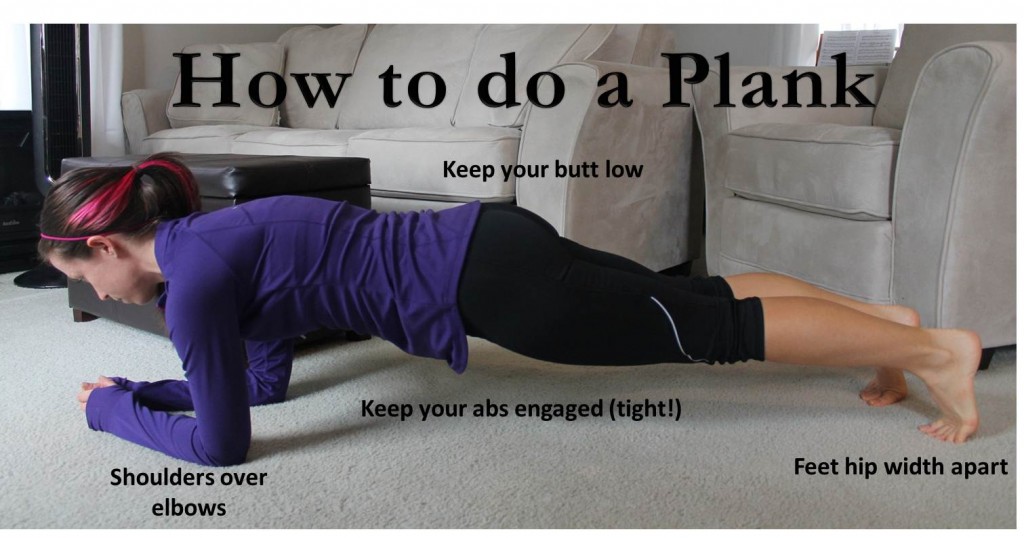
If your abdominal muscles haven’t seen a sit-up in years, you should also incorporate abdominal exercises into your regimen. Here are my three favorite abdominal exercises which work for everyone, from beginners to advanced athletes:

bicycle crunches
Katie-Bicycle-Crunches
ball crunches
basic-crunches-on-stability-ball
planks
Plank-1024x538

If you are consistent with making healthy food choices and getting regular exercise, chances are good that you will see a toned tummy if you are already at a normal weight. If you are overweight, the healthier food choices will help you to slim down and get rid of belly fat, putting you on course for a tighter midsection.

Looking For Fitness, Wellness, and Life Inspiration?


If you are looking for that fire which will encourage you to reach out towards your fitness, wellness and life goals, then be sure to tune into the motivating, inspiring podcasts at https://micro.fit/ where the motto is, “For big results, think small”. That’s right…small changes in your lifestyle can create dramatic results in your life!

I am honored to be one of the featured podcasters for this wonderful app! My podcast runs on Fridays, so be sure to check it out each week for new topics and fresh perspectives on life balance, goal setting, motivation and fulfillment.

Click on this link to access the podcast page directly:

https://micro.fit/podcasts

Of Bikinis And Medical Degrees

In contrast with the illusion that society is prepared to welcome empowered women with open arms, I have met with a tremendous amount of opposition when I am evaluated for my medical expertise. Wanna know why? Because I competed onstage in blingy bikinis, because I continue to model in bikinis, and because I am not afraid to flaunt what I am blessed to still have. And it pisses me off.

You would think that societal influences have relaxed enough to allow a female physician to flaunt her femininity without getting dinged for it, but I continue to encounter resistance. In keeping with this double standard, there aren’t too many female docs who are confident enough to push the envelope and post images which may be considered more alluring. Female doctors are expected to remain covered up, with very little skin showing, in social media posts. I’m not talking about jeans and a t-shirt. I’m talking about professional business attire and a white coat, or scrubs. Evidently women who are physicians aren’t allowed to reveal who they are outside of the clinical setting. That’s ridiculous, and I refuse to give in.

If a client has a narrow-minded view of physicians and expects me to fit the mold of an uber-conservative nerdy person, that client will quickly reject me. I think it’s utter nonsense that my credibility has been questioned, simply because I also happen to be a model. I have a LIFE. I have a certain manner of dressing which includes a certain fashion flair. The way I dress for work is by no means gaudy or slutty, but because of my abhorrence of ultra conservative clothing and the white doctor’s coat, it is obvious that I refuse to play the stereotype game.

Tell me this: how the hell am I supposed to feel empowered when narrow-minded idiots insist on throwing their judgment on me? I admire a strong, intelligent, educated, accomplished person who also happens to beat the aging process and who isn’t afraid of flaunting it. Such people are courageous, not scandalous.
As a fully credentialed, board certified physician who also happens to be deeply involved in fitness, bodybuilding and modeling, I know that I stand out a bit in a sea of medical professionals, and to be honest, I am proud of it. A good portion of the world also seems ready for such empowered career women, but when those women are being considered for an ad campaign or other large scale project, they are quickly criticized and cast aside for their fortitude and boldness.

I don’t see why I should feel a drop of shame for modeling in bikinis. What the &*%@ is wrong with bikinis? Women all over the world wear bikinis, and even dare to go sans suits in some locales. So why should I be made to feel like I am being scandalous if I model in a bikini? I have modeled my entire life, and I have no plans to stop at all, especially if I have a physique which is bikini-worthy.

My life is so varied, full and exciting that I can easily escape the dry and often depressing climate of medicine and enjoy something that has twists and turns. None of my other pursuits diminish what I bring to the table as a healer. If anything, they add a humanness and relatability which I think my patients appreciate. I have said before and will say again that I have never been, nor will I ever be, a “typical” physician (whatever that means). So don’t try to mold me into something I am not.

My Website Has Been Revamped and Updated!

Hey folks! My main website, https://www.staceynaito.com/, has a new look and greater functionality for 2017. Three of my websites were consolidated into a fantastic main site which enables you to navigate through Fitness and Nutrition Plans, Contest Prep Services, Fitness Products for sale through affiliates, Hormone Balance Consultations, Autographed 8×10’s, a Gallery full of updated professional images, Bio, and my Blog.

Check it out!

https://www.staceynaito.com/