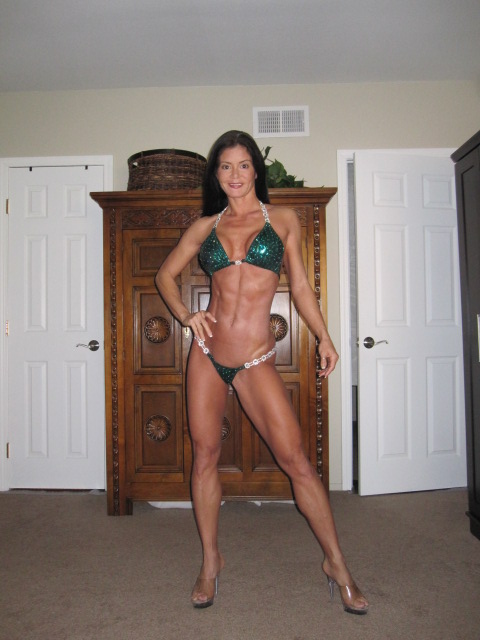
As a physician I am as much a therapist as I am a physical healer and am well aware of the vital connection between mind, spirit and body. I have also seen how closely linked emotional stress is to development and exacerbation of physical ailments. What concerns me is when people abandon healthy habits when adversity hits them because it is at those times that some structure would provide balance to their lives.
A common question I hear from patients, clients and strangers I meet is, “how can you maintain a regular exercise schedule and pack your food all the time with your busy careers?”, to which I respond, “I just do it.” Working out and eating right are as essential to me as sleeping and brushing my teeth. It never occurs to me to abandon healthy habits during stressful times. I recently went through a particularly difficult month during which I went through a residential move, took two family practice board recertification exams, attended a major medical convention out of town for several days, and attended a three day fitness seminar, all while working at the three offices I usually work at, attending meetings, visiting my mother in the nursing home each week, and calling my favorite aunt and another elderly friend every week like I had been doing for years. I did not miss my workouts at all. There were only a couple of days when I was not on my usual food regimen only because my food had spoiled during the move.
Why would I push myself like this? Because I know that consistency is key to maintaining balance in one’s life. When I am consistent with my workouts and food, I maintain structure and focus and do not allow excuses of an insanely busy schedule to deter me from my mission to live an optimally healthy lifestyle. Every day I make an important investment in myself.
If you make an investment in yourself by being consistent with your exercise and meal habits, you will be rewarded with greater balance in your life and better health. Don’t you deserve that?

Stretch marks form as a result of rapid stretching from growth by muscle gain, fat gain, or pregnancy. The most common areas in which they develop are the abdomen, buttocks, arms, hips, thighs, breasts and calves. There is a strong genetic component, which means if you are predisposed to forming stretch marks, the more apt you are to develop them if a rapid gain in mass occurs.
However, even if your genetic blueprint dictates that you are more prone to getting these pesky marks, there are a number of things which you can do to minimze their formation.
1. Drink plenty of water daily. Aim for at least eight 8-ounce cups of water each day to ensure adequate hydration.
2. Increase protein intake to optimize collagen formation.
3. Decrease the amount of weight lifted at the gym to prevent very rapid increases in muscle mass. A 12-15 rep range is advised. I can already sense some readers balking at this, but there is a tradeoff: either have a more modest increase in mass over a longer period of time or gain mass rapidly and run the risk of developing stretch marks.
4. Take certain supplements. Make sure to take fish oil, flaxseed oil, zinc, and vitamins A, C, and D.= on a daily basis.
5. Eliminate sugar from your diet! Refined sugar breaks down the elastin in your skin, making you more vulnerable to stretch marks, early aging, and increased risk of scar formation from cuts.
6. Exfoliate your skin regularly. This sloughs off the dead skin cells, thus minimizing the appearance of stretch marks which may already exist.
7. Moisturize skin thoroughly and regularly. For many years cocoa butter cream has been used by pregnant women to prevent stretch marks, but there is no final verdict on whether it has any benefit. However, I love cocoa butter’s emollient effects and believe it should be added to an anti-stretch mark regimen. Vitamin E oil is another excellent moisturizer which can be applied to stretch marks or areas which are the most prone to their formation.
8. If you develop new stretch marks, you can use prescription tretinoin on a once daily basis with decent results. Just make sure that the stretch marks you are treating are less than six weeks old. Other topicals such as Tri-Luma and Stri-Vectin also may be used with some benefit.
9. As a last resort for existing lesions, you may consider laser skin resurfacing or micro-needling.
I have now competed in thirteen pro-qualifying NPC/IFBB Bodybuilding contests since 2009, yet I have not attained the IFBB Professional Status that I have been chasing after. I am not going to deny my frustration and despondency over this fact, because I have worked so hard at every aspect of competing and have improved dramatically with each event. However, I have had a number of people ask me why I would continue competing if I have not been successful in reaching my goal by now. I have also been asked why I want that Pro Card so badly. Some individuals have gone as far as to suggest that I switch organizations, which is something I will NEVER do.
Let me put it in plain terms: I have set IFBB Pro Status as a personal goal, and it dangles before me like a carrot. Yes, I have made more sacrifices than you could imagine in order to compete, and yes, I have scratched my head wondering why I have gone up for four National-level Overall comparisons and have been passed up for a Pro slot every time. But I will NOT be deterred or discouraged from continuing to compete. When I train as hard as I do, I notice continued improvements in my physique which are a direct slap in the face to the aging process. I LIKE chasing after goals and will not give up just because this particular goal continues to elude me. Perhaps it hasn’t been my time, the stars and planets were not aligned properly, or I just wasn’t the right flavor for the judges’ eyes that day. Whatever the case, I love competing, which is why I have already begun formulating my strategy and show schedule for 2013.

IFBB North American, 2012
I will definitely return to the stage next year. Watch out, world!
I admit that abdominals are my favorite of all the body regions to train and have been for my entire adult life. In fact I cannot think of a single time that I balked when it was time in my training split to work my abs. This makes designating a particular abdominal exercise as my favorite especially challenging for me, since I consider very move to be a valuable component of an abdominal routine.
After having evaluated the level of motivation I have during each abdominal exercise, I have determined that my top abdominal move is the decline bench crunch. If you have not performed this exercise before (and yes, I realize that many of you are already familiar with this move), I would highly recommend that you incorporate decline bench crunches into your routine. Decline bench crunches are excellent at targeting the rectus abdominis and hip flexors due to the increased range of hip flexion which occurs on a decline bench.
Adjust a decline bench so that it is at a 30 to 45 degree angle (the more advanced you are, the greater the angle you can use). Sit on bench with your feet hooked under the rollers and lie back on the pad with your arms folded across your chest. Exhale as you bring your head, shoulders and back off the pad, coming to a full sit up position, then return slowly to start position. You can perform 12 to 20 reps per set, 3 to 5 sets, but I will admit that when I do decline bench crunches, I perform 5 to 6 sets of 30 reps. If you crave an extra challenge, extend your arms overhead while you perform this move.
Decline bench crunches can also be performed with a twisting motion at the top of the move, recruiting the obliques and serratus anterior.
Those of you who are really looking to punch up this exercise can perform a weighted variation of this move in which you hold a dumbbell behind your head, hold a plate on your chest, or pull on a cable during the exercise.
After incorporating decline bench crunches into your training split, don’t be surprised if people begin noticing your washboard abs!
 All too often children formulate emotional associations with food which extend into adulthood. Some of us might have been coerced as youngsters into consuming every morsel on our plates, while others may have developed fixations on foods which delivered a feeling of comfort in the midst of stressful times. Many times the foods which appeal to us are very closely linked to our ethnic heritages and continue to tempt us when we find ourselves at family gatherings. I am half-Japanese and consequently grew up eating glutinous white rice on a daily basis as a child. When I began omitting this substance from my diet I recall feeling guilty, as though my Japanese ancestors would never forgive me for shunning a staple food.
There is no doubt in my mind that the food associations I had formulated as a child set the stage for aberrant eating. Once I entered my late teens, I developed a pathological relationship with food which was intimately linked with the quest for perfection, and found myself inextricably trapped in guilt when eating calorie dense food items. Over the span of a few short months I developed the classic signs of anorexia nervosa, consuming a paltry amount of calories, taking laxatives and keeping a daily log of calories and fat grams consumed. Yet I was fortunate enough to overcome this disorder within a year.
I have been successful over the past two decades in maintaining a healthy relationship with food. However, there are rare occasions in which I am tempted to indulge in forbidden foods, especially during the last couple of weeks prior to a competition. In an effort to assist others in “staying the course”, I have defined three primary guidelines which have been instrumental in keeping me in line.
A particularly insidious relationship with food is one in which eating is a mostly emotional event. One may stubbornly insist on indulging in cultural comfort foods, rationalizing that they define one’s character. Though it was challenging for me to omit sticky white rice from my diet, it became easier over time. When I allow myself this rare indulgence, my gut will rebel within minutes, thus reinforcing the message that such cultural ties are not worth the gastrointestinal insult which ensues.
Those who are involved in contest prep follow rigid meal plans which place “regular” foods on the banned list. If strong emotional ties to food exist, avoidance of forbidden foods may be a torturous undertaking. However, by regarding food simply as fuel which the body requires for optimal function, the emotional component can be virtually eliminated. I have noticed that when I am less than thrilled about consuming prepped meals consisting of asparagus, green beans, spinach, tilapia, or salmon, I simply remind myself that these foods are considered fuel and that they serve specific purposes. I also pay attention to how my body processes these foods versus how it fails to properly digest prohibited foods.
I can already hear readers grumbling about the arduous ritual of food prep because it invariably occupies a good portion of at least one day of the week. However, prepping meals ahead of time and having them stored in individual storage containers acts as an insurance policy to prevent any dietary transgressions. When I consult patients for weight management I make sure to show them my food cooler and explain to them that I travel with my food on a daily basis. I go to such an extent that I will attend dinner meetings and social events with my food in tow. People will frequently shoot odd glances in my direction, and some may even ask why I would do such a thing. These queries often take place while a calorie-laden dessert is being served and various individuals are lamenting about how said dessert will derail their efforts to shed the excess pounds they have been carrying around. However, I never have to worry about scrambling to find clean food items as long as I remain adequately prepared.
Hunger is a primary biological drive which signals a departure from a balanced physiological state known as homeostasis and which is essential for our survival. This drive is so deeply rooted in our evolutionary history that the main regulator of hunger and satiety, the hypothalamus, is also one of the oldest portions of the brain. There also exists a potent psychosocial component to the hunger drive which may at times supersede the biological element. Thus it is important to differentiate between a pure physiological need for sustenance and a psychological one, especially when the food sources contain little nutritional value.
By tuning into one’s biological need for food and permitting the body’s natural feedback loop which signals satiety, overeating can be avoided. There is some research which has revealed a slight depletion of dopamine receptors in the brain. The very neurotransmitter which is a driving force of hunger and which generates a mild euphoric feeling during meals is hence depleted during binges, and has also been found to be depleted in obese individuals. This engenders a vicious cycle in which one needs more food over time to generate the same feeling of euphoria.
Most people have experienced the physical discomfort which comes with consuming excessive portions of food, but consider what physical symptoms may manifest after such a session:
The most prudent course of action when sitting down to a meal is to remain aware of the body’s response to the foods ingested and to discontinue the activity if there are clear signs of discomfort or pain.
Though it can be challenging to develop relatively neutral responses to foods which may have in the past evoked feelings of joy, or conversely, revulsion, such neutrality will ensure that the power remains with the individual, and not with the food items.
The first image is from my very first competition in July 2009 when I knew nothing about how to prep for a show. The second image is from May of 2012.

This was my 16th competition over four years. I have worked very hard to transform my physique from “average” to “DAMN!”. All the hard work was work it!

This was from my first competition…boy was I clueless about how to prep for a show!

 Thank goodness for progress…I have come a LONG way in four years…
Rounded glutes have never been more fashionable or desired as they are now, so in keeping with this trend, I am posting a glute-punishing routine here which is sure to grow a tighter, rounder posterior. Make sure you move through this routine quickly, resting no more than 30 seconds between sets. If you aren’t dripping sweat through this routine, you aren’t pushing yourself enough!
Prone Leg Curl – 20 repetitions, then move to One-Legged Dumbbell Deadlifts – 15 repetitions, then move to One-Legged Cable Kickbacks – 20 repetitions
Repeat above sequence 5 times.
Walking Dumbbell Lunges – 15 repetitions, then move to One-Legged Leg Press (lying on your side and pushing through your heel) – 15 repetitions, then move to Plie Dumbbell Squats (holding DB between legs and squatting LOW) – 20 repetitions
Repeat above sequence 5 times.
Butt Blaster – 25 repetitions, then move to Jump Squats – 20 repetitions, then move to Good Mornings – 15 repetitions
Repeat above sequence 4 times.
Add this routine to your leg workouts twice per week and don’t be surprised when your booty fills out your jeans!
 dr. stacey naito's blog