Category Competitions
Hindsight is 20/20: Weight Training Then Versus Now
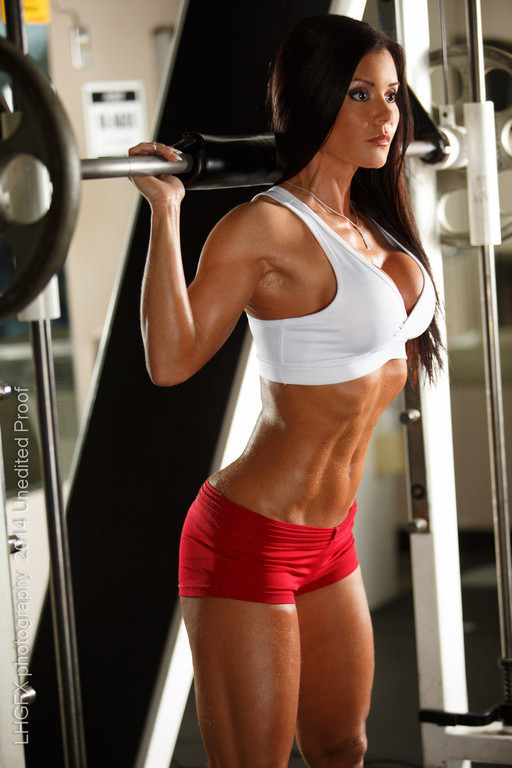 This article details the five most important things I have learned about training since I began weight lifting over 25 years ago. When I think back on how little I truly knew about the methods and motivation behind working out, I realize that I have come a very, very long way. It was no accident that I obtained an undergraduate degree in exercise science and a medical degree, because I have spent my adult life strongly driven to learn as much about the human body and its potential as I possibly could. However, there is so much warrior spirit and heart that goes into weight lifting, and it can never be taught, only experienced.
Lifting Lady Weights versus A Lady Lifting WEIGHTS
I began lifting weights when I was 21 years old, shortly after embarking on a mission to heal from a year-long struggle with anorexia which brought me down to 85 pounds and also sunk my spirits to rock bottom. At that time my main objective was to learn how to lift properly, which fortunately was supported by my undergraduate studies and eventual Bachelor’s degree. I was rail thin and weak, so it took some time before I made real gains in the weight room. I held the same misconception back then that many women have now, in which I had a fear of lifting heavy and getting too muscular as a result. More than 25 years later, I regularly dispel that myth by encouraging women to lift heavy weights and showing them that my physique, which is not overly muscular, is the result of some very heavy lifting over the last several years.
Maintaining a Nice Physique versus Raising The Bar
During the years preceding my journey into competitive bodybuilding, I never pushed myself to the next level because I honestly never saw the point. I was content with the degree of muscle I had built in my 20’s and 30’s and was surrounded by people who weren’t impressed with weight training, so I never set new goals. Since I was blessed with decent genetics which kept me at a low to normal body weight and a moderate amount of muscle mass, I was pretty complacent (though very consistent) about my weight training. Then I went through a dramatic shift in 2009 when I competed in my first NPC bodybuilding contest and had an “aha” moment in which I finally understood the insatiable desire to push on to the next level and continue to set the bar higher and higher. Essentially, I had been bitten by the bodybuilding bug, and it overtook me with a ferocity and intensity that I had never known. I know that if it hadn’t been for that dogged determination which made me hungry for top national placings and an IFBB Pro Card, I might never have become a Pro.
Competitions & Overtraining versus Paying Attention To Pain
Let’s just get one thing straight: ever since I began competing in 2009, I have become accustomed to training like a beast. However, when I began my journey towards obtaining IFBB Professional Status, my purpose was so singular that I was willing to train until I collapsed from complete exhaustion, a tactic which I now realize is pretty stupid since it wreaks major havoc on the body when practiced for many months or years. I now understand that it is NEVER worth overtraining, or training with injuries which won’t heal because the athlete never takes a break from lifting. Overtraining interferes with muscle gains, immune function, sleep cycles, joint health, mood and energy, and can trigger a complete metabolic meltdown if the athlete continues overtraining for an extended period of time. Though my body’s creaks and groans, along with chronic pain issues from rotator cuff tears in my shoulder and severe tendinitis (IT bands, forearms, feet) were what caused me to finally ease up on the intensity of my workouts, I only allowed myself to pull the reins back AFTER I got my Pro Card. Once the beast had been slain, I fully embraced the idea of training smart and listening to my body’s pain cues
Hurry Up Before It’s Too Late versus Improving With Age
Before I began competing, I honestly believed that there was a freshness date stamped on competitors which essentially relegated them to the dinosaur pits by the time they reached 35 or 40. So I became positively giddy when I discovered that there was a masters’ division in bodybuilding and that I could strut my 43-year old booty onstage without risk of embarrassment. I regarded each subsequent contest as a chance to improve with age, thus using my competitions as a means to beat Father Time. Through my competition journey I have also met other bodybuilding and fitness devotees who do an outstanding job of proving that one can never be too old to be in great shape.
Seeing Clients/Patients One-On-One versus Impacting The Masses
If someone had told me back in 2009 (my first year of competing) that I would build a global following in a couple of years, I never would have believed it, especially since I had become so accustomed to working with fitness training clients and medical patients on a one-on-one basis. My passion for fitness became supercharged when I began competing, and I was so enthusiastic about sharing that passion that I turned to websites and social media platforms to demonstrate favorite exercises and contest video footage. Without thinking about it, I had put myself in a position to lead by example, and used my knowledge, educational background and experience to build fan loyalty and inspire and motivate my followers and fans. To this day, I love getting messages from fans who say that it was because of me that they decided to start competing or to pursue another personal passion which gave them joy and also graced them with optimal fitness.
These days, I often refer to embarking on a fitness and wellness regimen as putting the oxygen mask over one’s own face. That was exactly what I did for myself over 25 years ago. By showing others how to do the same thing, I feel completely in line with my life’s purpose, and it’s extremely rewarding.
No Excuses Calisthenics Training Video Series On RxGirl: Plank Jacks
What Do You Bring To The Table? Know Your Worth
Original post can be found at
Last month I wrote an article in which I discussed different levels of athlete sponsorship and the tendency of some sports supplement and fitness related companies to use athletes as unpaid salespeople under the guise of being sponsored. This month I am flipping to the other side and discussing athlete value, i.e., what the athlete SHOULD be bringing to the table in terms of marketability, knowledge, and salesmanship when approached for a sponsorship. Both the company and the athlete should have something to offer the other party so that the relationship is a healthy symbiosis which promotes both parties. Essentially, when an athlete and a company work together, they should be working as a TEAM so that everyone can benefit from the union, but this doesn’t always occur.
In some cases, athletes will work tirelessly to promote a brand for little or no compensation, while in others, supplement and fitness related companies put their energies into an athlete, believing that the athlete will enhance the brand, only to have an athlete take advantage and become extremely lazy and neglect his/her end of the deal. While there are athletes out there who have tremendous value and who have built laudable reputations through inspiring articles, e-books, and client transformations, there are countless more who have an exaggerated sense of self-entitlement and who believe that simply because they graced the stage once or twice, they deserve to have everything handed to them for free.
If you are new to competing or to the fitness world in general, you need to be aware that it takes time to build your own brand and to find your place in the industry. Perhaps the best thing you can do at this point is to assess your value and what you truly bring to the table. Companies which are looking for brand ambassadors want someone with a following and a unique presence or message which is congruent with their brand philosophy, so if you aren’t there yet, you had better start working on building your own value.
Let’s start with physical appearance. Those who are successful in the bodybuilding and fitness industry have great physiques which they continue to improve upon over time. Individuals who maintain a relatively consistent weight and conditioning level throughout the year tend to fare best as well since they are close to shoot/contest ready almost all the time. Some of the top signed sponsored athletes are also some of the best looking people on the planet! I’m not saying that you have to have movie star good looks to land sponsorships, but it certainly doesn’t hurt. This is when you need to be VERY realistic about yourself and what you bring into the mix. You should be blessed with good looks or a distinctive, appealing look, or at the very least be photogenic if you expect to land a sponsorship with one of the bigger supplement companies.
Perhaps you are just average looking, or have a face only a mother could love, but you ooze sex appeal and charisma. If you are blessed enough to have such an energetic pull on people, this could work in your favor during booth appearances and videos, and increase interest in the brand you are representing. You are also far more likely to get picked up by a company if you have an enthusiastic and positive attitude. In keeping with this, you should only work with companies which sell products you truly believe in and like, because your enthusiasm for the products will come through naturally as you promote them.
Another valuable trait which increases an athlete’s value is integrity. People who do well in the fitness and bodybuilding industry and who have longevity within it tend to be truthful, sincere, and have strong values. You must have a strong backbone to survive in this highly saturated and fickle industry, and that only comes with knowing who you are and honoring your personal beliefs. If you sell out and take shortcuts, you run the risk of having a very short-lived career.
One of the most powerful ways to connect with your core audience is to show your human side and share stories which allow your followers to relate to you. It doesn’t matter if you show your own body transformations or those of your clients, as long as followers can see a before photo which they can relate to and an after photo which inspires them to take action. Such inspiration becomes even more powerful when you offer to help followers to reach their fitness and wellness goals. People begin to believe in YOU, and that can give you the leverage you need to promote a product line for a brand you represent.
If you have experience and education in fitness, nutrition, business, advertising, medicine, physical therapy, massage, or any other field which may be relatable to your journey in fitness and to the people who follow you, it’s a good idea to fortify such knowledge by becoming an authority. You can do this by creating videos, blog posts and books which showcase your knowledge. This can make you especially valuable to supplement and fitness companies which are considering bringing you on board because you can offer your knowledge as part of the deal which you negotiate with them.
Many companies assess the popularity and reach of an athlete through social media numbers, a tactic which can edge many athletes out of the running for top sponsorship spots if numbers are all they care about. Some athletes have purchased followers or promoted their profiles by paying for them, which has worked in their favor when securing sponsorships, but I don’t recommend this route since many of those paid followers won’t buy products which the athlete promotes. Then there are athletes who desperately want to work in the industry and obtain sponsorships, but have built their following solely on sexy half-naked photos of themselves. These athletes (mostly women) have resorted to using their social media channels solely as a means to post scantily clad selfies which ostensibly generate a ton of likes from the opposite sex. Every athlete who lowers his/her standards to this point where the only value generated is from smutty photos is sure to find that there is no legacy to speak of as time goes on and looks fade.
Even if you build your value and show consistently that you have a strong work ethic, you must continue to meet your end of the bargain. Sometimes companies will give you product as a trial run to see what you will do with respect to adding value to the brand. Some athletes will ramp up slowly, while others will jump right in with social media posts and will do all they can to promote a product. I have also seen some athletes start out as strong cheerleaders for a product, only to fizzle out because they lack self-discipline and consistency. Of course this can also occur on the company’s end, so it behooves both the athlete and the company to check in with each other regularly to make sure that everyone is happy.
My Hot Dress At The IFBB Ferrigno Legacy November 28th


Here’s one of the best photobombs on one of my photos that I have seen in a while!
My New Six Pack Bag Innovator Mini Is Awesome!
Get The Best Skin Ever- Part 1: Lifestyle Adjustments

Please read my RxGirl article on making lifestyle adjustments that will transform your skin. You can access the original article by clicking on the link above, or keep reading here for the full article.
“What skin cream do you use? Your skin looks amazing!”
This is a common exclamation from women who admire the flawless skin of those who are either naturally dermatologically blessed or have been proactive about practicing good skin care. Perhaps you are one of the blessed individuals, but most women deal with acne, wrinkles, oiliness, hyperpigmentation, dry skin and dark circles under the eyes, all of which can be addressed with targeted products. If you practice consistent skin care with the right products, you will see improvements in the tone and quality of your skin.
Before delving into topical products in Part 2 of this article, I will utilize Part 1 here to review the many variables which can dramatically influence the quality of the skin.
Sleeping Beauty –
There’s a lot of truth to the adage about getting one’s beauty sleep. When you get adequate sleep, you optimize your body’s ability to repair itself because it has a chance to release human growth hormone in the deep stages of sleep. Conversely, cheating yourself out of a good night’s sleep results in an increase in cortisol release, which increases the amount of inflammation in the body. Basically, the inflammation prevents your cells from repairing damaged collagen, and if this occurs chronically, your skin will adopt an aged appearance. So get some quality shut-eye every night!
Don’t smoke –
I know most of you ladies don’t engage in this habit, but if you do, bear in mind that the habit breaks down the collagen and elastin in your skin, aging you prematurely. Smoking also constricts the blood vessels in the upper layer (epidermis), which interferes with delivery of oxygen and other vital nutrients which are involved in cell renewal. Lastly, the constant pursing of the lips which occurs while puffing on a cigarette causes fine vertical lines (“smoker’s lines”) to develop around the mouth.
Internal antioxidants –
We have all heard of the benefits of daily antioxidant intake and how these nutrients boost the body’s immunity, decrease inflammation, and even improve cognition, so it shouldn’t surprise you that antioxidants also promote cellular repair in the skin as well. Make sure to incorporate foods and supplements which have antioxidants such as vitamins A,C, E, cofactors like CoQ10, and polyphenols like resveratrol in them.
Hydrate from within –
Drink plenty of water, and you will be rewarded with glowing, healthy skin. Every time I have told a patient who suffered either from dry skin or from stubborn acne to drink plenty of water, I have seen dramatic improvement in the quality of their skin after they began drinking at least three liters of water per day. Adequate hydration will ensure that toxins are flushed out of cells and the cells are filled with water.
Healthy fats –
One of the hazards of competing is the tendency for coaches to completely strip dietary fat from contest prep diets. What results is a gaunt, unhealthy, aged appearance in the face which looks terrible and just screams for dermal fillers. Rather than wreak havoc on your youthful appearance, why not keep healthy fats like avocado, MCT oil, coconut oil, olive oil, flax seed, almonds, cashews, and fish oil in your daily regimen?
Limit alcohol –
Alcohol is notorious for dehydrating the skin and for that reason alone should be ingested in moderation. Also, since alcohol is toxic to the liver, it impairs the body’s ability to remove other environmental toxins which will be reflected in the quality of the skin. And for those of you who suffer from rosacea, that relaxing glass of red wine with dinner is a big no-no because it will aggravate the condition.
Clean makeup brushes –
When was the last time you cleaned your makeup brushes? Makeup brushes should be thoroughly washed on a regular basis to remove product build-up, bacteria and oils. If you suffer from acne, you need to be especially diligent about cleaning your makeup brushes regularly. As a general rule, clean foundation and concealer brushes at least once a week (twice a week if acne is a major issue). Eye makeup brushes should be cleaned every two weeks, and other brushes should be cleaned monthly. There are some excellent brush cleaning solvents, but you can mix one part baby shampoo with four parts water for an excellent and cheap brush cleaner.
Sanitize cell phone –
Cleaning your cell phone on a regular basis is a good sanitary practice to adopt, and can also save your skin from acne breakouts and rashes. Think for a minute how much you touch your phone and how much dust, ear wax and fingertip residue can accumulate on its surface. It’s no surprise that putting this bacteria- riddled device next to your cheek can cause skin flare-ups to occur. The best way to clean your phone is to use a soft cloth which is lightly sprayed with a dilute isopropyl alcohol solution (equal parts iso alcohol and water).
Stay tuned for Part 2 of this article which will cover topical products and treatments for luminous, youthful skin!
Oil and Water: Is Crossfit Detrimental For Developing Aesthetic Muscle?
Original post can be found at: http://sportsnutritionsupplementguide.com/training/crossfit/item/1389-oil-and-water-is-crossfit-detrimental-for-developing-aesthetic-muscle#.VGqav_nF-K0

I will boldly state right now that I’m not a fan of Crossfit, and will be delighted when its novelty wears off. I’ve dedicated my life to supporting, empowering, inspiring, guiding, coaching and otherwise promoting any activity that gets people moving. This is one reason I waited to publicly write about my arguments against the principles of Crossfit. The other more specific reason is that it’s become more common to hear NPC and IFBB competitors ask if Crossfit will enhance their efforts to get into contest shape. If the latter is you, let me cut to the chase. Not only will Crossfit widen your waistline as a result of the constant heavy “functional” lifting, it will also cause cortisol spikes, which make your body hold onto belly fat for dear life.
Before I get into why Crossfit is counterproductive to developing aesthetic muscle, a word to those who have found Crossfit gets them active, and has not caused them injury. Keep it up. If it’s Crossfit you need to keep you moving and motivated to be fit, don’t stop on my account. If however, Crossfit just doesn’t feel right, or your goal is to create your best body, and give you the best chance to stay injury free, read on. You’ll find that you don’t have to become part of the latest fitness craze to reach all of your fitness goals and then some.
CrossFit’s Unnecessary Nine
We begin our class with a review of the nine fundamental exercises that CrossFit is built upon:
Air Squat
Front Squat
Overhead Squat
Shoulder Press
Push Press
Push Jerk
Deadlift Sumo
Deadlift High Pull
Medicine Ball Clean
Oh boy, I can only imagine how many lumbar disc herniations have occurred in weekend athletes as a result of performing most of these movements, not to mention the rotator cuff strains and tears from the stress on the shoulders. First off, it just annoys me to know CrossFit renamed the free squat or bodyweight squat to Air Squat in an effort to be catchy and original. Then again, I see no point in getting a client to perform 200 or 300 “air” squats in a row, not unless your objective is to drive your client to complete exhaustion and overtraining. Based on what I have witnessed with the design of CrossFit regimens, exhaustion and overtraining is the inevitable outcome.
CrossFit routines also incorporate other exercises such as pull-ups and pushups. What bothers me here is that these movements are performed in a high rep range, to the tune of 100 or more. Then the client may be pushed to do tire flips or one of the Olympic lifts that CrossFit has managed to make faddish, even though they were developed over 100 years ago.
One of the calling cards to CrossFit workouts is training at “super high intensity”, which taken in correct doses are fundamental to conditioning. As it is used in CrossFit programming, the benefits are far outweighed by the negatives they incur. In CrossFit context, they tax the central nervous system to an excessive degree. Crossfit fanatics may love the feeling of being pushed to the limit, but this borders on being DANGEROUS. When the body is fatigued to the extent that it is in a Crossfit routine, the risk for muscle breakdown and frank rhabdomyolysis is considerable. No physical discipline is worth the risk of landing in the hospital.
I understand that Crossfit offers a great social environment and a feeling of camaraderie, but at what price? Every single person I know who is a fan of Crossfit has been injured while doing it. The suggested Crossfit regimen of 3 days on, 1 day off is too rigorous when you consider the fact that Olympic lifts are part of the core of Crossfit training. The body simply cannot repair itself in enough time. To fatigue a Crossfit client by having him/her do a WOD (workout of the day for those of you not familiar with Crossfit) and then stack on deadlifts for reps or 5 foot high box jumps is insane.
Benefits drop dramatically when the body is completely depleted like that. The Crossfit ideology of deplete and endure is BS. In contrast, bodybuilders and physique enthusiasts, train hard and heavy, and yes, they often train to depletion or failure, but they certainly aren’t going to attempt 100 pull-ups after destroying a traditional back workout. They understand the law of diminishing returns all too well.
Proponents of Crossfit often state that the training is functional and enhances the day to day activities which people perform. When was the last time you had to do a clean and jerk while on the job? Unless you work as a firefighter, stock room clerk or some other physically demanding work role, I seriously doubt that you are performing movements which mimic what happens while in a Crossfit box. Besides, if you’re injured as a result of Crossfit (or should I say WHEN), you can’t possibly perform any challenging physical movement which strains your injured body part.
For those of you who compete in the NPC or IFBB (or INBA, WBFF, etc.), don’t expect to be able to incorporate Crossfit into your contest prep training and sculpt your physique in the manner required for bodybuilding. I actually had a client who begged me repeatedly to let her do Crossfit two days a week despite my recommendation that she abandon it and focus on traditional weight lifting. I finally acquiesced, and allowed her to incorporate Crossfit as part of her training.
As I had predicted, she sustained an injury, her waist widened from all the heavy complex movements which made her midsection boxy, and she became soft as a result of the cortisol spikes which the high intensity Crossfit training created. After 3 weeks of seeing all her efforts from pre-Crossfit training unravel, I asked her to reconsider her decision to engage in Crossfit. As soon as she stopped doing Crossfit, her waist began to nip in, and her body began to tighten up again. Amen for old school weightlifting!
If it sounds like I am saying you will have to decide between doing Crossfit and competing in any of the bodybuilding divisions, I am. You simply cannot create the nipped in waist and beautiful taper that defines every single bodybuilding division. If you do Crossfit, you will create a strong body (plus some injuries), but you will also widen your silhouette and carry a layer of fat as a result of all that cortisol you will release from constant high intensity training. Look at a typical Crossfit athlete. Shoulders are broad, quads and hams are thick, and the abdominal region is thick and boxy. That is what happens when compound Olympic lifts are performed on a regular basis. If that is your aesthetic ideal, by all means knock yourself out with Crossfit, but you will be destroyed on a bodybuilding stage. On the subject of Olympic lifts, even power lifters have the sense not to rep out on these movements. Yet Crossfitters, blinded by the so-called warrior mentality that leads them to do stupid things that invite injury, will rep out on movements which recruit a tremendous amount of muscle fibers and hence tax the central nervous system. I am willing to bet that the Crossfit nation contends with adrenal burnout, permanent muscle damage, and repetitive tendon and ligament ruptures on a relatively consistent basis, and that such negative aspects will eventually cause the demise of this fad sport.
I will always staunchly defend the focus and the principles behind bodybuilding. I know that NPC and IFBB competitors are true warriors and know how to push through grueling training. I also strongly believe that for the most part, most competitors are smart enough not to over train or invite injury by performing movements which are biomechanically unsound. The world of bodybuilding not only rewards strength, but it also recognizes the aesthetic ideal which all bodybuilders aspire to achieve, regardless of division. Bodybuilding is not about flipping a massive tire across a gym, it’s about sculpting and defining muscle.
Are You A Sponsored Athlete Or An Unpaid Salesperson?
Original post can be found here:
Most sports supplement companies and other fitness related companies aggressively promote their products through athletes who can sing the praises of their benefits. Who could be better at describing the efficacy of a product and how it enhances training or recovery than an athlete who not only already uses those types of products, but someone who has a following and who can convince new customers to purchase from the company which they represent?
Here’s where things get problematic. The pool of bodybuilding and fitness athletes is pretty massive, and the waters are teeming with athletes who are anxious to get their so-called “big break”. As a result of this, savvy marketing teams from fitness related companies often sweep up these individuals because they are enthusiastic and can propel a brand’s exposure. All the company needs to do is to offer some free product to the athlete and provide instructions on how to use social media to get the word out that these products exist. Then the athletes post images of themselves holding or using products, and add affiliate codes so that any orders which are generated through that athlete’s post are credited to the athlete. This can be a great way for an athlete to make some extra money while competing or chasing down fitness related gigs and projects.
It is important to bear in mind that such athletes really aren’t sponsored, but are instead unpaid salespeople who provide free advertising and generate sales via social media posts which direct followers to product websites. Yes, they get commissions if they have affiliate codes, but such commissions are nothing to write home about unless someone is really blowing the roof off in sales. This is in stark contrast to a true athlete sponsorship, in which an athlete is paid to represent the brand as a brand ambassador. The sponsored athlete is chosen for his or her physique, performance history and awards, facial good looks, charisma, enthusiasm, and often the size of his or her social media following. Usually a sponsored athlete signs a contract which stipulates that he or she will receive a certain amount of free product, and in most cases will also receive financial compensation which is either paid via a monthly salary or via a contest stipend. Though the athlete usually agrees to a set requirement or recommendation to provide social media posts for the company at regular intervals, the company pays the athlete for his or her trouble. Personal appearances and events are also part of the sponsored athlete agreement and clearly described in the written contract. The sponsored athlete is compensated for use of his or her likeness on advertising materials as well.
Obviously it is a far better deal to become an official sponsored athlete for a company. Otherwise, you are just providing free advertising and cheap labor in exchange for products which are sold at a significant markup from what they are manufactured at. If you post a selfie with product that somehow goes viral, the company will certainly love the boost, but I doubt you will ever see any type of compensation if you aren’t a sponsored athlete, which means you provided your likeness for free. The truth of the matter is that there are only a handful of athlete sponsorships to go around, with a massive surplus of athletes vying for those spots. The athletes who end up getting sponsorships stand out from the crowd in some way, or fit a brand’s look and philosophy so well that it makes sense to bring them on board to represent a brand. The rest of the athletes must navigate through all the companies out there to try to find an arrangement which benefits them in some way. Sometimes it is easy to sell a product, usually because the athlete enjoys using it so much that he or she doesn’t mind providing free advertising or labor.
Sometimes a supplement company will launch a contest which is based on social media posts. One company, which shall remain unnamed, launched a huge campaign this year that was patterned on this idea, and decided to award 5 of the entrants $10,000. Sure, that sounds like a good chunk of change, but if there were 8,000 entrants, then 7,995 walked away with nothing. At the end of the campaign, the company got tons of free advertising and all those hashtags they requested for “tracking” purposes also propelled their brand in a huge way. To be honest, this is a brilliant marketing tactic, but not the best move for the majority of athletes who participated. I have also seen companies launch contests in which entrants must purchase a product, then post on social media with hashtags to enter the contest. This is another form of free advertising for the company, a great way to generate sales, a brilliant means for them to boost exposure, and yet another way for athletes to be suckered into doing free advertising. I don’t see much harm in taking part in such a contest if you truly love a product and want to proclaim it, but just remember that it works wonders as an advertising tool for the company without any benefit for you.
One thing I will never advocate is purchasing products, even at a steep discount, while also representing a brand as one of its “sponsored” athletes. If you are asked to pay for a product while also providing free advertising on social media channels, run quickly in the other direction! Basically you are dealing with a company which doesn’t value you enough as an athlete to provide compensation for your advertising efforts. This isn’t the same as purchasing a product, finding out you like it, THEN posting something on social media which lets people know how much you like it. I know of several athletes who had done this, which sparked the attention of the company which manufactured the product, eventually leading to a sponsorship deal. But do not, I repeat, DO NOT PAY for products as a way to get false sponsorship for a company.
It isn’t a bad thing to work as an unpaid salesperson in the fitness industry as long as you know your place and value. Once your following builds, the smart thing to do is to leverage your visibility into getting an athlete sponsorship. The main thing is to make sure that you don’t get taken advantage of in the process.
Corsets And Waist Training
https://www.yahoo.com/style/whats-the-deal-with-the-corset-training-101355906803.html
I am posting an article which I found the other day on Yahoo! Style which made me chuckle. Here is the original link as well. I will reserve comments until the end of the article.
To the ways you can attempt to whittle your waist — Slim-Fast, side planks — add one more: Corset training.
The method, which requires you to cinch yourself into a corset for four to six hours a day, is popular with celebrities and has been intriguing many other women seeking hourglass shapes.
Both Kim and Khole Kardashian have tried it. Kim posted a picture of herself yesterday in her mom’s foyer wearing a corset — hers is from a company called “What A Waist” — with the caption “I’m really obsessed with waist training!”
Jessica Alba is a fan, too. She actually wore two at the same time to help her lose weight after both of her pregnancies. “It was brutal; it’s not for everyone,” she told Net-A-Porter. “I wore a double corset day and night for three months. It was sweaty, but worth it.”
Self-described “corset fetishist” Kelly Lee Dekay, 27, has been doing corset training for seven years, and claims she has a 16-inch waist because of it. “I loved how Batman’s outfit let him channel a different side of himself,” she told the Sun. “That’s what the corset does.”
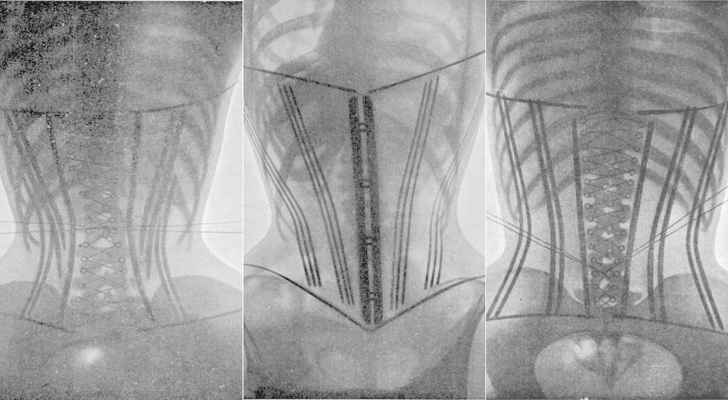
Women have worn corsets for ages. In the 1500s, they smashed down their entire torso. Later, in the late 1800s or Victorian era, they were used to help define the waist. It’s thought that the reason ladies back then were always fainting was because their corsets were squeezing their internal organs and restricting their breathing.
In these modern times, however, women now think that wearing a corset can actually help you lose weight. The Cincher by AMIA claims, “[It can] sculpt inches from your midsection and enhance your curves while increasing thermal activity in your core.”
According to TheCorsetDiet.com, you can shed up to six pounds a week by wearing one of their custom-made waist shapers. The UK-based company describes the pressure from its corsets as “gentle hugging feeling.”
But when writer Rebecca Harrington tried wearing one, albeit from a different brand, she wrote on NYMag.com, “My breathing is slightly impaired, but I can still breathe; I just have to take short, staccato breaths. I try to drink coffee, and it’s very difficult. After four hours, I whip off the corset and throw it across the room. My waist has red welts on it.”
In reality, doctors say that the corset is not — I repeat not — helping you reshape your body with simple pressure. It’s simply so tight around your stomach that you won’t — or can’t — eat too much, and doctors roundly decry any kind of corset diet or waist training as a viable long-term weight loss method.
“It’s outrageous, and it just absolutely makes no medical sense whatsoever,” Keri Peterson, M.D., a physician at Lenox Hill Hospital in New York told Women’s Health.
It also could be dangerous. Wearing one could actually shift or compress your internal organs and fracture your ribs, Dr. Jyotindra Shah said. “People might put it so tight that the liver, spleen and kidneys could get bruised,” she told The Huffington Post.
Even “corset fetish” Dekay knows she has to remove hers sometimes. “It can be restrictive when climbing stairs,” she told the Sun. “You can’t carry heavy things as you could hurt yourself. I don’t go to the gym in it. That would be very dangerous as I lift weights.”

Okay, here goes my commentary. I jumped on the corset bandwagon back in 2011 when I was informed that it was a very effective way to whittle the waist. During the time in which I diligently wore a corset (or two) several hours a day, every day, I noticed my waistline whittle down from 24 inches to 22-1/2 inches. So do I think it works? I KNOW it works.
I have to say I disagree with so-called doctors’comments that the corset prevents consumption of large amounts of food, thus resulting in weight loss. This just sounds like something one of my male colleagues would mutter. If caloric consumption is kept constant, women and men who engage in corset training WILL have a reduction in inches no matter what. This sounds like the typical uber conservative medical snobbery which makes other doctors the types of people I will NEVER choose to spend extensive periods of time with. I do agree that the practice of wearing a corset is outrageous, painful, and could be dangerous. But it DOES work. What price beauty?
Over the centuries, women have compressed their waistlines effectively with corsets, so it blows my mind that these narrow minded physicians have decided to toot their horns and express skepticism. As a physician who competes, I chose to give corsets a chance and had great results. I am glad that I didn’t allow the part of my brain which is trained in traditional Western medicine talk the competitor in me out of doing all that I could to make my waist smaller.
I would usually wear a neoprene wrap underneath my corset (or Squeem as it is somewhat affectionately called in the bodybuilding world due to one manufacturer brand), or one corset over a second. I would do this for at least 6 hours, sometimes as long as 14 hours. Was I uncomfortable? Yes. Did I sweat like a pig? You bet. Was it worth it? I think so.
I have dealt with the metal boning poking out as the corsets would wear out, and would glue them back into their channels, so I know all too well the sensation of metal poking into my underboob, my ribcage or my hip bone when the corsets began wearing out. I would have digestive upset, abdominal pain, and at times had difficulty breathing. During one stretch of time when I was wearing latex corsets, I developed painful lesions all over my back from the yeast overgrowth which resulted from the long hours of wear and the constant sweating. It took me over a year for my skin to heal from all those lesions, and I have a couple of permanent scars to mark my determination to sculpt a waistline that would win a Pro Card. Thankfully, I won that Pro Card in 2013 and almost immediately tossed the corsets aside.
Now I wear corsets from time to time if I feel the need to squeeze out extra water from my midsection, but I will probably never return to the days of wearing corsets for many hours, driving to work in pain because a metal boning was jabbing me in the rib, sweating profusely under nice clothing, and dealing with skin around my midsection which was constantly macerated, lighter in pigment, and showing signs of skin breakdown.
I know you ladies want to slim down the midsection, but please be careful when you wear corsets! It isn’t worth ruining your skin and compressing organs to wear these torture devices for extended periods of time. Give your skin and your torso a rest in between the sessions during which you are training your waist. I recommend wearing corsets for a 4 hour stretch.
 dr. stacey naito's blog