Women’s Health & Fitness: Relationship-Based Solutions For Female Clientele Of Any Age

Please click on this link to read the original blog submission for the month of May in which I was a featured contributor:

http://us9.campaign-archive2.com/?u=2a517c301526ee432715a7f55&id=a975e73eed&e=fe80cede46

Many women can often be intimidated by health club or gym environments for a multitude of reasons. Women who don’t have a clue how to use unfamiliar exercise machines may find the experience of navigating through a whole collection of them rather terrifying.

As if that isn’t enough, some women question their ability to perform exercises with the necessary degree of coordination, balance and strength. Other women may hold onto the common misconception that lifting weights will make them extremely muscular and masculine, so they will shy away from free weights and weight machines, opting instead for more aerobic style activities. What is remarkable is that once these women are educated on the importance of regular exercise and proper nutrition, they experience profound health benefits which impact every aspect of their lives.

Gym owners who are willing to make an effort to address the unique concerns of women have a wonderful opportunity to build trust in their female clients, while also potentially increasing revenue by offering classes, training packages, classes, supplements and apparel which are designed for women.

If one-on-one training is offered at your facility, make sure to develop a group of trainers which can motivate female clients and address their unique concerns without making them feel inadequate or overwhelmed. Women also tend to have more questions about how to eat healthy, and often practice chronic caloric restriction which their bodies eventually adapt to, making it more difficult to drop those last few pounds, so it also makes sense to offer nutritional advice or refer female clients out to a dietician or nutritionist who is affiliated with your facility. Once the clients begin to experience physical and mental transformations, they become great cheerleaders for the gyms in which they train.

On a personal note, I am a proponent of weight training and supportive nutrition, especially in older individuals. One of the cruel consequences of aging is that a progressive loss of muscle occurs, beginning as early as one’s 20’s. I explain to clients that resistance training and an increase in protein intake are both critical for combating the insidious deflation of muscle and sagging skin which are the dreaded signs of advancing age.

It is important to make clients aware of the fact that resistance training will increase muscle-fiber diameter and overall strength, as well as naturally boost growth hormone and testosterone levels in the body.

Such hormonal and metabolic boosts can be incredible blessings for a menopausal woman who has been riding the unpredictable and often uncomfortable wave of hormonal decline, which is fraught with hot flashes, mood swings and, insomnia.

Basically, it is never too late to begin strength training!

For more information on age-related muscle loss in older women, please read my feature article in the September 2014 issue of Muscle & Body Magazine.

Use Social Media To Blow Up Your Brand

social media logos
Those of you in the world of fitness and bodybuilding who have aspirations of becoming the next big fitness sensation have chosen an amazing industry, but it is saturated and the competition is fierce. These days, the most successful fitness people have built social media followings which help to get them on the map and generate interest in what they have to offer. The individuals who really stand out are the ones who know their target audience’s interests and needs, and accommodate them by posting relevant material which continues to lure their followers back to their profiles.

It doesn’t really matter how buff, attractive, or photogenic you are if you don’t have an understanding of how to appeal to your audience. It is no surprise that the pool of beautiful, fit people who are scrambling for stardom is considerably large, which makes it vital for fitness people to establish something unique and marketable if they want to rise to the top of the heap. This is where branding comes in. What IS your brand? What is your message? Do you know your target audience?

You can look at trends from social media to see who is following you and target the largest group. Then you need to determine what it is about you that grabs that target audience, whether it is your age, your gender, a specific training style, a distinctive look, a great product, etc. Once you have done that, you can use hashtags on social media to describe your unique qualities and to spark the interest of your target audience. If you have a certain key phrase you use all the time, USE IT! It is astonishing how effective using a key phrase can be in promoting your personality.

There are so many social media platforms now (Twitter, Facebook, Instagram, Pinterest, LinkedIn, Flickr, Vimeo, YouTube, etc.) that you have countless opportunities to build your fan base and also build your brand. Be sure to also tag your friends and industry people who are in your corner and believe in what you have to offer. There’s nothing like having a cheering section of friends who can help spread the word and grow your social media tree.

Make sure you have a website which is updated regularly, and direct your followers to that website whenever possible. Though having a slick website is a nice bonus, it is more important to have SOMETHING for followers to go to, even if it is a free site like Wix or WordPress. Many people will just shy away from fitness personalities who do not have a site established. There are several website template sites which are decent and which provide all the basics you need. Once you have established your brand, you can always upgrade to a more complex or detailed site.

On another note, I am always surprised by how many people want to establish a foothold in the fitness industry, but do not have business cards. I cannot tell you how unprofessional you look when you are trying to network, only to tell interested parties that you do not have a business card to hand to them. Business cards are pretty inexpensive these days, and in some cases free (Vistaprint.com is one site which offers free cards), so GET ON IT!

What Do You Bring To The Table? Know Your Worth

Originally published on mensphysique.com on Saturday, 06 December 2014

This is part two of an immensely popular article which I wrote for the site.

http://www.rxmuscle.com/blogs/the-business-fitness-modeling-and-showbiz/11909-what-do-you-bring-to-the-table-know-your-worth.html
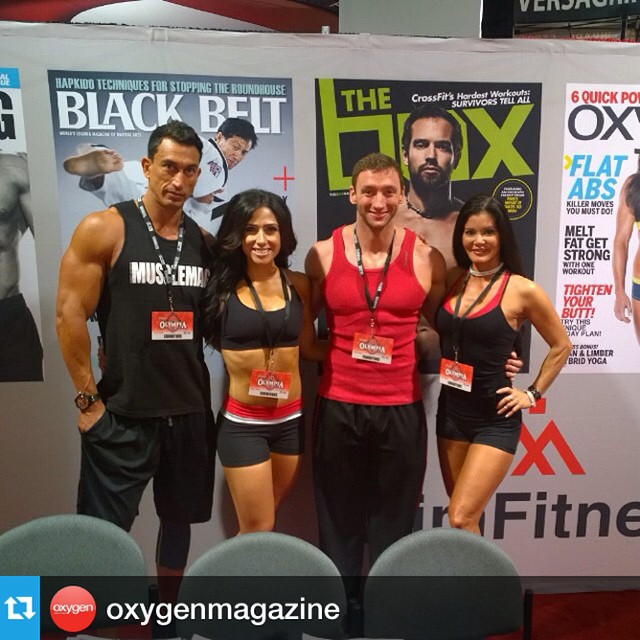
Olympia 2014 foursome
Last month I wrote an article in which I discussed different levels of athlete sponsorship and the tendency of some sports supplement and fitness related companies to use athletes as unpaid salespeople under the guise of being sponsored. This month I am flipping to the other side and discussing athlete value, i.e., what the athlete SHOULD be bringing to the table in terms of marketability, knowledge, and salesmanship when approached for a sponsorship.Both the company and the athlete should have something to offer the other party so that the relationship is a healthy symbiosis which promotes both parties. Essentially, when an athlete and a company work together, they should be working as a TEAM so that everyone can benefit from the union, but this doesn’t always occur.

In some cases, athletes will work tirelessly to promote a brand for little or no compensation, while in others, supplement and fitness related companies put their energies into an athlete, believing that the athlete will enhance the brand, only to have an athlete take advantage and become extremely lazy and neglect his/her end of the deal. While there are athletes out there who have tremendous value and who have built laudable reputations through inspiring articles, e-books, and client transformations, there are countless more who have an exaggerated sense of self-entitlement and who believe that simply because they graced the stage once or twice, they deserve to have everything handed to them for free.

If you are new to competing or to the fitness world in general, you need to be aware that it takes time to build your own brand and to find your place in the industry. Perhaps the best thing you can do at this point is to assess your value and what you truly bring to the table. Companies which are looking for brand ambassadors want someone with a following and a unique presence or message which is congruent with their brand philosophy, so if you aren’t there yet, you had better start working on building your own value.

Let’s start with physical appearance. Those who are successful in the bodybuilding and fitness industry have great physiques which they continue to improve upon over time. Individuals who maintain a relatively consistent weight and conditioning level throughout the year tend to fare best as well since they are close to shoot/contest ready almost all the time. Some of the top signed sponsored athletes are also some of the best looking people on the planet! I’m not saying that you have to have movie star good looks to land sponsorships, but it certainly doesn’t hurt. This is when you need to be VERY realistic about yourself and what you bring into the mix. You should be blessed with good looks or a distinctive, appealing look, or at the very least be photogenic if you expect to land a sponsorship with one of the bigger supplement companies.

Perhaps you are just average looking, or have a face only a mother could love, but you ooze sex appeal and charisma. If you are blessed enough to have such an energetic pull on people, this could work in your favor during booth appearances and videos, and increase interest in the brand you are representing. You are also far more likely to get picked up by a company if you have an enthusiastic and positive attitude. In keeping with this, you should only work with companies which sell products you truly believe in and like, because your enthusiasm for the products will come through naturally as you promote them.

Another valuable trait which increases an athlete’s value is integrity. People who do well in the fitness and bodybuilding industry and who have longevity within it tend to be truthful, sincere, and have strong values. You must have a strong backbone to survive in this highly saturated and fickle industry, and that only comes with knowing who you are and honoring your personal beliefs. If you sell out and take shortcuts, you run the risk of having a very short-lived career.

One of the most powerful ways to connect with your core audience is to show your human side and share stories which allow your followers to relate to you. It doesn’t matter if you show your own body transformations or those of your clients, as long as followers can see a before photo which they can relate to and an after photo which inspires them to take action. Such inspiration becomes even more powerful when you offer to help followers to reach their fitness and wellness goals. People begin to believe in YOU, and that can give you the leverage you need to promote a product line for a brand you represent.

If you have experience and education in fitness, nutrition, business, advertising, medicine, physical therapy, massage, or any other field which may be relatable to your journey in fitness and to the people who follow you, it’s a good idea to fortify such knowledge by becoming an authority. You can do this by creating videos, blog posts and books which showcase your knowledge. This can make you especially valuable to supplement and fitness companies which are considering bringing you on board because you can offer your knowledge as part of the deal which you negotiate with them.

Many companies assess the popularity and reach of an athlete through social media numbers, a tactic which can edge many athletes out of the running for top sponsorship spots if numbers are all they care about. Some athletes have purchased followers or promoted their profiles by paying for them, which has worked in their favor when securing sponsorships, but I don’t recommend this route since many of those paid followers won’t buy products which the athlete promotes. Then there are athletes who desperately want to work in the industry and obtain sponsorships, but have built their following solely on sexy half-naked photos of themselves. These athletes (mostly women) have resorted to using their social media channels solely as a means to post scantily clad selfies which ostensibly generate a ton of likes from the opposite sex. Every athlete who lowers his/her standards to this point where the only value generated is from smutty photos is sure to find that there is no legacy to speak of as time goes on and looks fade.

Even if you build your value and show consistently that you have a strong work ethic, you must continue to meet your end of the bargain. Sometimes companies will give you product as a trial run to see what you will do with respect to adding value to the brand. Some athletes will ramp up slowly, while others will jump right in with social media posts and will do all they can to promote a product. I have also seen some athletes start out as strong cheerleaders for a product, only to fizzle out because they lack self-discipline and consistency. Of course this can also occur on the company’s end, so it behooves both the athlete and the company to check in with each other regularly to make sure that everyone is happy.

Are You A Sponsored Athlete Or An Unpaid Salesperson?

Originally published on mensphysique.com on Wednesday, 12 November 2014

This was the most popular article I ever wrote for the site, getting over 2,700 likes.

SponsorshipSlide
http://www.rxmuscle.com/blogs/the-business-fitness-modeling-and-showbiz/11790-are-you-a-sponsored-athlete-or-an-unpaid-salesperson.html

Most sports supplement companies and other fitness related companies aggressively promote their products through athletes who can sing the praises of their benefits. Who could be better at describing the efficacy of a product and how it enhances training or recovery than an athlete who not only already uses those types of products, but someone who has a following and who can convince new customers to purchase from the company which they represent?

Here’s where things get problematic. The pool of bodybuilding and fitness athletes is pretty massive, and the waters are teeming with athletes who are anxious to get their so-called “big break”. As a result of this, savvy marketing teams from fitness related companies often sweep up these individuals because they are enthusiastic and can propel a brand’s exposure. All the company needs to do is to offer some free product to the athlete and provide instructions on how to use social media to get the word out that these products exist. Then the athletes post images of themselves holding or using products, and add affiliate codes so that any orders which are generated through that athlete’s post are credited to the athlete. This can be a great way for an athlete to make some extra money while competing or chasing down fitness related gigs and projects.

It is important to bear in mind that such athletes really aren’t sponsored, but are instead unpaid salespeople who provide free advertising and generate sales via social media posts which direct followers to product websites. Yes, they get commissions if they have affiliate codes, but such commissions are nothing to write home about unless someone is really blowing the roof off in sales. This is in stark contrast to a true athlete sponsorship, in which an athlete is paid to represent the brand as a brand ambassador.

The sponsored athlete is chosen for his or her physique, performance history and awards, facial good looks, charisma, enthusiasm, and often the size of his or her social media following. Usually a sponsored athlete signs a contract which stipulates that he or she will receive a certain amount of free product, and in most cases will also receive financial compensation which is either paid via a monthly salary or via a contest stipend. Though the athlete usually agrees to a set requirement or recommendation to provide social media posts for the company at regular intervals, the company pays the athlete for his or her trouble. Personal appearances and events are also part of the sponsored athlete agreement and clearly described in the written contract. The sponsored athlete is compensated for use of his or her likeness on advertising materials as well.

Obviously it is a far better deal to become an official sponsored athlete for a company. Otherwise, you are just providing free advertising and cheap labor in exchange for products which are sold at a significant markup from what they are manufactured at. If you post a selfie with product that somehow goes viral, the company will certainly love the boost, but I doubt you will ever see any type of compensation if you aren’t a sponsored athlete, which means you provided your likeness for free.

The truth of the matter is that there are only a handful of athlete sponsorships to go around, with a massive surplus of athletes vying for those spots. The athletes who end up getting sponsorships stand out from the crowd in some way, or fit a brand’s look and philosophy so well that it makes sense to bring them on board to represent a brand. The rest of the athletes must navigate through all the companies out there to try to find an arrangement which benefits them in some way. Sometimes it is easy to sell a product, usually because the athlete enjoys using it so much that he or she doesn’t mind providing free advertising or labor.

Sometimes a supplement company will launch a contest which is based on social media posts. One company, which shall remain unnamed, launched a huge campaign this year that was patterned on this idea, and decided to award 5 of the entrants $10,000. Sure, that sounds like a good chunk of change, but if there were 8,000 entrants, then 7,995 walked away with nothing. At the end of the campaign, the company got tons of free advertising and all those hashtags they requested for “tracking” purposes also propelled their brand in a huge way. To be honest, this is a brilliant marketing tactic, but not the best move for the majority of athletes who participated.

I have also seen companies launch contests in which entrants must purchase a product, then post on social media with hashtags to enter the contest. This is another form of free advertising for the company, a great way to generate sales, a brilliant means for them to boost exposure, and yet another way for athletes to be suckered into doing free advertising. I don’t see much harm in taking part in such a contest if you truly love a product and want to proclaim it, but just remember that it works wonders as an advertising tool for the company without any benefit for you.

One thing I will never advocate is purchasing products, even at a steep discount, while also representing a brand as one of its “sponsored” athletes. If you are asked to pay for a product while also providing free advertising on social media channels, run quickly in the other direction! Basically you are dealing with a company which doesn’t value you enough as an athlete to provide compensation for your advertising efforts. This isn’t the same as purchasing a product, finding out you like it, THEN posting something on social media which lets people know how much you like it. I know of several athletes who had done this, which sparked the attention of the company which manufactured the product, eventually leading to a sponsorship deal. But do not, I repeat, DO NOT PAY for products as a way to get false sponsorship for a company.

It isn’t a bad thing to work as an unpaid salesperson in the fitness industry as long as you know your place and value. Once your following builds, the smart thing to do is to leverage your visibility into getting an athlete sponsorship. The main thing is to make sure that you don’t get taken advantage of in the process.

To The New Model On The Block

Originally published on mensphysique.com on Monday, 02 April 2012

http://www.rxmuscle.com/blogs/the-business-fitness-modeling-and-showbiz/5254-to-the-new-model-on-the-block.html

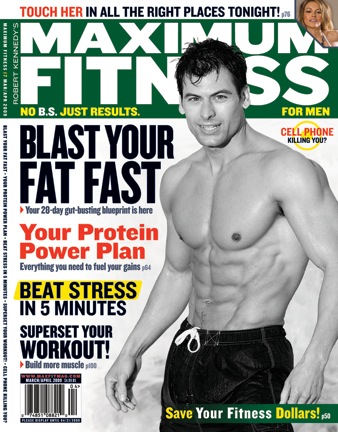
MF17-COVER

Modeling for the first time can be a bit daunting, especially during fitness shoots in which your physique is being prominently displayed. However, there are some guidelines and tricks to make the experience a pleasant one and one in which you can maximize the chances of producing strong images. The single-most important thing is to follow the photographer’s lead with posing, since prominent fitness photographers have developed considerable skill in posing the human body in the most flattering manner possible. This doesn’t mean that your work isn’t cut out for you, but the following posing tips will become easier over time as you are asked to do more shoots. It’s actually a good idea to practice modeling poses in front of a mirror so that you can more clearly assess how your body looks in certain poses.

Generally speaking, a wide leg stance displays your muscularity in the best fashion since it makes your waist appear smaller and enhances the bulk of your quads. Make sure to stagger feet so one foot is a few inches more forward than the other. You will shift your weight onto this foot and flex your quads while bending knees slightly. To make your upper body look as wide as possible, widen your shoulders and keep your back straight in order to enhance your v-taper.

Once your pose is established, you will flex muscle groups one at a time, such as quads, then delts, then pecs, then arms and finally abs. Get used to holding a pose! You may need to hold a pose while fully flexed for a couple of minutes. Which brings me to facial expression…quite often you will be asked to relax your face and flash a genuine smile which belies all the tension you are employing in your muscles, which can definitely be tricky. Your face needs to be a calm and happy sea, while the rest of your body is a raging storm of muscle contraction. This may take longer for some men to learn than others, and those men may keep praying for those shoots in which their facial expression needs to be intense, grimacing and full of power. Successful fitness models have mastered this trick and know that is essential in order to land certain covers and ad campaigns.

Above all else, have fun with the shoot, ask for a short break if you are tiring out too quickly, and maintain a positive and pleasant attitude.

Picture Perfect With The Ladies: How To Model With A Female

Originally published on Tuesday, 29 November 2011

http://www.rxmuscle.com/blogs/the-business-fitness-modeling-and-showbiz/4796-picture-perfect-with-the-ladies-%E2%80%93-how-to-model-with-a-female.html

You may have modeled alone numerous times and are comfortable with your poses. This may lead you to think that posing with a woman is no different. However, there are numerous points to keep in mind any time you are at a shoot in which you are expected to pose with a lady.

First of all, don’t allow nerves to distract you from performing as expected. What helps tremendously with getting over any nervousness is to chat with the woman before the shoot in order to establish a comfort level. You don’t have to discuss anything in particular, but at least get an idea of her personality.

Be aware of the goal of the shoot. If the goal is to shoot a cover or an ad, you will most likely be the center of focus since many covers showcase the man while using the woman as a type of accessory. Fitness photographers are typically excellent at posing their models, which means you need to be able to follow direction without offering commentary on the poses you are being asked to do. If the photographer tells you to open your shoulders, or turn your head slightly more to the right, then just do it. Sometimes these microadjustments may be challenging since you have to hold a pose while also flexing and looking like you are having the time of your life. But all these elements are key in conveying the proper energy and mood through the images.

Move slowly between each pose and give the lady time to adjust as well. Remember that she needs to be in the proper pose as well. If you are asked to touch each other, perhaps with your hand around her waist and her hands on your chest or shoulder, be respectful of her. That being said, make sure that when you are both in a pose in which you are touching, you both look like you actually like each other, even if you can’t stand each other. Your poses and your facial expressions need to be genuine and believable.

Remember to carry yourself in a professional manner during the shoot. It doesn’t matter if you have the hots for your modeling partner remain a professional. If you must, you can ask for a date WELL after the shoot is over!