I recently visited Japan in April and May, and even included a little hop over to South Korea, which was lovely. The cadence of my second trip to Japan was quite different than my first trip in 2020, partially due to the fact that we were concentrating two main areas (Tokyo and Kyoto), rather than scanning the entire country like I did on my first visit. I also made sure to see different areas in Tokyo and Kyoto than I had in 2020, including areas like Harajuku.
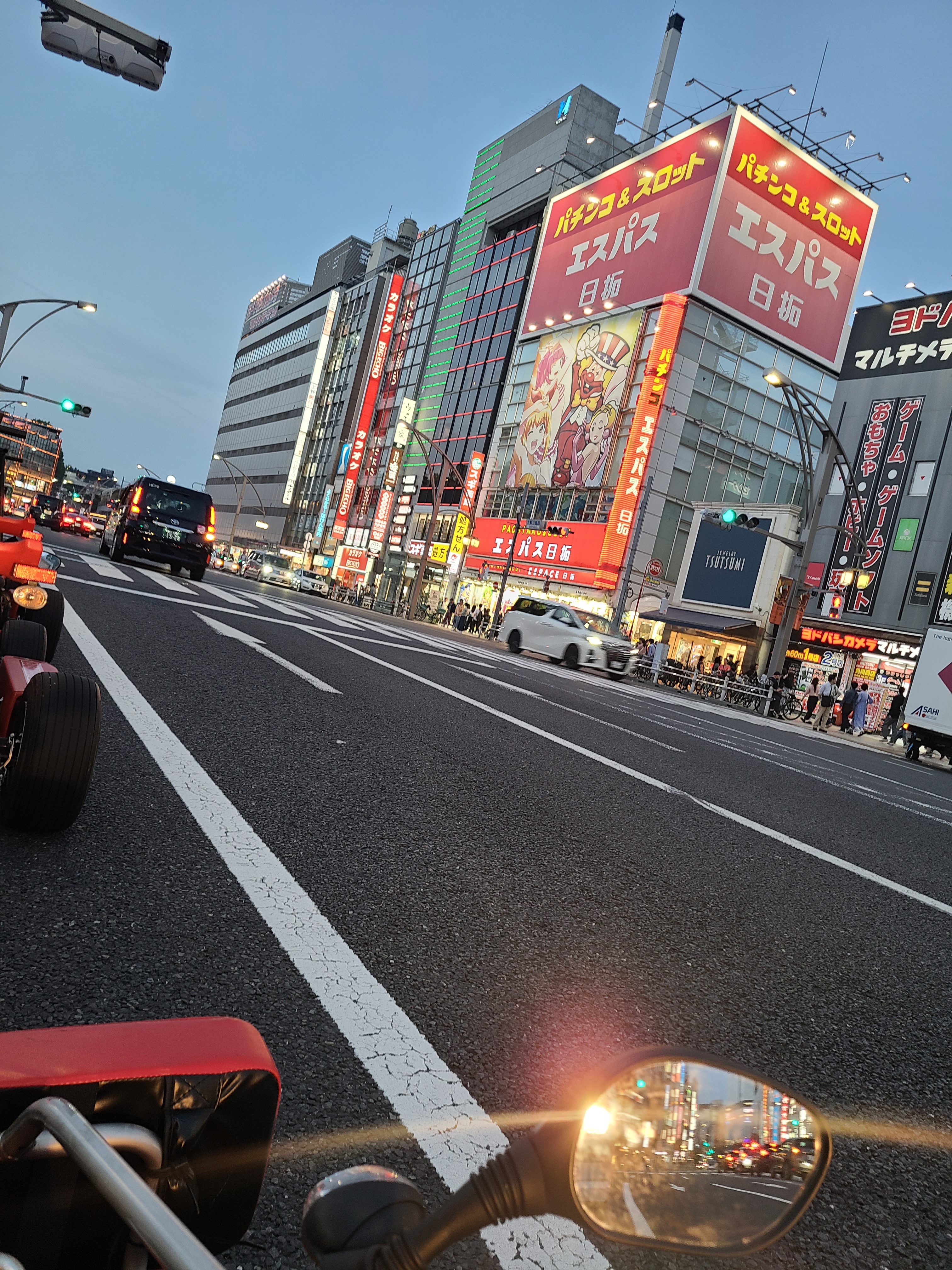
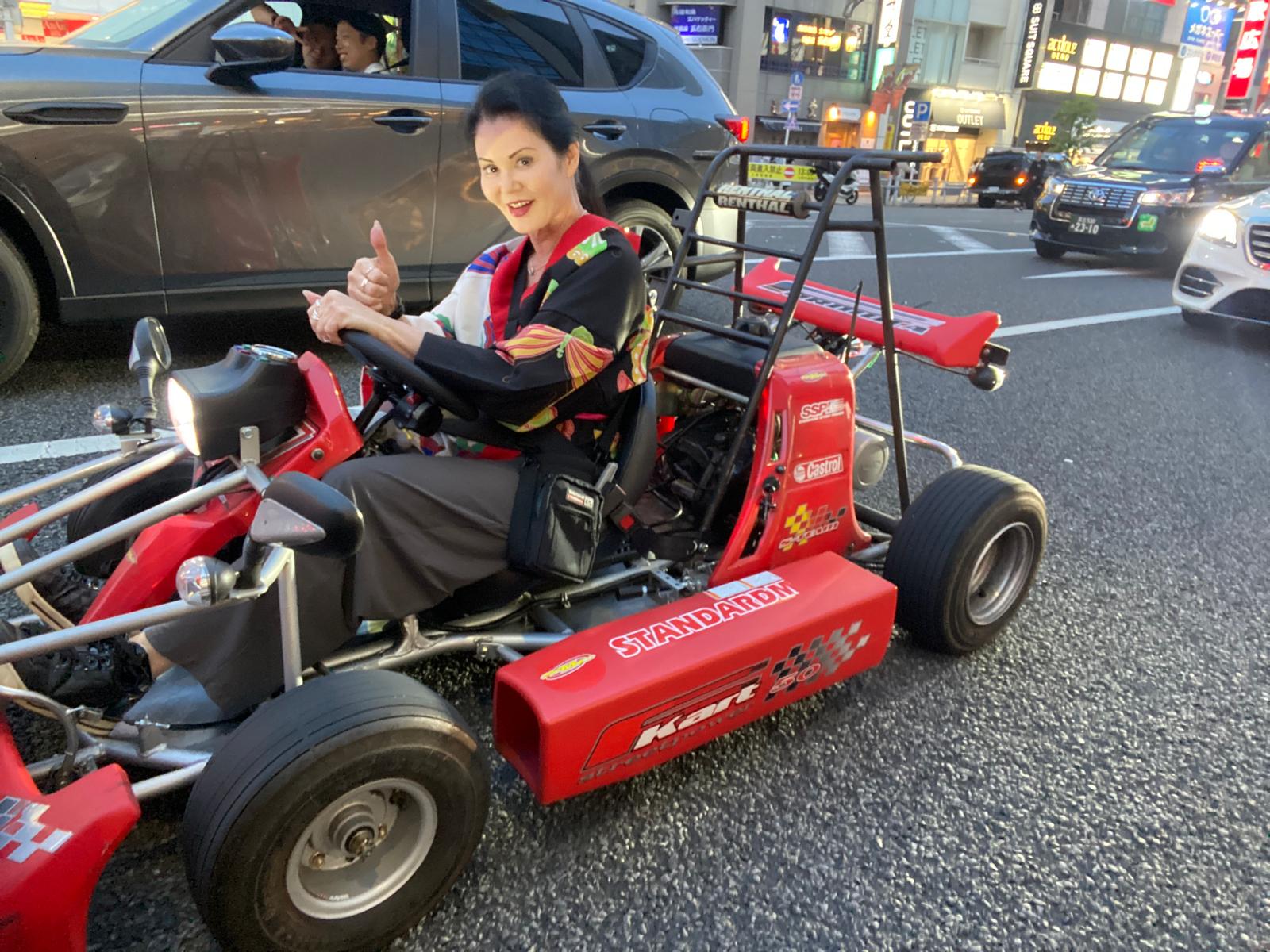
Perhaps the biggest highlight of our stay in Tokyo in particular was the two-hour Street Kart Racing event we took part in one evening in the Akihabara district of Tokyo. We donned more sedate haori jackets in preparation for our outing, while the other two participants decided to go full bore with Hopeful Heart Care Bear and Stitch onesies, both of which were hilarious. After a brief lesson on how to operate the karts, we were on our way, a single-line procession of gas-powered street karts on an adventure in Tokyo!
Here is a video I found on YouTube from RCBtrips which shows part of the route we took. It was far more fun and interesting for us to begin our drive at 6 pm, shortly before sunset, then continue our crawl at night, because we were able to see the transition to the display of lights throughout the city.
Perhaps the best aspect of driving for two hours on the streets of Tokyo, other than the absolute thrill of driving with the wind in your face, is the fact that this is one of the best ways to see Tokyo. You get to see the lay of the land, and while driving, you are bound to see areas which you want to visit later. I would absolutely recommend this adventure to anyone who is willing to get behind the wheel in a foreign country. It certainly was a lot more fun than the 23-hour stress bomb that characterized my driving experience on Koh Samui, Thailand in 2022. As long as you are willing to obtain an international driver’s permit from AAA (if you reside in the U.S.), you can experience an awesome driving adventure in Japan!
I used Klook to book my driving adventure. Click here to book yours!
I’m sure that the title of this blog post will irk some people, and that’s actually part of the point. Unless you use credit cards only to make large purchases which you will pay in full when you receive the credit card bill, you are playing with fire. Using unsecured credit and carrying balances are sure signs that you cannot afford the items you are buying. I know these are strong words, but credit card debt remains one of the most insidious and dangerous types of debt to carry.
Here are some key reasons why it is so difficult to pay off credit card balances:
You don’t prepare to pay the balance each month, so the amount continues to grow until it becomes unmanageable.
Interest rates change over time, and if you miss a payment, make a late payment, or go over limit, your interest rate will syrocket, digging the debt hole even deeper.
You don’t have enough wiggle room in your budget to make more than the minimum payment each month, so the interest charges often exceed the minimum payment amount, and you slide even more into debt.
As someone who had struggled with credit card debt twice in my life, I know firsthand how much of a challenge it is to surmount such obstacles and get out of debt, but I also know that IT CAN BE DONE. The first time I racked up credit card debt ($30,000 in my 20’s), I eventually managed to pay it all off, then 20 years later, I found myself saddled with $40,000 of credit card debt. Once that was paid off in its entirety, I completely changed my attitude towards credit cards and with money in general, and have spent over a decade with zero credit card debt. I absolutely refuse to go down that road ever again.
If you need to pick up a side gig to make some extra money to pay extra over the minimum monthly payments, then definitely do it. You can either tackle the smallest balance first and work up, or tackle the balance with the highest APR and work down, until everything is paid off. When starting out, just focus on paying extra on the first card, and pay the minimum on the other cards. Once the first card is paid off, employ the “snowball effect” and apply the extra dollar amount you were paying towards the first card to the next card. Continue this strategy until you pay everything off. I have done this, and it absolutely works.
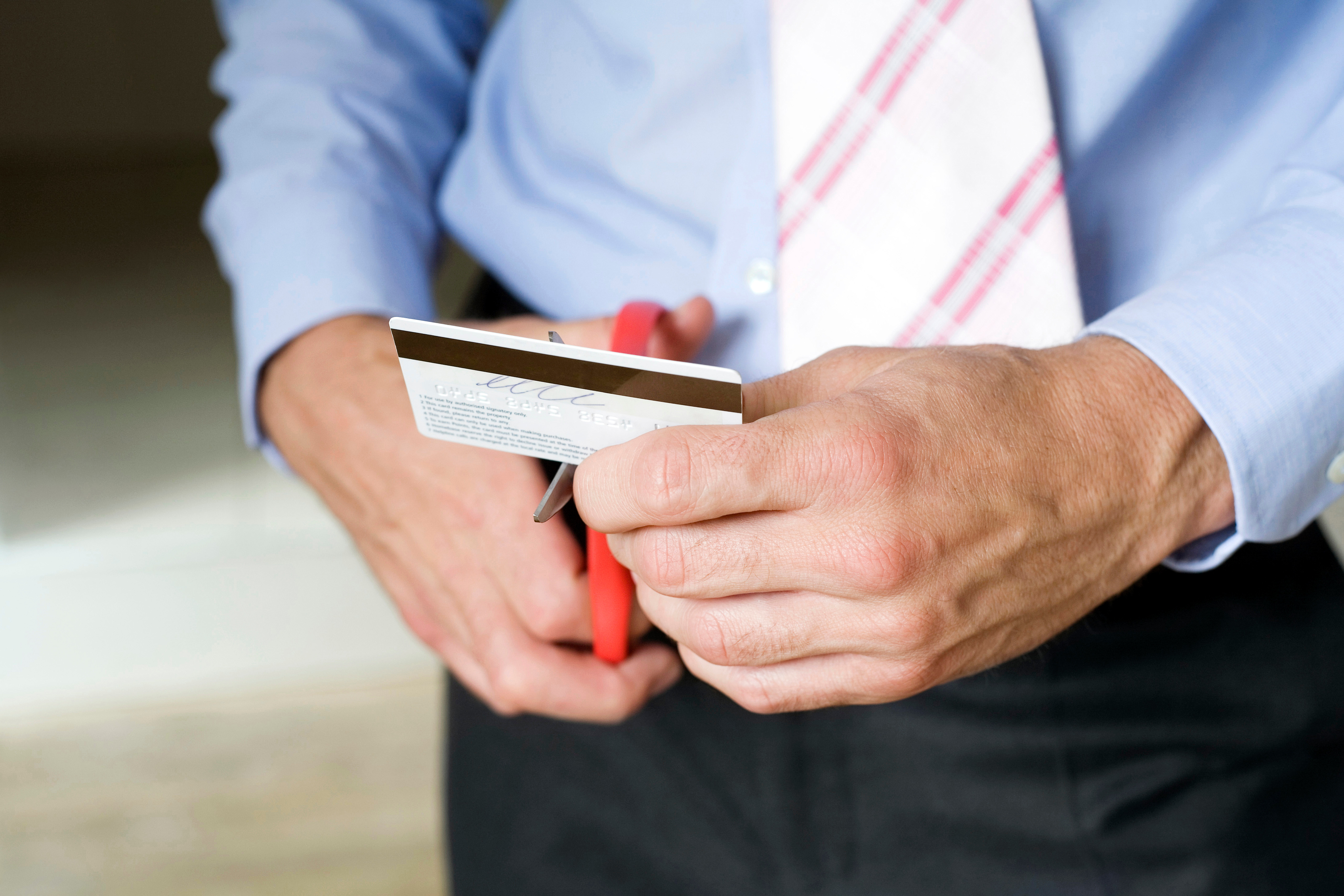
Another thing to consider is to sell items in your home that you don’t need, and apply those funds towards your credit card bills. Once your credit card debt is paid off, keep the card accounts open to ensure that your credit is not damaged by closing accounts. However, cut up the cards, and do NOT use the accounts at all. What I did for the first year after paying off my credit card debt was to use a debit card to keep my spending in check, since the funds were coming directly from my checking account.
Having been completely free of credit card debt and a car note for close to ten years, I feel incredibly liberated and financially healthy. Trust me when I say that paying off your credit cards, and never jumping back into the pool of credit card debt, is the most wonderful feeling ever.
I am sharing an article written by Claire Thornton of USA TODAY which details a fun story about a man who was instructed to hide his boat. Read on for the article, or click HERE to see the original post.
A California boat owner’s ingenuity is gaining attention after he commissioned a mural of his vessel to sidestep demands from officials while complying with city codes in his own “tongue-in-cheek” way.
Officials in Seaside, California, told Etienne Constable the boat parked in his driveway needed to be hidden from view or Constable could face a $100 fine. So, the homeowner erected a fence in the middle of his driveway, hiding the boat.
Sort of.
Because the fence showcases a hyper-realistic mural depicting the 19-foot Arima Sea Ranger, the view from the street hasn’t changed much. The “illusion,” as the mural’s artist describes it, lines up perfectly with elements of the real world, like shrubs, as well as the side of Constable’s home, which is just northeast of Monterrey.
“This struck me as the right way to go, and something that makes my house unique,” Constable told USA TODAY.
Next-door neighbor and longtime artist Hanif Yanni painted the mural − and Constable paid him far more than $100 to do so, the artist said.
City Hall officials, rather than feel defeated by Constable’s roundabout compliance, celebrated his idea.
“I applaud the constituent’s creative approach, which not only addresses compliance but also showcases a community-driven solution,” City Council member Alexis García-Arrazola told USA TODAY.
Artist relied on photos for hyper-realistic look
Yanni said he was motivated to paint the mural because he wanted to help Constable jump through a “bureaucratic hoop” while complying with the rules in a creative way. Now, he said, passersby will be able to view art that didn’t exist before, he said.
Yanni, 42, and Constable, 61, took photos of the boat sitting in the driveway and the artist sketched out an outline on the fence before he began painting.
“It’s kind of this illusion where you can see the boat, and what’s behind it is mixed with the mural,” he said, describing the final product, completed May 3.
In 2023, a Seaside code compliance specialist sent Constable a notice telling him he was in violation of a rule prohibiting residents from parking boats, RVs and trailers in public view − including vehicles parked on private property.
To avoid a fine, Constable needed to erect a screen or other covering shielding his boat from the street.
Such ordinances ensure large vehicles, which can be difficult to maintain, are hidden from sight to keep overall property values high, City Manager Nick Borges told USA TODAY. Sometimes, Borges said, vehicle owners don’t do a job good of cleaning up leaking oil and other sanitary problems tied to vehicles.
“There’s an importance to some of these codes, so that doesn’t occur,” Borges said.
At the time Constable received his notice about the boat, Borges said, the city was ramping up its code enforcement efforts after years of letting violations fall by the wayside. As a result, Constable was notified of his violation for the first time in July 2023 after having parked the boat in the same spot for around four years, Constable said.
It makes sense that Constable was frustrated, Borges said, because his boat has always appeared to be well-maintained. In the end, the mural was a fun solution, the city manager said.
“The only action to take at this point is a high-five to the owner,” Borges said.
Constable said he wanted to make a point about “ridiculous” city codes without getting into a legal battle with the mayor’s office.
“I did it to stick my thumb in your eye, but I did it in a way that’s nonoffensive, doesn’t hurt anybody, doesn’t take anything from anyone,” Constable said. “I feel like I hit the sweet spot, and got my point across.”
Constable got the boat four years ago, and often takes it out into Monterrey Bay and toward Santa Cruz and Big Sur, he said. He’s a fan of fishing, often hunting for halibut and rockfish, and when he can, salmon and tuna, he said.
Now, having the mural be a public, artistic part of the neighborhood “is something I’m very proud of,” he said.
Modern life is busy. You probably have a lot of obligations to juggle, from work to family, friends, school, and more. You might find yourself getting overwhelmed and frazzled regularly. In the big picture, this can lead to mental health issues like anxiety. Read on for some resources and tips from Dr. Stacey Naito’s blog to help you unwind and recharge your battery.
Take a Break to Focus on Your Physical Well-being
Regular exercise is good for your mental and physical health. Try these tips to get more physical activity.
Using natural remedies to relieve stress is important because they often have fewer side effects, can be cost-effective, and work harmoniously with the body’s natural processes to promote overall well-being and resilience. Here’s a list of three natural remedies for stress:
Exercise: Regular physical activity, such as yoga, jogging, or swimming, can significantly reduce stress levels by releasing endorphins and improving overall mood.
Meditation: Practicing meditation and mindfulness techniques can help calm the mind, reduce anxiety, and enhance emotional stability.
THCA (Tetrahydrocannabinolic Acid): As a non-psychoactive precursor to THC found in raw cannabis, options for THCA may have therapeutic properties that help reduce stress without inducing a high.
Create a Relaxation Space at Home
When you need to take a break, curl up in your zen zone. Here’s how to make the perfect soothing space.
You don’t have to go through life feeling stressed and drained of energy. Making small changes to your daily routine can ensure you feel calm and refreshed. The resources above can help you get a better grasp on your daily well-being. Read more informative articles on Dr. Stacey Naito’s blog today!
I stumbled upon sobering news from the Bankrate Emergency Savings Report, which reported that only 44% of Americans would be able to cover a $1,000 emergency if it arose. The remaining group of Americans would do the following (according to the December 2023 Bankrate report):
“35% would borrow money, including 21% who would finance with a credit card and pay it off over time, 10% who would borrow from family or friends and 4% who would take out a personal loan.”
It turns out that over 20% of Americans have no emergency savings set aside, leaving them completely unprepared should they experience a significant financial loss such as termination of employment. Another staggering report from Bankrate is that more than one-third of Americans have more credit card debt than emergency savings. Granted, more than half of the U.S. population according to the poll has more emergency savings than credit card debt, but the mere fact that such a large portion of Americans is saddled with significant credit card debt is sobering.
If you are someone who either has no emergency savings, or an insufficient amount to cover at least 3 months of regular expenses, it would be a good idea to focus on putting even a small amount of money into a high yield savings account in order to build up your emergency fund. It’s a good idea to get into the habit of depositing money into an emergency fund at least once a month, especially if you automate it. This way, you are protecting yourself by fattening up your emergency fund on a regular basis. Make sure to steer clear of traditional bank savings accounts, since the average yield on such accounts is 0.59 percent APY.
I have to admit that I have become a huge fan of scented candles in the past few years, preferably from Voluspa. There is something incredibly enjoyable about lighting a favorite candle each afternoon or evening and allowing the fragrance to permeate the room, evoking a certain mood. Since I don’t always want to smell the same aroma, I have numerous different scented candles nestled in various parts of the house, and will even ask guests to select a fragrance which resonates with them.
The reason why I prefer Voluspa candles is because they are of excellent quality, the vessels are beautiful, and many of the fragrances are absolutely divine. Whether I decide to experience a scrumptious fruit melange, an exotic woody bamboo, or a magical spice, I absolutely love the nightly ritual I have developed of lighting a candle and enjoying the illumination, the beauty of the candle jar, and the bouquet which these candles impart. Voluspa candle jars are so incredibly gorgeous and versatile that I have cleaned many of them and repurposed them to store things like cotton balls, makeup brushes, etc. There is even a suggestion from Voluspa to repurpose their 5-wick hearth candles into champagne buckets, which actually makes perfect sense.
If you want to fill your home with delicious fragrance, I would highly recommend checking out Voluspa, and no, this is not a sponsored post. That’s how much I appreciate candles from this master candle making house.
It seems that people are more prone to ghosting others than ever before, and it is incredibly frustrating to deal with people who do so. Such individuals reveal a glaring lack of empathy and a very low emotional intelligence quotient when they choose to ignore another human being over being direct and honest about how they feel. Some would argue that such behavior serves as an acceptable defense mechanism, but ghosting is just one of the ways in which narcissistic behavior emerges. Plainly stated, ghosting is a form of emotional abuse.
There may be times in which you might have been ghosted by someone, only to hear from that person again, without any explanation of why you were ghosted in the first place. If someone dares to do this, I would hope that any of you reading this article would do the sensible thing and block that person from your life. Undoubtedly, the person wants some type of emotional support from you and has decided to contact you again, but they lost the right to do so when they cut you off abruptly. Even if that person doesn’t contact you directly, but haunts you on social media, you are far better off blocking that person on social media and moving on, because that individual is toxic.
I was tricked by a lovebomber in March, and am still stunned by how quickly the so-called relationship advanced, how much of a textbook lovebomber the guy turned out to be, and how I felt like a complete fool at the end of the whole process. I am so enraged by what happened that I felt the need to warn other women about this type of man, and RUN IN THE OTHER DIRECTION.
Physically speaking, Ted wasn’t the type of man I would usually go for. He was very slender, had very long hair halfway down his back (not my thing at all), and was unusual looking. I dug the fact that he was half Japanese though, because as a half-Japanese woman, I have found that I relate so well to other half-Japanese people, and was even engaged to a half-Japanese man many years ago. As soon as Ted found out that I was half-Japanese, he highlighted that fact, and even told me that he had gotten a sign some years ago that the love of his life would be half-Japanese and would have a name that started with an S. I now believe that he made that up to pull me in emotionally.
I was also concerned about his checkered past, but as soon as we started chatting on the dating app that fateful Monday, I felt so much at ease with him that it honestly didn’t matter. Our first phone call the following night lasted 7 hours, then on Wednesday night we had another 7-hour phone conversation. We made plans to meet for dinner in my part of town on Thursday night, and he took care of selecting a restaurant, stating “you’re so busy and I want to make sure that I always help you out” which I mistakenly thought was a sweet gesture. As it turned out, someone hit his car when he was en route to my place and totaled his car, but since his car was still driveable, he continued to head to my place. He did ask me if we could take my car, to which I agreed without hesitation.
When Ted showed up at my door, I honestly felt like I was a participant in the show Love Is Blind, because though we had connected so beautifully on the phone, his appearance left a bit to be desired. He wore a surf pullover and jeans, not exactly appropriate for a night out on the town. He also had a disheveled appearance, but I shrugged it off. I drove us to the restaurant, a small sushi bar in my area, and we had such a fantastic time chatting and eating there that we agreed to continue the evening at my home by listening to music and talking. Our late night chat progressed into an overnight visit.
The next morning, we just kept talking until about 11 am, without a care in the world. Ted stated that despite the fact that he would have to call the insurance company about his car, and also arrange to have his other car fixed so that he could drive it, he didn’t want to leave. So I ordered lunch to be delivered, which he insisted on paying for. We continued talking for several hours, so I ordered dinner to be delivered, which he also paid for. Ted didn’t leave my place until about midnight that Friday. Ted told me on Friday that he already deleted the dating app, and I happily followed suit.
Since Ted was about to start an intense new job the following week, and also since he had car issues, that meant that we would have to rely on phone calls and texts, as well as me visiting him. He called me that Saturday, and we had a 6-hour phone call, during which he told me he loved me, and I swooned, returning the sentiment to him. What a whirlwind the whole experience was! I made arrangements to go to his place on Sunday, and told him I would cook for him, especially since he revealed to me that no woman had ever cooked for him. I lugged all the spices and other ingredients we needed for dinner to his place and cooked dinner, then stayed over that night. I made enough food to get him through his first week at the new job. The following morning, I took him to his new place of employment.
The second week with Ted was a bit rough, because he was forced to work a grueling schedule which included a 2:30 pm to 1:00 am shift that started on Wednesday. But by that time, I was so blinded by love that I was willing to do anything to help him out.
Skipping ahead to the second Saturday with Ted in my life, I was suddenly met with a cold shoulder. I was yet again supposed to go to his place to cook dinner as well as food for him for the following week, and we had agreed that it would be a good idea for me to come by around 11 am so that we could maximize our weekend time together. I was running behind, so I texted him to let him know. No response. I texted him around 12:15 pm to let him know I was on the road, and got a text from him saying that he had forgotten that he had a funeral to attend (he had mentioned this several days before, but we both forgot about it), that he had forgotten about it, but that I could still come over because he had given me a key to his place. I stated that I had stuff to do at home, and that I would prefer to wait until he got home after the funeral. Despite the fact that I was a bit miffed about the fact that he couldn’t text me or call me to let me know that he realized that he had to go to the funeral, I attributed it to him being sleep-deprived.
When I finally arrived at his place that Saturday evening, he was oddly distant, and when I asked if he was all right, he said that he was sad because of the funeral. However, he didn’t touch me, and when I touched him, he almost recoiled. Since I had so much food to prepare, I set about cooking everything while he blabbed about his day. The evening progressed nicely, but he was still a bit off. The next morning, as I was leaving, I asked him if he wanted to talk that night, to which he replied, “Oh yes, babe, absolutely”, and kissed me goodbye.
Ted then proceeded to ghost me. I didn’t hear a peep from him all day Sunday, and when I saw the next morning that he was active on Instagram, I became extremely irritated. I texted him, asking what was going on. His response was to dump me, stating that he wouldn’t be ready for a relationship for a while, and that he hoped that I would find what I was looking for in a relationship. Just like that, he was done with me.
Ladies, you have to be careful with these lovebombers! They will promise you the moon and stars, then pull the rug out from under you. I feel like such a fool, and now my radar is sharpened so that I never fall victim to that nonsense ever again.
What is a True Mirror? It’s a non-image-reversing mirror, nestled in a box frame, which enables you to see yourself as others see you. The issue with the True Mirror is that it can be quite jarring to finally see oneself as everyone else sees them. John Walter, the founder of the brand True Mirror, states in an email to Alix Tunell from RealSelf News:
“For many people, especially image-conscious people, the perception of asymmetry is overwhelming. It’s unfortunate, because it’s exaggerated—because things are on the opposite side [from what you’re used to seeing], they get doubled in your own perception.”
This was certainly the case for me the first time I looked into the True Mirror, and I was so rattled by my facial asymmetry that I refused to gaze into the contraption for several days. I understand now that my brain is still exaggerating subtle differences when I look into the True Mirror, and that I can gain comfort by looking into a standard reversing mirror. I also understand that the True Mirror is best appreciated when your face is animated, because you will then see the true reflection of your energy. It’s a complete trip and something I would recommend to anyone.
I absolutely love this Ted Talk by Caroline McHugh, so I am reposting it a second time. She is a brilliant woman who speaks so eloquently and honestly about the sense of self.