A recent study involving close to 16,000 subjects which was published in the British Journal of Sports Medicine determined that strength training exercises like planks and squats were more effective than other forms of exercise in reducing blood pressure. This flies in the face of previous recommendations by cardiologists, which focused on cardiovascular aerobic exercise. To be fair to the study, the reductions in blood pressure from strength training exercises, were minor, averaging 8.24 mm Hg for systolic blood pressure readings, and 4 mm Hg for diastolic readings, but the reductions were indeed greater than aerobic exercise such as running, which reduced pressures by 4.49 mm Hg and 2.53 mm Hg on average. However, the study did point out that various forms of exercise were proven to be beneficial with respect to lowing blood pressure.
Please check out this interesting article which was posted on the American Academy of Ophthalmology website, explaining the science behind eye color. I have copied and pasted it here so that you can easily read it.
Brown and hazel eyes get their color from melanin, the same pigment that colors your skin. The more melanin in the eye, the darker your eye color will appear. But blue eyes don’t have any blue pigment in them. Blue eyes get their color the same way water and the sky get their blue color. They scatter light so that more blue light reflects back out.
How do eyes get their color?
Eye color depends on the iris, the colored part of the eye. It’s a structure that contains muscle and other kinds of cells. You can see the iris in action when it squeezes or relaxes to let in more or less light through the pupil. The iris is made up of two layers. For almost everyone — even people with blue eyes — the back layer (called the pigment epithelium) has brown pigment in it.The front layer of the iris (called the stroma) can make eyes appear brown, hazel, blue or green.
People with blue eyes have no pigment at all in this front layer, causing the fibers to scatter and absorb some of the longer wavelengths of light that come in. More blue light gets back out and the eyes appear to be blue.
For people with green or hazel eyes, one or both of the layers of the iris contains light brown pigment. The light brown pigment interacts with the blue light and the eye can look green or speckled.
Many people have variations in the color of their irises, often with one color near the pupil and another at the edge. This variation happens when different parts of the iris have different amounts of pigment in them.
Is there a way to predict a baby’s eye color?
The genetics of eye color are very complicated. You can’t predict a child’s eye color just from looking at the parents’ eyes. Even parents who have the same color eyes as each other could have a child with different colored irises.
Genetic research has shown that blue eyes probably only appeared in the last 6,000 to 10,000 years. Before then, everyone had brown eyes. Blue eyes have probably spread through the population just because some people like how they look and chose to have children with blue-eyed people.
Why do some eyes change colors in different lighting?
People with hazel or green eyes might notice that their eye color changes depending on surrounding light. Green and hazel eyes are a mixture of pigment color and color from scattered light, so they can look different in different lighting conditions.
Since blue eyes get their color from the light that’s coming in and being reflected back out, they also can appear as different colors depending on the lighting conditions.
What is the rarest eye color?
The Academy surveyed more than 2,000 Americans to determine what color eyes they have. Below are the results of that 2014 Harris Poll survey, weighted to reflect the United States population at that time:
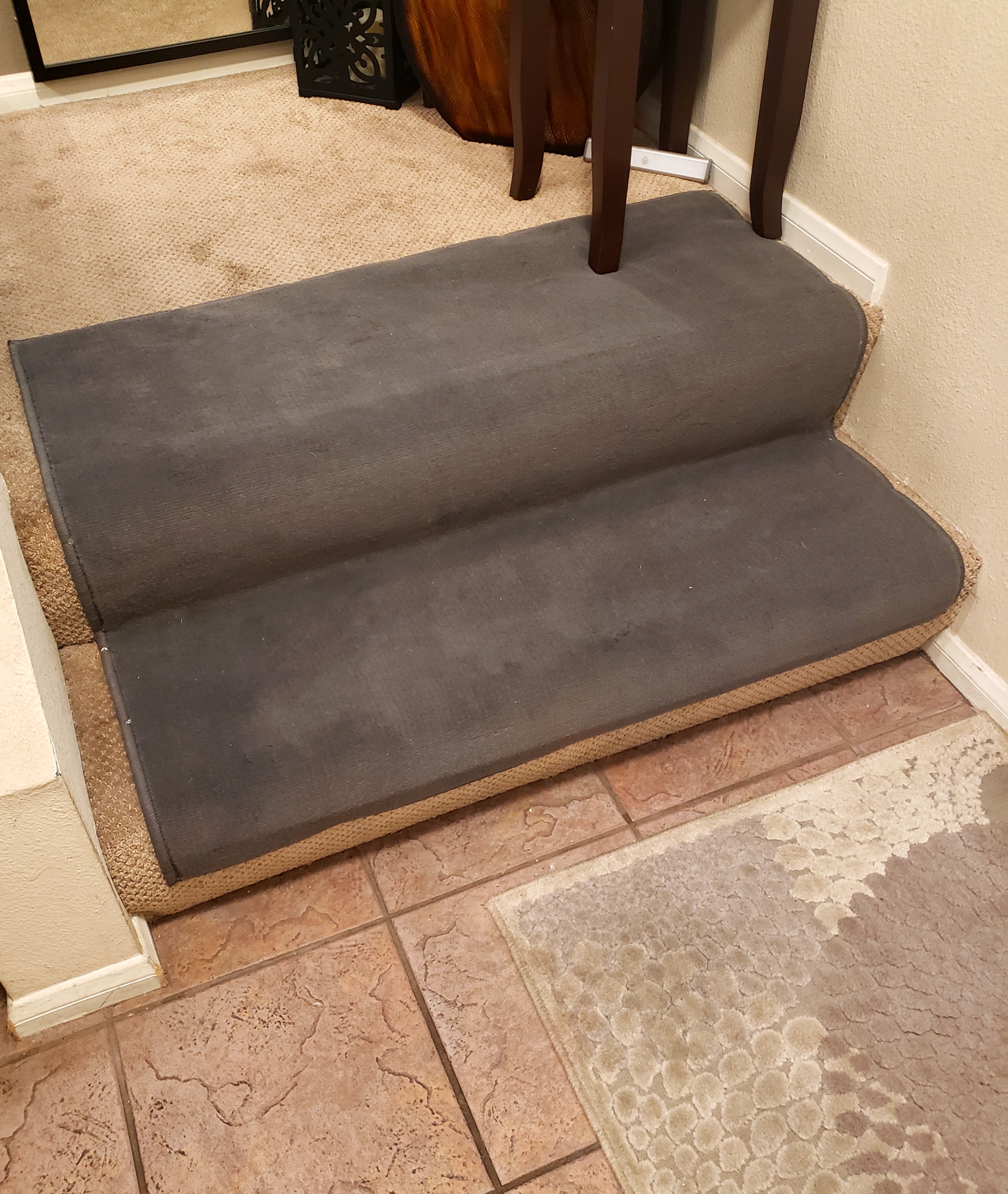
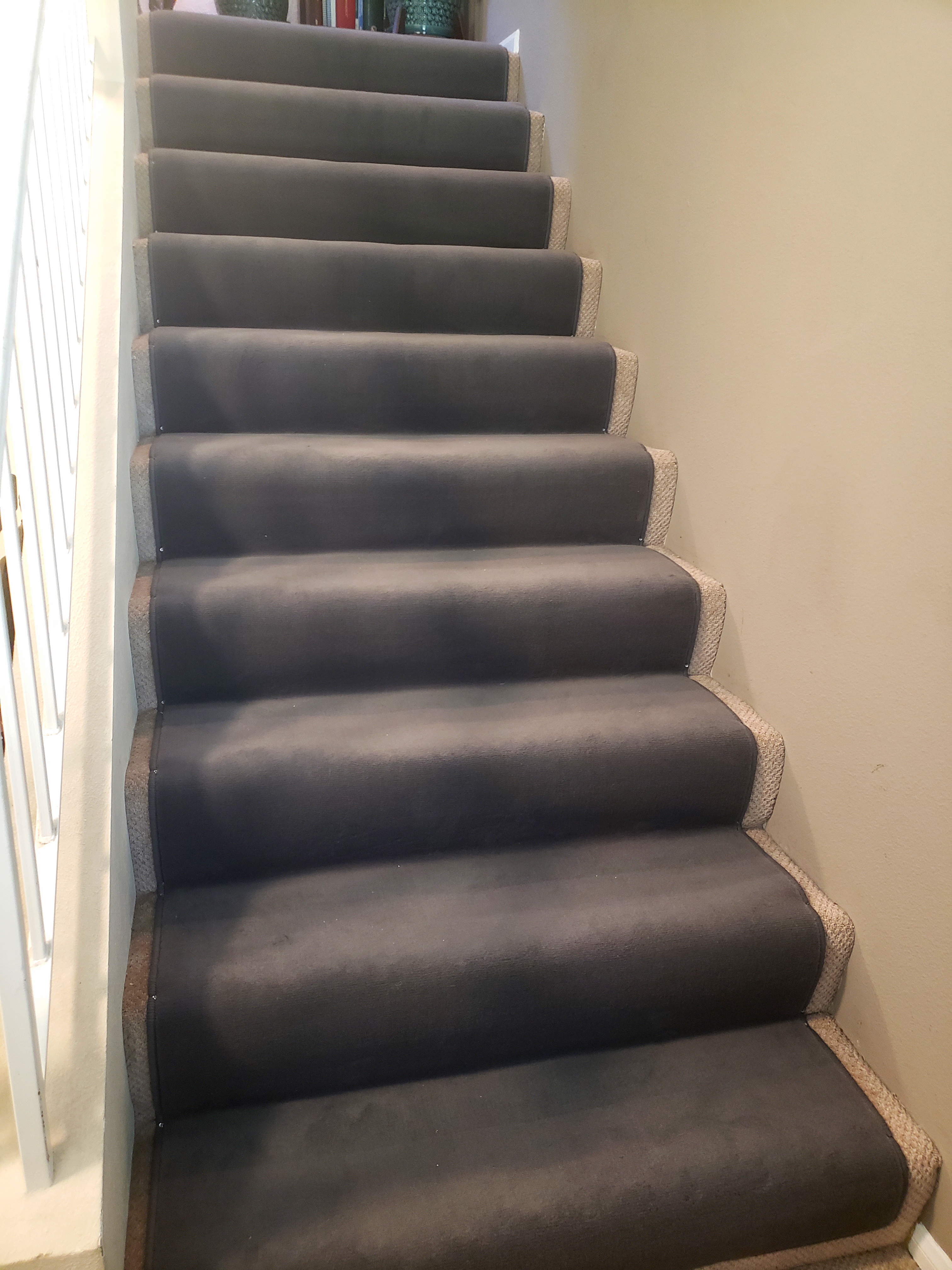
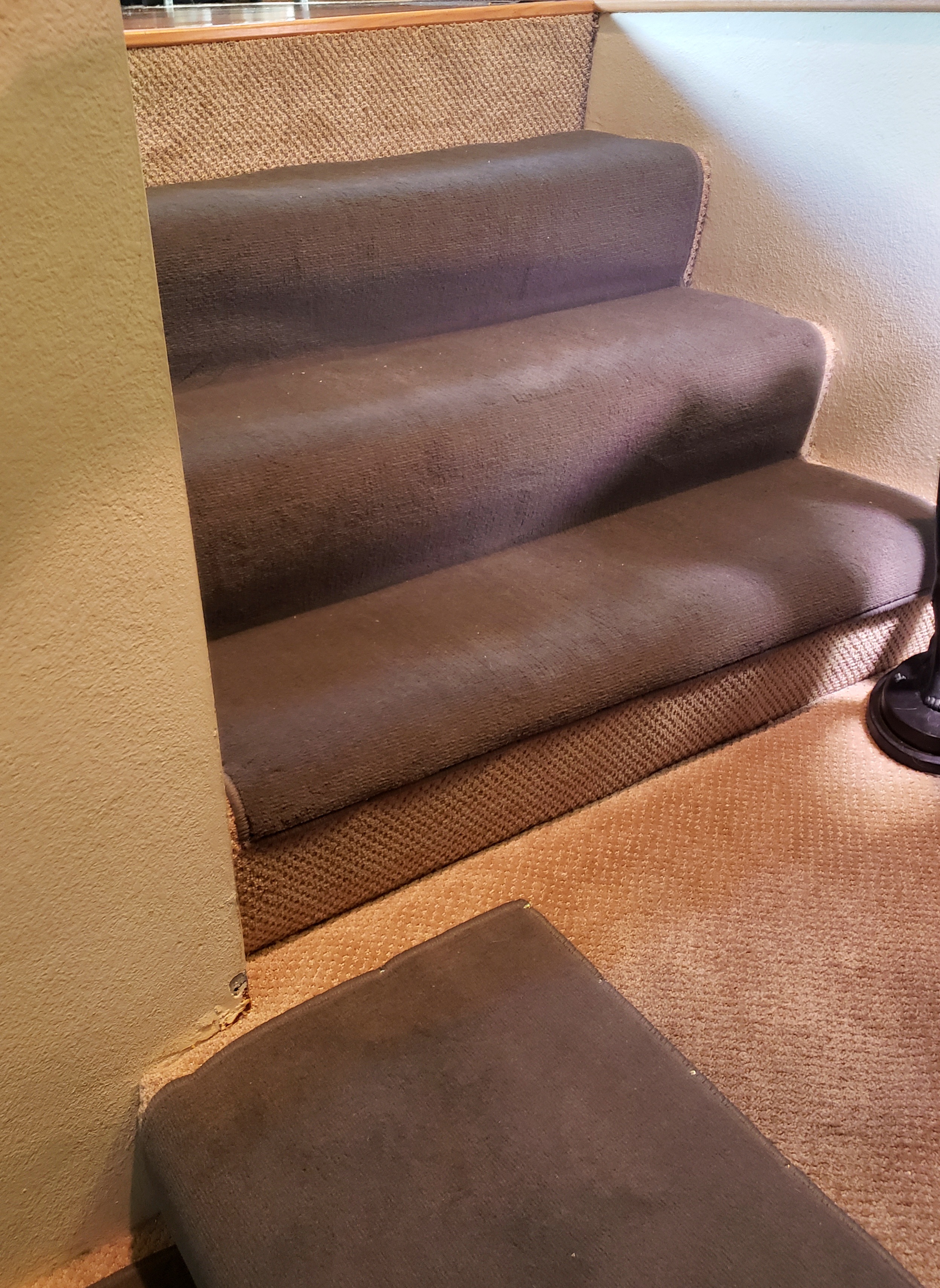
There are two flights of stairs covered in Berber carpet in our place, and because one of my cats enjoys scratching Berber carpet, I purchased rug runners for the stairs shortly after we had moved in so that the carpet would be protected. Since each set of stairs has two L-turn stair landings, I had to purchase three separate rug runners for each set of stairs, but I had found some reasonably priced versions on Amazon. However, five years later, the rug runners were looking pretty shabby, partially because the scratch happy cat had switched to scratching the runners (never mind that he has had access to numerous scratching posts throughout the house), and partially because of wear and tear from foot traffic. The runners had definitely gotten to the point where they were a bit of an embarrassment, but since I remembered spending a small chunk of change on the existing runners, I wasn’t too eager to plunk down more money to get replacements.
However, I found myself anxious to shift the energy in my home after one of my cats and my mom died, so I went back onto Amazon to reorder the same runners. Unfortunately, the sellers I had purchased from before were no longer selling rug runners, and none of the other runners I found on Amazon were customizable to the dimensions which I needed. That spurred me to investigate other sites which specialized in rug runners, one of which actually had fair pricing, especially when compared to a couple of other sites which were prohibitively expensive. I placed my order at the end of July and was thrilled when the runners arrived within four business days.
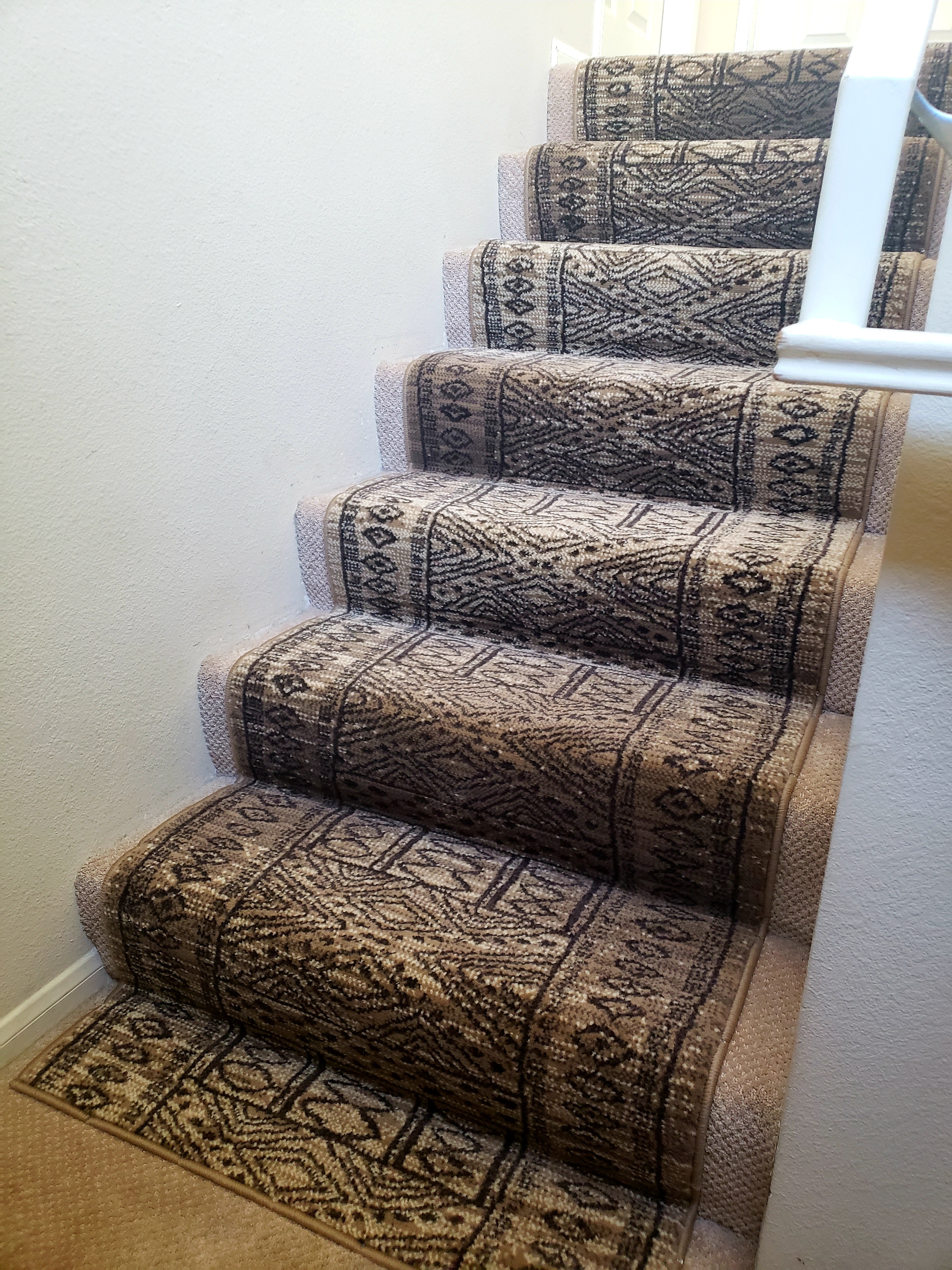
The uninstallation of the old rug runners was exhausting and took about two and half times longer than the installation of the new rug runners, but once the old ones were removed and replaced by the new ones, the place was transformed into a much more welcoming home. I even decided to place patterned runners in one stairway, and though I was initially very nervous about how they would look, I absolutely love them. The quality of the new runners is far superior to the old ones, with a nice, springy feel under the feet. If you are in the market for rug runners of any kind (kitchen, stairs, hallways), I would definitely recommend runrug.com,
This is the first runner for the first set of stairs…
This is the main stretch of runner for the first flight of stairs
The third runner for the first flight of stairs
Our new Afrikans print taupe runners for the second flight of stairs
Second runner…
The final runner for the second flight of stairs
I hope that these new rug runners last for a very long time!
Back in early July, I attended a music festival with a few friends. We noticed that there were numerous vendors with booths set up along the entry corridor, so we decided to take a look at what was being sold. At one point, we found a booth which sold accessories like body chains and sunglasses, and zoomed in on one particular pair of shades. My friend tried them on and absolutely loved them, so she asked the vendor how much they cost. They were $100, and though my friend hesitated over the lofty price, I could tell she was thinking about purchasing them, despite the fact that she couldn’t afford them.
I have to admit that I also liked the glasses, so much so that I took a picture of them for reference (see image above). I then told my friend that we should keep walking, and once we were out of earshot of the salesperson, I informed her that all of the styles of sunglasses at the booth, sans embellishment, were available through Amazon. I also stated that we could probably duplicate the look for a fraction of the price, and that it would be foolish for my friend to purchase the cool spectacles from the booth we had just visited.
A couple of days after the event, I decided to look on Amazon to see if I could find the glasses, and also figured that I could look for the aqua fabric, the rhinestones, and cool eyeglass chains. By some stretch of luck and a willingness to search for appropriate accessories, I quickly found everything I needed, and ordered them. Once the materials arrived, I printed out the image of the shades we both loved, and set up my workstation so that I could make two pairs of duplicates. Despite the fact that I did a fair amount of cursing while figuring out the sizing of the fabric segments and also while gluing the rhinestones, I was able to complete the project.
The reference photo with the two finished pairs of sunglasses
The best part of the project was that I made each pair for $32.77 ($38.76 after I added cases), and had a nice creative challenge. The next time I saw my friend, I asked her if she remembered those glasses from the event we had attended, then handed her one of the pairs. She was speechless. I then told her that I hadn’t purchased the glasses from the vendor, but that I had made them, along with a second pair which I kept for myself. She was truly blown away, especially after I told her how much I had spent on materials.
Last year right around Christmas, I taught my dear friend Karla how to make origami cranes, and though she struggled at first, she began to get the hang of making them. She thought they were pretty neat, and asked if they were ever made for a specific purpose, so I told her about the tradition of making one thousand cranes and stringing them up to hang for a number of different occasions, including making a wish for an ill person’s recovery, the birth of a child, wedding blessings, or to grant good luck within a home. Senbazuru (a thousand cranes) is the Japanese way to make a wish and bless it so that it might come true.
Emma Taggert offers an explanation of how the origami crane emerged in Japanese culture:
“The tradition of the Japanese orizuru (ori– “folded,” tsuru “crane”), or paper crane, began in feudal Japan (1185–1603 CE), when people gifted each other the paper figures as symbols of honor and loyalty. However, it wasn’t until the 16th century that the art of the origami crane was officially recorded. Hiden Senbazuru Orikata (“Secret to Folding One-thousand Cranes”), published in Japan in 1797, is the first known book on origami. It features the earliest known instructions on how to make origami cranes, along with countless examples of different kinds.”
Since I grew up making origami cranes, I can quite literally make them with my eyes closed, but I understand that for someone who is unfamiliar with origami, making that first crane can be a challenge. Here is a video tutorial for those of you who want to learn how to make one:
For those of you who already know how to make origami cranes, you might want to challenge yourself with renzuru, a form of origami in which multiple forms are made from a single piece of paper:
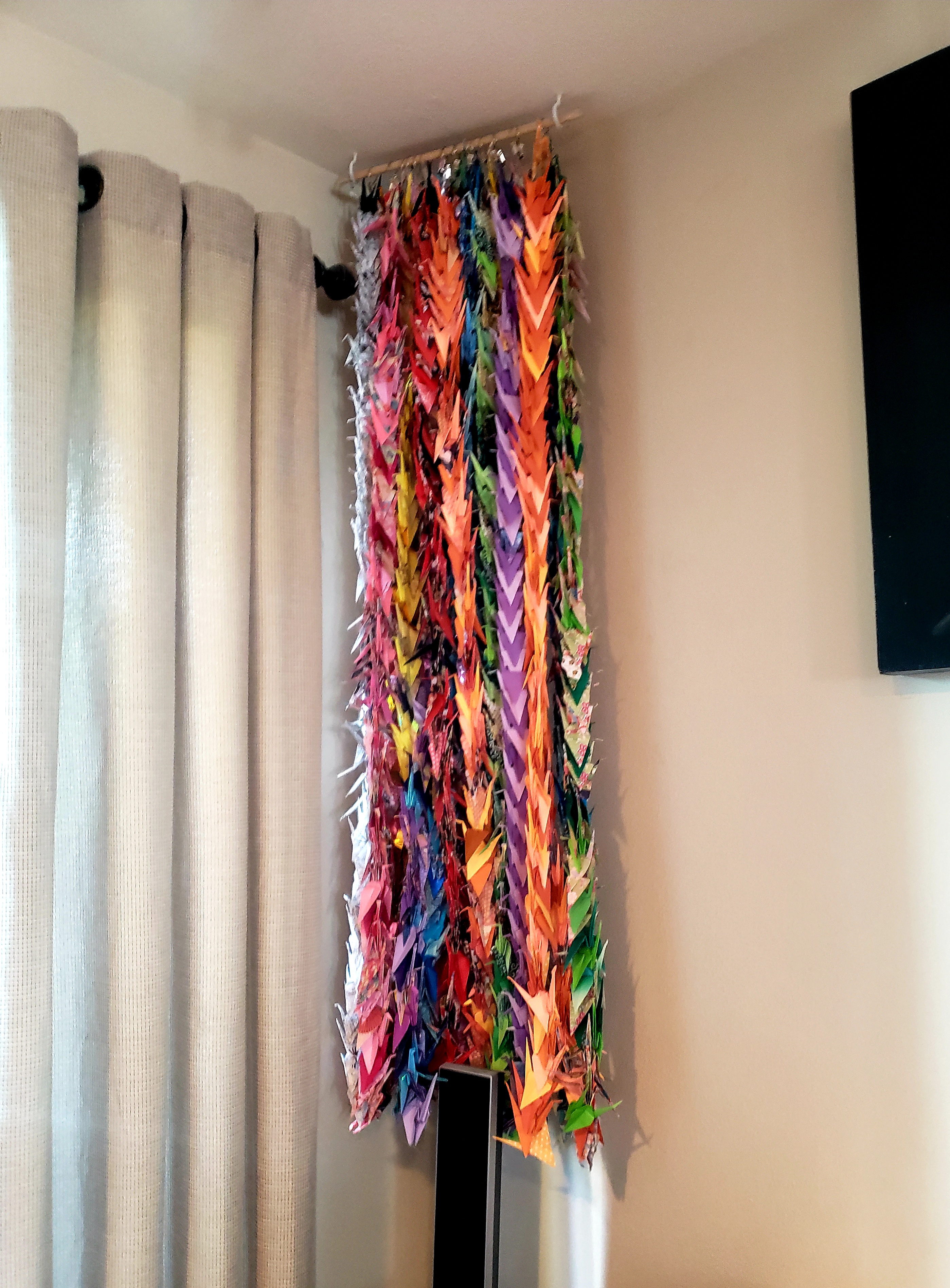
Getting back to my friend Karla, she amazed me in July when she gifted me with a thousand cranes for my birthday. I wasted no time in gettting a dowel and hooks for the cranes so that I could display them in my living room. Once they were hung, I realize I had chosen a great spot because during the day, the cranes catch the sunlight, and in the evening, the uplights which I have behind my sofa impart a lovely glow on them.







 dr. stacey naito's blog