In this video I review BN Labs Vegan Protein, which is a very clean, all natural plant-based protein powder. My review is unbiased, and I was only given sample packets to try for the purposes of reviewing the product. This video was shot about 3-1/2 years ago, but I still love this protein!
Month January 2021
5 Healthy Habits Seniors Can Adopt in the New Year
Please check out this excellent article written by Karen Weeks, which covers healthy habits which seniors can adopt in 2021.

Image via Pexels
By Karen Weeks of elderwellness.net
A brand new year is ahead of us, making it the perfect time to adopt healthy habits like eating nutritiously, exercising regularly, and spending time with loved ones (whether in-person or virtually). Below, Dr. Stacey Naito offers five senior-friendly habits that can be adopted in the new year — and how seniors can go about incorporating them in their lives.
1. Eat Nutritiously
According to the Academy of Nutrition and Dietetics, seniors need adequate amounts of calcium and vitamin D, B12, dietary fiber, healthy fats, and potassium in order to lead long and healthy lives. And fortunately, seniors can get all the nutrients they need by consuming plenty of fresh leafy greens, lean meats, beans, and healthy fats like avocados and fish. Supplementation may also be necessary if calcium, B12, B6, or vitamin D levels are low.
If you’re looking for some ways to eat better this year, try buying a new cookbook or two, purchasing a grocery delivery service, or visiting your local health foods store to stock up on fresh fruits and veggies, healthy grains, and lean proteins. If you’re thinking of paying for a grocery delivery service, some of the best options for produce include Imperfect Foods, Misfits Market, and Farmbox.
2. Exercise Often
Like good nutrition, seniors need plenty of physical activity — including strength training activities, exercises for balance and flexibility, and aerobic activities such as walking, biking, swimming, or dancing. And fortunately, there are several things seniors can do to increase their physical activity in the year ahead:
-
Following along to exercise DVDs or online fitness classes.
-
Walking or biking alone or with friends (while practicing social distancing, of course).
-
Parking further away from store entrances when shopping.
-
Purchasing an elliptical machine, exercise bike, or treadmill.
-
Starting and maintaining a garden.
If you have a medical condition or you’re experiencing body aches or pains, a physical therapist can help you to select the best exercises for you. Plus, many physical therapists are offering virtual services amidst COVID-19.
3. Socialize With Loved Ones
Socializing is tough in the age of the coronavirus, but it isn’t impossible! With senior-friendly video chat software, online multiplayer games and apps, and safe in-person gatherings (like outdoor activities and walks with loved ones), seniors can safely spend more time with their friends and family members in the new year. Regular socialization keeps seniors physically, mentally, and emotionally well — and reduces their risk of cognitive decline and depression.
4. Keep the Mind Sharp
Speaking of cognitive decline, seniors should also make time for brain games and activities in the new year. Brain games keep the mind young and healthy, fight boredom, and improve overall mental well-being. A few brain training activities for seniors include:
-
Jigsaw puzzles, crosswords, and word finds.
-
Classes on cooking, foreign languages, dance, or music.
-
Arts and crafts like knitting, scrapbooking, and upcycling.
-
Reading, coloring, and drawing.
5. Clean and Declutter
Clutter is harmful for a number of reasons. Not only does it create tripping hazards at home, but excess clutter often triggers anxiety, concentration issues, irritability, and even depression. So, if you’ve been feeling especially negative or depressed as of late, the new year is the perfect time to freshen up your living space by cleaning, decluttering, and letting in as much fresh air as possible. Redfin shares a checklist with some ideas for cleansing your home and creating a happier and healthier living space.
New Year, New You
It’s never too late to adopt healthier habits and take steps to improve your life, and these five tips will help you to tackle everything from changing your diet to eliminating excess clutter at home. No matter your age, the start of a new year is the perfect time to reinvent yourself and improve various areas of your life.
Looking for more health tips and advice? Visit Dr. Stacey Naito’s blog at staceynaitoblog.com.
Mineral Oil Sensitivity
Source: 123rf.com
Image ID : 33900955
Copyright : thodonal
Ever since I was a baby, I have had wicked reactions to mineral oil, and consequently have avoided it for the bulk of my life. My poor mother was unable to apply Johnson’s Baby Oil on me, and had to find other options to moisturize my skin.
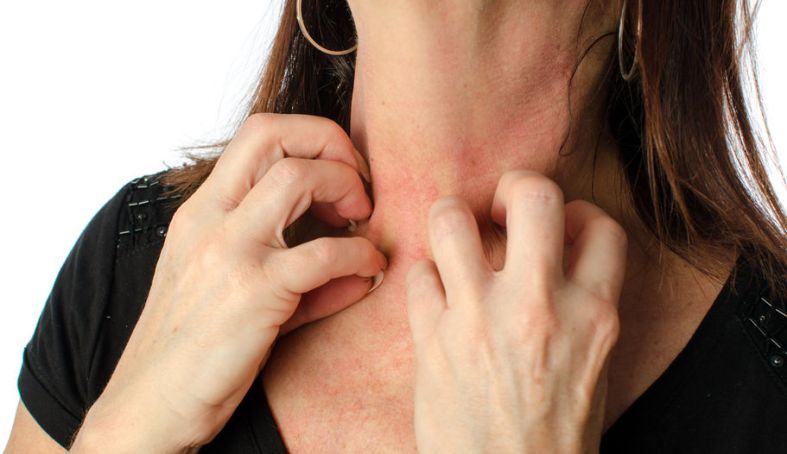
Whenever mineral oil is placed on any part of my skin, I experience intense itching within a couple of minutes which starts at the point of contact with the oil, then about a minute or so after that, I develop a fine, sandpaper-like, incredibly itchy rash over my entire body. I must immediately wash off the oil, then take an antihistamine. The rash takes hours to subside.
In case you think I am making this up, I have gone for massages and hadn’t paid attention to what oil or cream the therapist was using. There have been numerous incidents in which I reacted to an oil in the manner I just described above, and upon querying the therapist, discovered without fail that they had applied baby oil, i.e. mineral oil, to my skin.
Strangely, I have never had a pronounced reaction to any other mineral oil based products such as petrolatum, paraffin oil, or paraffin wax, so I have kept items like Vaseline and Aquaphor on hand, and I have never concerned myself with small amounts of mineral oil in body lotions. However, I have never been comfortable with the fact that mineral oil is ubiquitous, used in everything from lotions, to cold creams, ointments, cosmetics, and personal care products. Mineral oil is very inexpensive, and helps to lock in moisture, making it desirable for use in skin products.

Source: 123rf.com
Image ID : 81118389
Copyright : Dmitry Pichugin
But let’s think about where mineral oil comes from. When crude oil is refined to make gasoline and other petroleum products, such as diesel fuel, jet fuel, asphalt, lubricating oils, and biofuels, mineral oil is one of the by-products which is used in household and personal care products. I know that there are purifying methods used to guarantee that the substances used in personal care products aren’t toxic, but I am a bit bothered by the usage of crude oil distillates and by-products in this way, and would prefer to avoid them.
The reason why I bring all this up is because I had the worst reaction ever to a post-laser treatment cream which I was instructed to use immediately following a fractional CO2 laser treatment which took place in mid-November of 2020. I hadn’t used the cream much during the first 36 hours following the procedure, but began using it 5-6 times a day from the 36 hour point on. Within a couple of hours, I began noticing an incredibly itchy, fine, sandpaper-like rash which appeared on both arms, my chest, belly, hips, neck, and shoulders. I kept using the cream, and the rash became angrier, and completely robbed me of sleep for the next 2 nights before I decided that I had better check the ingredients on the post treatment cream. Of course the second ingredient listed was mineral oil.
Hence began my quest to find a rich, emollient cream which would soothe my laser torched skin without exposing me to petroleum products. I couldn’t use Aquaphor because it had petrolatum, so I turned to a shea butter cream I had…which also had mineral oil. I broke out horribly. My next idea was to use cocoa butter cream, but that also had mineral oil in it, so the rash persisted. In desperation, I turned to raw mango butter, but I discovered that my skin wasn’t fond of that substance either.
It has been nearly impossible to find rich, emollient creams which are free of mineral oil. I have been on the hunt since November, and have looked everywhere. I know there are others who have sensitive, reactive skin, and I had even focused my search on treatments for eczema and psoriasis. What shocks me is that the majority of products for those conditions have…mineral oil. It’s enough to drive one mad.
It has now been over SEVEN weeks since I had the laser procedure, and since that time, I have been on oral antihistamines, gave myself two hydrocortisone injections, and used everything imaginable to try to get my skin not only to calm down, but to also offer hydration. Incidentally, my skin is so leathery and parched, that I must apply emollient creams every hour to replenish moisture, and I am STILL battling a constant rash and hives all over my upper body. The combination of the fractional CO2 laser and the mineral oil cream have essentially ruined my skin.
For anyone who even dares to argue that mineral oil sensitivity is not a thing, I challenge you. Honestly, I’ve lived with this condition for my entire life, and I am extremely irritated by the fact that dermatologists foolishly avoid the subject, as if it was some forbidden topic. An article by
Hopefully there is a light at the end of this skin rash tunnel. There are three emollient creams which I have ordered which are free of mineral oil and other petroleum substances, and I am keeping my fingers crossed that at least one of them will give me blessed relief.
 dr. stacey naito's blog